
By SCWS Team
Published February 17, 2026 · 9 min read
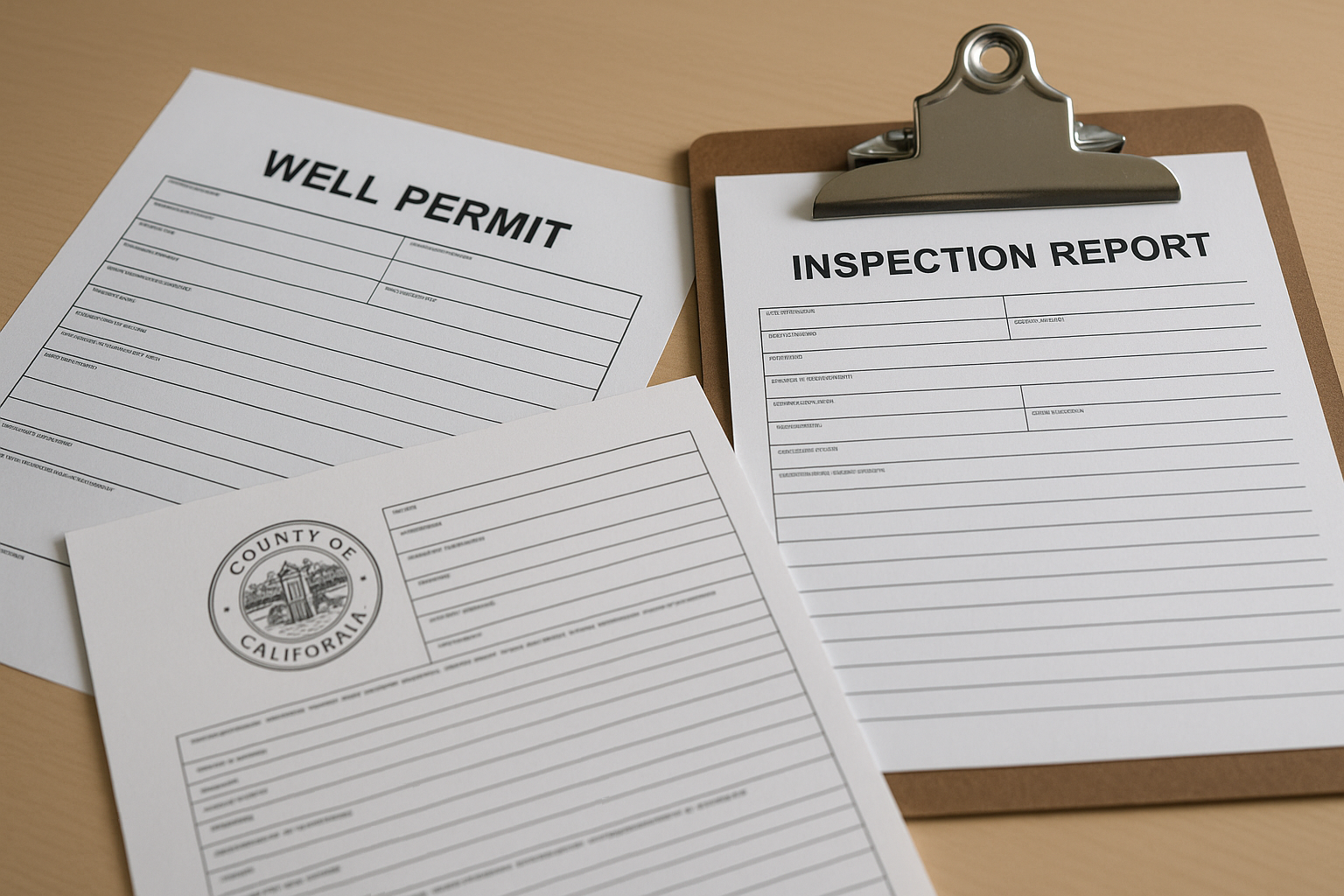
When a well is no longer needed, California law requires proper destruction—not just covering it up. Improperly abandoned wells become contamination pathways that can affect entire aquifers.
When to Abandon a Well
- Connecting to public water and no longer need well
- Well is dry or produces inadequate water
- Well is contaminated and treatment isn't practical
- Replacing with a new well
- Property development requires removal
- County requires destruction of unpermitted well
Legal Requirements
- Permit required: Obtain destruction permit from county environmental health
- Licensed contractor: Only C-57 licensed well drillers can legally destroy wells
- State standards: Must follow California Well Standards (Bulletin 74-90)
- Completion report: Driller files report with state DWR
The Destruction Process
- Obtain permit: Application with well location and construction details
- Remove equipment: Pull pump, pipe, wiring from well
- Fill from bottom up: Pump neat cement grout from bottom, displacing water
- Seal annular space: Grout between casing and surrounding soil
- Cut casing: Remove casing to at least 5 feet below grade
- Fill to surface: Complete filling and cap
- County inspection: Verify proper destruction
- File completion report: Document destruction with state
Typical Costs
| Item | Cost Range |
|---|---|
| Destruction permit | $200-400 |
| Pump removal (if needed) | $300-800 |
| Well destruction (shallow) | $800-1,500 |
| Well destruction (deep) | $1,500-3,000+ |
| Total typical range | $1,000-3,500 |
Why Proper Abandonment Matters
Risks of Improper Abandonment
- Groundwater contamination: Surface contaminants can reach aquifers
- Physical hazards: Open or poorly covered wells are dangerous
- Legal liability: Property owner responsible for contamination
- Property sale issues: Title search may reveal problems
- Neighbor impact: Your abandoned well can contaminate their water
We service all major pump brands including Franklin Electric, Grundfos, Goulds (Xylem), and Sta-Rite (Pentair). Our trucks carry common parts and components for same-day repairs.
Frequently Asked Questions
Do I need a permit to abandon a well?
Yes, California requires a destruction permit from your county. Only licensed C-57 contractors can legally destroy wells.
How much does well abandonment cost?
Typically $1,000-3,000+ depending on well depth, diameter, and complexity.
What if I have an old abandoned well?
Contact your county environmental health department. You may need to properly destroy it, especially before property sales or construction.
Need to Abandon a Well?
We handle permits and proper destruction throughout San Diego and Riverside Counties.
Call (760) 440-8520Related Articles
Continue learning about well maintenance and troubleshooting


Abandoning a Well
California has some of the most comprehensive well regulations in the country—and for good reason. Proper well construction and management protects both your water supply and the shared groundwater resources that thousands of properties depend on.
California Well Regulations Overview
Well construction, modification, and destruction in California are governed by several layers of regulation:
- California Well Standards (DWR Bulletin 74-90): Sets minimum construction standards for all water wells statewide
- County ordinances: San Diego, Riverside, and San Bernardino counties each have additional requirements that may be stricter than state minimums
- SGMA (Sustainable Groundwater Management Act): Affects well permitting in certain basins by requiring analysis of new wells' impact on the aquifer
- CEQA: Some commercial or agricultural wells may require environmental review
Permitting Requirements
In San Diego County, the Department of Environmental Health (DEH) handles well permits. You need a permit for:
- Drilling a new well
- Deepening an existing well
- Modifying well casing or equipment
- Destroying (properly abandoning) a well
Permit applications require a site plan showing the well location relative to property lines, septic systems, and other potential contamination sources.
Setback Requirements
Minimum distances between a well and potential contamination sources (San Diego County):
- Septic tank: 50 feet minimum
- Leach field: 100 feet minimum
- Sewer line: 50 feet minimum
- Property line: Varies by county (typically 5–10 feet)
- Building foundation: Sufficient distance for drilling access (typically 10+ feet)
These setbacks can make well placement challenging on smaller lots. We help navigate these requirements during our site evaluation.
Contractor Licensing
California law requires a C-57 Water Well Drilling license for anyone who drills, modifies, or destroys a water well. This is a specialized classification—a general contractor's license is NOT sufficient.
Always verify your contractor's license at www.cslb.ca.gov. SCWS holds CSLB License #1086994 with active C-57 classification.
Well Owner Responsibilities
As a well owner in California, you're responsible for:
- Maintaining your well in sanitary condition
- Testing water quality (recommended annually for bacteria/nitrates)
- Properly destroying wells that are no longer in use
- Not contaminating groundwater through improper well construction or maintenance
- Reporting your well's existence when selling property (disclosure requirement)
Well Destruction Requirements
Abandoned or unused wells pose a serious contamination risk to groundwater. California requires proper destruction by a licensed C-57 contractor, which includes:
- Removing all pumping equipment
- Filling the well with cement grout or approved materials
- Filing a Well Completion Report with the Department of Water Resources
Typical cost for proper well destruction in San Diego County: $1,500–$5,000 depending on well depth and condition.
Need Professional Help?
SCWS has 30+ years of experience serving San Diego, Riverside, and San Bernardino counties. Licensed C-57 contractor (CSLB #1086994).
Call (760) 440-8520