Agricultural Well Service in Aguanga
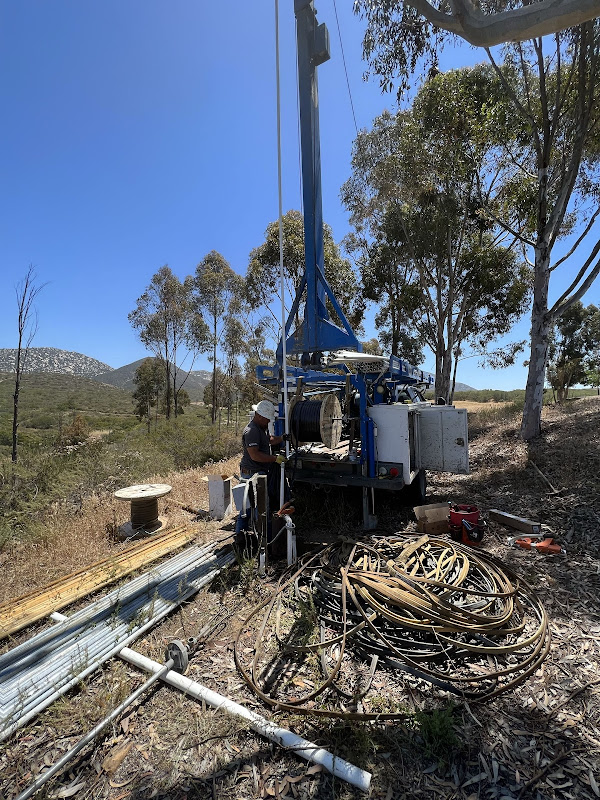
Southern California Well Service provides complete agricultural well services to Aguanga farmers, ranchers, and growers. From irrigation wells to livestock watering systems, we have the expertise and equipment to keep your operation running.
📋 In This Guide
Need Agricultural Well Service in Aguanga?
We serve Aguanga and all of Riverside County. Licensed C-57 contractor with 30+ years experience.
Call: (760) 440-8520Our Agricultural Well Service Services
- Agricultural well drilling
- Irrigation well installation
- High-capacity pump systems
- Variable frequency drives (VFDs)
- Well rehabilitation for increased yield
- Water quality testing for crops
- Livestock watering systems
- 24/7 emergency agricultural service
Well Data: Aguanga, California
411'
Average Depth
20–1710'
Depth Range
946
Wells on Record
San Diego
County
Based on California DWR well completion reports. Aguanga's average well depth is close to the Riverside County average of 450 feet.
With 946 wells on record, Aguanga has a well-established well infrastructure. The wide depth range of 20 to 1710 feet reflects the varied terrain and geology across Aguanga's landscape. Shallower wells typically tap into alluvial aquifers near drainages, while deeper wells penetrate the Peninsular Ranges batholith, primarily granitic and metamorphic rock to reach more reliable water sources.
At an average depth of 411 feet, agricultural wells in Aguanga require high-capacity pumps sized for significant lift — typically 1 to 5 HP depending on flow rate and total dynamic head. See detailed well depth data for Aguanga →
Agricultural Water Needs in Aguanga
Aguanga's Riverside County location means a Mediterranean climate with dry summers that put heavy demand on irrigation wells from May through October. Agricultural wells here must be sized for sustained high-volume pumping, often 10-30 GPM from deeper fractured rock aquifers.
Common agricultural well setups in Aguanga include variable frequency drives (VFDs) to match pump output to demand, storage tanks for buffer capacity, and booster systems for pressurized irrigation lines. We size every agricultural pump to the well's tested yield — oversizing wastes energy and can damage the well by drawing the water level down too fast.
Serving Aguanga and Surrounding Areas
In addition to Aguanga, we provide agricultural well services throughout Riverside County, including nearby communities:
- 4s Ranch
- Adelanto (avg well depth: 240')
- Aguanga Valley
- Allied Gardens
Why Aguanga Chooses SCWS
✓ Local Expertise
We know Riverside County geology and wells
✓ Fast Response
Same-day service for Aguanga
✓ Fair Pricing
Honest quotes, no surprises
✓ Quality Work
4.9★ rating, hundreds of reviews
Our Locations
Agricultural Well Service for Aguanga's Ranches and Vineyards
Aguanga lies along State Route 79 in the southwestern corner of Riverside County, where the Anza Valley spills down toward the Temecula wine country and the headwaters of Temecula Creek. It is ranch and vineyard country — cattle and horse properties, boutique wineries climbing the slopes near Hamilton and Crazy Horse Canyon, hay and pasture along the creek bottom, and large rural parcels where the nearest water main is many miles away. Every one of those operations depends on a private agricultural well. Southern California Well Service has worked this stretch of Highway 79 for more than three decades, and our Anza office is only a short drive up the road, so an Aguanga grower rarely waits long for help.
The land around Aguanga is a transition zone geologically. Along Temecula Creek you find alluvial deposits — sand, gravel, and clay washed down over millennia — that can hold good water. Move up onto the hillsides and you are into the granitic and metamorphic basement rock of the Peninsular Ranges, where water lives in fractures. This mix means Aguanga wells range from relatively shallow creek-bottom wells to deep bedrock wells, and the right pump and the right pumping strategy depend entirely on which kind of well you have.
How Vineyard and Ranch Wells Work Here
A vineyard near Aguanga has a different water profile than a cattle ranch. Vines want measured, consistent drip irrigation through the growing season and a deficit-irrigation strategy near harvest; a cattle operation wants dependable trough flow year-round. Both are served by a submersible pump set deep in the casing, but the surface equipment differs. Vineyards almost always run through a storage tank and a filtered, pressure-regulated drip system, while stock operations may run simpler float-controlled troughs and storage.
Because creek-bottom alluvial wells in Aguanga can yield more freely than hillside fractured-rock wells, we test each well's sustainable yield before recommending a pump. A common mistake on a new vineyard is installing a pump sized for peak July demand on a well that can only sustain a fraction of that flow. The water level crashes, the motor short-cycles, and the pump fails within a season. We size to sustainable yield and use storage to bridge peak demand — the approach that keeps a vineyard watered for decades.
Common Agricultural Well Problems in Aguanga
Seasonal water-level swings
Temecula Creek and its underflow rise and fall sharply between wet and dry years. After a dry winter, Aguanga wells that depend on creek recharge can drop dramatically by late summer, leaving vines and pastures short exactly when they need the most water.
Hard water and scaling
Groundwater here is typically hard, and mineral scale builds up inside pumps, pressure tanks, and drip emitters. Plugged emitters are a constant headache for vineyard managers; we address both the symptom and the underlying water chemistry.
Long runs and pressure loss
Aguanga parcels are large, and irrigation lines often run thousands of feet from the wellhead to distant blocks. Pressure loss over that distance starves the far end of the system. A correctly engineered booster or constant-pressure setup solves it without over-stressing the well.
What to Check Before You Call
- Verify power at the well — check the breaker, the disconnect, and the control box for tripped protection.
- Read your pressure gauge and note whether pressure is low, zero, or fluctuating wildly.
- Check storage-tank level and the air charge on any pressure tank.
- Walk a few drip lines or troughs to see whether the problem is system-wide or isolated to one zone.
- Note recent power outages, a hard freeze, or a sudden change after you increased irrigation.
If the pump is running but no water arrives, shut it down to avoid running dry, and call us.
When to Call a Professional
Reach for a licensed C-57 contractor when water stops, when yield falls off mid-season, when you are planning a vineyard expansion or a new herd, or when sand, air, or pressure problems appear. Deep-well pump work in Aguanga requires a service rig and proper safety equipment — it is not a job to attempt with a tractor and a chain. Our diagnostic visit is $125, credited toward any repair.
What Agricultural Well Work Costs in Aguanga
As a planning guide: a pressure switch runs about $150 to $350; a pressure tank $600 to $1,500; a replacement submersible pump and motor $2,500 to $5,500 depending on depth and horsepower; a constant-pressure or booster system $2,000 to $4,500; sediment or scale-management filtration $300 to $900; a water softener $1,500 to $3,500; well rehabilitation varies by method; hydrofracturing to improve a low-yield bedrock well $3,000 to $8,000; and a complete new turnkey well $18,000 to $42,000. Every quote starts with a real diagnosis, not a guess.
Our Aguanga Service Area
From our Highway 79 base we serve Aguanga and the surrounding Riverside County ranch country, including the vineyard slopes toward Temecula, the Cahuilla and Radec areas, and the rural parcels along Temecula Creek, Crazy Horse Canyon, and the Highway 371 corridor up toward Anza. We understand how this valley's water behaves season to season and stock the parts that fail most often.
Frequently Asked Questions
Is the groundwater in Aguanga good enough for a vineyard?
Generally yes, though it is typically hard and benefits from filtration to protect drip emitters. We test your well water and recommend the right filtration and pressure setup so your irrigation system runs clean and your vines get consistent flow.
Why did my Aguanga well drop so much this summer?
Wells fed by Temecula Creek underflow rise and fall with the wet and dry years. A low-rainfall winter means less recharge and a lower water table by late summer. Lowering the pump, adding storage, or rehabilitating the well usually restores reliable supply.
How far can you push irrigation water across a large parcel?
With a properly engineered booster or constant-pressure system, quite far — but the design has to respect the well's sustainable yield. We calculate pressure loss over the run and size equipment so distant blocks get the flow they need without over-pumping the well.
Can you install a solar-powered ranch well?
Yes. Solar submersible systems are well suited to remote Aguanga parcels with no convenient grid power. They pump into storage during the day, which pairs naturally with the storage-and-draw strategy that works best on local wells.
Do you respond to emergencies in Aguanga?
Yes — same-day emergency service is available, and our Anza office is just up Highway 79. For livestock or crop emergencies call (760) 440-8520 or text (619) 259-0410.
How often should an agricultural well be inspected?
For a working vineyard or ranch, an annual inspection is wise — checking yield, water level, motor amperage, pressure, and water quality. Catching a declining well or scaling pump early is far cheaper than an emergency failure during harvest or a heat wave.
Reliable Water for Aguanga Vineyards and Ranches
Same-day agricultural well service along the Highway 79 corridor. Licensed C-57, 30+ years, 4.9-star rated.
Call (760) 440-8520For agricultural applications, we install high-capacity Franklin Electric and Grundfos submersible pumps from 7.5 to 25+ HP. Grundfos SQFlex solar pumps are available for off-grid ranch locations.
Related Articles
Continue learning about well maintenance and troubleshooting