Agricultural Well Service in Escondido
Southern California Well Service provides complete agricultural well services to Escondido farmers, ranchers, and growers. From irrigation wells to livestock watering systems, we have the expertise and equipment to keep your operation running.
📋 In This Guide
Need Agricultural Well Service in Escondido?
We serve Escondido and all of San Diego County. Licensed C-57 contractor with 30+ years experience.
Call: (760) 440-8520Our Agricultural Well Services
- Agricultural well drilling
- Irrigation well installation
- High-capacity pump systems
- Variable frequency drives (VFDs)
- Well rehabilitation for increased yield
- Water quality testing for crops
- Livestock watering systems
- 24/7 emergency agricultural service
Escondido: A Hidden Valley Built on Groves and Wells
Escondido — Spanish for "hidden" — sits in an inland valley of San Diego County ringed by hills and granite outcrops, and that protected, sun-drenched setting has made it one of the region's enduring agricultural centers. Citrus and avocado groves climb the surrounding slopes, wine grapes have flourished here for generations, and small farms, nurseries, and family groves dot the valley floor and the rolling country toward Valley Center and San Pasqual. Much of this agriculture leans on groundwater. With imported water costly and crops like avocados and grapes demanding precise, reliable irrigation, an Escondido grower's well is often the backbone of the whole operation.
The geology here is dominated by the crystalline basement rock of the Peninsular Ranges — the same granites that form the boulders so characteristic of the Escondido and San Pasqual hills — overlain by alluvial valley fill. That means two broad types of wells. In the valley bottoms and along drainages, wells tap alluvial aquifers; up on the slopes and in the harder country, wells produce from fractures in the bedrock, where yield depends on intercepting water-bearing fracture zones. Fractured-rock wells behave differently from alluvial wells, and siting and completing them well takes real local experience — a lesson many hillside Escondido growers learn the hard way before calling a contractor who knows the ground.
Designing a Well for Groves and Vineyards
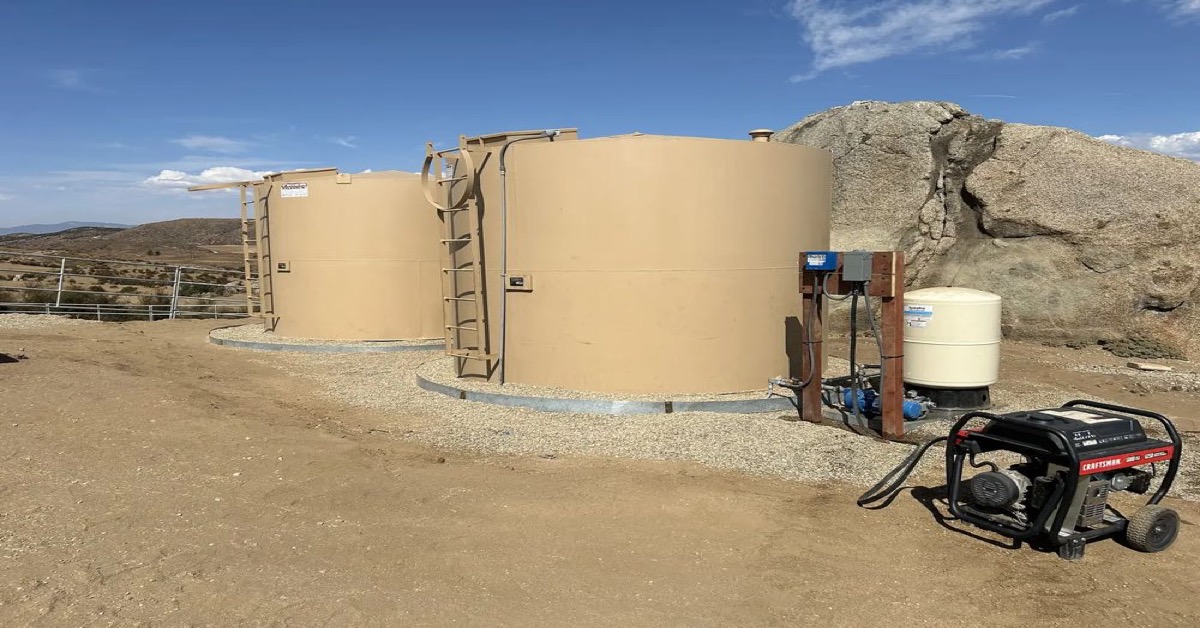
Avocados, citrus, and wine grapes share a common need: steady, clean, well-controlled water rather than huge bursts of flow. We size Escondido agricultural pumps to the well's tested yield and to the irrigation method — drip and micro-spray for groves and vineyards run efficiently on moderate, consistent flow. Where a fractured-rock well produces a modest but reliable yield, storage becomes essential: a tank or pond lets the well run steadily through the day and night to fill it, then the irrigation system draws the higher instantaneous flow it needs during a watering set. This pairing of a modest well with adequate storage is the key to making hillside Escondido properties work.
Water quality deserves attention here too. Grapes and avocados respond to mineral content and salinity, so we test before designing the system and recommend filtration or treatment where needed. A complete Escondido grove or vineyard system typically includes a properly sized submersible pump, sediment filtration to protect emitters, a pressure tank or storage and booster setup tuned to the terrain, and controls — often including a variable frequency drive — to hold steady pressure across sloped blocks. Getting the lift and pressure right matters especially on Escondido's hilly parcels, where water may need to climb significantly from wellhead to the highest block.
- Fractured-rock expertise: siting and completing bedrock wells that depend on intercepting water-bearing fractures.
- Storage: tanks and ponds that let a modest hillside well meet a grove or vineyard's daily demand.
- Terrain-aware pumping: pumps and boosters sized for the lift to upslope blocks, with VFDs for steady pressure.
- Quality testing: water analysis for the salinity and minerals that affect grapes and avocados.
Common Well Problems in the Escondido Area
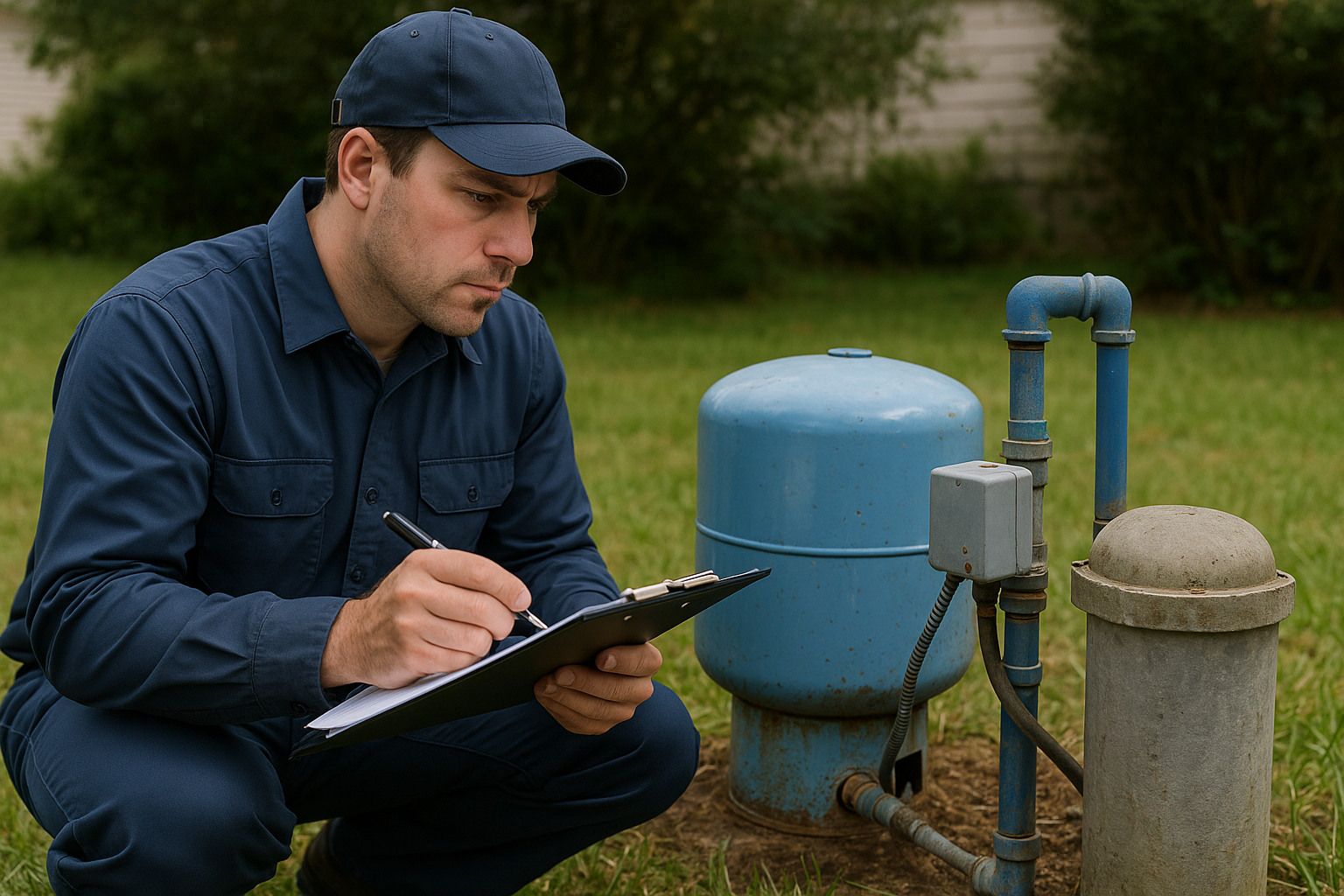
Fractured-rock wells bring their own signature problems. Yield can change over time as fractures silt up or as the water table in the rock fluctuates seasonally, and a hillside well that was marginal to begin with can fall short in a dry year. The remedy ranges from rehabilitation to lowering the pump to, occasionally, deepening — but only after testing reveals what is actually happening. Sediment and fines from weathered rock are also common, wearing pumps and clogging the fine emitters that grove and vineyard drip systems rely on.
In the valley's alluvial wells, the more familiar issues dominate: scale and bacterial buildup on screens that gradually choke flow and that rehabilitation can reverse, and aging pumps, pressure tanks, and check valves that announce themselves through short-cycling and pressure swings. Across both well types, pressure problems are quickly noticed on Escondido's sloped properties, because micro-irrigation on a hillside is sensitive to anything that disturbs the carefully balanced pressure across blocks at different elevations.
Maintenance Every Escondido Grower Should Do
- Track flow and water level, especially on fractured-rock wells whose yield can shift seasonally.
- Service sediment filters and flush drip lines to handle fines from weathered rock.
- Check pressure across upslope and downslope blocks; uneven pressure points to a pump or tank issue.
- Monitor motor amperage as an early indicator of wear or screen plugging.
- Test water quality for the salts and minerals that affect grapes and avocados.
When to Call a Professional
Falling yield on a hillside well, uneven grove or vineyard pressure, sediment in the line, repeated motor trips, or a well that quits all warrant a licensed contractor. Fractured-rock wells in particular reward experience: diagnosing whether a hillside well is plugged, drawn down, or simply at the limit of its fractures takes proper testing and judgment. With over 30 years and a C-57 license, we know Escondido's granite country, we carry the rig and instruments the work demands, and we design fixes that respect both the crop and the well.
What Agricultural Well Service Costs in Escondido
Pump replacement typically runs $2,500 to $5,500, with deep-set or high-capacity installations higher. A pressure tank runs $600 to $1,500, and sediment filtration $300 to $900. A new turnkey well generally falls between $18,000 and $42,000 depending on depth and completion — fractured-rock drilling can vary widely — while high-capacity systems run above that. Our diagnostic visit is $125, credited toward any work performed, so you get a straight, tested answer before investing in equipment.
Serving Escondido and Inland North County
From our nearby Ramona office and our Anza office, our crews are well placed to serve Escondido, Valley Center, San Pasqual, Hidden Meadows, and the grove and vineyard country across inland North San Diego County. We understand the valley's granite geology, the behavior of fractured-rock wells, and the precise irrigation that high-value crops demand. Whether you farm a hillside avocado block or a valley-floor vineyard, our 4.9-star reputation reflects careful, honest work.
Drilling a New Well in Escondido's Granite Country
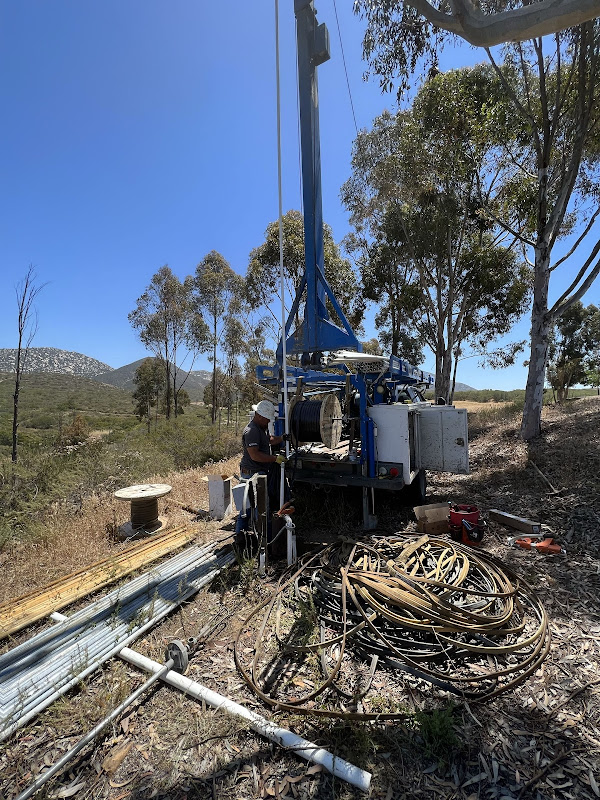
Putting in a new agricultural well on an Escondido hillside is a different proposition from drilling in soft valley alluvium, and growers benefit from understanding the process before they commit. In fractured granite, the well does not draw from a uniform sandy aquifer; it produces from the network of cracks the borehole happens to intersect. That makes siting partly a matter of geology and partly a matter of experience reading the land — the lay of the slopes, nearby producing wells, drainage patterns, and the character of the outcropping rock all inform where a borehole has the best odds of cutting productive fractures.
Once a promising location is chosen, the well is drilled, cased through any overburden, developed to clear the fractures of drilling debris, and tested to establish its true sustainable yield. That tested yield — not an optimistic guess — becomes the basis for sizing the pump and the storage. A modest but steady producer paired with a properly sized tank will serve a grove reliably for decades, whereas an oversized pump on a marginal fracture well simply pumps it dry and burns out. We also handle the county permitting that a new agricultural well requires, so the finished well is compliant and documented from the start. Taking the time to do siting, development, and sizing right is what separates a Escondido well that lasts from one that disappoints.
Escondido Agricultural Well FAQ
What is a fractured-rock well and how is it different?
On Escondido's slopes, wells often produce from cracks and fractures in granite rather than from sand and gravel. Yield depends on intercepting water-bearing fractures, so siting and completion take local experience, and storage is usually needed to meet peak demand.
My hillside well runs low in dry years — what can I do?
We test first to see whether the issue is a falling water level, a plugged well, or the limit of the fractures. Solutions range from rehabilitation to adding storage to lowering or deepening the pump, chosen from data, not guesswork.
Is well water suitable for wine grapes?
Grapes respond to salinity and minerals, so we test the water before designing the system and recommend filtration or treatment where appropriate. Many Escondido vineyards run successfully on properly managed well water.
Why is my grove getting uneven water?
On sloped Escondido properties, uneven irrigation usually points to a pressure problem — a pump, tank, or control issue — that micro-irrigation across different elevations exposes quickly. We balance and correct it.
Can a well save me money versus imported water?
For many inland North County growers, yes. With imported water expensive, a well can carry most of the irrigation load and meaningfully lower costs while a municipal hookup remains as backup.
Do you offer same-day service in Escondido?
Yes, same-day emergency service when our schedule allows, and our Ramona office is close by. Call (760) 440-8520 or text (619) 259-0410.
Expert Well Service for Escondido's Groves and Vineyards
Fractured-rock and alluvial wells, pump and storage systems, and rehabilitation across inland North County. Diagnostic visits credited toward your repair.
Call (760) 440-8520Our Locations
Related Articles
Continue learning about well maintenance and troubleshooting