Agricultural Well Service in Good Hope
Southern California Well Service provides complete agricultural well services to Good Hope farmers, ranchers, and growers. From irrigation wells to livestock watering systems, we have the expertise and equipment to keep your operation running.
📋 In This Guide
Need Agricultural Well Service in Good Hope?
We serve Good Hope and all of Riverside County. Licensed C-57 contractor with 30+ years experience.
Call: (760) 440-8520Our Agricultural Well Service Services
- Agricultural well drilling
- Irrigation well installation
- High-capacity pump systems
- Variable frequency drives (VFDs)
- Well rehabilitation for increased yield
- Water quality testing for crops
- Livestock watering systems
- 24/7 emergency agricultural service
Agricultural Wells in Good Hope: Small Farms and Pasture in the Perris Valley
Good Hope is a rural, unincorporated community in western Riverside County, tucked between Perris and Lake Elsinore along the Highway 74 corridor near Meadowbrook and the rolling hills of the Perris Valley. It has long been a place of small farms, pasture, horse properties, and large-lot homesteads, where families keep a few acres in production and groundwater does the heavy lifting. With municipal water service limited across much of this country, a reliable agricultural well is the practical foundation for irrigating gardens and pasture, watering livestock, and supporting the small-scale farming that gives Good Hope its character. Southern California Well Service has drilled, repaired, and maintained wells across the Perris, Lake Elsinore, and Good Hope area for more than 30 years, and we know what it takes to keep a rural property watered out here.
We are a licensed C-57 water well contractor handling the full range of agricultural well services in Good Hope: new irrigation and stock well drilling, pump sizing and installation, well rehabilitation, water quality treatment, and emergency repair when a pump goes down. This guide walks through how ag well systems work in this area, the local conditions to plan for, what to check before you call, and what the work realistically costs.
How a Good Hope Agricultural Well System Works
A working farm or stock well in Good Hope brings together several parts: the cased borehole and screen, a submersible pump set below the static water level, drop pipe and wiring, a pressure or storage tank, and the distribution plumbing that feeds your pasture, garden, or troughs. The Perris Valley sits on alluvial basin fill ringed and underlain by the granitic bedrock of the Peninsular Ranges, so groundwater is held in the valley alluvium and the weathered and fractured rock beneath. Well depth varies with position in the basin: wells in deeper alluvium can be moderately shallow, while those nearer the hills or in thinner fill often go deeper. Many Good Hope ag wells fall in a range of roughly 150 to 500 feet.
The key figure for any irrigation or stock well is gallons per minute (GPM). A few acres of pasture, a garden, and livestock may be well served by 10 to 25 GPM, especially with a storage tank to buffer demand, while larger operations can call for 30 to 50 GPM or more in summer. We size every pump to the well's tested yield. Pushing a well harder than it can recharge pulls the water level down too fast, making the pump cycle, draw air, overheat, and wear out early. We test drawdown, set the pump at the right depth, and often pair it with storage and a variable frequency drive (VFD) so a modest, steady well can still deliver strong pressure when you need it.
Local Conditions That Affect Good Hope Wells
Good Hope sees hot, dry inland summers that drive pasture and garden irrigation, and livestock water demand, to its peak from late spring through fall. On a working homestead, that combined demand, irrigation plus stock water, is exactly why a storage tank is so valuable: it lets a steady-producing well keep troughs full and gardens watered even on the hottest days. Reliability matters most in midsummer, when a failed pump can leave animals without water in dangerous heat, so we build in margin and recommend regular maintenance.
Water quality in the Perris Valley tends toward hard, mineral-rich groundwater, and some Good Hope wells carry iron, manganese, or elevated dissolved solids. Hard water scales drip emitters, sprinkler heads, and float valves and shortens pump and tank life. Sediment is common too: as a well ages or its screen wears, fine sand from the alluvium can migrate in, grinding pump impellers and clouding the water. Grit, staining, or a loss of clarity usually means the well needs service. We test water on every job and recommend the right treatment for both livestock and equipment, from a softener or iron-and-manganese system to sediment filtration.
What to Check Before You Call
Before you call, a few quick checks can point to an easy fix or help us bring the right parts:
- Breaker and disconnect. Confirm the pump breaker has not tripped and the wellhead disconnect is on. A tripped breaker is a very common cause of a sudden stop, and rural panels are exposed to heat and rodents.
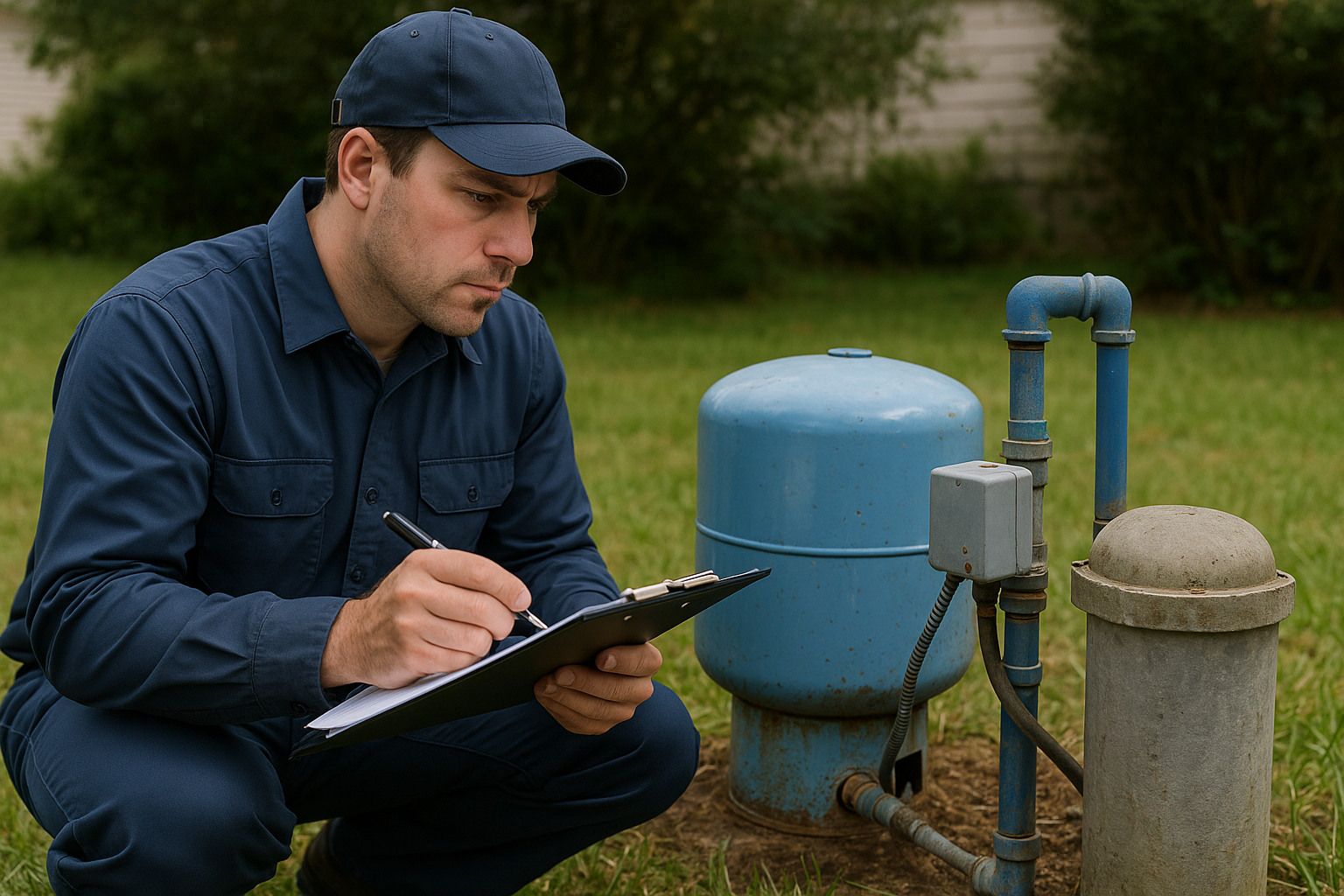
- Pressure switch and tank. No pressure or a pump that will not start often traces to a failed pressure switch. Rapid cycling usually means a tank that has lost its air charge.
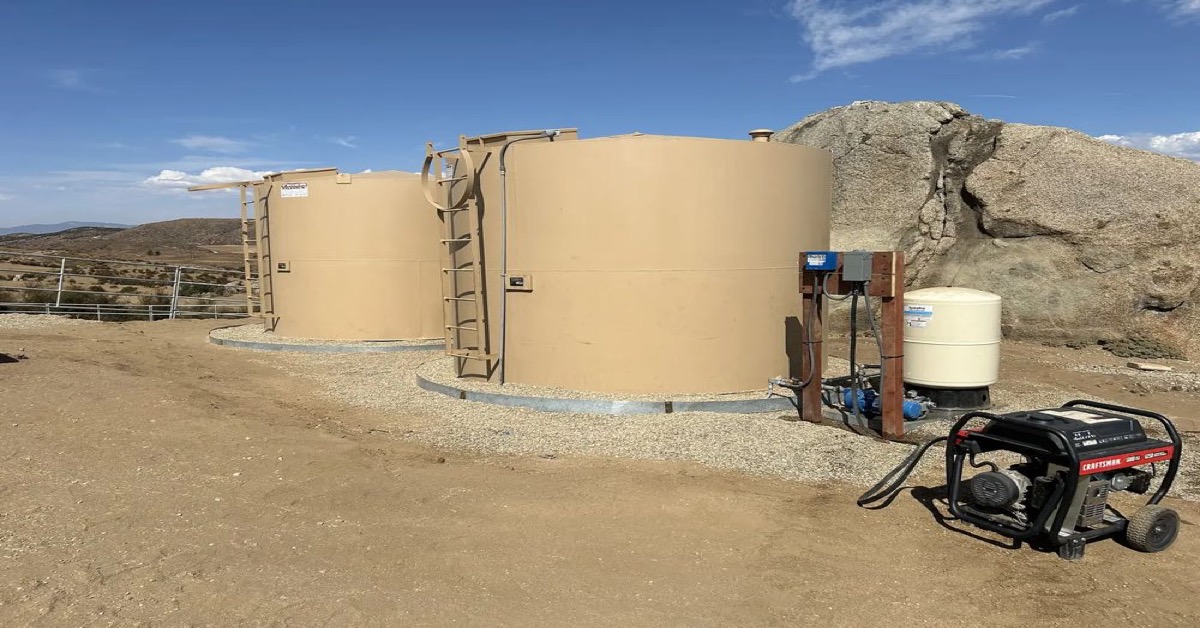
- Storage tank and troughs. If you rely on storage, a low tank may simply mean stock and irrigation demand outran the well on a hot day.
- Water clarity. Note grit, cloudiness, staining, or odor, which point to a screen or treatment issue.
- Output behavior. Flow that fades after a few minutes can mean the pump is outrunning the well or the seasonal water level has dropped.
When to Call a Professional
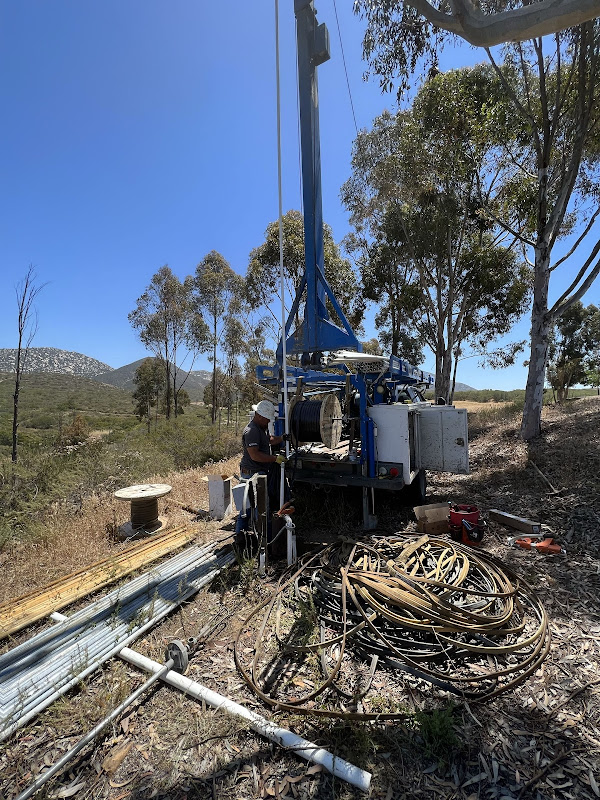
Agricultural wells involve high-voltage power and heavy submersible pumps suspended on hundreds of feet of pipe, so some work is not safe to attempt yourself. Call a licensed contractor when the pump will not start after you have confirmed power, when you have lost water and your livestock need it, when output has dropped sharply, when sand or cloudy water persists, or when you are adding acreage or animals and need more GPM. We handle the Riverside County permitting and construction standards for new and replacement ag wells, so the work is properly documented. Pulling a deep submersible pump takes the right rig and experience; a failed do-it-yourself attempt that drops equipment down the casing can turn a simple repair into an expensive recovery.
What Agricultural Well Work Costs in Good Hope
Final pricing depends on depth, pump size, water chemistry, and access, but these ranges give Good Hope owners a realistic starting point:
- Pressure switch replacement: $150 to $350
- Pressure tank replacement: $600 to $1,500
- Pump replacement (depth and HP dependent): $2,500 to $5,500
- Sediment filtration system: $300 to $900
- Iron/manganese system or water softener: $1,500 to $3,500
- Constant-pressure or booster system: $2,000 to $4,500
- New turnkey agricultural well: $18,000 to $42,000
- Hydrofracturing to boost yield: $3,000 to $8,000
- Well abandonment/decommissioning: $1,500 to $5,000
Our diagnostic visit is a flat $125, covering a full system test and written assessment, and it is credited toward any repair you approve. Honest quotes, no surprises.
Serving Good Hope and the Perris Valley
In addition to Good Hope, we serve Perris, Lake Elsinore, Meadowbrook, Menifee, Mead Valley, and the surrounding rural communities of western Riverside County. Our crews understand the alluvial-and-granitic aquifers of the Perris Valley, the hard-water and sediment patterns typical of the area, and the storage-and-pump strategies that keep a homestead's pasture, garden, and livestock watered through a hot summer. Whether you keep a few acres in production, run stock, or manage a larger small farm, we can keep your water flowing. With offices in Ramona and Anza, a 4.9-star reputation built over three decades, and same-day emergency service, we are the crew Good Hope property owners call when the water stops.
Frequently Asked Questions
How deep are agricultural wells in Good Hope?
Because Good Hope sits in the Perris Valley on alluvial basin fill over granitic bedrock, depths vary with location. Many ag wells here fall in a range of roughly 150 to 500 feet, with wells nearer the hills or in thinner fill tending to be deeper. We test each parcel before recommending a depth.
How much water does a small farm in Good Hope need?
A few acres of pasture, a garden, and livestock may be well served by 10 to 25 GPM, especially with a storage tank, while larger operations can require 30 to 50 GPM or more in summer. We size pumps and storage to your well's tested yield so it never outruns the aquifer.
Why is a storage tank recommended for Good Hope properties?
On a homestead, irrigation and livestock demand can spike on hot days. A storage tank lets a steady-producing well fill the tank over time and then deliver strong pressure on demand, keeping troughs full and gardens watered even when a modest well could not meet peak draw directly.
Is Good Hope well water safe for livestock?
Most groundwater here is hard and may carry iron, manganese, or elevated dissolved solids. While often fine for stock, testing is the only way to be sure, and treatment may help with scaling and clogged float valves. We test your water and recommend the right system for your animals and equipment.
How much does a new agricultural well cost in Good Hope?
A complete turnkey ag well typically runs $18,000 to $42,000 depending on depth, casing, pump size, and treatment needs. Smaller jobs like a pump replacement run $2,500 to $5,500. We provide written estimates and credit the $125 diagnostic toward approved work.
Do you offer emergency well service in Good Hope?
Yes. When a pump fails in the summer heat and your livestock or crops need water, we offer same-day emergency service throughout Good Hope and the Perris Valley. Call (760) 440-8520 or text (619) 259-0410 and we will get your water back.
Get a Free Estimate for Your Good Hope Well
Licensed C-57 contractor, 30+ years in the Perris Valley, 4.9-star rated, same-day emergency service.
Call (760) 440-8520Related Articles
Continue learning about well maintenance and troubleshooting