Agricultural Well Service in Homeland
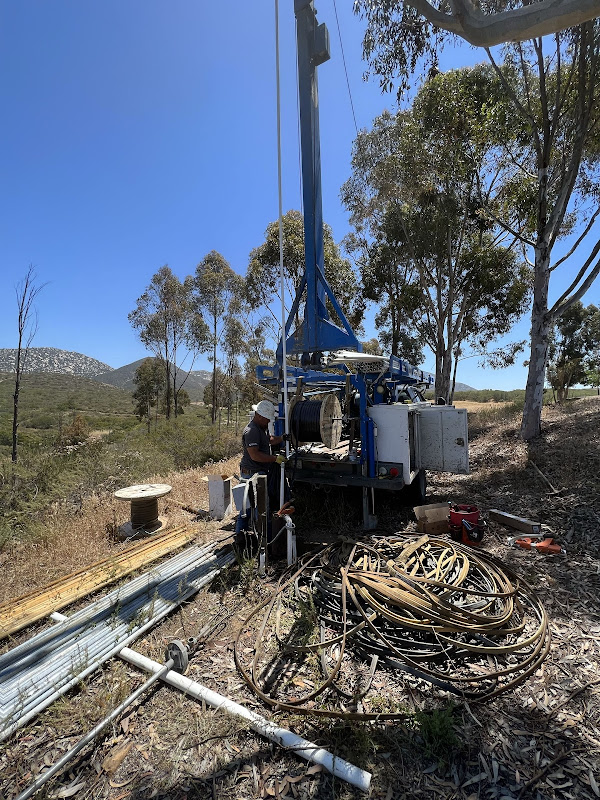
Southern California Well Service provides complete agricultural well services to Homeland farmers, ranchers, and growers. From irrigation wells to livestock watering systems, we have the expertise and equipment to keep your operation running.
📋 In This Guide
Need Agricultural Well Service in Homeland?
We serve Homeland and all of Riverside County. Licensed C-57 contractor with 30+ years experience.
Call: (760) 440-8520Our Agricultural Well Service Services
- Agricultural well drilling
- Irrigation well installation
- High-capacity pump systems
- Variable frequency drives (VFDs)
- Well rehabilitation for increased yield
- Water quality testing for crops
- Livestock watering systems
- 24/7 emergency agricultural service
Well Data: Homeland, California
337'
Average Depth
2–1325'
Depth Range
82
Wells on Record
Riverside
County
Based on California DWR well completion reports. Homeland's average well depth is close to the Riverside County average of 320 feet.
With 82 wells on record, Homeland has a growing well infrastructure. The wide depth range of 2 to 1325 feet reflects the varied terrain and geology across Homeland's landscape. Shallower wells typically tap into alluvial aquifers near drainages, while deeper wells penetrate mixed alluvial deposits and crystalline basement rock of the Peninsular Ranges to reach more reliable water sources.
At an average depth of 337 feet, agricultural wells in Homeland require high-capacity pumps sized for significant lift — typically 1 to 5 HP depending on flow rate and total dynamic head. See detailed well depth data for Homeland →
Agricultural Water Needs in Homeland
Homeland's Riverside County location means hot inland temperatures that can push daily irrigation demand to 5,000+ gallons per acre during peak summer months. Agricultural wells here must be sized for sustained high-volume pumping, often 15-50 GPM from alluvial or weathered rock aquifers.
Common agricultural well setups in Homeland include variable frequency drives (VFDs) to match pump output to demand, storage tanks for buffer capacity, and booster systems for pressurized irrigation lines. We size every agricultural pump to the well's tested yield — oversizing wastes energy and can damage the well by drawing the water level down too fast.
Serving Homeland and Surrounding Areas
In addition to Homeland, we provide agricultural well services throughout Riverside County, including nearby communities:
- Hinkley (avg well depth: 160')
- Home Gardens
- Idyllwild (avg well depth: 389')
- Imperial Beach (avg well depth: 93')
Why Homeland Chooses SCWS
✓ Local Expertise
We know Riverside County geology and wells
✓ Fast Response
Same-day service for Homeland
✓ Fair Pricing
Honest quotes, no surprises
✓ Quality Work
4.9★ rating, hundreds of reviews
Our Locations
Agricultural Wells in Homeland: Small Farms and Pasture Between Hemet and Menifee
Homeland is a small unincorporated community in western Riverside County, tucked between Hemet to the east, Menifee to the west, and Romoland and Nuevo nearby along Highway 74 and the Ramona Expressway. It is a place of larger rural lots, modest farms, horse properties, and open pasture, the kind of working landscape that has held onto its agricultural character even as suburbia has crept toward it from Menifee and Murrieta. Many Homeland properties draw their irrigation and stock water from private wells rather than district supply, which keeps watering costs down for pasture, small orchards, and livestock. When a pump quits or a well loses pressure during a 100-degree Homeland summer, the animals and crops feel it immediately, so dependable well service is essential.
Southern California Well Service has worked the wells of western Riverside County for more than 30 years, and Homeland sits squarely in our service area. Wells here draw from the mixed alluvial sediments of the valley floor and, at greater depth, from the crystalline basement rock of the Peninsular Ranges. Yields vary with location and depth, so understanding what a given Homeland parcel sits on, and sizing the pump and storage to match, is what separates a reliable agricultural supply from a well that disappoints during peak demand.
How an Agricultural Well System Works in Homeland
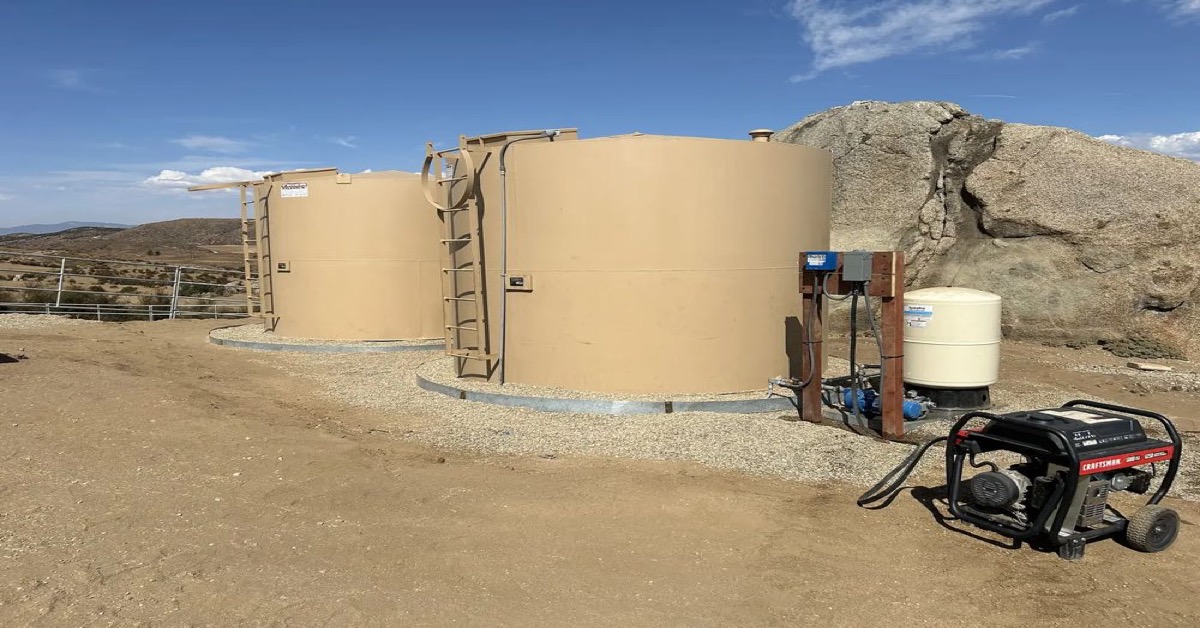
An agricultural well on a Homeland farm or ranch is a coordinated system rather than a single pump. The well and its submersible pump are sized to the well's tested yield and set at the right depth in the casing. Many properties route water into a storage tank, which buffers the gap between a steady well and a heavy peak-hour irrigation or stock-watering draw. A pressure tank with a pressure switch handles simpler setups, while a constant-pressure booster system delivers steady pressure to sprinklers, drip lines, and stock troughs across the property. A variable-frequency drive increasingly ties it together, softening pump starts, holding pressure constant, and protecting both the motor and the water level in the well.
For pasture and small-farm operations, the storage-and-booster approach is often the smartest design. A well with a modest sustained flow can still water several acres of pasture and a herd of livestock if it fills a large tank during off-peak hours and a booster handles peak demand. We size every pump and tank to the well's real, tested yield, because over-pumping draws the water level down too fast, risks pulling air, and can burn out the motor.
Common Agricultural Well Problems Around Homeland
Drought Drawdown and Declining Water Levels
Like much of inland Riverside County, the groundwater under Homeland has seen levels decline through repeated dry years and steady pumping. Owners notice it as a well that produced reliably for years now coming up short late in the season, with pressure that fades in the afternoon and recovers overnight, or water that spits air. Remedies range from lowering the pump deeper in the casing to follow the water table down, to rehabilitating or hydrofracturing the well to recover yield.
Rising Demand on Working Properties
Homeland parcels change with their owners and uses. A property that watered a small pasture may add horses, a vegetable plot, or a young orchard, pushing demand past what the existing well, pump, and tank were sized for. When an owner tells us the well "won't keep up like it used to," the cause is frequently growing demand rather than a failing well, and added storage with a properly sized booster usually solves it.
Sediment and Water Quality
Wells in the western Riverside basins can pull fine sand and sediment that clogs emitters and sprinklers and wears pumps. Inland water also tends toward hardness, and some wells carry elevated iron, manganese, nitrates, or salts that stain equipment, foul irrigation hardware, and matter for both crops and livestock. Sediment filtration protects the system, and where mineral content is a problem, treatment or softening keeps it clean. Periodic water testing is smart insurance for any farm or ranch using a well for both irrigation and stock water.
Aging Pumps and Pressure Equipment
Agricultural pumps work hard, and components wear out. A failed pressure switch, a waterlogged pressure tank, or a tired submersible motor all show up as erratic pressure or repeated breaker trips. Replacing these before the motor fails on the hottest day of the year protects both the operation and the budget.
What to Check Before You Call
A few quick checks can pinpoint the problem and sometimes save a service call:
- Power and breakers. Confirm the well breaker and pump-house disconnect are on, and look for a tripped GFCI after any outage.
- Pressure gauge. Note where pressure cuts in and out; a gauge stuck at zero or pinned high points to a switch or tank fault.
- Pressure tank. Tap it; a tank that feels heavy with water all the way up has lost its air charge and is short-cycling the pump.
- Air or sputtering. Spitting troughs, sprinklers, and faucets usually mean the water level has dropped near the pump intake.
- Storage tank level. On a storage-and-booster system, confirm the tank is refilling overnight rather than staying low.
- Recent changes. Added livestock, new irrigation zones, or a dry winter all change what the well can deliver.
If power is on, the tank is charged, and you still have no water or weak pressure, it is time for a licensed professional rather than risking a pump pull yourself.
When to Call a Professional
Call us when you have no water, when pressure fades during irrigation or stock watering and recovers overnight, when you see sand or air in the lines, or when the pump runs constantly without building pressure. These point to pump, water-level, or control problems that need proper diagnosis. As a licensed C-57 well-drilling contractor, we carry the pump-pulling rigs, flow-test equipment, and rehabilitation tools that western Riverside County agricultural wells require. Our diagnostic visit is a flat $125, credited toward any repair we perform, so you only pay once to find and fix the problem.
What Agricultural Well Work Costs in Homeland
Every property is different, but these realistic ranges help Homeland farmers and ranchers budget. A failing pressure switch runs about $150 to $350. A replacement pressure tank generally falls between $600 and $1,500 by size. A submersible pump replacement typically runs $2,500 to $5,500, with deeper sets and larger horsepower at the high end. Sediment filtration for sand runs roughly $300 to $900, and iron, manganese, or hardness treatment with a softener-style system runs $1,500 to $3,500. A constant-pressure or booster system sized to feed irrigation and stock water evenly runs $2,000 to $4,500.
For wells that have lost yield, hydrofracturing to open new fractures runs roughly $3,000 to $8,000 and often restores production far more cheaply than redrilling. When a well truly cannot be saved, a new turnkey agricultural well typically runs $18,000 to $42,000 depending on depth, casing, and pump system. Properly decommissioning an abandoned well to Riverside County standards runs $1,500 to $5,000. We quote against your well's real numbers, plainly and without surprises.
Agricultural Well Service Across Western Riverside County
We serve Homeland and the surrounding western Riverside County communities, including Romoland, Nuevo, Hemet, Menifee, Winchester, and the small farms and ranches along the Ramona Expressway. Our crews understand both the alluvial basin wells of the valley floor and the deeper crystalline-rock wells of the area. Same-day emergency service is available, because a pasture, an orchard, or a herd of livestock cannot wait days for water in the inland Riverside heat.
Frequently Asked Questions: Homeland Agricultural Wells
How deep are agricultural wells in Homeland?
Homeland wells vary widely, with depths recorded from very shallow to well over 1,000 feet and an average around 337 feet. Shallower wells tap alluvial aquifers near drainages, while deeper wells reach into mixed deposits and crystalline basement rock. Depth alone does not predict yield, so we rely on local experience and well testing.
My well produced fine for years and now runs short. Why?
Groundwater levels across western Riverside County have declined through dry years and steady pumping, so a pump that once sat well below the water may now be near the producing zone. Late-season air, sputtering, and afternoon pressure loss are classic signs. Solutions range from lowering the pump to rehabilitating or hydrofracturing the well.
Can one well handle both pasture irrigation and livestock?
Often yes. By pairing the well with a storage tank that fills overnight and a booster that meets peak demand, a single well can supply pasture irrigation and stock troughs together. The key is matching storage and pumping to the well's real sustained yield.
Is my well water safe for crops and livestock?
It usually is, but inland Riverside wells can carry hardness, iron, manganese, nitrates, or salts worth testing for, especially when the same water serves both irrigation and animals. Sediment filtration handles sand, and where mineral or nitrate content is a concern, treatment protects equipment, crops, and livestock alike.
Do you offer same-day service in Homeland?
Yes. We provide same-day emergency agricultural well service throughout Homeland, Romoland, Nuevo, Hemet, and Menifee. Call (760) 440-8520 or text (619) 259-0410; our diagnostic visit is $125 credited toward any repair.
Should I repair my old well or drill a new one?
Repair is almost always cheaper first. Pump replacement, added storage, or hydrofracturing usually costs a fraction of a new turnkey well, which can run $18,000 to $42,000. We evaluate whether your existing well can be saved before recommending a replacement.
Keep Your Homeland Farm or Ranch Watered
Licensed C-57 contractor, 30+ years in western Riverside County, 4.9 stars, same-day emergency service. Call or text for a free estimate on agricultural well service in Homeland.
Call: (760) 440-8520For agricultural applications, we install high-capacity Franklin Electric and Grundfos submersible pumps from 7.5 to 25+ HP. Grundfos SQFlex solar pumps are available for off-grid ranch locations.
Frequently Asked Questions
How much water does an agricultural well produce?
Agricultural wells in Southern California typically produce 20-100+ GPM depending on the aquifer. Irrigation needs vary widely — a small orchard may need 15-20 GPM while larger operations require 50-100+ GPM.
What type of pump is best for agricultural wells?
For high-volume agricultural wells, we typically install large-diameter submersible pumps (7.5-25+ HP) from Franklin Electric or Grundfos. Solar-powered pump systems are increasingly popular for remote ranch locations.
How deep are agricultural wells in Southern California?
Agricultural wells in our service area range from 200 to 1,000+ feet. Desert and inland valley locations often require deeper wells (400-800 ft), while coastal and foothill areas may produce at 200-400 feet.
Related Articles
Continue learning about well maintenance and troubleshooting