Agricultural Well Service in Lakeview
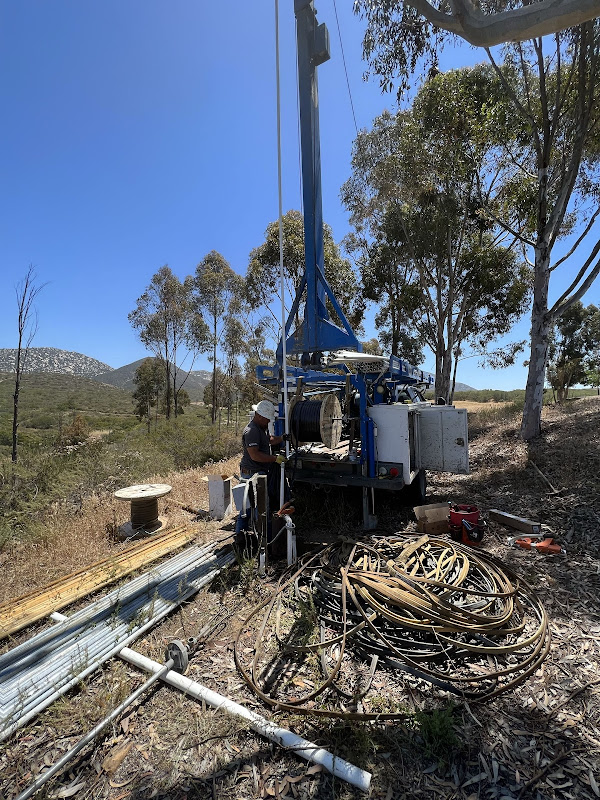
Southern California Well Service keeps the farms, poultry operations, and row-crop fields of Lakeview supplied with water. Working across the San Jacinto Valley between Nuevo and Hemet, our licensed C-57 crews drill, repair, and maintain agricultural and irrigation wells built for the high, steady demand that valley-floor farming requires.
In This Guide
Need Agricultural Well Service in Lakeview?
We serve Lakeview and all of Riverside County. Licensed C-57 contractor, 30+ years of experience, 4.9-star rated, with same-day emergency response. Our diagnostic visit is $125 and is credited toward any repair.
Call: (760) 440-8520Lakeview is a small farming community on the floor of the San Jacinto Valley in western Riverside County, set between Nuevo to the west and the city of San Jacinto and Hemet to the east. Unlike the granite-hill communities to the south and west, Lakeview sits on a deep alluvial basin: layers of sand, gravel, silt, and clay carried down over thousands of years by the San Jacinto River and its tributaries. That basin is what makes the valley such productive farmland, supporting poultry ranches, hay and forage, and a patchwork of row crops, and it is also why the agricultural wells here behave very differently from the fractured-rock wells common in the surrounding hills.
Because water in an alluvial basin is stored in the pore spaces between sand and gravel grains, a properly sited well in Lakeview can often sustain a much higher, steadier flow than a hard-rock well of the same depth. That is good news for irrigation, but it comes with its own set of challenges: regional groundwater levels rise and fall with rainfall and pumping across the whole valley, the granular formation can let sand into the well if the screen and gravel pack are not right, and the valley's groundwater carries notable hardness and, in places, nitrate from a long agricultural history. Knowing the San Jacinto basin is the key to building and maintaining a well that performs year after year.
How Agricultural Wells Work in the San Jacinto Valley
A Lakeview ag well draws from the granular aquifer through a slotted screen surrounded by a gravel pack, which holds back the surrounding sand while letting water in. A submersible pump set below the water level pushes water up the column pipe to the surface, where it feeds your irrigation mains, poultry-house watering lines, or storage. The pump is controlled by a pressure switch or, on more demanding systems, a variable frequency drive or constant-pressure controller that smooths output and protects the motor from constant on/off cycling.
Sizing is everything in the valley. A well that can sustain 30, 50, or more gallons per minute is wasted if the pump is too small, and a well that can only sustain 20 GPM will be damaged by a pump that tries to pull 60. We base every installation on a proper yield test, then match the pump and motor horsepower to the well's safe, sustainable flow and the total lift to your fields. For poultry operations, where water has to be absolutely continuous, we frequently design in redundancy and storage so a single component failure never leaves the birds without water. For row crops and forage, the priority is usually steady high-volume delivery during the May-through-October irrigation peak, when valley demand and summer heat are both at their highest.
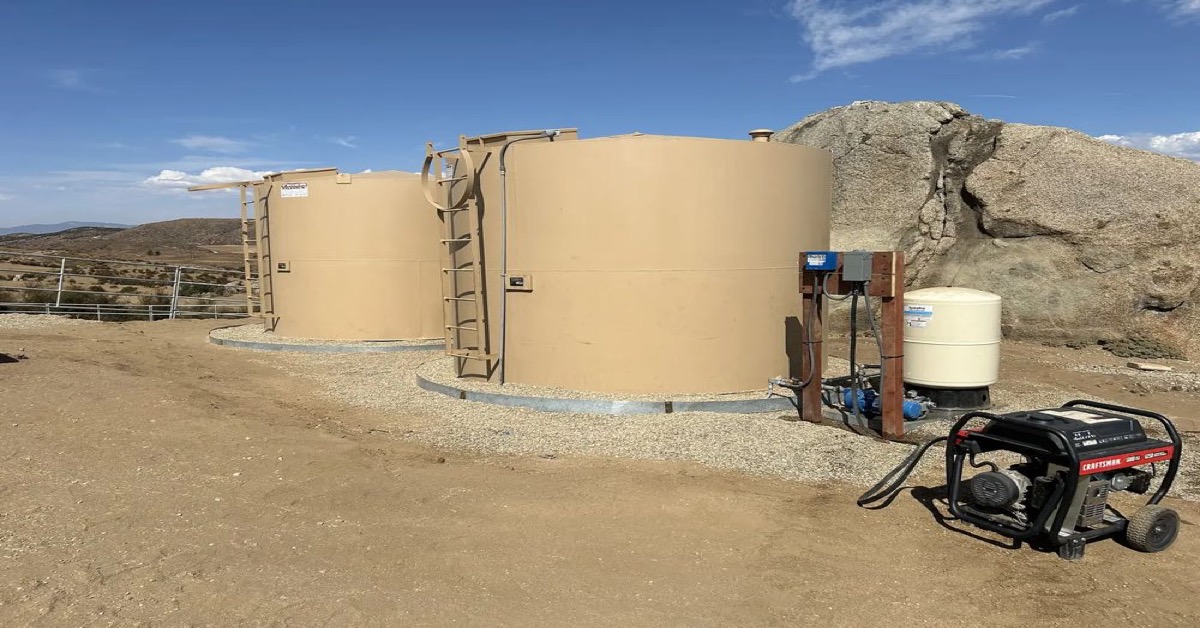
Storage tanks earn their keep here too. Even a strong valley well benefits from a tank that fills overnight at off-peak power rates and during low-demand hours, then supplies a booster pump that pressurizes the system when several zones or barns call for water at once. This buffer reduces peak draw on the well, flattens your power bill, and gives you a reserve if the pump ever goes down mid-cycle.
Common Local Well Problems
In the San Jacinto Valley, the most frequent agricultural well issues we are called for include:
- Sand pumping. The granular aquifer can send fine sand into the well when the screen wears, the gravel pack settles, or the pump is oversized. Sand wears out pumps fast, clogs poultry waterers and drip emitters, and muddies the supply. It needs prompt attention.
- Falling water levels in dry years. Because the whole valley draws on the same basin, several dry seasons of heavy pumping can lower the regional water table. A pump that used to stay submerged may begin pulling air and losing prime.
- Hard-water scaling. San Jacinto Valley groundwater is on the hard side. Scale builds up inside pipes, pump components, evaporative coolers in poultry houses, and emitters, gradually choking flow.
- Nitrate in the supply. Decades of fertilizer use and septic systems on the valley floor mean some wells show elevated nitrate. This matters for any well also used for drinking water and for certain livestock.
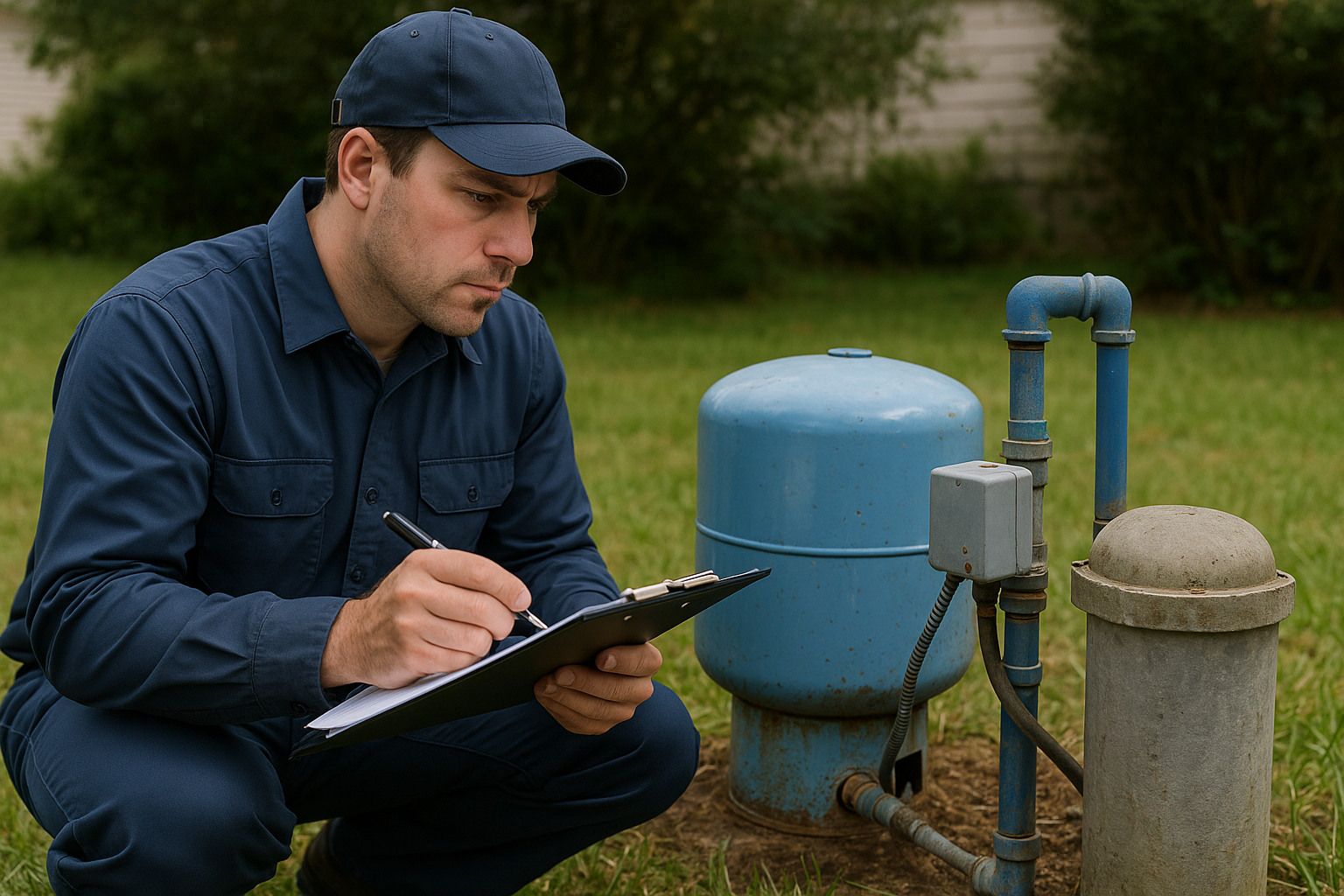
- Short-cycling and pressure-tank failure. A waterlogged pressure tank or failing switch makes the pump slam on and off, burning out the motor and surging your irrigation pressure.
- Aging pumps and motors. Many valley wells have run for decades. A pump that draws more amps than it used to, or that has lost capacity, is usually near the end of its service life.
What to Check First
Before you call, a quick walk-around can narrow things down and may save a trip charge:
- Check the breaker and control box. Confirm the pump breaker has not tripped. If it resets and trips again right away, leave it off and call, because that points to a motor or wiring fault.
- Watch for sand. Run water into a clean bucket. Grit settling at the bottom is a strong sign of a screen or gravel-pack problem.
- Read the pressure gauge. Note the cut-in and cut-off pressures. Pressure that builds then collapses quickly usually means a tank or switch issue.
- Inspect your storage tank. Confirm it is filling to full during low-demand hours. If it never tops off, the well or pump may be underperforming.
- Note the timing. Does the problem appear only during peak summer irrigation, or all year? Seasonal-only trouble often points to declining water levels rather than equipment.
Leave the wellhead, wiring, and pump itself to a professional. Valley ag pumps hang on long strings of pipe and run on high-voltage circuits that are dangerous to handle without the right equipment and training.
When to Call a Professional
Call us immediately if your operation has lost water during the irrigation season, if you run a poultry operation and the watering lines have stopped, if the pump breaker keeps tripping, or if you see sand or a sudden change in water clarity. Those situations get worse and more costly the longer they wait. It is also worth a professional look when your power bill climbs without a change in use, when production drops off year over year, or when you are planning to add acreage or barns and need to confirm the well can keep up. Our $125 diagnostic is credited toward any repair, so getting a clear answer is rarely an expensive step.
Realistic Cost Ranges
Costs depend on depth, horsepower, and water quality, but these ranges are typical for agricultural well work in the Lakeview area. We provide a firm quote before any work starts.
- Pressure switch replacement: $150 to $350
- Pressure tank replacement: $600 to $1,500
- Submersible pump replacement: $2,500 to $5,500 depending on depth and horsepower
- Sediment / sand filtration system: $300 to $900
- Iron/manganese filtration or water softener for hard water: $1,500 to $3,500
- Constant-pressure or booster system: $2,000 to $4,500
- Well rehabilitation / hydrofracturing: $3,000 to $8,000
- New agricultural well (turnkey): $18,000 to $42,000
- Well abandonment / decommissioning: $1,500 to $5,000
- Diagnostic visit: $125, credited toward any repair
Our Lakeview Service Area
We serve Lakeview and the wider San Jacinto Valley from our Ramona and Anza offices, with crews working the valley floor regularly. That includes the farms and ranches around Nuevo, the agricultural land toward San Jacinto and Hemet, and the surrounding Perris, Romoland, and Homeland areas. Because we work the alluvial basin constantly, we understand its sand-prone formations, its hard water, and the high-volume pumping that valley agriculture demands. We are licensed (C-57, License #1013597), fully insured, and equipped for everything from a quick pressure-switch swap to drilling a new high-capacity irrigation well.
Get a Free Estimate
Call now for agricultural well service in Lakeview, or text us anytime.
(760) 440-8520Frequently Asked Questions
How deep are agricultural wells in Lakeview?
Because Lakeview sits on the alluvial San Jacinto Valley basin, wells are often shallower than in the surrounding granite hills. Many valley ag wells fall in the roughly 150 to 400 foot range, tapping the sand-and-gravel aquifer, though depth varies with where the most productive layers are found. A test bore and yield test confirm the right depth for your parcel.
My well is pumping sand. What causes that and can you fix it?
Sand usually means the well screen has worn, the gravel pack has settled, or the pump is pulling harder than the formation can supply. We can install or correct sediment filtration, re-evaluate pump sizing, and in many cases rehabilitate or rescreen the well to stop sand at the source before it destroys your pump and clogs your irrigation lines.
Is the hard water in the valley a problem for my crops or poultry?
San Jacinto Valley water tends to be hard, which scales up pipes, emitters, and evaporative coolers over time. For most irrigation it is manageable, but scaling can reduce flow and efficiency. We can install softening or scale-control equipment where it matters most, such as drip systems and poultry-house cooling lines.
Should I test my Lakeview well for nitrate?
Yes, periodic testing is wise. The valley's long agricultural history and septic use mean nitrate can be elevated in some wells. Testing matters most for any well also supplying drinking water and for sensitive livestock. We can advise on testing and on treatment if levels come back high.
Can you build in redundancy for my poultry operation?
Absolutely. For poultry and other operations where water cannot be interrupted, we design systems with storage reserves, backup pumps, and controls that keep water flowing even if a component fails. We will tailor the level of redundancy to your flock size and risk tolerance.
How quickly can you respond to a Lakeview emergency?
We offer same-day emergency service across Lakeview and the San Jacinto Valley. If your irrigation or livestock water has stopped, call (760) 440-8520 or text (619) 259-0410 and we will prioritize your call.
Related Articles
Continue learning about well maintenance and troubleshooting