
Agricultural Well Service in Oak Hills
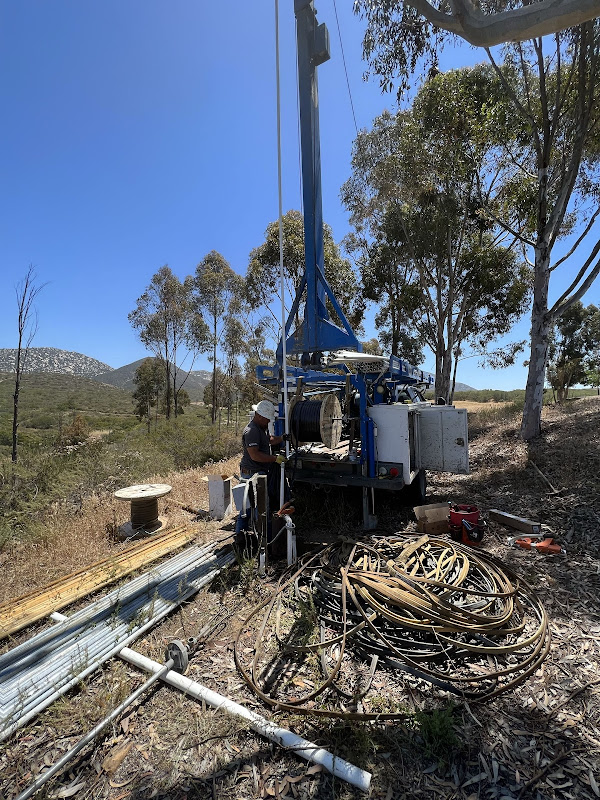
Southern California Well Service provides complete agricultural well services to Oak Hills farmers, ranchers, and growers. From irrigation wells to livestock watering systems, we have the expertise and equipment to keep your operation running.
Agricultural and Horse-Property Wells in Oak Hills, California
Oak Hills is a rural-residential community in the high desert of San Bernardino County, tucked between Hesperia and Phelan along the southern edge of the Victor Valley where the desert floor rises toward the San Gabriel Mountains. It is horse country: large lots, hobby farms, small orchards, pasture, and ranchettes spread across decomposed-granite and alluvial ground. Because Oak Hills sits outside the reach of any irrigation district, the water that keeps a pasture green, fills the stock troughs, and runs the drip lines comes almost entirely from private wells. Southern California Well Service, a licensed C-57 contractor with more than 30 years in the Mojave high desert, drills, repairs, and maintains those wells throughout Oak Hills and the surrounding Victor Valley.
What sets Oak Hills apart from valley-floor farming is depth. As the land climbs toward Phelan and the foothills, the water table tends to sit deeper, and wells here often have to be drilled well down through alluvium and weathered granite to reach a dependable water-bearing zone. Deeper wells mean more lift, larger pumps, and components that have to be sized correctly the first time. A well that was fine for a single household years ago is frequently undersized once a property adds horses, a small grove, or irrigated pasture, and that mismatch is one of the most common reasons Oak Hills owners call us.
Components of an Oak Hills Irrigation Well System
A working agricultural well in Oak Hills is a system of matched parts. It starts with the cased borehole and a submersible pump set at the right depth, connected by drop pipe and wire to a control box or variable frequency drive (VFD) at the surface. From there, water typically moves into a storage tank, then through a booster or constant-pressure pump that feeds the pasture sprinklers, drip lines, and troughs. On deeper Oak Hills wells, the storage-tank approach is almost standard: a moderately sized pump fills the tank steadily over the day, and the booster delivers the high flow and pressure needed for irrigation without forcing the deep pump to work against both lift and peak demand at the same time.
Sizing matters more here than almost anywhere. With significant lift, an oversized pump can pull the water level down past the pump intake, draw in air and sand, and burn out an expensive motor. An undersized pump never delivers the gallons per minute a horse property or grove needs during the hot months. We test a well's sustainable yield first, then size the pump and tank to that number, not to wishful thinking. Many Oak Hills properties run comfortably in the 10 to 40 GPM range depending on acreage and what is being watered, with storage smoothing out the peaks.
Constant-pressure VFD systems are a popular upgrade in Oak Hills because they hold steady pressure across long supply runs to far corners of a property and reduce the hard on-off cycling that wears out deep-set pumps. For parcels far from the meter, solar pumping is a workable option for keeping stock tanks full.
Typical Well Issues We See in Oak Hills
The high-desert setting and deeper wells around Oak Hills produce a recognizable set of problems:
- Deep-pump failures. Pumps set deep in Oak Hills wells run hard during summer irrigation. Age, heat, sediment, and rural voltage swings eventually take a motor down, and replacing a deep pump is a bigger job than a shallow one.
- Low or dropping pressure. Pressure that fades during irrigation often traces to a failing pump, a waterlogged pressure tank, or a water level that has fallen below where the pump can keep up.
- Hard water and scale. Desert groundwater here carries calcium, iron, and manganese that scale pipes, stain concrete and fixtures, and clog drip emitters over the seasons.
- Sand and grit. Wells finished in weathered granite and alluvium can produce fine sand that chews up impellers and plugs irrigation lines.
- Short-cycling. A worn pressure switch or a tank that has lost its air charge makes the pump kick on and off constantly, which is hard on a deep pump and shortens its life.
- Outgrown systems. Adding horses, a barn, an orchard, or irrigated pasture pushes an older domestic-sized well and pump past what it was built to do.
Steps You Can Check First
Before calling, a quick walk-through can narrow down the problem:
- Check the breaker and control box. Confirm the well circuit has power and has not tripped. Deep-well pumps draw hard on startup and can trip a marginal breaker, especially in heat.
- Watch the pressure gauge. Note whether pressure builds normally, stalls below cutoff, or bounces. Each pattern points somewhere different.
- Tap the pressure tank. A tank that sounds solid all the way up, or a pump short-cycling every few seconds, usually means a failed bladder or lost air charge.
- Look at the water. Sand, cloudiness, or new staining tells us about screen wear and pump setting.
- Walk the lines. A break in a long desert supply run can look exactly like a weak pump.
Do not attempt to pull a deep submersible pump or open the electrical box yourself. Deep pumps are heavy and awkward, the wiring is dangerous, and a mistake can drop equipment into the casing. That is a job for a properly equipped crew.
When It Is Time to Call Us
Reach out when the water stops, when pressure or flow drops far enough to stress livestock or a crop, when the water turns sandy or smells of sulfur, or when the pump cycles rapidly. On deeper Oak Hills wells these symptoms usually mean a downhole problem that needs the right rig and tooling to diagnose and fix safely. We run same-day emergency calls across Oak Hills and the Victor Valley because a horse property cannot wait. Our diagnostic visit is $125 and is credited toward any repair we complete.
What Well Work Typically Costs in Oak Hills
Costs vary with depth and pump size, which run higher than average in Oak Hills, but these ranges are realistic starting points:
- Pressure switch: $150 to $350
- Pressure tank: $600 to $1,500
- Submersible pump replacement: $2,500 to $5,500, toward the higher end for deep-set pumps
- Sediment filtration: $300 to $900
- Iron, manganese, or hardness treatment / softener: $1,500 to $3,500
- Constant-pressure or booster system: $2,000 to $4,500
- Hydrofracturing to improve a weak well: $3,000 to $8,000
- New turnkey well: $18,000 to $42,000, with deeper Oak Hills wells trending upward
- Abandonment / decommissioning: $1,500 to $5,000
We provide written, itemized estimates before any work, and the $125 diagnostic is credited toward the repair.
Serving Oak Hills and the Victor Valley
From our Ramona and Anza offices, we serve well owners across Oak Hills and the surrounding San Bernardino County high desert, including Hesperia, Phelan, Victorville, Apple Valley, Pinon Hills, Wrightwood, and Summit Valley. We know how deep these wells run, how the decomposed-granite and alluvial ground behaves, and what it takes to keep a horse property or small grove watered through a desert summer. Whether you are putting in a new well or nursing an older one along, we size and service systems for Oak Hills conditions.
More Agricultural Well Resources
- Agricultural Well Guide
- Ranch Water Well Systems: Complete Guide
- Agricultural Well Service in Hesperia
- Agricultural Water Rights in California
Frequently Asked Questions
Why are wells in Oak Hills deeper than in the valley below?
Oak Hills sits where the high desert begins climbing toward Phelan and the San Gabriel foothills, and the water table generally sits deeper here than on the valley floor. Wells often go through alluvium and weathered granite before reaching a reliable water-bearing zone, which is why deeper drilling and larger pumps are common.
How much water does a horse property in Oak Hills need?
It depends on how much pasture and how many animals you keep. Many properties do well in the 10 to 40 GPM range with a storage tank buffering peak demand. The goal is to match the system to the well's tested sustainable yield rather than overdraw a deep well.
My pump runs but pressure keeps dropping. What is wrong?
Common causes are a waterlogged pressure tank, a worn pump losing capacity, or a water level that has fallen below where the pump can keep up. On deeper Oak Hills wells, drawdown during heavy irrigation is a frequent culprit. A diagnostic visit pinpoints which it is.
Do you treat hard water and iron staining?
Yes. High-desert groundwater around Oak Hills is typically hard and often carries iron and manganese. Based on a water test we install sediment filtration, iron and manganese treatment, or softening systems, usually in the $300 to $3,500 range depending on your flow.
Can you upgrade an old domestic well for irrigation use?
Often, yes. If the well itself produces enough water, we can add storage, a booster or constant-pressure system, and proper filtration to support pasture and orchard irrigation. If yield is the limiting factor, hydrofracturing or a new well may be the better path. We assess and advise based on a draw-down test.
How quickly can you get to Oak Hills?
We offer same-day emergency service throughout Oak Hills and the Victor Valley, with lost-water and pump-failure calls prioritized. Call (760) 440-8520 or text (619) 259-0410.
Reliable Agricultural Well Service in Oak Hills
Deep-well specialists. Licensed C-57 contractor, 30+ years in the high desert, 4.9-star rated, same-day emergency service. Call or text for a free estimate.
Call: (760) 440-8520