Agricultural Well Service in Perris
Southern California Well Service provides complete agricultural well services to Perris farmers, ranchers, and growers. From irrigation wells to livestock watering systems, we have the expertise and equipment to keep your operation running.
In This Guide
- Need Agricultural Well Service in Perris?
- Groundwater and Farm Wells in Perris
- How an Agricultural Well System Works
- Common Well Problems on Perris Farms
- What to Check Before You Call
- When to Call a Licensed Pro
- What Agricultural Well Work Costs
- Serving Perris and Nearby Areas
- Why Perris Growers Choose SCWS
- Frequently Asked Questions
- Our Locations
Need Agricultural Well Service in Perris?
We serve Perris and all of Riverside County. Licensed C-57 contractor with 30+ years of well experience and same-day emergency response.
Call: (760) 440-8520Perris sits in the wide, hot bowl of the Perris Valley, where the San Jacinto River drains south toward Canyon Lake and the land has supported dairies, poultry ranches, alfalfa, small grains, and horse property for generations. Even as subdivisions like Green Valley, May Ranch, and the Villages of Avalon have spread across the valley floor, a working ring of irrigated parcels remains in Mead Valley, Good Hope, Romoland, and the open ground east toward the Lakeview hills. For those growers and ranchers, a dependable private well is not a convenience but the whole operation, and Southern California Well Service has spent more than three decades keeping that water moving.
Groundwater and Farm Wells in Perris
The Perris Valley groundwater basin is a classic inland Riverside County setting: a floor of alluvial sand, gravel, and clay washed down from the surrounding hills, sitting on top of weathered and fractured granitic basement rock of the Peninsular Ranges. Where a well lands on that map makes a real difference. Parcels near the valley center and the old San Jacinto River channel often tap productive alluvial layers at moderate depth, while properties pushed up against the Bernasconi Hills, the Lakeview Mountains, or the rising ground toward Gavilan Hills frequently have to drill deeper and rely on fractures in the bedrock for yield.
Two things shape almost every agricultural well decision out here. The first is heat: Perris summers routinely run over 100 degrees, and irrigation demand climbs fast in July and August, so a farm well has to deliver sustained flow during the exact weeks the aquifer is under the most stress. The second is water level. Decades of pumping across western Riverside County have lowered groundwater in places, and a well that was comfortable at one depth twenty years ago may now be drawing close to its pump. We see both patterns constantly, and they drive how we size pumps, set intakes, and plan for the future.
How an Agricultural Well System Works
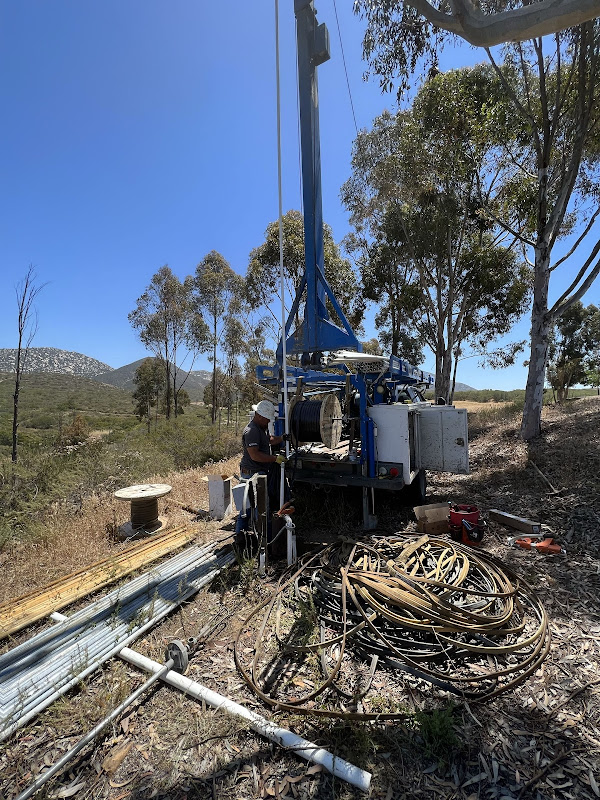
A farm well is a chain of parts, and the weakest link decides your reliability. At the bottom is the well itself: a drilled borehole lined with steel or PVC casing, with a perforated or screened section across the water-bearing zone and a gravel pack around it to keep sand out. A submersible pump hangs below the water level on a column of pipe, pushing water to the surface through that pipe and up into your delivery system.
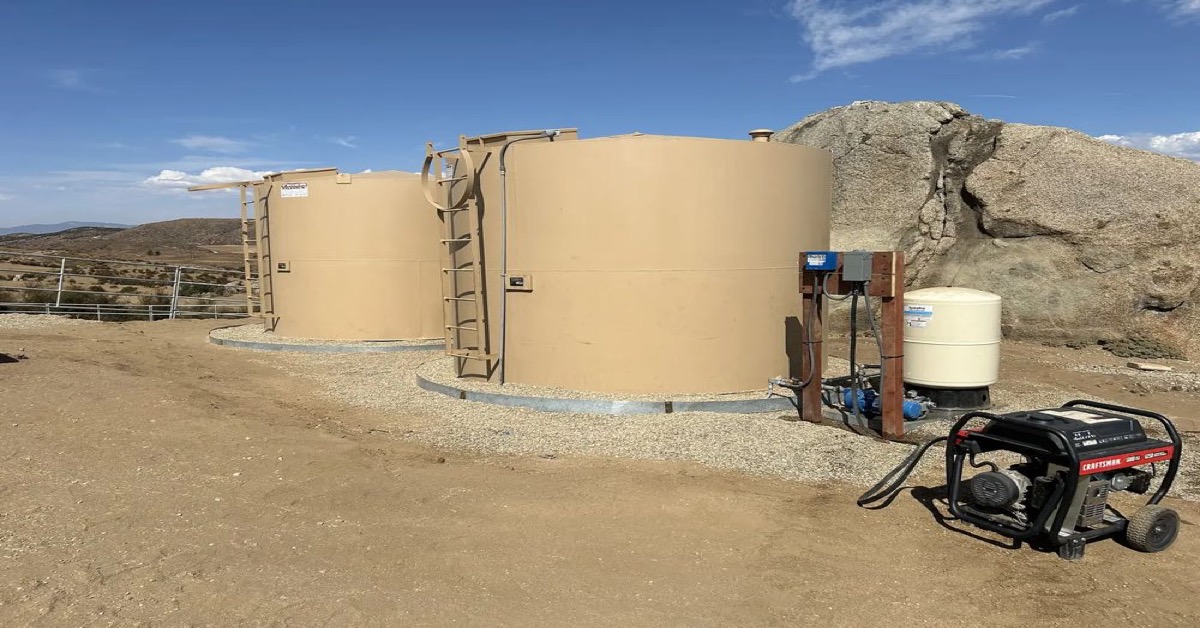
On most Perris operations that water then passes through a check valve, a pressure or flow control, and often a storage tank that lets a modest well keep up with a heavy irrigation set. Many growers run a variable frequency drive (VFD) so the pump ramps its speed to match demand instead of slamming on and off, which saves energy and is far gentler on the motor and the aquifer. From there, water feeds drip lines, micro-sprinklers, flood checks, or livestock troughs. We size every pump to the well's tested yield and the total lift, because an oversized pump will pull the water level down faster than the aquifer can recharge, draw in sand, and burn itself out.
Common Well Problems on Perris Farms
The single most common call we get from Perris Valley is dropping water level and falling flow. During a hot stretch the well that filled the tank all spring suddenly can't keep up, the pump starts cycling, and pressure sags by afternoon. Sometimes that is a true aquifer drawdown; just as often it is a pump set too high in the casing or an intake that needs to be lowered. Either way it is fixable once we measure the static and pumping levels.
Sand and sediment are the next big one. Perris alluvium carries fine sand, and a worn pump, a failing gravel pack, or a cracked screen will start pulling grit that chews up impellers, clogs drip emitters, and fills storage tanks with sediment. Mineral scale and hard water are common too; inland Riverside groundwater tends to be hard, and over years calcium and iron deposits coat screens and pump components and cut yield. We also see nitrate in parts of the valley with a long dairy and fertilizer history, which matters if the same well supplies a house or livestock. Finally there are the electrical and mechanical failures every well shares: failed pressure switches, waterlogged pressure tanks, seized motors, and pinhole leaks in the drop pipe that quietly steal pressure.
What to Check Before You Call
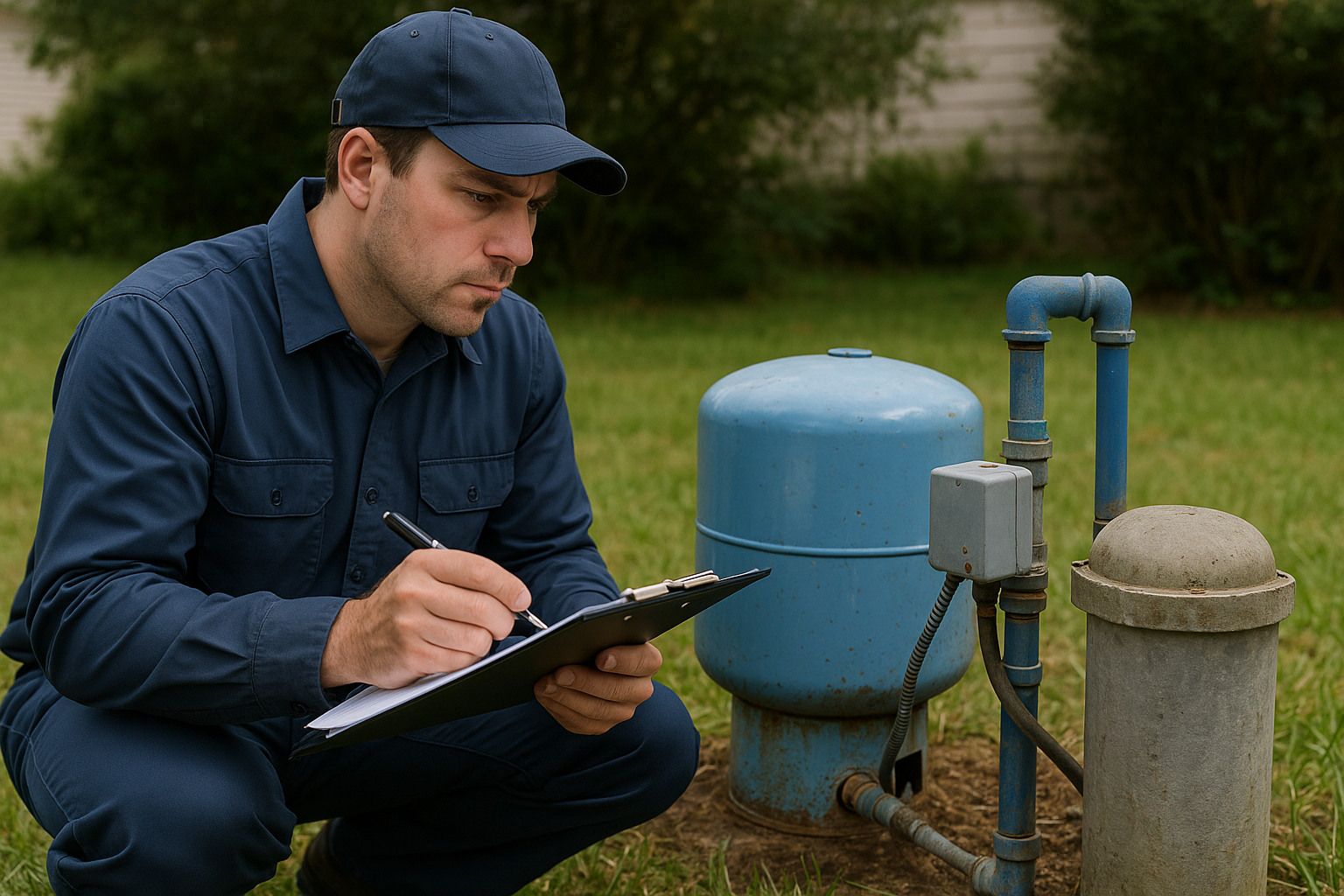
A few quick checks can tell you a lot and sometimes save a service call. Start at the breaker and the pump disconnect; agricultural circuits trip under heat and load, and a reset is occasionally all it takes. Look at your pressure gauge: if it reads zero with the pump running, you likely have no water reaching the surface; if it cycles rapidly, suspect a waterlogged pressure tank or a failed switch.
- Tap the pressure tank near the top and bottom: a healthy tank sounds hollow up top and solid below the waterline. All-solid usually means the bladder is shot.
- Watch your flow at the end of an irrigation set. Pressure that starts strong and fades over an hour points to drawdown or a tiring pump.
- Check for sand in a sample jar. A little settling is normal on an old well; a layer that keeps growing is a warning.
- Note any breaker that trips repeatedly. Do not keep resetting it, as that often means a failing motor or a wiring fault that needs a pro.
Write down what you see, including how deep your well is if you know it and when the pump was last serviced. That information lets our technician arrive with the right parts for a Perris-area well instead of making a second trip.
When to Call a Licensed Pro
Pulling a submersible pump from an agricultural well is not a do-it-yourself job. The pump may hang hundreds of feet down on heavy column pipe, the wiring carries 230 or 460 volts, and a dropped pump can wreck a good well. Call a licensed C-57 contractor any time the pump needs to come out, when a breaker trips repeatedly, when you smell something burning at the controls, when sand suddenly increases, or when flow has dropped enough to threaten a crop or a herd. In Perris summer heat a dead irrigation well becomes an emergency in hours, not days, which is why we keep same-day service available. We also handle the permitting and California DWR well completion paperwork when a well needs to be deepened, rehabilitated, or replaced.
What Agricultural Well Work Costs in Perris
Every well is different, but realistic ranges help you plan. A diagnostic visit is $125, and we credit it toward any repair we perform. Common figures for Perris-area work:
- Pressure switch replacement: $150 to $350
- Pressure tank replacement: $600 to $1,500
- Submersible pump replacement: $2,500 to $5,500 depending on depth and horsepower
- Sediment filtration: $300 to $900
- Water softener for hard water: $1,500 to $3,500
- Constant-pressure / booster system: $2,000 to $4,500
- Well rehabilitation: typically a few thousand dollars, far less than a new well
- Hydrofracturing to boost a low-yield well: $3,000 to $8,000
- New turnkey agricultural well: $18,000 to $42,000
On a tired Perris Valley well, rehabilitation or hydrofracturing is often worth trying before committing to a replacement, and we will tell you honestly when a well has reached the end of its life rather than selling you work you do not need.
Serving Perris and Nearby Areas
From our Ramona and Anza offices we cover Perris and the surrounding farm and ranch country throughout western Riverside County, including Mead Valley, Good Hope, Romoland, Homeland, Nuevo, Lakeview, and the parcels east toward Lake Perris and the San Jacinto Valley. Whether you run a few acres of pasture off Ellis Avenue or a larger irrigated operation out in Mead Valley, we bring the same pumps, rigs, and inland-Riverside experience to every call.
Why Perris Growers Choose SCWS
Local Expertise
We know Riverside County geology, aquifers, and farm wells
Fast Response
Same-day service for Perris growers and ranchers
Fair Pricing
Honest quotes, $125 diagnostic credited to the work
Quality Work
4.9-star rating across hundreds of reviews
Frequently Asked Questions
How deep are agricultural wells around Perris?
Most Perris Valley farm wells fall in the low hundreds of feet, with parcels on the alluvial valley floor often shallower than those pushed up against the surrounding hills, where wells may go deeper to reach water in fractured bedrock. The right depth depends on your exact location and the water-bearing zone, which we confirm by reviewing nearby well records and measuring water levels on site.
Why does my Perris well lose pressure on hot afternoons?
During July and August, irrigation demand peaks just as groundwater levels are lowest, so a marginal well can draw down faster than it recharges and the pump begins to cycle. The fix may be lowering the pump, adding storage, or rehabilitating the well, but it starts with measuring your static and pumping water levels to see what the aquifer is actually doing.
Is the groundwater in Perris hard or high in nitrate?
Inland Riverside County groundwater tends to be hard, and parts of the Perris Valley with a long dairy and fertilizer history can carry elevated nitrate. We test water quality and can recommend sediment filtration, softening, or treatment, which matters most when the same well also supplies a home or livestock.
Can you boost the yield of an older Perris well instead of drilling a new one?
Often, yes. Well rehabilitation to clean screens and the gravel pack, or hydrofracturing to open up fractures in the bedrock, can restore meaningful flow for a fraction of the cost of a new well. We evaluate the casing condition and yield first and only recommend replacement when a well has genuinely reached the end of its service life.
Do you offer emergency well service in Perris?
Yes. A failed irrigation or livestock well in Perris summer heat is an emergency, so we keep same-day service available. Call (760) 440-8520 and we will get a technician out with the parts most likely to get your water back on.
Do I need a permit for agricultural well work in Riverside County?
New wells, deepening, and destruction of an old well require permits through Riverside County, and completed work is filed with the California Department of Water Resources. As a licensed C-57 contractor we handle that permitting and paperwork for you, so the job is done legally and on record.
Our Locations
Get a Free Estimate
Call or text now for agricultural well service in Perris. Diagnostic visit is $125, credited toward any repair.
(760) 440-8520Related Articles
Continue learning about well maintenance and troubleshooting