Agricultural Well Service in Wynola
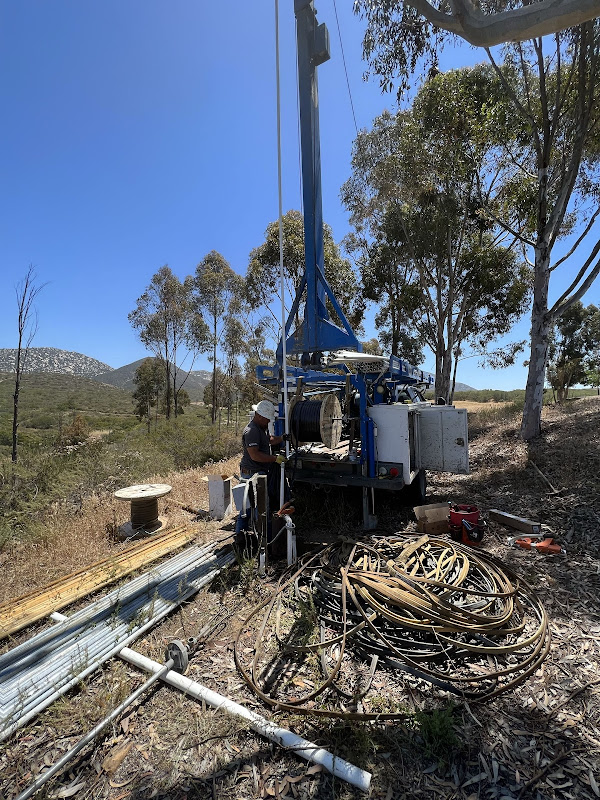
Southern California Well Service provides complete agricultural well services to Wynola farmers, ranchers, and growers. From irrigation wells to livestock watering systems, we have the expertise and equipment to keep your operation running.
📋 In This Guide
Need Agricultural Well Service in Wynola?
We serve Wynola and all of San Diego County. Licensed C-57 contractor with 30+ years experience.
Call: (760) 440-8520Our Agricultural Well Service Services
- Agricultural well drilling
- Irrigation well installation
- High-capacity pump systems
- Variable frequency drives (VFDs)
- Well rehabilitation for increased yield
- Water quality testing for crops
- Livestock watering systems
- 24/7 emergency agricultural service
Well Data: Wynola, California
290'
Average Depth
76–605'
Depth Range
8
Wells on Record
San Diego
County
Based on California DWR well completion reports. Wynola's average well depth is 160 feet shallower than the San Diego County average of 450 feet.
With 8 wells on record, Wynola has a growing well infrastructure. The wide depth range of 76 to 605 feet reflects the varied terrain and geology across Wynola's landscape. Shallower wells typically tap into alluvial aquifers near drainages, while deeper wells penetrate the Peninsular Ranges batholith, primarily granitic and metamorphic rock to reach more reliable water sources.
At an average depth of 290 feet, agricultural wells in Wynola require high-capacity pumps sized for significant lift — typically 1 to 5 HP depending on flow rate and total dynamic head. See detailed well depth data for Wynola →
Agricultural Water Needs in Wynola
Wynola's San Diego County location means a Mediterranean climate with dry summers that put heavy demand on irrigation wells from May through October. Agricultural wells here must be sized for sustained high-volume pumping, often 15-50 GPM from alluvial or weathered rock aquifers.
Common agricultural well setups in Wynola include variable frequency drives (VFDs) to match pump output to demand, storage tanks for buffer capacity, and booster systems for pressurized irrigation lines. We size every agricultural pump to the well's tested yield — oversizing wastes energy and can damage the well by drawing the water level down too fast.
Serving Wynola and Surrounding Areas
In addition to Wynola, we provide agricultural well services throughout San Diego County, including nearby communities:
- Woodcrest (avg well depth: 107')
- Wrightwood (avg well depth: 262')
- Yermo (avg well depth: 245')
- Yucaipa (avg well depth: 354')
Why Wynola Chooses SCWS
✓ Local Expertise
We know San Diego County geology and wells
✓ Fast Response
Same-day service for Wynola
✓ Fair Pricing
Honest quotes, no surprises
✓ Quality Work
4.9★ rating, hundreds of reviews
Our Locations
Agricultural Wells in Wynola: Apple Country at the Foot of Volcan Mountain
Tucked between Santa Ysabel and Julian along Highway 78/79, Wynola sits in the heart of San Diego County's mountain apple country at roughly 3,500 to 4,000 feet of elevation. The decomposed-granite soils, oak-studded meadows, and the cool air spilling off the Volcan Mountain foothills make this one of the few corners of Southern California where apple orchards, small vineyards, lavender fields, and hobby livestock thrive. Nearly every one of those operations runs on a private agricultural well. There is no municipal irrigation pipeline serving the orchards off Wynola Road or the spreads along Farmer Road toward Julian, so when a well loses pressure or a pump fails in the middle of a dry August, the trees, vines, and animals depend entirely on getting that system back online quickly.
Southern California Well Service has spent more than 30 years working the granite backcountry of San Diego County, and Wynola's geology is a familiar challenge. Wells here usually drill through a thin layer of decomposed granite and weathered overburden before reaching the fractured granitic bedrock of the Peninsular Ranges batholith. Water collects in the cracks and joints of that rock rather than in a deep sandy aquifer, which means yield can vary dramatically from one parcel to the next, even between neighbors. Understanding that fractured-rock behavior is the difference between a well that carries an orchard through the season and one that runs itself dry by July.
How an Agricultural Well System Works on a Wynola Property
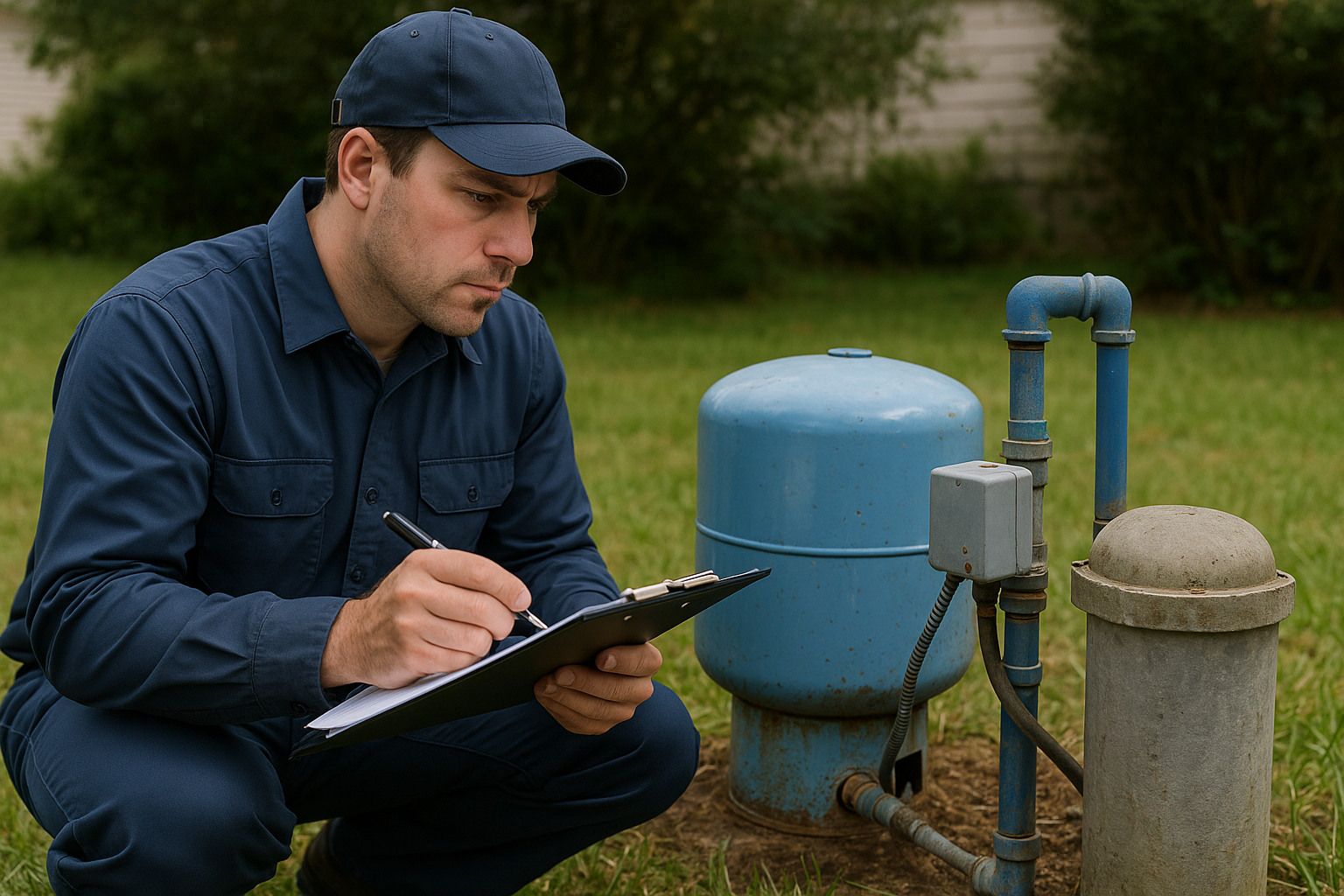
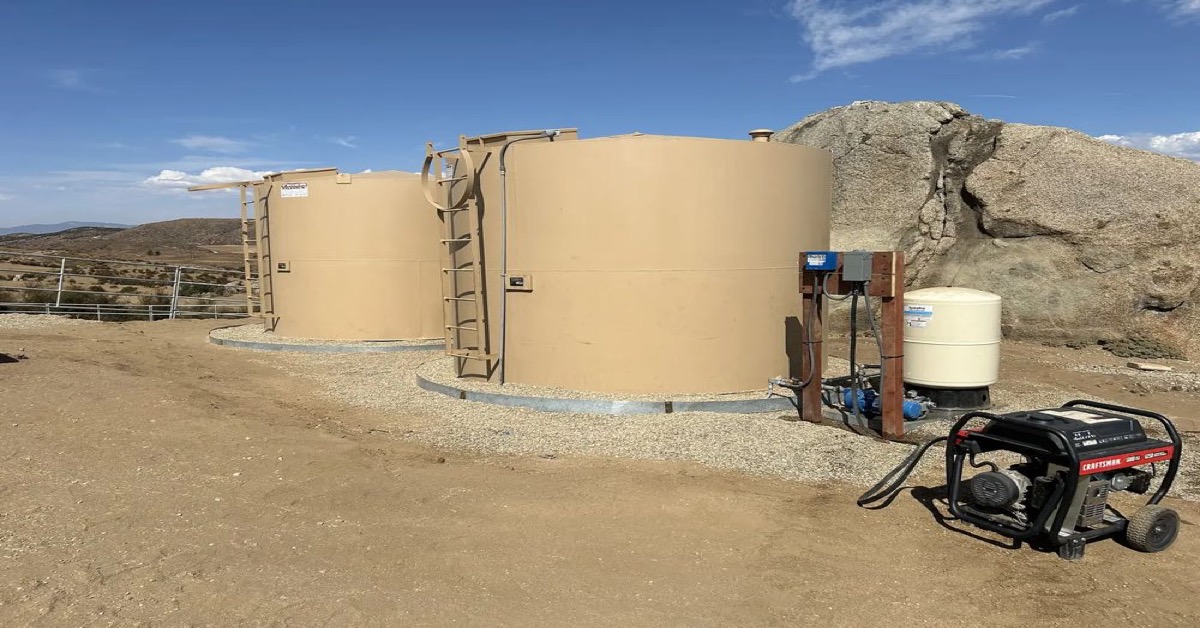
An agricultural well is more than a hole and a pump. On a typical Wynola apple or vineyard property, the system has four working parts that have to be matched to one another. First is the well itself and its submersible pump, set deep in the casing and sized to the well's tested yield. Second is the pressure or storage component, often a large atmospheric storage tank where fractured-rock wells are involved, because storing water over several hours lets a modest well keep up with a heavy afternoon irrigation draw. Third is the delivery side, which can be a pressure tank and pressure switch for a simple setup, or a constant-pressure booster pump feeding drip lines and micro-sprinklers across an orchard. Fourth is the control and protection layer: the pressure switch, control box, and increasingly a variable-frequency drive that ramps the pump up and down to protect both the motor and the water level in the well.
In fractured-granite country like Wynola, the storage-tank-plus-booster approach is often the smartest design. A well that tests at only 8 or 12 gallons per minute can still irrigate a respectable orchard if you let it fill a 2,500 or 5,000 gallon tank overnight, then draw from that tank with a booster during the hottest part of the day. We size every component to the actual sustained yield of your well, not to an optimistic number, because over-pumping a granite well simply lowers the water level until the pump sucks air and burns out.
Common Agricultural Well Problems in the Wynola Area
Drought Drawdown and Declining Water Levels
The single most common call we get from the Julian and Wynola backcountry is a well that produced fine for years and is now coming up short late in the season. After several dry winters, the static water level in fractured-rock wells drops, and a pump that used to sit comfortably below the water may now be near or above the producing zone. Symptoms include water that sputters with air, a pump that short-cycles, or pressure that fades in the afternoon and recovers overnight. Sometimes the fix is lowering the pump deeper in the casing; sometimes it is hydrofracturing the well to open new fractures and improve yield.
Increased Irrigation Demand
Apple country properties change hands and uses change with them. A parcel that once watered a handful of trees may now support a young vineyard, a market garden, and a small horse operation. A pump and tank sized for the old demand simply cannot keep up. When clients tell us their well "can't keep up anymore," the underlying issue is frequently that the demand grew while the system stayed the same. The answer is usually added storage and a properly sized booster rather than a brand-new well.
Sediment, Sand, and Mineral Content
Decomposed granite produces fine sand and grit that can work into the system, clog drip emitters, and wear pump components. We also see elevated iron, manganese, and hardness in some Wynola-area wells, which stains equipment, plugs micro-sprinklers, and can affect sensitive crops. Sediment filtration and, where needed, iron/manganese treatment keep irrigation hardware running and protect the pump.
Aging Pumps and Pressure Systems
Pumps in deep granite wells work hard against significant lift, and they do not last forever. A failing pressure switch, a waterlogged pressure tank, or a tired 20-year-old submersible motor will all show up as inconsistent pressure or repeated tripping. Catching these early, before the motor fails outright on a 100-degree day, saves both the crop and the emergency markup.
What to Check Before You Call
A few quick checks can tell you a lot and sometimes save a service call. Before reaching for the phone, look at the following:
- Power and breakers. Confirm the well breaker and any pump-house disconnect are on, and look for a tripped GFCI. Storms and grid flicker are common in the backcountry.
- Pressure gauge. Note the cut-in and cut-out pressure. A gauge stuck at zero or pinned high points to a switch or tank problem.
- Pressure tank. Tap the tank; a tank that sounds full of water all the way up has likely lost its air charge and is short-cycling the pump.
- Air or sputtering. Spitting faucets and irrigation heads often mean the water level has dropped near the pump intake.
- Storage tank level. If you run a storage-and-booster system, check whether the tank is actually filling overnight or staying low.
- Recent changes. New irrigation zones, added livestock, or a dry winter all change the math on what your well can deliver.
If power is on, the tank is charged, and you still have no water or fading pressure, it is time to bring in a licensed professional rather than risk pulling a pump yourself on a steep granite parcel.
When to Call a Professional
Call us when you have no water at all, when pressure fades during irrigation and recovers overnight, when you see sand or air in the lines, or when your pump runs constantly without building pressure. These are signs of pump, water-level, or control problems that need proper diagnosis. As a licensed C-57 well-drilling contractor, we carry the pump-pulling rigs, test equipment, and well-rehabilitation tools that backcountry granite wells require. Our diagnostic visit is a flat $125 and is credited toward any repair we perform, so you are not paying twice to find and fix the problem.
What Agricultural Well Work Costs in Wynola
Every property is different, but these realistic ranges help Wynola growers budget. A failing pressure switch runs about $150 to $350. A new pressure tank typically falls between $600 and $1,500 depending on size. A submersible pump replacement in a deep granite well generally runs $2,500 to $5,500, with deeper sets and larger horsepower at the upper end. Sediment filtration for grit and fine sand runs roughly $300 to $900, while iron, manganese, or hardness treatment for a softener-style system runs $1,500 to $3,500. A constant-pressure or booster system to feed drip irrigation evenly across an orchard runs $2,000 to $4,500.
For wells that have lost yield, hydrofracturing to open new fractures in the granite runs roughly $3,000 to $8,000 and can restore a struggling well far more cheaply than redrilling. When a well truly cannot be saved, a new turnkey agricultural well in this terrain typically runs $18,000 to $42,000 depending on depth, casing, and the pump system. Properly decommissioning an abandoned well to county standards runs $1,500 to $5,000. We give honest quotes against your well's real numbers, with no surprises.
Agricultural Well Service Across the San Diego Backcountry
From our Ramona office at 1077 Main St, Wynola is a familiar drive up Highway 78. We serve the full apple-country corridor and the surrounding San Diego County backcountry, including Julian, Santa Ysabel, Pine Hills, Wynola proper, Ranchita, and the ranches stretching toward Warner Springs and Mesa Grande. Our crews know the decomposed-granite terrain, the steep access roads, and the fractured-rock wells that define this region. Same-day emergency service is available, because we know an apple orchard or a herd of horses cannot wait three days for water in the heat of summer.
Frequently Asked Questions: Wynola Agricultural Wells
How deep are agricultural wells around Wynola?
Wells in the Wynola and Julian area vary widely with the fractured-granite geology, commonly ranging from under 100 feet to 600 feet or more. Because water in this terrain sits in rock fractures rather than a uniform aquifer, depth alone does not predict yield. We rely on local drilling experience and well testing rather than a single number.
My well used to be fine but runs short in late summer. Why?
After several dry winters the static water level in fractured-rock wells drops, leaving less water above the pump. Late-season air, sputtering, and fading afternoon pressure are classic signs. Solutions range from lowering the pump deeper in the casing to hydrofracturing the well to open new water-bearing fractures.
Can a low-yield granite well still irrigate an orchard?
Yes. By adding a large storage tank that fills slowly overnight and a booster pump that draws from it during peak irrigation hours, even an 8 to 12 GPM well can support a substantial Wynola orchard. The key is matching storage and pumping to the well's real sustained yield.
Will hard water or iron hurt my drip irrigation?
It can. Iron, manganese, and hardness common to some backcountry wells will stain equipment and clog drip emitters and micro-sprinklers over time. Sediment filtration handles grit from decomposed granite, while iron/manganese or softening treatment protects your irrigation hardware and sensitive crops.
Do you offer same-day service in Wynola?
Yes. From our Ramona office we provide same-day emergency agricultural well service throughout the Wynola, Julian, and Santa Ysabel area. Call (760) 440-8520 or text (619) 259-0410, and our diagnostic visit is $125 credited toward any repair.
Is it cheaper to fix my old well or drill a new one?
Usually it is far cheaper to rehabilitate. Pump replacement, added storage, or hydrofracturing typically costs a fraction of a new turnkey well, which can run $18,000 to $42,000 in this terrain. We always evaluate whether your existing well can be saved before recommending a new one.
Keep Your Wynola Operation Watered
Licensed C-57 contractor, 30+ years in the San Diego backcountry, 4.9 stars, same-day emergency service. Call or text for a free estimate on agricultural well service in Wynola.
Call: (760) 440-8520For agricultural applications, we install high-capacity Franklin Electric and Grundfos submersible pumps from 7.5 to 25+ HP. Grundfos SQFlex solar pumps are available for off-grid ranch locations.
Frequently Asked Questions
How much water does an agricultural well produce?
Agricultural wells in Southern California typically produce 20-100+ GPM depending on the aquifer. Irrigation needs vary widely — a small orchard may need 15-20 GPM while larger operations require 50-100+ GPM.
What type of pump is best for agricultural wells?
For high-volume agricultural wells, we typically install large-diameter submersible pumps (7.5-25+ HP) from Franklin Electric or Grundfos. Solar-powered pump systems are increasingly popular for remote ranch locations.
How deep are agricultural wells in Southern California?
Agricultural wells in our service area range from 200 to 1,000+ feet. Desert and inland valley locations often require deeper wells (400-800 ft), while coastal and foothill areas may produce at 200-400 feet.
Related Articles
Continue learning about well maintenance and troubleshooting