Agricultural Well Service in Yucaipa
Southern California Well Service provides complete agricultural well services to Yucaipa farmers, ranchers, and growers. From irrigation wells to livestock watering systems, we have the expertise and equipment to keep your operation running.
In This Guide
- Need Agricultural Well Service in Yucaipa?
- Groundwater and Farm Wells in Yucaipa
- How an Agricultural Well System Works
- Common Well Problems on Yucaipa Farms
- What to Check Before You Call
- When to Call a Licensed Pro
- What Agricultural Well Work Costs
- Serving Yucaipa and Nearby Areas
- Why Yucaipa Growers Choose SCWS
- Frequently Asked Questions
- Our Locations
Need Agricultural Well Service in Yucaipa?
We serve Yucaipa and all of San Bernardino County. Licensed C-57 contractor with 30+ years of well experience and same-day emergency response.
Call: (760) 440-8520Yucaipa rises out of the San Bernardino Valley into the foothills below the San Bernardino Mountains, and it has been orchard country for well over a century. Apples, cherries, peaches, and citrus once blanketed the benches around Wildwood Canyon, Oak Glen Road, and the Dunlap Acres area, and a surprising amount of that growing tradition survives today on small farms, family orchards, and horse properties. For the growers who still work this ground, a reliable well is the difference between a good harvest and a lost one, and Southern California Well Service has spent more than thirty years drilling, repairing, and maintaining agricultural wells across the Yucaipa Valley.
Groundwater and Farm Wells in Yucaipa
Yucaipa sits over the Yucaipa groundwater subbasin, a wedge of alluvial sand, gravel, and boulders shed off the San Bernardino and Crafton Hills and laid down over crystalline bedrock. Because the town climbs from the valley floor up onto sloping alluvial fans, water depth changes quickly from one parcel to the next. Properties down toward Calimesa and the Yucaipa Creek drainage often find water at moderate depth in thick alluvium, while orchards up on the benches toward Oak Glen and Wildwood frequently drill deeper to reach a dependable water-bearing zone, sometimes into fractured rock.
Two realities shape almost every well out here. The first is the mountain-front geology: coarse, bouldery alluvium can be tremendously productive in one spot and tight and slow a few hundred feet away, so local well records matter when we plan a drill site. The second is demand and decline. Yucaipa summers are hot and dry, orchard irrigation peaks in late summer, and groundwater levels in the subbasin have been drawn down over the decades, which means a well that once ran easily may now sit much closer to its pumping limit.
How an Agricultural Well System Works
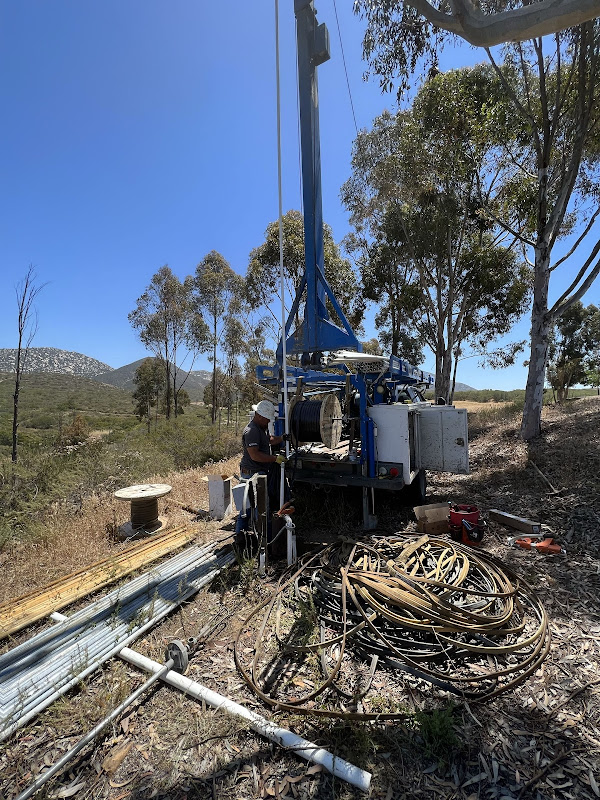
A farm well is a chain of components, and any weak link can take down the whole system. The well is a drilled borehole lined with steel or PVC casing, screened or perforated across the water-bearing layer and surrounded by a graded gravel pack that holds back sand. A submersible pump hangs below the water level on column pipe and lifts water to the surface, where it moves into your delivery system.
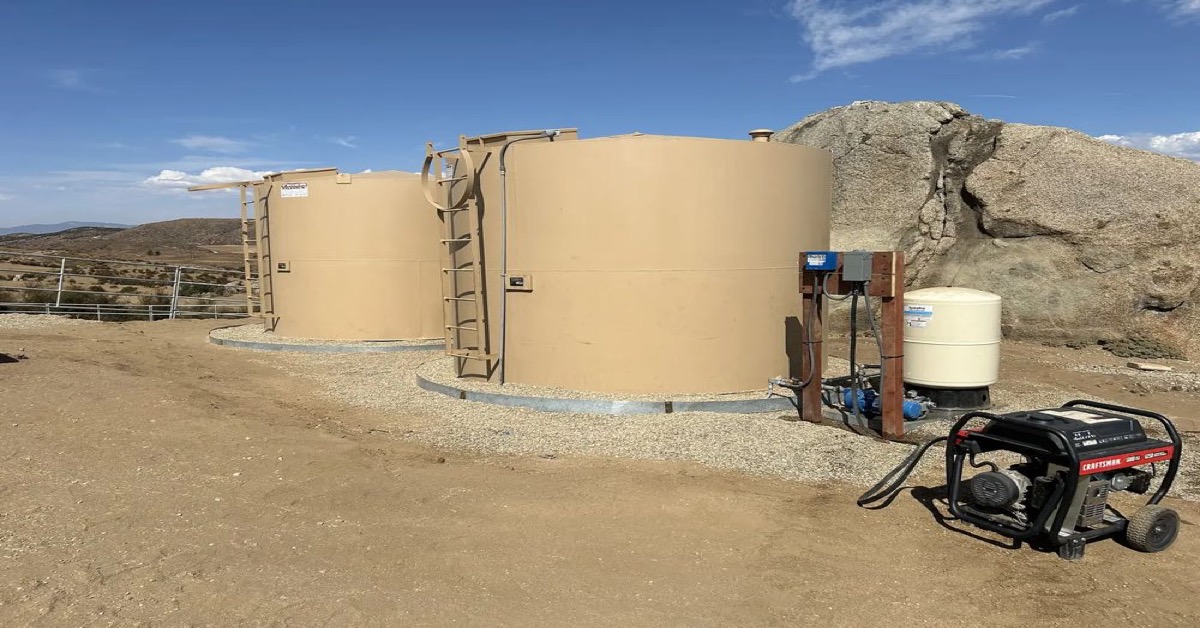
On most Yucaipa orchards that water passes through a check valve and pressure control and often into a storage tank, so a moderate well can fill the tank overnight and meet a heavy daytime irrigation set. A variable frequency drive (VFD) lets the pump match its speed to demand, which protects the motor, saves power, and is gentler on a stressed aquifer. From there water runs to micro-sprinklers, drip lines under the trees, or frost-protection systems that orchardists in the foothills sometimes rely on. We size every pump to the well's tested yield and total lift, because an oversized pump pulls the water level down too fast, draws sand, and shortens the life of both the pump and the well.
Common Well Problems on Yucaipa Farms
The most frequent issue we see in Yucaipa is declining yield and rising pumping levels. As the orchard hits peak summer demand, a well that kept up in spring starts to draw down, the pump short-cycles, and pressure fades in the afternoon. Sometimes the aquifer is simply lower than it used to be; just as often the pump is set too high in the casing and needs to be lowered to follow the water. Measuring static and pumping levels tells us which it is.
Sand and grit are common in Yucaipa's coarse, mountain-front alluvium, and a worn pump or failing gravel pack will pull sediment that erodes impellers and plugs drip emitters. Hard water and mineral scale are typical of the local groundwater, slowly coating screens and pump parts. Iron and manganese show up in some foothill wells, staining fixtures and clogging filters. And every well eventually faces the usual mechanical and electrical failures, including burned-out pressure switches, waterlogged pressure tanks, failed motor starts, and leaks in aging drop pipe.
What to Check Before You Call
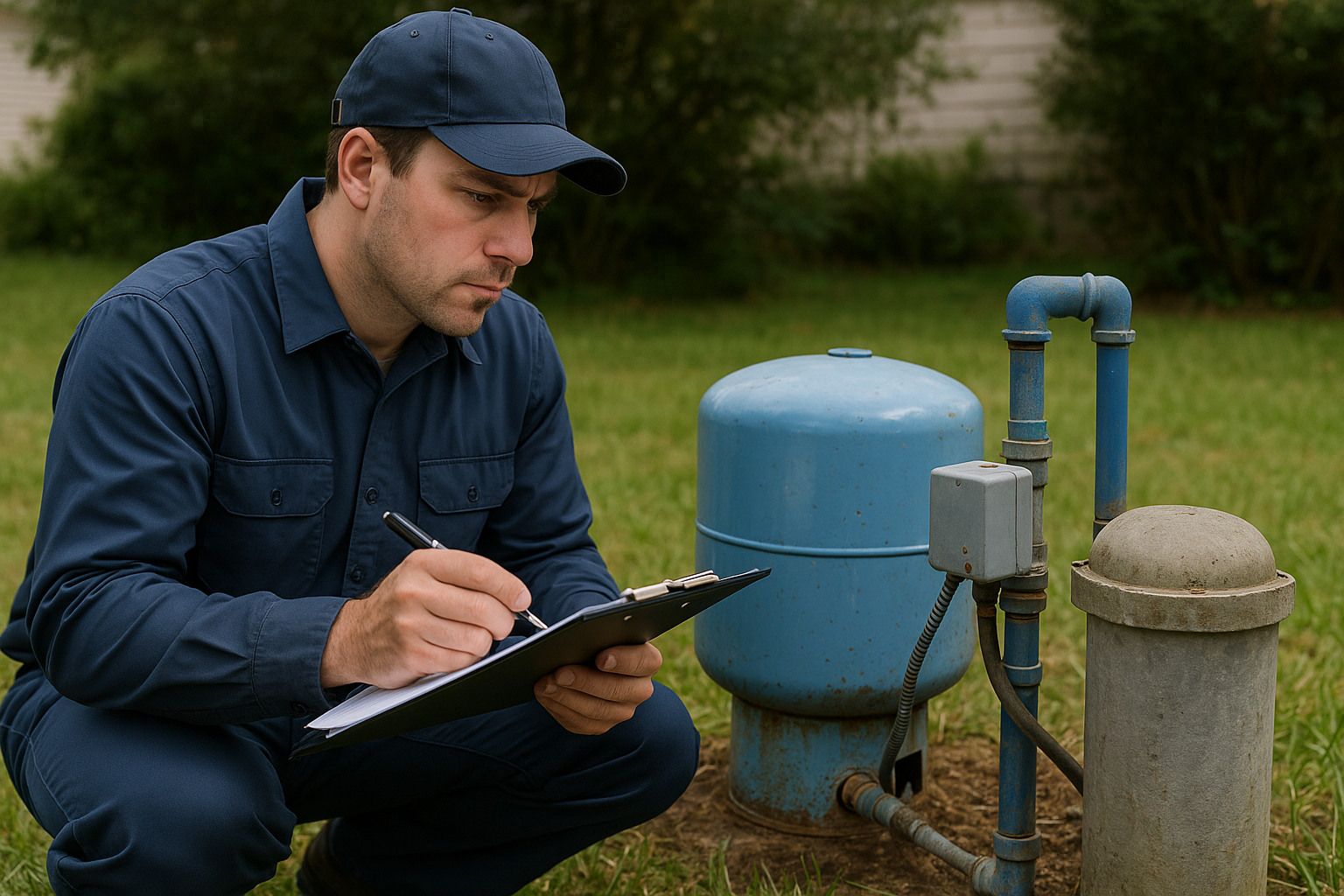
A few simple checks can narrow the problem and sometimes spare you a service call. Start at the breaker and pump disconnect, since heat and heavy load trip agricultural circuits and a single reset occasionally restores everything. Read the pressure gauge: zero with the pump running usually means no water is reaching the surface, while rapid cycling points to a waterlogged tank or a failed switch.
- Tap the pressure tank top and bottom. Hollow up high and solid below the waterline is healthy; solid all over usually means a ruptured bladder.
- Watch pressure through a full irrigation set. A strong start that fades over an hour suggests drawdown or a tiring pump.
- Catch a water sample in a clear jar and look for sand that keeps settling out, which warns of a screen or gravel-pack problem.
- If a breaker trips again and again, stop resetting it; repeated trips usually mean a failing motor or a wiring fault.
Note your well depth if you know it and when the pump was last serviced. Those details let our technician arrive prepared for a Yucaipa foothill well instead of needing a second visit.
When to Call a Licensed Pro
Pulling a submersible pump is not a do-it-yourself job. The pump can hang hundreds of feet down on heavy column pipe, the wiring carries high voltage, and a dropped pump can ruin a productive well. Call a licensed C-57 contractor whenever the pump must come out, when a breaker trips repeatedly, when you smell burning at the controls, when sand suddenly increases, or when flow drops far enough to threaten an orchard or livestock. In a Yucaipa summer a dead irrigation well becomes urgent within hours, which is why we keep same-day service available, and we handle the San Bernardino County permitting and California DWR well completion paperwork whenever a well must be deepened, rehabilitated, or replaced.
What Agricultural Well Work Costs in Yucaipa
Every well is different, but realistic ranges help you plan. A diagnostic visit is $125, credited toward any repair we perform. Common figures for Yucaipa-area work:
- Pressure switch replacement: $150 to $350
- Pressure tank replacement: $600 to $1,500
- Submersible pump replacement: $2,500 to $5,500 depending on depth and horsepower
- Sediment filtration: $300 to $900
- Water softener for hard water: $1,500 to $3,500
- Constant-pressure / booster system: $2,000 to $4,500
- Well rehabilitation: typically a few thousand dollars, far less than a new well
- Hydrofracturing to boost a low-yield well: $3,000 to $8,000
- New turnkey agricultural well: $18,000 to $42,000
On a deeper foothill well, rehabilitation or hydrofracturing is often worth trying before a full replacement, and we will tell you honestly when a well has reached the end of its life rather than selling work you do not need.
Serving Yucaipa and Nearby Areas
From our Ramona and Anza offices we serve Yucaipa and the surrounding foothill farm country, including Oak Glen, Wildwood, Dunlap Acres, Chapman Heights, and out toward Calimesa and Mentone. Whether you tend a small apple orchard up the Oak Glen grade or run pasture and horses on the valley floor, we bring the same rigs, pumps, and San Bernardino mountain-front experience to every job.
Why Yucaipa Growers Choose SCWS
Local Expertise
We know San Bernardino County geology, aquifers, and farm wells
Fast Response
Same-day service for Yucaipa growers and ranchers
Fair Pricing
Honest quotes, $125 diagnostic credited to the work
Quality Work
4.9-star rating across hundreds of reviews
Frequently Asked Questions
How deep are agricultural wells in Yucaipa?
It varies sharply with elevation. Parcels down toward the Yucaipa Creek drainage and Calimesa often reach water at moderate depth in thick alluvium, while orchards up on the benches toward Oak Glen and Wildwood usually drill deeper, sometimes into fractured rock. We confirm the right depth by checking nearby well completion records and measuring water levels on your property.
Why is my Yucaipa orchard well losing flow in late summer?
Late-summer irrigation demand peaks at the same time groundwater levels in the Yucaipa subbasin are lowest, so a marginal well draws down faster than it recharges and the pump begins to cycle. The fix may be lowering the pump, adding storage, or rehabilitating the well, and it starts with measuring your static and pumping water levels.
Is Yucaipa groundwater hard or high in iron?
Local foothill groundwater tends to be hard, and some Yucaipa wells carry iron and manganese that stain fixtures and clog filters. We test the water and can recommend sediment filtration, softening, or iron treatment, which matters most when the same well also serves a home or livestock.
Can you improve an older Yucaipa well instead of drilling a new one?
Often, yes. Rehabilitation to clean the screen and gravel pack, or hydrofracturing to open fractures in the bedrock, can restore real flow for a fraction of the cost of a new well. We evaluate casing condition and tested yield first, and only recommend a new well when the existing one has truly reached the end of its life.
Do you offer emergency well service in Yucaipa?
Yes. A failed irrigation or livestock well during a Yucaipa summer is an emergency, so we keep same-day service available. Call (760) 440-8520 and we will get a technician out with the parts most likely to restore your water quickly.
Do I need a permit for well work in San Bernardino County?
New wells, deepening, and destroying an old well require permits through San Bernardino County, and completed work is filed with the California Department of Water Resources. As a licensed C-57 contractor we handle that permitting and paperwork so your project is done legally and on record.
Our Locations
Get a Free Estimate
Call or text now for agricultural well service in Yucaipa. Diagnostic visit is $125, credited toward any repair.
(760) 440-8520Related Articles
Continue learning about well maintenance and troubleshooting