
Booster Pump Installation in Campo
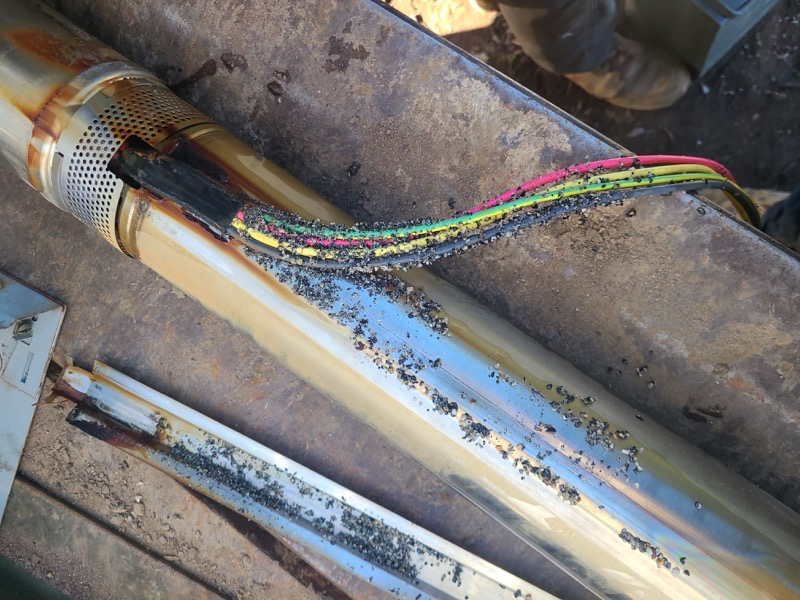
Looking for professional booster pump installation services in Campo? Southern California Well Service provides expert booster pump installation for residential and commercial properties throughout Campo and surrounding areas.
📋 In This Guide
Call now for a free estimate:
(760) 440-8520Our Booster Pump Installation Services in Campo
- Booster pump installation
- Booster pump repair
- Pressure system design
- Variable speed pumps
- Constant pressure systems
- Multi-story pressure solutions
- Irrigation boosters
- Commercial booster systems
Pricing for Campo
Our booster pump installation services in Campo typically range from $800 - $3,500 depending on your specific needs. We provide free estimates and transparent pricing with no hidden fees.
Why Choose Us for Booster Pump Installation in Campo?
- Local Expertise: Serving Campo and San Diego County since 2020
- Licensed & Insured: C-57 Well Drilling Contractor License
- Fast Response: Same-day service available for emergencies
- Fair Pricing: Competitive rates with free estimates
- Quality Work: 4.9★ rating on Google Reviews
We install premium Franklin Electric and Grundfos submersible pumps — the two most reliable brands in the well industry. For specific applications, we also offer Goulds and Sta-Rite options.
Booster Pump Installation for Campo's Backcountry Wells
Campo sits in the rugged, high-valley backcountry of eastern San Diego County, roughly an hour east of San Diego along State Route 94 and only a few miles from the U.S.-Mexico border near Tecate. At an elevation above 2,500 feet, this is a genuinely rural community of working ranches, large agricultural parcels, and homes spread far apart across decomposed-granite hillsides. There is no municipal water system out here. Almost every household and ranch in Campo, Potrero, Boulevard, Lake Morena, and the surrounding mountains draws from a private well, and that single fact shapes everything about how water pressure behaves on local properties.
When you depend on your own well, weak or inconsistent water pressure is not just an annoyance. It means showers that trickle, irrigation that cannot reach the far end of a pasture, and livestock troughs that take forever to fill. The combination of low-yield wells, deep water tables, long buried pipe runs across big lots, and the elevation changes typical of Campo's terrain makes this prime territory for a properly sized booster pump, very often paired with a storage tank. Southern California Well Service has spent more than 30 years solving exactly these problems for backcountry well owners, and we bring that experience to every Campo job.
Signs Your Campo Property Needs a Booster Pump
Most homeowners do not think about water pressure until it becomes a daily frustration. On a rural Campo well, several conditions tend to point toward a booster pump as the right fix. If you recognize a few of these, it is worth having your system tested.
- Chronic low pressure throughout the house. Faucets dribble, the shower loses force when the washing machine runs, and you never quite get the steady flow you would expect from a city connection. Anything consistently under about 40 PSI is worth investigating.
- A home that sits well above the well or storage tank. Campo's hilly, granite terrain means the wellhead is frequently downslope from the house. Every 2.31 feet of elevation gain costs roughly 1 PSI, so a home perched 60 or 80 feet above the source can lose 25 to 35 PSI before a drop reaches the tap.
- Long pipe runs from the well to the house. On parcels measured in acres, the buried line between the wellhead and the home can stretch hundreds of feet. Friction inside that pipe steadily bleeds off pressure the farther water has to travel.
- Multi-story homes. Upper floors and distant bathrooms are always the first to feel a pressure shortfall, because they sit highest and farthest from the source.
- Weak or low-yield well pressure. Many Campo wells are modest producers. A well that recovers slowly cannot push strong pressure on demand, and that is one of the clearest cases for a storage tank feeding a booster pump.
- Irrigation and livestock demand that outstrips supply. Sprinklers that barely pop up, drip lines that underperform at the back of the property, and troughs that fill slowly all signal that your system cannot deliver enough pressure and volume at once.
Types of Booster Pumps and How They Work
A booster pump does one job: it raises the pressure of water that has already been delivered from your well or storage tank, so that strong, consistent flow reaches every fixture and zone on the property. The right type depends on your water source, your daily demand, and the layout of your Campo parcel.
Single-Stage Booster Pumps
A single-stage pump uses one impeller to add a fixed boost in pressure. It is the simplest and most economical option, well suited to a home with a moderate pressure deficit, a single elevation jump, or one long pipe run. For many Campo properties where the well pump is adequate but distance and grade eat into delivered pressure, a single-stage booster restores comfortable flow without overcomplicating the system.
Multi-Stage Booster Pumps
A multi-stage pump stacks several impellers in series, with each stage adding more pressure. This design produces high pressure and steady volume, making it the better choice for larger Campo ranches, multi-story homes, properties with several buildings or barns, and extensive irrigation. When you need to lift water meaningfully uphill or push it a long way and still have force left at the end, a multi-stage unit does the heavy lifting.
Constant-Pressure Variable-Speed (VFD) Systems
A constant-pressure system uses a variable-frequency drive to continuously adjust the pump's speed in response to demand. Instead of cycling abruptly on and off, the pump speeds up when you open more fixtures and eases off when demand falls, holding a steady target pressure at all times. For Campo households that experience noticeable pressure swings when several taps, the shower, and irrigation run at once, a VFD system delivers city-like consistency. It also reduces wear from frequent cycling and tends to run more efficiently over its life. These are the premium option, and for many backcountry homes the comfort gain is well worth it.
Sizing and Installation Done Right
A booster pump only performs as well as its sizing and installation. Oversize it and you waste energy, stress your plumbing, and risk water hammer; undersize it and you are right back to weak pressure. Getting it right starts with measurement, not guesswork.
When we evaluate a Campo property, we test your current static and working pressure, gauge your well's yield and recovery, measure the elevation difference between the source and the home, estimate friction loss across your pipe run, and add up your peak demand in gallons per minute across fixtures, irrigation, and livestock. From those numbers we specify a pump with the correct flow and pressure rating for your specific situation. We install premium, field-proven equipment, set proper pressure switches or VFD controls, protect the system against dry-running and rapid cycling, and verify performance at the fixtures before we leave. Our crews work out of two locations, Ramona and Anza, which keeps us close to backcountry communities like Campo. Every install begins with a diagnostic visit, and that $125 diagnostic fee is credited toward the work when you move forward.
Why Storage Tanks and Boosters Belong Together on Low-Yield Wells
This is the single most important point for Campo well owners, so we want to be emphatic about it. If your well is a low-yield producer, and many in this area are, a booster pump alone is not the answer. A booster can only push the water that is available to it. If the well only recovers a few gallons per minute, demanding high flow straight from the well will simply pull it down and starve the pump.
The proven solution for backcountry properties is a storage tank paired with a booster pump. Here is how it works: your well pump runs gently over the course of the day, slowly filling a large storage tank, often 1,500 to 5,000 gallons or more, at whatever rate the well can sustain. That stored water then becomes your reservoir of pressure and volume. The booster pump draws from the full tank and delivers strong, steady pressure to the house and irrigation on demand, regardless of how slowly the well itself produces. This setup lets a modest well comfortably serve a home, a garden, and livestock without ever being overdrawn. For low-yield Campo wells, the storage-plus-booster combination is not a luxury, it is the design that actually works, and it protects your well pump from the hard cycling that shortens its life.
Common Backcountry Challenges We Plan For
Rural Campo systems face a handful of recurring issues, and a thoughtful installation accounts for all of them.
- Sediment and decomposed-granite grit. Local soils and granite formations send fine sediment into well water. Without proper filtration ahead of the pump, that grit abrades impellers and seals and shortens equipment life. We include appropriate sediment protection so your booster runs clean.
- Low well yield. As covered above, slow recovery is best managed with storage capacity rather than by overworking the pump.
- Elevation and distance. Hilly terrain and big lots create real pressure loss that must be engineered into the system, not patched over afterward.
- Hot, dry summers and chilly winters. Campo's high-desert climate brings intense summer irrigation demand and freezing winter nights. We size for peak summer load and protect exposed equipment and lines against winter cold.
When to Call a Professional
Some homeowners try to bolt on a cheap off-the-shelf booster and end up with cycling, leaks, or a burned-out pump within a season. Booster systems involve electrical work, pressure controls, correct sizing, and integration with your well and tank, all areas where mistakes are costly. Call a licensed professional when pressure problems persist after simple checks, when you are adding a storage tank, when you have a low-yield well, when the job involves a multi-story home or significant elevation gain, or any time you are unsure what your system actually needs. Southern California Well Service holds a C-57 license and carries full insurance, and we stand behind our work. We also offer same-day emergency service when you suddenly have no water.
What Booster Pump Installation Costs in Campo
Pricing depends on the type of system, your water source, and the complexity of the install, but here are the typical ranges for Campo properties:
- Standard booster pump installation: $2,000 to $4,500
- Constant-pressure variable-speed (VFD) systems: $2,500 to $5,000
- Water storage tank: $1,500 to $4,000, depending on capacity
- Diagnostic visit: $125, credited toward your installation
We provide clear, written estimates with no hidden fees, and we will always explain why a particular configuration fits your property. For a low-yield Campo well, expect us to recommend a storage tank and booster together, which is the combination that delivers reliable pressure for the long haul.
Serving Campo and the Surrounding Backcountry
From our Ramona and Anza shops, Southern California Well Service covers Campo and the neighboring mountain and high-desert communities, including Potrero, Boulevard, Jacumba, Tecate, Pine Valley, Descanso, and Lake Morena. We understand the granite soils, the elevation, the long lots, and the low-yield wells that define this region, and we have built water systems that thrive here for more than three decades. Whether you are upgrading an aging system or starting fresh, we will design a booster and storage solution matched to your exact property.
Frequently Asked Questions
Do I need a storage tank with my booster pump in Campo?
If your well is a low-yield producer, which is common in the Campo backcountry, yes. A storage tank lets your well fill slowly over the day, then the booster pump draws from that reservoir to deliver strong, steady pressure on demand. Without storage, a booster can overdraw a slow well and starve itself.
How much does a booster pump system cost in Campo?
A standard booster pump installation runs $2,000 to $4,500, while constant-pressure variable-speed systems range from $2,500 to $5,000. A storage tank adds $1,500 to $4,000 depending on capacity. Our $125 diagnostic visit is credited toward the installation.
What is the difference between a single-stage and multi-stage booster pump?
A single-stage pump uses one impeller and adds a fixed pressure boost, ideal for moderate needs and a single elevation jump. A multi-stage pump stacks several impellers for much higher pressure and volume, which suits larger ranches, multi-story homes, and extensive irrigation.
Why is my water pressure so low even though my well works fine?
On Campo properties, elevation gain and long pipe runs are usually the culprits. Every 2.31 feet of rise costs about 1 PSI, and friction in a long buried line bleeds off more. A correctly sized booster pump restores the pressure lost between the source and your fixtures.
Can a booster pump help my irrigation and livestock watering?
Absolutely. Boosters are excellent for getting sprinklers to pop up properly, driving drip lines at the far end of a parcel, and filling troughs quickly. For large agricultural demand we typically pair a multi-stage booster with a storage tank so supply keeps up with peak use.
Do you offer emergency booster pump service in Campo?
Yes. We provide same-day emergency service for backcountry well owners. If you have lost water or pressure, call us right away and we will get a technician out to diagnose and restore your system.
Get Strong, Reliable Water Pressure in Campo
Southern California Well Service has more than 30 years of experience designing booster and storage systems for backcountry wells. Licensed C-57, fully insured, and rated 4.9 stars, we serve Campo and the surrounding communities with same-day emergency service available.
Call (760) 440-8520Prefer to text? Message us at (619) 259-0410 or request a free estimate online.