
Cloudy or Milky Well Water in Julian
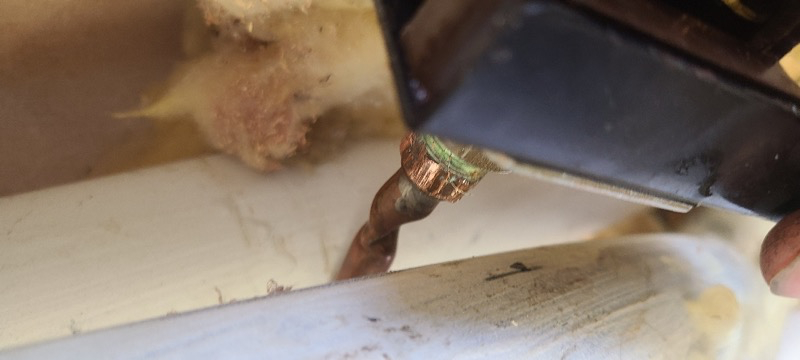
Noticing cloudy, milky, or white-colored water from your Julian well? This issue has several possible causes—some harmless, others requiring attention. Julian's unique mountain geology and historic mining legacy create specific water quality challenges that require local expertise to diagnose and treat correctly.
📋 In This Guide
Causes of Cloudy Well Water in Julian Wells
Cloudy water from a Julian well can stem from multiple sources. The appearance — whether milky white, grayish, or opaque — provides clues about the underlying cause:
1. Air Bubbles (Most Common & Harmless)
Tiny air bubbles suspended in the water create a milky appearance, especially right out of the faucet. This occurs when:
- Pump cavitation: The pump draws air along with water
- Water table drops: Common in Julian during dry months when well levels decline
- Pressure changes: Cold water under pressure releases dissolved air when it reaches atmospheric pressure at your faucet
- Pump depth issues: Shallow pump placement relative to water level
Air bubbles are completely safe and clear within 30-60 seconds when water sits in a glass.
2. Dissolved Minerals (Hard Water)
Julian's bedrock — primarily decomposed granite and metamorphic rock — leaches minerals into groundwater. High levels of calcium, magnesium, and silica create a cloudy or hazy appearance that doesn't settle out. This is especially common in:
- Wells drilled into fractured granite
- Properties near the historic mining district (where mineral-rich veins intersect aquifers)
- Shallow wells that intercept mineral-laden surface infiltration
3. Methane Gas
Some Julian wells — particularly those in valleys or near organic-rich soils — contain dissolved methane. This naturally occurring gas creates a cloudy appearance and sometimes a "fizzy" quality to the water. Methane is:
- Non-toxic to drink
- Potentially explosive if concentrated indoors
- Easily removed with aeration
If you notice a petroleum or musty odor alongside cloudiness, methane is a likely culprit.
4. Iron Bacteria and Biofilm
Julian's iron-rich geology supports iron-oxidizing bacteria, which create slimy biofilms in well casings and plumbing. These bacteria don't pose direct health risks but cause:
- Cloudy or murky water
- Reddish-brown slime in toilet tanks
- Metallic taste
- Clogged fixtures and reduced flow
5. Total Suspended Solids (TSS)
Fine sediment particles — clay, silt, or decomposed granite — suspended in water create persistent cloudiness that doesn't clear in a glass. Causes include:
- Well development issues: New or recently serviced wells may produce sediment until properly developed
- Earthquake activity: Julian sits near the Elsinore Fault; seismic events stir up sediment in aquifers
- Heavy rain: Surface infiltration after storms carries fine particles into shallow aquifers
- Screen deterioration: Corroded or damaged well screens allow sediment entry
Julian's Unique Geology and Water Quality
Understanding Julian's subsurface geology is essential for diagnosing cloudy water issues. The town sits in the Peninsular Ranges, a mountain block uplifted millions of years ago and dominated by:
Decomposed Granite (DG)
Much of Julian overlies weathered granite that has broken down into coarse sand and gravel. This creates:
- High permeability: Water moves quickly through fractured rock
- Mineral leaching: Feldspar and mica break down into clay minerals and dissolved ions
- Variable water quality: Shallow wells may intercept different mineral zones than deep wells
Historic Mining Legacy
Julian's gold rush era (1869-1900s) left behind extensive underground mine workings and exposed mineral veins. Wells drilled near old mines may encounter:
- Elevated iron, manganese, and sulfate from pyrite (fool's gold) oxidation
- Arsenic in mineralized zones (rare but present in some local bedrock)
- Acid mine drainage in areas with exposed sulfide minerals
If your property is near the historic mining district (around Banner Grade or the Julian townsite), water testing is especially important.
Seasonal Water Table Fluctuations
Julian receives most precipitation in winter (November-March), with dry summers common. This creates:
- Summer water table decline: Wells that performed well in spring may struggle by September
- Increased mineral concentration: Less water diluting dissolved minerals
- Air entrainment: Pumps drawing from lower levels more prone to cavitation
The Glass Test: Diagnosing Cloudy Water
Before calling a well technician, perform this simple diagnostic:
🧪 The Glass Test Procedure
- Fill a clear glass with water from a cold tap
- Set it on a counter and observe for 2-3 minutes
- Note the clearing pattern:
- Clears from bottom up: Air bubbles (harmless)
- Clears from top down: Sediment settling (needs filtration)
- Stays uniformly cloudy: Dissolved minerals or bacteria (testing needed)
- Forms visible particles: Iron oxidation or sediment (filtration + possibly shock chlorination)
Additional Observations
- Smell test: Rotten egg odor = sulfur bacteria; petroleum smell = methane
- Hot vs. cold: If only hot water is cloudy, the issue is in your water heater (anode rod interaction or sediment)
- Timing: Cloudiness immediately after pump runs suggests air entrainment; cloudiness all the time suggests dissolved minerals or bacteria
Treatment Options for Cloudy Well Water
The right solution depends on the cause. Here's what we recommend for Julian properties:
For Air Bubbles
- Pump depth adjustment: Lowering the pump below the water table prevents air entrainment
- Pressure tank maintenance: Properly pressurized tanks reduce dissolved air release
- Check valve installation: Prevents backflow that introduces air
Cost: $200-600 for minor adjustments; $1,200-2,500 if pump needs repositioning.
For Sediment and TSS
- Sediment filter (5-50 micron): Removes particles before they reach fixtures
- Multi-stage filtration: Larger particles removed first, finer filtration second
- Well development: For new wells or wells producing excess sediment
- Screen repair/replacement: If sediment indicates screen failure
Cost: Sediment filters $300-800 installed; well development $800-2,000; screen repair $2,500-5,000.
For Dissolved Minerals (Hard Water)
- Water softener: Ion exchange removes calcium and magnesium
- Reverse osmosis (RO): For drinking water — removes virtually all dissolved solids
- Catalytic media: Removes iron and manganese without salt
Cost: Whole-house softener $1,500-3,500; RO system $400-1,200; catalytic filter $2,000-4,000.
For Methane Gas
- Aeration system: Vents gas outdoors before water enters the home
- Vent piping: Ensures safe dissipation away from ignition sources
Cost: $1,200-3,000 installed.
For Bacteria and Biofilm
- Shock chlorination: One-time treatment to kill bacteria in well and plumbing
- UV disinfection: Continuous protection without chemicals
- Chlorine injection system: For persistent contamination
Cost: Shock chlorination $400-800; UV system $800-1,500; chlorination system $2,000-4,000.
Seasonal Factors Affecting Julian Wells
Winter: High Water, Surface Infiltration
Julian's wet season (November-March) brings:
- Rising water tables: Wells that struggled in summer recover
- Surface infiltration: Rain carries fine sediment and organic matter into aquifers
- Increased turbidity: Temporary cloudiness after heavy storms (usually clears in 1-2 weeks)
Summer: Low Water, Concentrated Minerals
Dry months (June-October) create different challenges:
- Declining water tables: Pumps may draw air if too shallow
- Higher mineral concentration: Less dilution = cloudier water from dissolved minerals
- Increased sediment: Lower water levels expose more well casing to potential collapse or screen failure
Wildfire Impact
Julian's fire-prone landscape can affect water quality after burns:
- Ash and debris infiltrate aquifers after first rains
- Hydrophobic soils increase surface runoff and erosion
- Elevated turbidity and particulates for 1-2 years post-fire
If you experience cloudy water after a nearby wildfire, shock chlorination and filtration are recommended.
When to Call a Professional
While air bubbles are harmless, some cloudiness signals serious problems:
⚠️ Call Immediately If:
- Cloudiness is accompanied by a petroleum or "gas" smell (methane risk)
- Water has a sulfur (rotten egg) odor (bacteria)
- You notice sediment or grit in fixtures (screen failure)
- Cloudiness persists for days without improvement
- You experience stomach issues after drinking the water
- Cloudiness suddenly appeared after earthquake, nearby construction, or drilling
Frequently Asked Questions
Is cloudy well water safe to drink in Julian?
If the cloudiness is from air bubbles, yes — completely safe. For dissolved minerals, bacteria, or methane, testing is necessary. We recommend a full water quality panel including bacteria, nitrates, arsenic, and mineral content for Julian properties.
Why does my water look cloudy only in the morning?
Overnight, pressure in your plumbing system equalizes and dissolved gases can build up. The first draw in the morning releases this gas as bubbles. If water clears after running for 30-60 seconds, this is normal.
How much does water testing cost?
Basic bacteria test: $50-100. Full mineral panel: $150-300. We can collect samples and coordinate lab testing as part of a service call.
Can I shock chlorinate the well myself?
Technically yes, but improper chlorination can damage your pump or plumbing. We recommend professional service to ensure correct dosage, circulation time, and thorough flushing. Cost is $400-800 and includes post-treatment testing.
Do Julian wells need annual maintenance?
We recommend annual inspection and water testing, especially for wells showing seasonal changes. Preventive maintenance catches small issues before they become expensive failures.
Will a water softener fix cloudy water?
Only if the cloudiness is from dissolved minerals (hardness). It won't help with air bubbles, sediment, or bacteria. A proper diagnosis is essential before investing in treatment equipment.
My water was clear for years — why is it cloudy now?
Sudden changes can result from: (1) Nearby well drilling or construction disturbing the aquifer, (2) Seasonal water table drop exposing different rock layers, (3) Screen corrosion allowing sediment entry, (4) Pump wear causing cavitation, or (5) Bacterial growth from a failed UV system or lapsed chlorination. Any sudden change warrants professional inspection.
Does Julian have hard water?
Yes. Most Julian wells produce moderately to very hard water (150-300+ mg/L calcium carbonate) due to decomposed granite geology. Hardness contributes to scale buildup, cloudiness, and reduced appliance lifespan. A water softener is a worthwhile investment for most Julian properties.
Can I drink cloudy well water while waiting for test results?
If the cloudiness is from air bubbles (clears in a glass within 60 seconds), yes. For any other type of cloudiness — especially with odor, sediment, or color — we recommend bottled water until testing confirms safety. Boiling does NOT remove minerals, methane, or sediment.
Need Help With Your Julian Well?
Our licensed C-57 technicians serve Julian with comprehensive well diagnostics, water testing, and treatment solutions. Same-day emergency service available.
Cloudy Well Water Solutions for Julian Properties
As a Julian property owner with a private well, you rely on your water system daily. The local geology — decomposed granite, fractured metamorphic rock, and historic mining impacts — creates unique challenges that require experienced, local technicians who understand the area.
Why Local Expertise Matters
Generic well companies from outside San Diego County often don't understand the terrain, geology, or seasonal water table fluctuations in Julian. Well depths here range from 150 feet in valley floors to 400+ feet on ridges. A technician familiar with Julian's specific conditions can diagnose problems faster and recommend the right solutions the first time.
What Sets Us Apart
- Local presence: Two offices (Ramona & Anza) mean faster response to Julian — typically same-day for emergencies
- Full-service: We handle everything from drilling to pump repair to water treatment under one roof
- Licensed C-57: Properly licensed well drilling contractor (CSLB #1086994), not just a plumber
- Honest assessments: We give fair pricing and don't upsell unnecessary services
- Emergency availability: 7 days/week response when you have no water
Common Well Issues in Julian
Based on our years of service in San Diego County, the most frequent problems we see in Julian include:
- Pump failures: Hard water mineral buildup on impellers and motors
- Pressure tank issues: Mineral-rich water corrodes bladders and pressure switches
- Low yield during droughts: Southern California's dry climate stresses wells; some properties need deeper wells or storage tanks
- Water quality changes: Iron staining, sulfur smell, or sediment from seasonal aquifer shifts
- Electrical problems: Power fluctuations and lightning strikes in rural mountain areas
- Freeze damage: Julian's winter freezes can crack well heads and surface piping if not properly insulated
Related Articles
Continue learning about well maintenance and troubleshooting

Signs Your Well Pump Is Failing
Catch pump problems early before you lose water completely.
Low Water Pressure in Julian
Diagnose and fix pressure problems in Julian's mountain wells.
Well Service in Julian
Comprehensive well service for Julian mountain properties.
Our Locations
1077 Main St, Ramona, CA 92065
57174 CA-371 (US Hwy 79), Anza, CA 92539