Geothermal Well Drilling in California: Heating and Cooling Solutions
Learn about geothermal well drilling for heating and cooling systems in California. Understand loop configurations, drilling requirements, and energy savings.
Geothermal System Fundamentals
Ground source heat pump (GSHP) systems leverage the earth's stable underground temperature to provide highly efficient heating and cooling. While air temperatures in Southern California can swing from freezing to over 100°F, the ground below 15-20 feet remains a constant 55-65°F year-round. This thermal stability makes geothermal systems 300-500% efficient compared to conventional HVAC systems.
Geothermal systems work by circulating fluid through underground loops to exchange heat with the earth. In winter, the system extracts heat from the ground to warm your home. In summer, it reverses the process, rejecting heat into the cooler ground. California's geology—particularly areas with good soil conductivity and stable water tables—creates ideal conditions for geothermal installations.
Two primary configurations exist: closed-loop systems circulate fluid through sealed HDPE pipes, while open-loop systems use groundwater directly as the heat exchange medium. Closed-loop systems are more common for residential applications since they require no water rights or discharge permits. Open-loop systems can be more efficient but face stricter California regulatory requirements.
Drilling Requirements and Loop Configurations
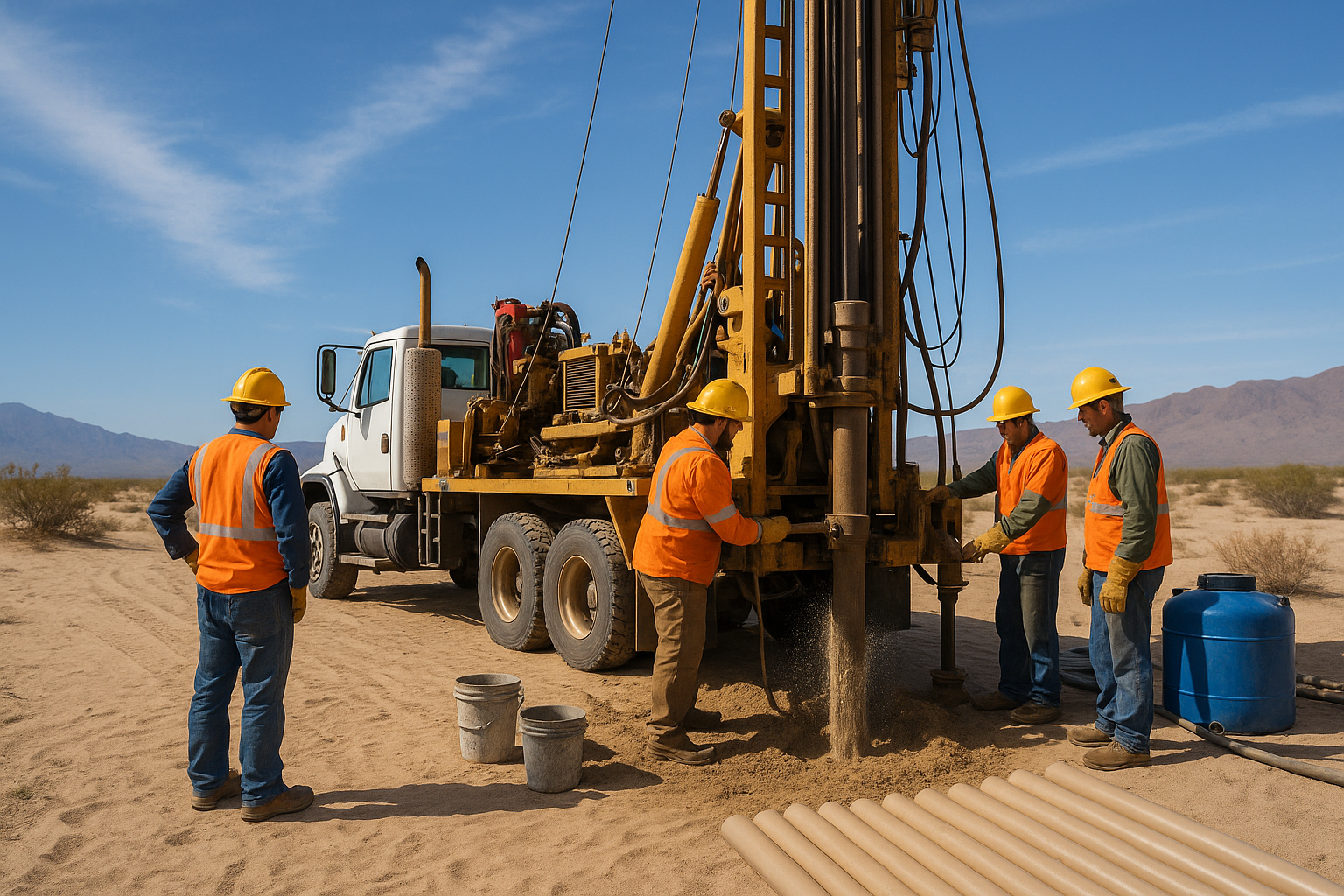
Vertical closed-loop systems are the most common configuration in California, requiring boreholes typically 150-400 feet deep. Each ton of heating/cooling capacity generally needs 150-200 feet of bore depth, depending on soil thermal conductivity. A typical 4-ton residential system requires 600-800 feet of total bore depth, often split across 2-4 separate boreholes spaced 15-20 feet apart.
Horizontal loop trenching offers a lower-cost alternative where land is available, requiring 400-600 feet of trench per ton at depths of 4-6 feet. Slinky coil configurations reduce trench length requirements. However, horizontal systems are more susceptible to seasonal temperature variations and require significant land area—often 1/4 acre or more for residential systems.
Standing column wells represent a hybrid approach for commercial applications, using a single deep well (1,000+ feet) that draws water from the bottom and returns it to the top. This configuration is particularly efficient in fractured bedrock aquifers common in California mountain regions. Grouting materials are critical for vertical systems—thermally-enhanced grout with conductivity ratings of 1.0-1.4 BTU/hr-ft-°F ensures optimal heat transfer between the loop and surrounding soil.
California Permitting and Regulations
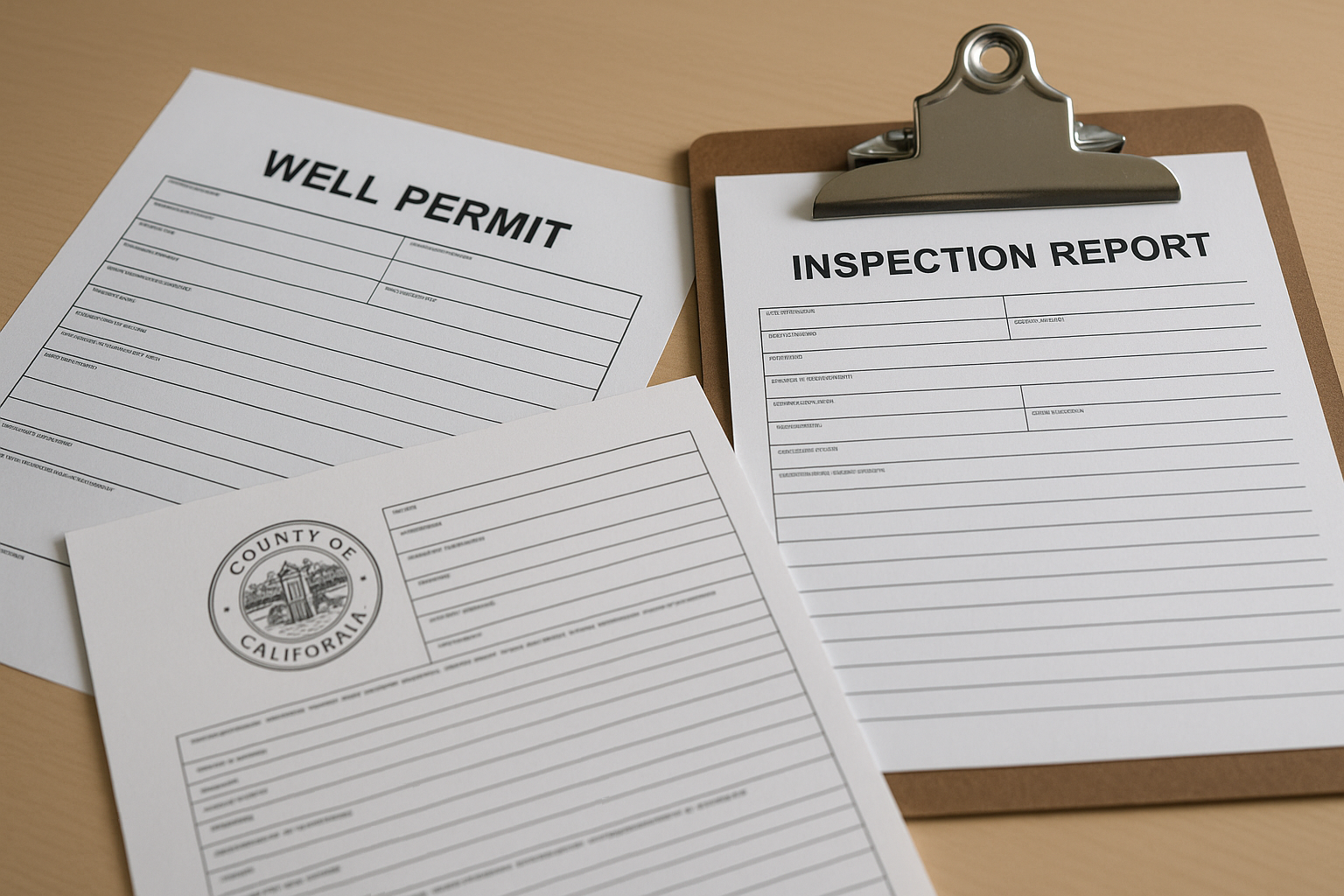
Geothermal well drilling in California requires permits from multiple agencies. The State Water Resources Control Board oversees groundwater protection, requiring proper well construction standards to prevent aquifer contamination. Closed-loop systems must use approved grouting materials and installation methods per California Well Standards (Bulletin 74-90).
County-level permits vary significantly across California jurisdictions. San Diego County, Riverside County, and other Southern California counties typically require drilling permits, grading permits for horizontal trenching, and building permits for mechanical system connections. Environmental impact considerations include potential effects on local groundwater and requirements for thermal discharge when using open-loop systems.
All geothermal drilling must be performed by licensed C-57 Well Drilling contractors in California. Heat pump installation requires separate HVAC contractor licensing. Working with a contractor experienced in both disciplines streamlines the permitting process and ensures proper system integration. Permit costs typically range from $500-2,000 depending on jurisdiction and system complexity.
Cost-Benefit Analysis and ROI
Geothermal system installation costs range from $15,000-30,000 per ton in California, with total residential system costs typically $40,000-80,000 for drilling, equipment, and installation. While significantly higher than conventional HVAC systems ($8,000-15,000), geothermal systems deliver substantial long-term savings through 50-70% reductions in heating and cooling energy costs.
Federal tax credits currently offer 30% of installed cost for residential geothermal systems through 2032, reducing net costs substantially. Some California utilities offer additional rebates for ground source heat pump installations. Energy savings of $1,000-3,000 annually are typical for California homes, with payback periods of 7-15 years depending on local energy costs and system efficiency.
Beyond direct energy savings, geothermal systems add property value and eliminate outdoor compressor units, reducing noise and maintenance requirements. The underground loop infrastructure requires virtually no maintenance over its 50+ year lifespan. For new construction, geothermal costs are even more competitive when factoring in avoided costs for separate heating and cooling systems, ductwork downsizing, and reduced utility infrastructure requirements.
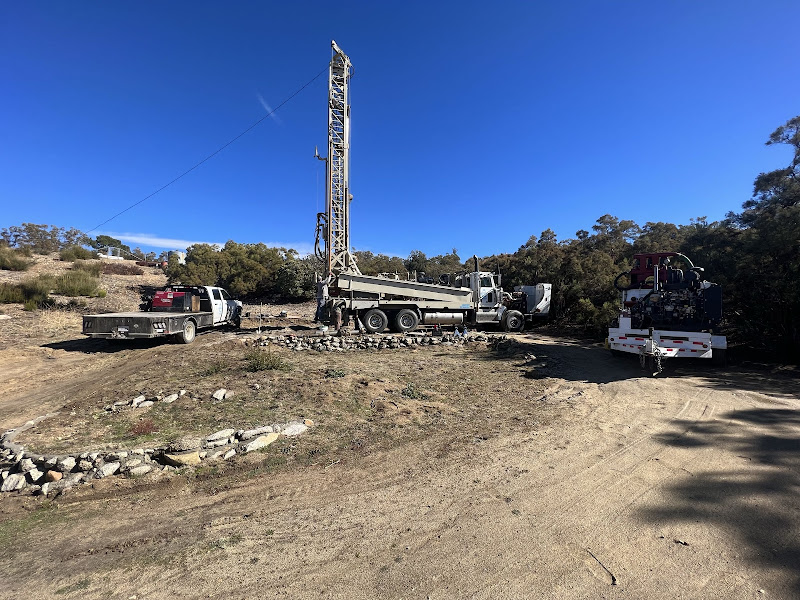
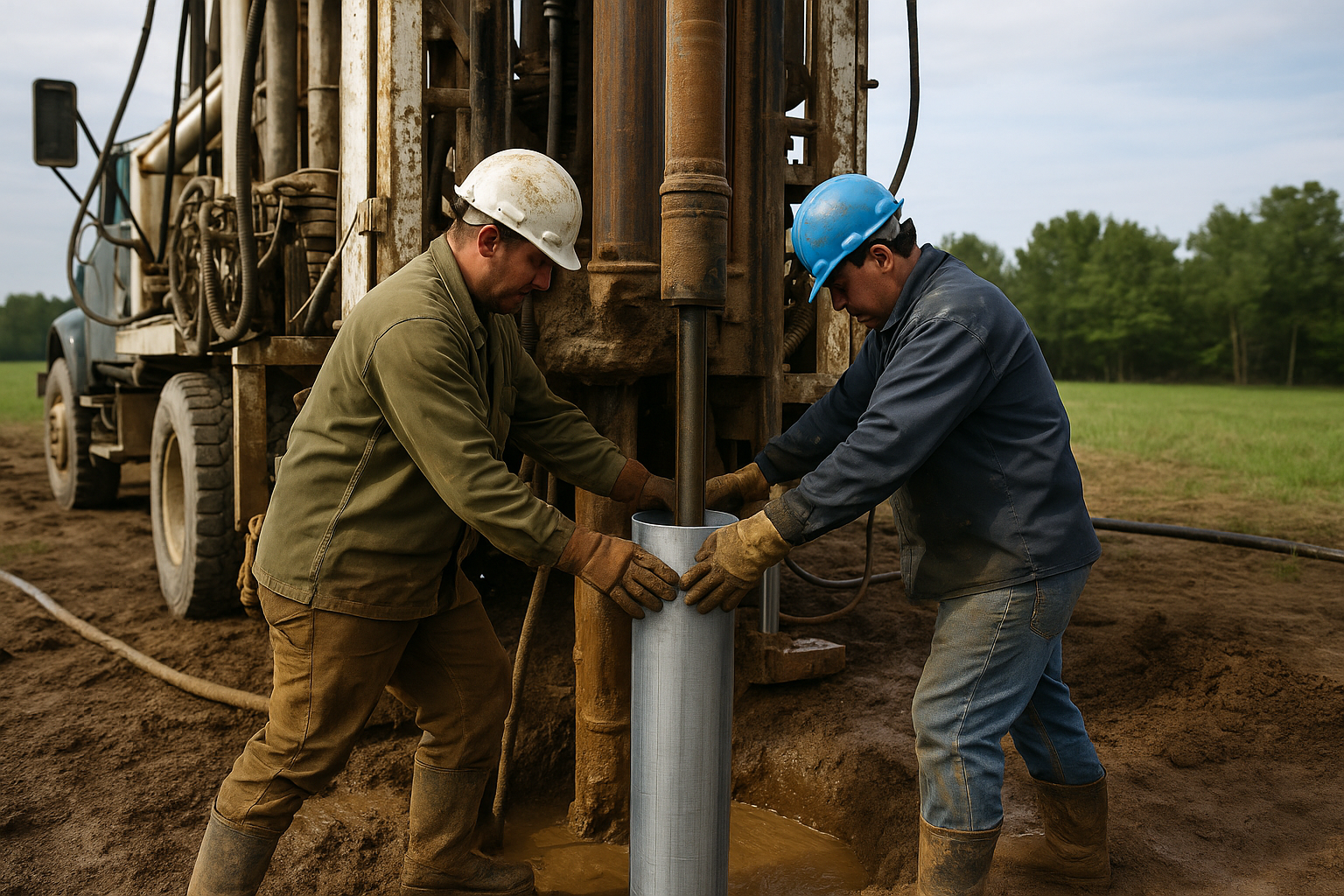
Our drilling fleet includes a Gefco rotary drill rig capable of drilling to 1,000+ feet. We use PVC and steel casing depending on well depth and geology, with gravel pack completion for optimal water production.
Frequently Asked Questions
How deep are geothermal wells drilled in California?
Geothermal wells in California are typically drilled between 150 and 400 feet deep for residential closed-loop systems. The exact depth depends on soil thermal conductivity, heating/cooling loads, and available land area. In areas with good thermal properties, shallower wells around 150-200 feet may suffice, while poor conductivity soils may require depths of 300-400 feet per ton of capacity.
Can existing water wells be converted to geothermal?
Yes, existing water wells can sometimes be converted to open-loop geothermal systems, using groundwater as the heat exchange medium. However, this requires adequate water quality (low mineral content), sufficient flow rates (typically 1.5-3 GPM per ton), and a discharge option. California regulations require permits for groundwater use and discharge. Closed-loop systems with dedicated boreholes are often more practical for new installations.
What is the lifespan of a geothermal well system?
Geothermal ground loops are designed to last 50+ years when properly installed with quality HDPE piping. The heat pump equipment typically lasts 20-25 years—roughly twice as long as conventional HVAC systems since components are protected indoors. With proper maintenance, the underground loop infrastructure represents a multi-generational investment in property value and energy efficiency.
Get Expert Well Service
Southern California Well Service has served San Diego, Riverside, and San Bernardino counties for decades. Licensed C-57 contractor.
Call (760) 440-8520Available 24/7 for emergencies
Related Articles
Continue learning about well maintenance and troubleshooting