Low Water Pressure Solutions in Alpine
Dealing with weak water pressure in Alpine? Low water pressure can make showers frustrating and appliances ineffective. Our team diagnoses the root cause and restores your water pressure fast.
📋 In This Guide
Need Low Water Pressure Solutions in Alpine?
We serve Alpine and all of San Diego County. Licensed C-57 contractor (CSLB #1086994), founded 2020.
Call: (760) 440-8520Low Water Pressure in Alpine: A Foothill Well Guide
Alpine sits at roughly 1,800 feet in the rolling foothills of eastern San Diego County, along the Interstate 8 corridor between El Cajon and the climb toward the Cuyamaca and Laguna mountains. It is classic San Diego backcountry: oak-studded hills, large lots, and a strong tradition of rural living. While the village core has municipal service, a great many Alpine properties, out along Victoria Drive, Tavern Road, South Grade, and the surrounding ranch parcels toward Japatul and Viejas, depend on private wells. When pressure at the tap drops on one of those wells, the comfort of your whole household, plus irrigation and any livestock, is affected.
The encouraging truth is that low water pressure is almost always a repairable mechanical problem rather than a sign your well is failing. Alpine's geology, dominated by decomposed granite and fractured crystalline bedrock, gives its wells a distinct character and a recognizable set of pressure problems. Understanding how your system works and what tends to go wrong locally helps you act fast and spend wisely.
How a Private Well Builds Pressure
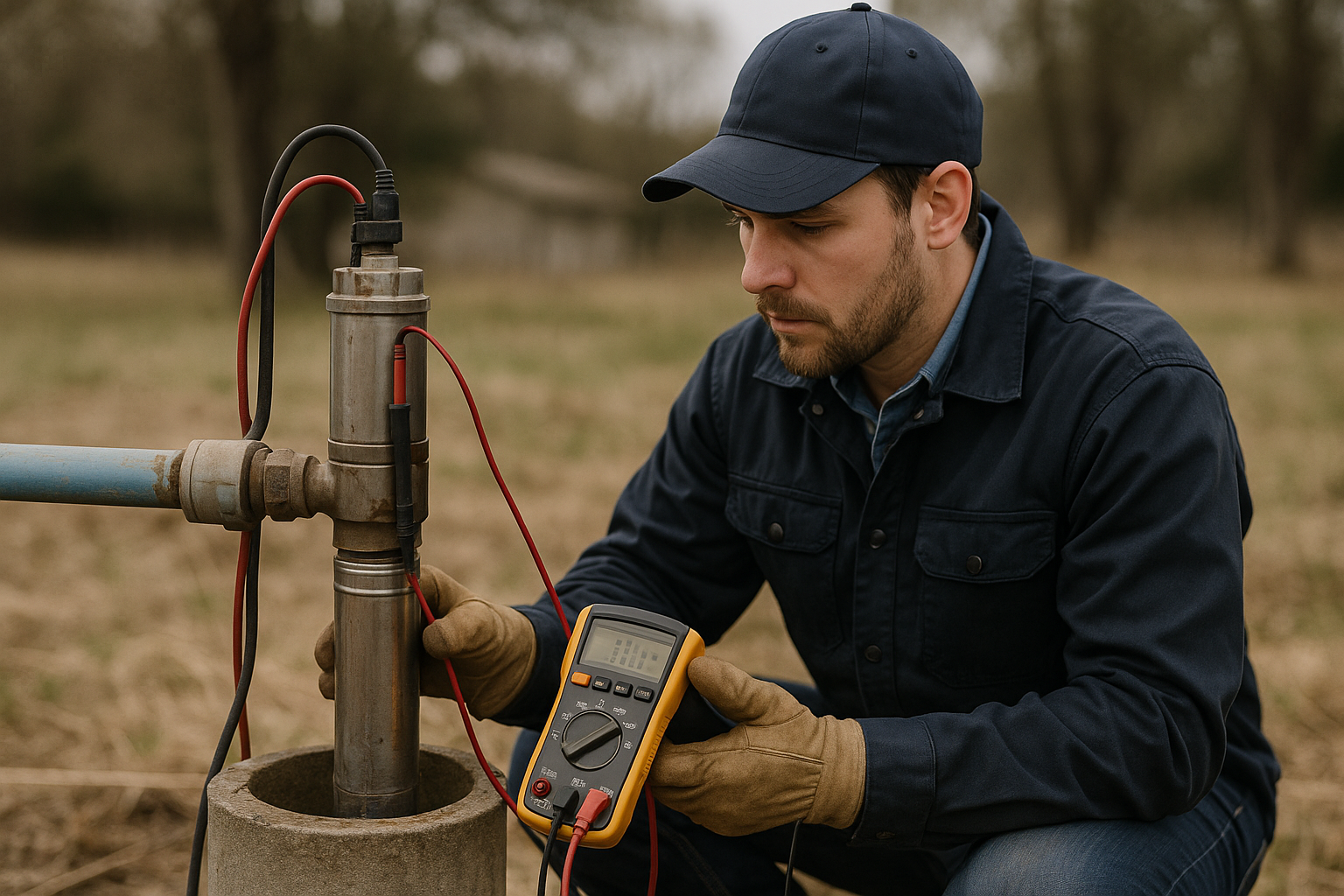
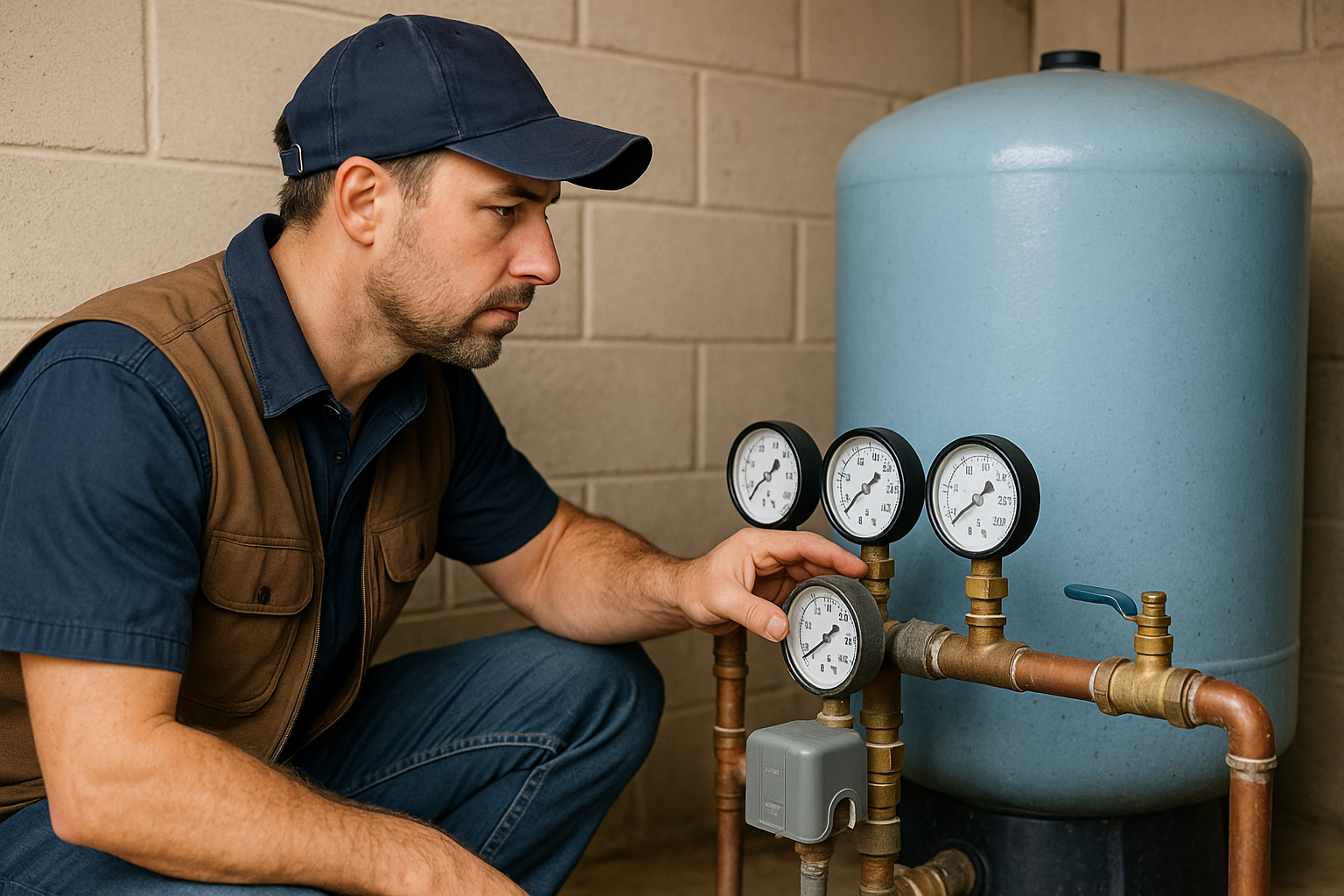
Your faucets are not fed straight from the well. A submersible pump deep in the casing lifts water to a pressure tank near the home, where a cushion of compressed air over a rubber bladder stores the pressure that feeds your house between pump runs. A pressure switch watches the tank and turns the pump on (commonly at 40 PSI) and off (commonly at 60 PSI), keeping the system in a 40/60 or 30/50 window.
When any one part slips, the symptom is weak or surging pressure. A waterlogged tank that has lost its air charge makes the pump short-cycle. A worn switch cuts the pump out early. A scaled or aging pump cannot move enough water. And in Alpine's granitic ground, fine sediment can pack a well screen or clog a filter and choke flow even when every component is sound. A good service call isolates which link failed before any parts are replaced.
Common Causes of Low Pressure in Alpine
In founded in 2020 working wells across eastern San Diego County, these are the issues we find most often in the Alpine foothills:
- Fractured-rock low yield in dry years: Many Alpine wells draw from fractured granite that recharges from winter rain. During drought the static water level falls, and a pump set too high can draw air or lose prime, sharply cutting summer pressure.
- Hard-water scaling: Granitic groundwater carries calcium and magnesium that deposit on pump impellers, valves and pipes, narrowing the flow path year after year.
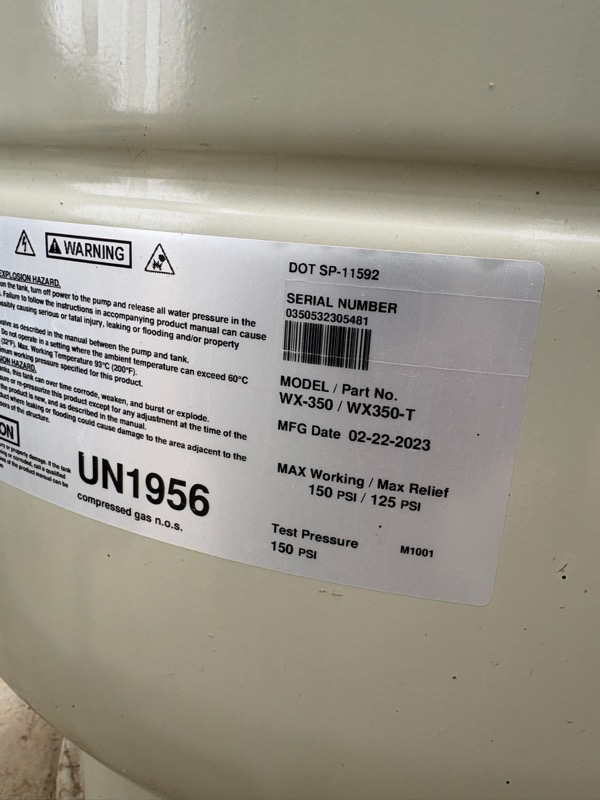
- Failed pressure tanks: The bladder eventually ruptures or the air charge bleeds off, producing rapid cycling and pressure that surges then sags, a very common backcountry call.
- Aging pumps: Many foothill wells have pumps that have run for decades; impeller wear gradually erodes the pressure they can deliver.
- Sediment after storms: Heavy rain can carry decomposed-granite fines into a well, clogging the screen and dropping both yield and pressure.
- Elevation and long supply runs: Hillside Alpine homes often sit uphill of or far from the wellhead. Vertical lift and friction loss in long buried lines quietly reduce the pressure that reaches the house.
What You Can Check First
Before calling, these safe checks can reveal a lot:
- Read the pressure gauge near your tank through a full pump cycle. Healthy pressure is 40 to 60 PSI; numbers that barely rise or swing hard are diagnostic.
- Listen for short-cycling. A pump kicking on and off every few seconds usually means a waterlogged tank or a failing switch.
- Whole house or one tap? If only one fixture is weak, suspect a clogged aerator; if all are weak, the well, pump or tank is involved.
- Knock on the tank. Hollow on top and solid below is normal; solid throughout means a failed bladder.
- Check for leaks at the wellhead, the tank, and along buried lines, where wet ground signals wasted pressure.
- Note the trigger. A drop right after a storm suggests sediment; after a power blink, the pump or switch; a slow decline, scaling or pump wear.
Leave the wellhead, electrical covers and pump to a licensed professional. These systems combine 240-volt power with deep equipment, and the risk of injury or costly damage is real.
When to Call a Professional in Alpine
Contact Southern California Well Service promptly if you have:
- No water or a sudden, dramatic pressure loss — possibly a failed pump, lost prime, or a critically low well needing same-day attention.
- Continuous pump cycling you can hear indoors, a sign the tank or switch is failing and the pump is at risk.
- Gritty or cloudy water, especially after rain, pointing to sediment intrusion.
- Grinding, humming or buzzing from the pump, indicating mechanical wear or an electrical problem.
- Persistent low pressure after you have cleared aerators and ruled out leaks.
We are a licensed C-57 well-drilling contractor founded in 2020, with 60+ years of family heritage and our Ramona office is an easy reach to the Alpine area. Our diagnostic visit is a flat $125, credited toward any repair we perform.
What Repairs Typically Cost
These 2026 ranges help Alpine homeowners plan; well depth and site conditions move the final number:
- Pressure switch replacement: $150–$350, the fastest and most affordable fix.
- Pressure tank replacement: $600–$1,500, the answer for waterlogged tanks and short-cycling.
- Submersible pump replacement: $2,500–$5,500, depending on depth and pump size.
- Sediment filtration: $300–$900, useful where decomposed granite enters the well.
- Iron/manganese filtration or a water softener: $1,500–$3,500 to control hard foothill water.
- Constant-pressure or booster system: $2,000–$4,500, well suited to hillside homes and long runs.
- Hydrofracturing to improve a low-yield well: $3,000–$8,000, a proven option for fractured-rock wells in this terrain.
- New turnkey well: $18,000–$42,000 when a well cannot be rehabilitated.
- Well abandonment/decommissioning: $1,500–$5,000 to seal a retired well to county code.
You receive a written quote before work starts, and we will recommend the least costly fix that genuinely solves the problem.
Maintenance That Keeps Alpine Wells Strong
Because backcountry wells take the full brunt of drought and hard water, preventive care pays off here. A professional inspection every 12 to 18 months lets a technician verify the tank's air charge, test the switch, and check pump amperage before a small fault becomes an emergency. Watch your gauge across the seasons; a gradual drop in cut-in pressure often warns of a tank losing charge or a pump starting to scale. Where water is hard, a softener slows the buildup that throttles flow and shortens pump life. And after major storms, look for cloudy water and address sediment early with screen service or filtration. Planning ahead is almost always cheaper than a no-water emergency during a dry Alpine summer.
Frequently Asked Questions
Why does my Alpine well lose pressure in summer?
Summer combines peak demand with a seasonally low water table in fractured-granite wells. If your pump, tank or switch is already marginal, that is when it shows. A flow test and pressure check tell us whether the fix is mechanical or yield-related.
Is low pressure a sign my well is drying up?
Usually not. Most Alpine low-pressure calls trace to the tank, switch, pump or scaling, all repairable. We confirm genuine low yield with a flow test before suggesting hydrofracturing or a deeper well.
How fast can you get to Alpine?
We offer same-day emergency service for no-water situations across San Diego County, and our Ramona office is an easy reach to the Alpine foothills. Routine diagnostics are usually scheduled within a day or two.
Can hard water cause low pressure?
Yes. The granitic groundwater here is hard, and scale narrows pump and pipe passages over time. Descaling or a softener often restores pressure and protects equipment.
Would hydrofracturing help my low-yield Alpine well?
Often, yes. Hydrofracturing uses high-pressure water to open existing fractures in the bedrock and can meaningfully improve yield in fractured-granite wells common around Alpine. We confirm with a flow test first.
Do you charge for an estimate?
The diagnostic visit is $125, credited toward any repair we complete, so you get a clear professional diagnosis first.
Serving Alpine and Eastern San Diego County
From our offices in Ramona (1077 Main St) and Anza (57174 CA-371 (US Hwy 79)), Southern California Well Service supports well owners throughout Alpine, Japatul, Descanso, Harbison Canyon and the surrounding backcountry of San Diego County. Whether you need a quick pressure-switch swap or a complete pump and tank overhaul, our crews understand these foothill wells. Call (760) 440-8520 or text (760) 219-5877 today and let us bring your water pressure back to full strength.