
Low Water Pressure Solutions in Cabazon
Dealing with weak water pressure in Cabazon? Low water pressure can make showers frustrating and appliances ineffective. Our team diagnoses the root cause and restores your water pressure fast.
In This Guide
Need Low Water Pressure Solutions in Cabazon?
We serve Cabazon and all of Riverside County. Licensed C-57 contractor (CSLB #1086994), founded 2020.
Call: (760) 440-8520Our Low Water Pressure Solutions Services
- Pressure tank repair and replacement
- Pressure switch adjustment
- Pump upgrades for better pressure
- Constant pressure systems
- Booster pump installation
- Clogged pipe diagnosis
- Well yield testing
- Complete system evaluation
Why Cabazon Chooses SCWS
Local Expertise
We know Riverside County geology and wells
Fast Response
Same-day service for Cabazon
Fair Pricing
Honest quotes, no surprises
Quality Work
CSLB #1086994, hundreds of reviews
Our Locations
Related Articles
Continue learning about well maintenance and troubleshooting
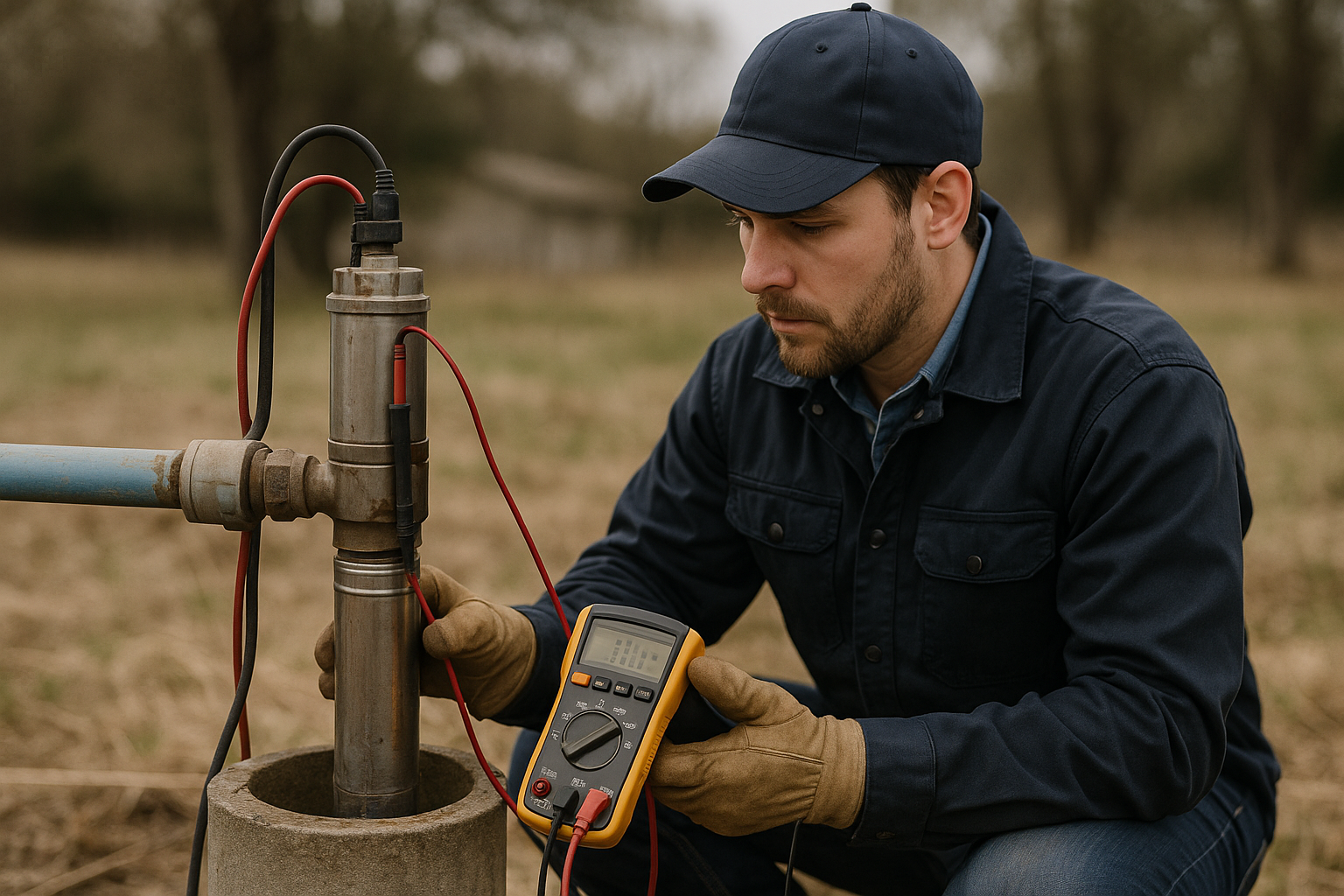
Low Water Pressure From Well: Complete Fix Guide
Diagnose and solve low pressure problems
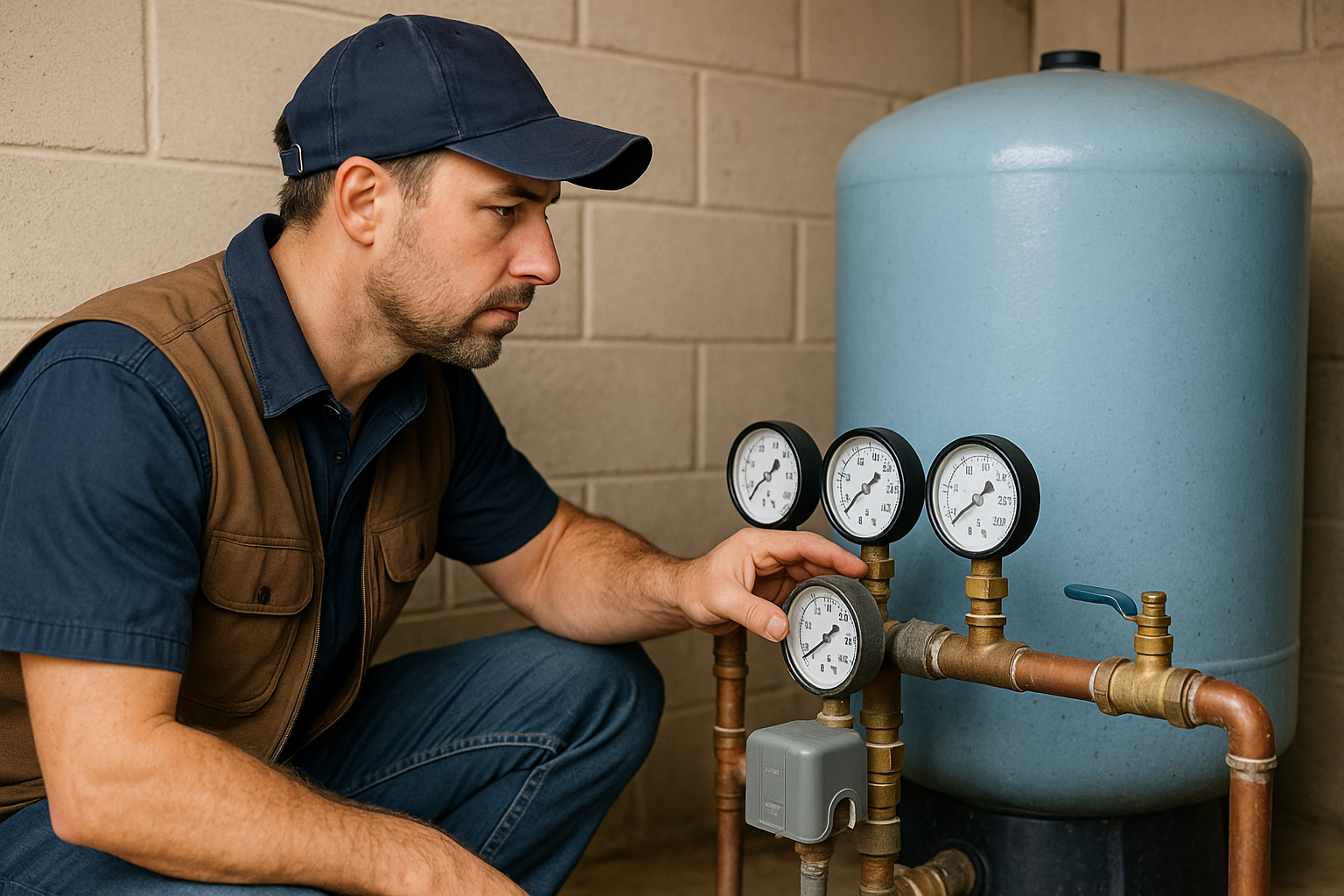
Well Pressure Switch: Settings, Adjustment & Replacement
Everything about pressure switches
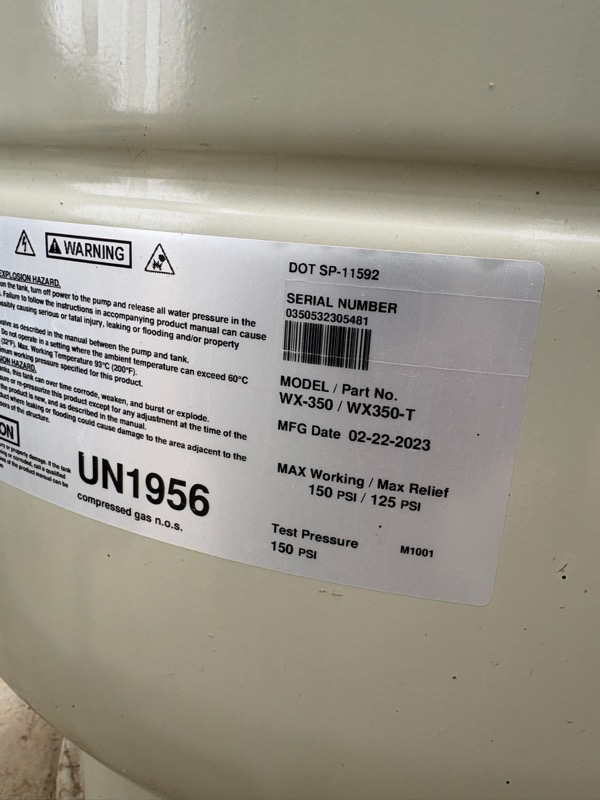
Pressure Tank Maintenance: Complete Guide
Keep your pressure tank working properly
Restoring Strong Well Water Pressure in Cabazon, California
Cabazon sits right in the throat of the San Gorgonio Pass, where Riverside County's desert floor squeezes between Mount San Gorgonio and Mount San Jacinto. If you own a home off Apache Trail, near the outlet malls, or out toward the Morongo foothills, your private well is doing a hard job in a harsh place. Relentless pass winds, blowing sand, summer heat well over 100 degrees, and a water table fed mostly by mountain snowmelt and the Whitewater River drainage all conspire to wear on a well system. When the pressure at your showerhead fades to a trickle, it is rarely random — there is almost always a specific, fixable cause. This guide walks you through how your system works, what tends to fail in Cabazon, and how to get reliable flow back.
How a Cabazon Well Pressure System Actually Works
Most Cabazon properties draw from deep wells, commonly 200 to 800 feet, using a submersible pump set down in the casing. That pump pushes water up to a pressure tank near your house. Inside the tank, a rubber bladder separates water from a cushion of compressed air. As water enters, the air compresses and stores energy; when you open a tap, that air pushes the water out at steady pressure. A pressure switch watches the tank and tells the pump when to start (the "cut-in," often 30 or 40 PSI) and stop (the "cut-out," often 50 or 60 PSI). A small sensing port connects the switch to the water line. Sediment filters sit downstream to catch the fine pass-blown grit that finds its way into desert wells.
The beauty of this design is that the pump does not have to run every time you open a faucet — the tank carries you through small draws and smooths out pressure. But it also means a fault in any single part shows up as low or erratic pressure throughout the home. Knowing which part is misbehaving is the whole game, and it is why a methodical look beats guessing and throwing parts at the problem.
Common Causes of Low Pressure in Cabazon
Across since 2020 of well work in the pass, a handful of culprits show up again and again here:
- Clogged sensing port on the pressure switch. Cabazon's signature fine sand packs the tiny port that feeds the switch, so it misreads pressure and runs the pump erratically. This is one of the most frequent calls we get in town.
- Waterlogged pressure tank. A ruptured bladder lets water fill the air space. The pump then short-cycles — snapping on and off every few seconds — and pressure swings wildly.
- Saturated sediment filters. Blowing grit and aquifer silt blind a filter cartridge fast. A clogged filter is a flow bottleneck that drops pressure throughout the house.
- Declining water table. Drought years and thin snowpack on San Gorgonio lower the static level. If it falls near the pump intake, you get sputtering, air in the lines, and a pump at risk of dry-running.
- Worn pump or motor. Abrasive sediment grinds down impellers, and wind-storm power surges punish pump motors. A tired pump simply cannot lift water like it used to.
- Scale and mineral buildup. Hard water leaves scale inside pipes and on the well screen over the years, narrowing the path water travels and slowly choking flow.
Sudden Drop Versus Gradual Decline
One quick way to narrow the cause is to ask whether the pressure fell off a cliff overnight or faded over months. A sudden loss usually points to a mechanical or electrical failure — a tripped breaker, a failed pressure switch, a ruptured tank bladder, or a pump that has quit. A slow, gradual decline more often means a creeping restriction: filters loading up with sand, scale building in the pipes, a slowly dropping water table, or a pump losing efficiency as its impellers wear. Telling us which pattern you are seeing helps us zero in faster when you call.
What to Check Before You Call
Safety first: shut off power to the well pump at the breaker before touching any electrical component. With that done, you can run through these checks:
- Read the gauge. Watch the pressure gauge near the tank. Does the pump cycle on and off every few seconds with little water use? That points to a tank or switch problem.
- Tap the tank. The top should sound hollow (air) and the bottom solid (water). If the whole tank sounds solid, it is likely waterlogged.
- Check the air charge. Power off and system drained, use a tire gauge on the tank's Schrader valve. It should read about 2 PSI below cut-in. Water spitting out of that valve means the bladder has failed.
- Inspect filters. Open the filter housings (pressure relieved) and look at the cartridges. Heavily packed with sand? Replace them — in Cabazon that can mean every one to three months.
- Clear the sensing port. With power off, a thin wire can clear sand from the switch's sensing port, a classic local fix.
- Look for leaks. With no water running, watch the gauge. A steady pressure drop means a leak somewhere between the wellhead and the house.
When to Call a Cabazon Well Professional
Some jobs need a licensed pro and the right rig. Call us if the pump is failing or must be pulled from a deep casing, if pressure stays low after you have changed filters and checked the tank, if you suspect the water table has dropped below the intake, or if there is any electrical fault in the pump wiring or control box. Pulling a submersible from 600 feet without proper equipment is dangerous and can damage the well, the drop pipe, and the wiring all at once.
Realistic Cost Ranges
We quote up front, and our diagnostic visit is $125 and credited toward the repair. Typical Cabazon ranges: a pressure switch runs $150–$350; a new pressure tank $600–$1,500; a submersible pump replacement $2,500–$5,500 depending on depth and horsepower; sediment filtration $300–$900; an iron, manganese, or softening system $1,500–$3,500; a constant-pressure or booster setup $2,000–$4,500; hydrofracturing to improve a weak well $3,000–$8,000; a turnkey new well $18,000–$42,000; and well abandonment or decommissioning $1,500–$5,000. Financing is available for larger projects.
Serving Cabazon and the San Gorgonio Pass
Southern California Well Service is a licensed C-57 contractor (License #1086994) founded in 2020, with 60+ years of family heritage. We work throughout Cabazon, Banning, Beaumont, Whitewater, and the surrounding pass communities from our offices in Ramona (1077 Main St, Ramona, CA 92065) and Anza (57174 CA-371 (US Hwy 79), Anza, CA 92539). Same-day emergency service is available because in Cabazon's heat, losing water is not something that can wait.
Frequently Asked Questions
How often should I change well sediment filters in Cabazon?
Because pass winds carry so much fine sand into local wells, Cabazon homeowners often replace cartridges every one to three months, far more frequently than homes elsewhere. Check them monthly and consider a multi-stage system with a coarse pre-filter to extend cartridge life.
Why does my pump turn on and off rapidly?
Rapid short-cycling almost always means a waterlogged pressure tank with a ruptured bladder, a faulty pressure switch, or a system leak. Check the tank's air charge first; in Cabazon, a failed bladder is the most common reason.
Can drought really affect my deep Cabazon well?
Yes. Even deep wells depend on snowmelt from San Gorgonio and San Jacinto recharging the aquifer. Sustained drought and low snowpack gradually lower the static water level, which can eventually reach any pump's intake.
How deep are most wells in Cabazon?
Reliable residential wells here commonly range from 200 to over 800 feet. Deeper wells reach more stable water and resist seasonal swings, but they require stronger submersible pumps.
Is it normal to get sand in my water here?
A small amount of fine sediment is common in desert wells, but persistent or heavy sand suggests a worn pump screen, a failing well screen, or undersized filtration. It is abrasive and should be addressed before it damages appliances and the pump.
Do you offer same-day service in Cabazon?
Yes. We keep emergency capacity for the pass and can usually reach Cabazon the same day. Call (760) 440-8520 or text (760) 219-5877.
Get Your Cabazon Water Flowing Again
Whether it is a sand-clogged switch, a tired pump, or a dropping water table, we have the local experience to diagnose it correctly the first time. Call Southern California Well Service at (760) 440-8520, text us at (760) 219-5877, or request a free estimate. Strong, steady water pressure in Cabazon is within reach.