pH Testing Your Well Water: Why Acidity Matters
The pH of your well water affects everything from pipe lifespan to taste to safety. While pH often goes unnoticed, problems from acidic or alkaline water can cost thousands in plumbing damage. Here's what every well owner should know.
📋 In This Guide
- Understanding Water pH
- Why Low pH (Acidic Water) Is a Problem
- Why High pH (Alkaline Water) Is a Problem
- What Causes Low pH in Well Water?
- Testing Your Water's pH
- Correcting Low pH (Acidic Water)
- Correcting High pH (Alkaline Water)
- pH and Other Water Quality Factors
- Need Your Water's pH Tested?
- San Diego County pH Patterns
- Frequently Asked Questions
- Related Articles
Understanding Water pH
pH measures how acidic or alkaline (basic) water is on a scale from 0 to 14:
- 0-6.9: Acidic (lower numbers = more acidic)
- 7.0: Neutral
- 7.1-14: Alkaline/Basic (higher numbers = more alkaline)
The scale is logarithmic—each whole number represents a 10x change. Water with pH 6 is ten times more acidic than pH 7.
Common pH Values for Reference
| Substance | Approximate pH |
|---|---|
| Battery acid | 1 |
| Lemon juice | 2 |
| Vinegar | 3 |
| Coffee | 5 |
| Rain water | 5.5-6 |
| Milk | 6.5 |
| Pure water | 7.0 |
| Sea water | 8.1 |
| Baking soda solution | 8.5 |
| Bleach | 12 |
EPA Recommendations
The EPA recommends drinking water pH between 6.5 and 8.5. This is a secondary (non-enforceable) standard based on aesthetic and technical concerns rather than direct health effects.
Why Low pH (Acidic Water) Is a Problem
Pipe and Fixture Corrosion
This is the primary concern with acidic water. Low pH water is "aggressive"—it dissolves metals it contacts:
- Copper pipes: Acidic water leaches copper, creating blue-green stains and pinholes over time
- Lead solder/pipes: More dangerous—lead dissolves into water you drink
- Brass fixtures: Dezincification weakens faucets and valves
- Galvanized steel: Accelerated rust and corrosion
- Water heater: Shortened tank life, anode rod consumption
Signs of Acidic Water Corrosion
- Blue-green stains on fixtures, tubs, and sinks (copper)
- Rust-colored stains from iron pipes
- Metallic taste (copper, iron, or other metals)
- Pinhole leaks in copper pipes
- Short water heater life (less than 8-10 years)
- Frequent faucet/fixture failure
Health Concerns
The water acidity itself isn't directly harmful to drink. The danger comes from what acidic water dissolves:
- Copper: High levels cause gastrointestinal issues; EPA limit is 1.3 mg/L
- Lead: No safe level—causes developmental issues, especially in children; EPA action level is 0.015 mg/L
- Cadmium, zinc, other metals: Various health effects depending on concentration
If you have low pH water AND old plumbing, get your water tested for metals.
Why High pH (Alkaline Water) Is a Problem
While less damaging than acidic water, very alkaline water has its issues:
Scale Buildup
- Mineral deposits in pipes reduce flow
- Water heater efficiency decreases
- White scale on fixtures and dishes
- Shortened appliance life
Taste and Appearance
- Bitter or soda-like taste
- Slimy or slippery feel
- Difficulty rinsing soap
Treatment Interference
- Chlorine disinfection less effective above pH 8
- Some water treatment systems work poorly with high pH
What Causes Low pH in Well Water?
1. Acidic Bedrock
Certain rock types produce naturally acidic water:
- Granite: Common in San Diego mountain areas like Julian, Pine Valley, and Palomar Mountain
- Some sandstones: Low mineral content allows acidity
- Igneous rocks: Generally produce lower pH water
2. Organic Acids
Decaying vegetation produces humic and fulvic acids that lower pH. Common in:
- Wooded areas with thick organic matter
- Shallow wells near marshes or wetlands
- Areas with thick leaf litter
3. Dissolved Carbon Dioxide
CO₂ dissolves in water to form carbonic acid. Sources include:
- Atmospheric CO₂ absorbed by rainwater
- Microbial activity in soil
- Deep aquifers with geologic CO₂
4. Low Mineral Content
Water with very low total dissolved solids (TDS) has little buffering capacity. Even small amounts of acid dramatically affect pH.
5. Contamination
Industrial, agricultural, or mining activity can acidify groundwater:
- Acid mine drainage
- Industrial waste
- Some agricultural chemicals
Testing Your Water's pH
Home Testing Options
- pH test strips: Inexpensive ($5-10), dip in water and compare color. Accuracy ±0.5 pH units.
- Liquid drop kits: More accurate than strips ($10-20). Add drops to water sample, compare color.
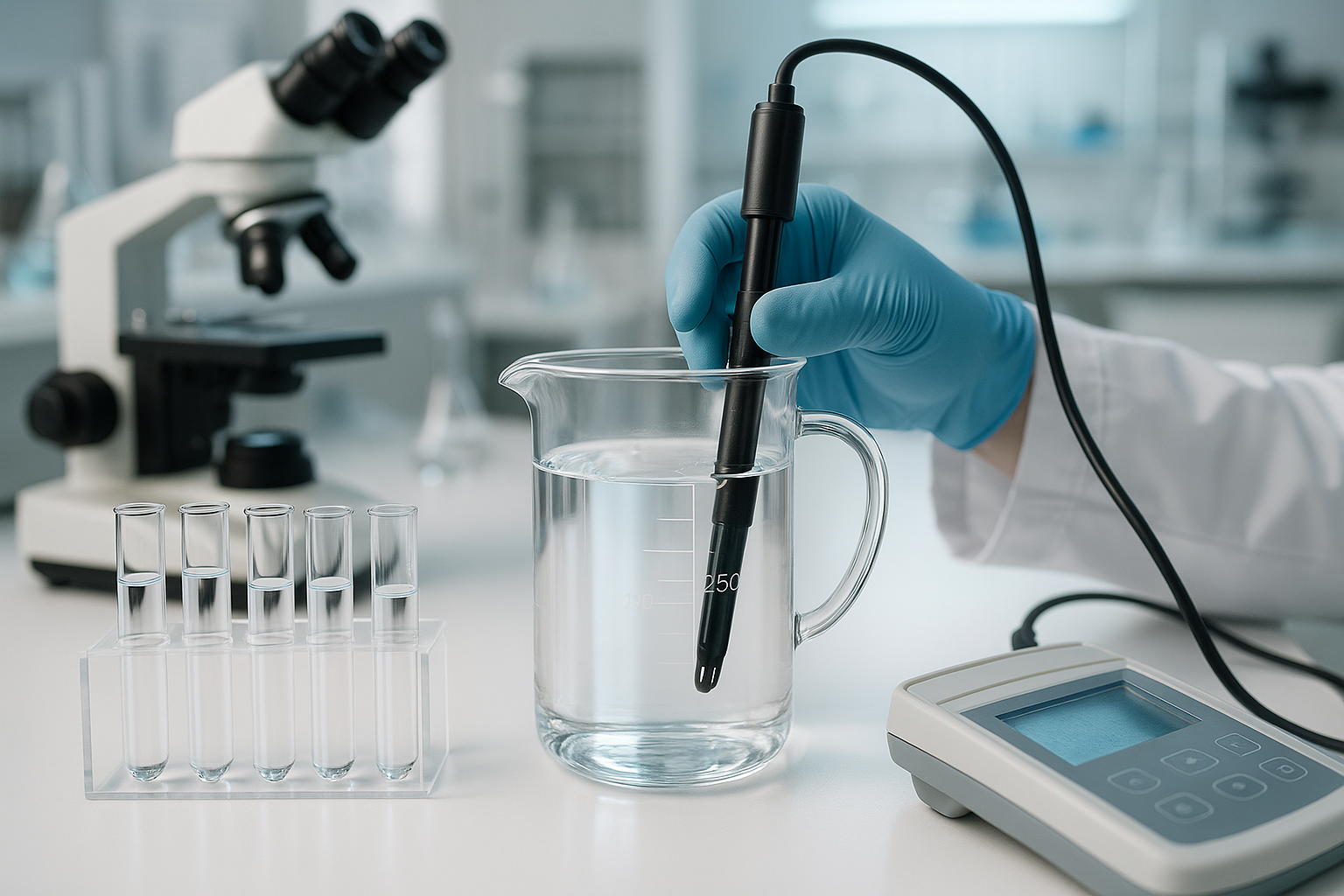
- Digital pH meter: Most accurate home option ($15-50). Requires calibration and maintenance.
Professional Laboratory Testing
For the most accurate results, especially if you're planning treatment:
- pH is typically included in standard water panels ($50-100)
- More stable than home tests (pH can change after collection)
- Often includes related parameters like alkalinity, hardness, and TDS
Testing Tips
- Test fresh: pH changes as water sits and loses/gains gases
- Test at the well: Before water enters house plumbing
- Test multiple times: pH can vary seasonally
- Test after rain: Surface infiltration may temporarily change pH
Correcting Low pH (Acidic Water)
Option 1: Calcite Neutralizer Filter
The most common solution. Water flows through a tank of calcite (calcium carbonate), which slowly dissolves and raises pH.
- Best for: pH 6.0-6.8
- Raises pH to: 7.0-7.5
- Maintenance: Add calcite media annually or semi-annually
- Side effect: Increases hardness slightly (may need softener)
- Cost: $800-1,500 installed
Option 2: Calcite + Magnesium Oxide (Corosex)
For more aggressive water, magnesium oxide (sold as Corosex or similar) provides faster, stronger pH correction.
- Best for: pH 5.5-6.5
- Raises pH to: 7.0-8.0
- Mix ratio: Typically 70% calcite, 30% Corosex
- Caution: Can over-correct; needs proper sizing
Option 3: Soda Ash Injection
For very low pH water, a chemical feed pump injects sodium carbonate (soda ash) solution.
- Best for: pH below 5.5 or where neutralizer tanks aren't practical
- Precise control: Adjustable dosing
- Maintenance: Refill solution tank regularly
- Side effect: Increases sodium content
- Cost: $1,000-2,000 installed
Option 4: Sodium Hydroxide Injection
Similar to soda ash but stronger. For professional application only due to caustic nature of the chemical.
Correcting High pH (Alkaline Water)
Less common but sometimes needed:
Acid Injection
- Phosphoric acid or citric acid injection
- Requires chemical feed pump
- Professional installation and monitoring
CO₂ Injection
- Carbon dioxide bubbled into water
- Forms carbonic acid, lowering pH
- More common in commercial applications
pH and Other Water Quality Factors
pH and Water Softening
Acid neutralizers add hardness to water. You may need a water softener downstream of the neutralizer to handle the increased calcium.
pH and Disinfection
Chlorine disinfection works best at pH 7-7.5. Above pH 8, much of the chlorine becomes ineffective hypochlorite ion. UV disinfection is not pH-sensitive.
pH and Iron/Manganese Treatment
Oxidation-based iron removal often requires pH above 7.0 to work effectively. Treat pH first, then iron.
Need Your Water's pH Tested?
We provide comprehensive water testing including pH, metals, and related parameters to identify any issues.
Call (760) 440-8520Serving San Diego, Riverside & San Bernardino Counties
San Diego County pH Patterns
Local pH typically depends on geology:
- Coastal areas: Generally neutral to slightly alkaline (7.0-8.0) due to marine sediments
- Mountain/granite areas: Often acidic (5.5-6.5) in areas like Julian, Palomar, Cuyamaca
- Valley alluvial areas: Usually neutral to slightly alkaline (7.0-7.8)
- Desert areas: Often alkaline (7.5-8.5) with high mineral content
Frequently Asked Questions
- What is a good pH level for well water?
- The EPA recommends drinking water pH between 6.5 and 8.5. Ideal is around 7.0 (neutral). Below 6.5 is considered acidic and may corrode pipes. Above 8.5 may taste bitter and can indicate hardness issues. Most San Diego County wells range from 6.8-8.0.
- Is acidic well water dangerous to drink?
- The water acidity itself isn't necessarily harmful, but acidic water (low pH) corrodes metal pipes, potentially leaching copper, lead, and other metals into your drinking water. This is the real danger—not the acidity itself but what it dissolves from your plumbing. Blue-green stains around drains indicate copper corrosion.
- How do I raise the pH of my well water?
- Common solutions include: calcite neutralizer filter (slowly dissolves calcium carbonate to raise pH), soda ash injection for very low pH water, or a combination of calcite and Corosex (magnesium oxide) for aggressive water. A water professional can recommend the right system based on your specific pH level.
- Why is my well water so acidic?
- Low pH in well water typically comes from: naturally acidic bedrock (granite, some sandstones), organic acids from decaying vegetation, dissolved CO₂ from soil or deep formations, very low mineral content that provides no buffering, or contamination from industrial/agricultural sources. San Diego mountain areas often have naturally acidic water due to granite bedrock.
- How often should I test my well water pH?
- Test annually as part of a comprehensive water test, and whenever you notice signs of corrosion (blue-green stains, metallic taste, pinhole leaks). If you have a pH treatment system, test periodically to verify it's working correctly.
- Does boiling water change the pH?
- Yes, but not helpfully. Boiling drives off dissolved CO₂, which usually raises pH slightly. However, it also concentrates any dissolved minerals. Boiling isn't a practical treatment for acidic well water.
Related Articles
Continue learning about well maintenance and troubleshooting