Sediment Filters for Well Water: Complete Guide
📋 In This Guide
What Are Sediment Filters?
Purpose
Sediment filters physically trap and remove solid particles from water. They catch:
- Sand and grit
- Silt and clay
- Rust and scale particles
- Dirt and debris
What They Don't Remove
- Dissolved minerals (hardness, iron in solution)
- Bacteria
- Chemicals
- Taste and odor
For those, you need additional treatment systems.
Why Well Water Needs Filtration
- Protects plumbing fixtures from clogging
- Extends appliance life (water heater, dishwasher)
- Prevents staining
- Improves clarity
- Pre-filters for other treatment systems
Types of Sediment Filters
Cartridge Filters
Most common for residential wells.
- Replaceable cartridge in housing
- Easy to change
- Various sizes and ratings
- Cost: $75-$200 for housing, $10-$30 per cartridge
Spin-Down Filters
Good for heavy sediment loads.
- Screen catches particles
- Flush to clean (no cartridge to replace)
- Good as pre-filter for sandy water
- Cost: $50-$150
Bag Filters
For high-flow applications.
- Bag-style cartridge
- Higher flow capacity
- Good for irrigation systems
- Cost: $100-$300 housing, $15-$40 bags
Self-Cleaning Filters
Automatic backwash systems.
- Automatically flush sediment
- No manual maintenance
- Higher upfront cost
- Cost: $300-$1,000+
Micron Ratings Explained
What Is a Micron?
A micron (micrometer) is one-millionth of a meter. For reference:
- Human hair: 50-100 microns
- Grain of sand: 100-500 microns
- Bacteria: 0.2-10 microns
Filter Ratings
| Micron Rating | Catches | Best For |
|---|---|---|
| 50-100 μm | Large sand, debris | Pre-filtration, very dirty water |
| 20-30 μm | Fine sand, silt | Sandy well water |
| 5-10 μm | Visible particles | Most residential (standard) |
| 1-5 μm | Fine sediment, some bacteria | Polishing, pre-RO |
| 0.5-1 μm | Very fine, cryptosporidium | High purity needs |
Nominal vs Absolute
- Nominal: Catches most particles of rated size (60-90%)
- Absolute: Catches all particles of rated size (99.9%)
- Absolute is more expensive, needed for critical applications
How to Choose the Right Filter
Assess Your Water
- Visible sand or grit = start with 20-30 micron
- Occasional cloudiness = 5-10 micron
- Clean-looking water = 5 micron sufficient
- Protecting RO system = 1-5 micron
Consider Flow Rate
- Match filter size to your needs
- Undersized filter = pressure drop
- 10" cartridge: 3-5 GPM typical
- 20" cartridge: 5-10 GPM
- Dual or larger systems for higher flow
Multi-Stage Approach
For very dirty water, use staged filtration:
- Stage 1: Spin-down or 50 micron (catch big stuff)
- Stage 2: 20 micron (fine sand)
- Stage 3: 5 micron (polishing)
This extends filter life and improves results.
Installation
Location
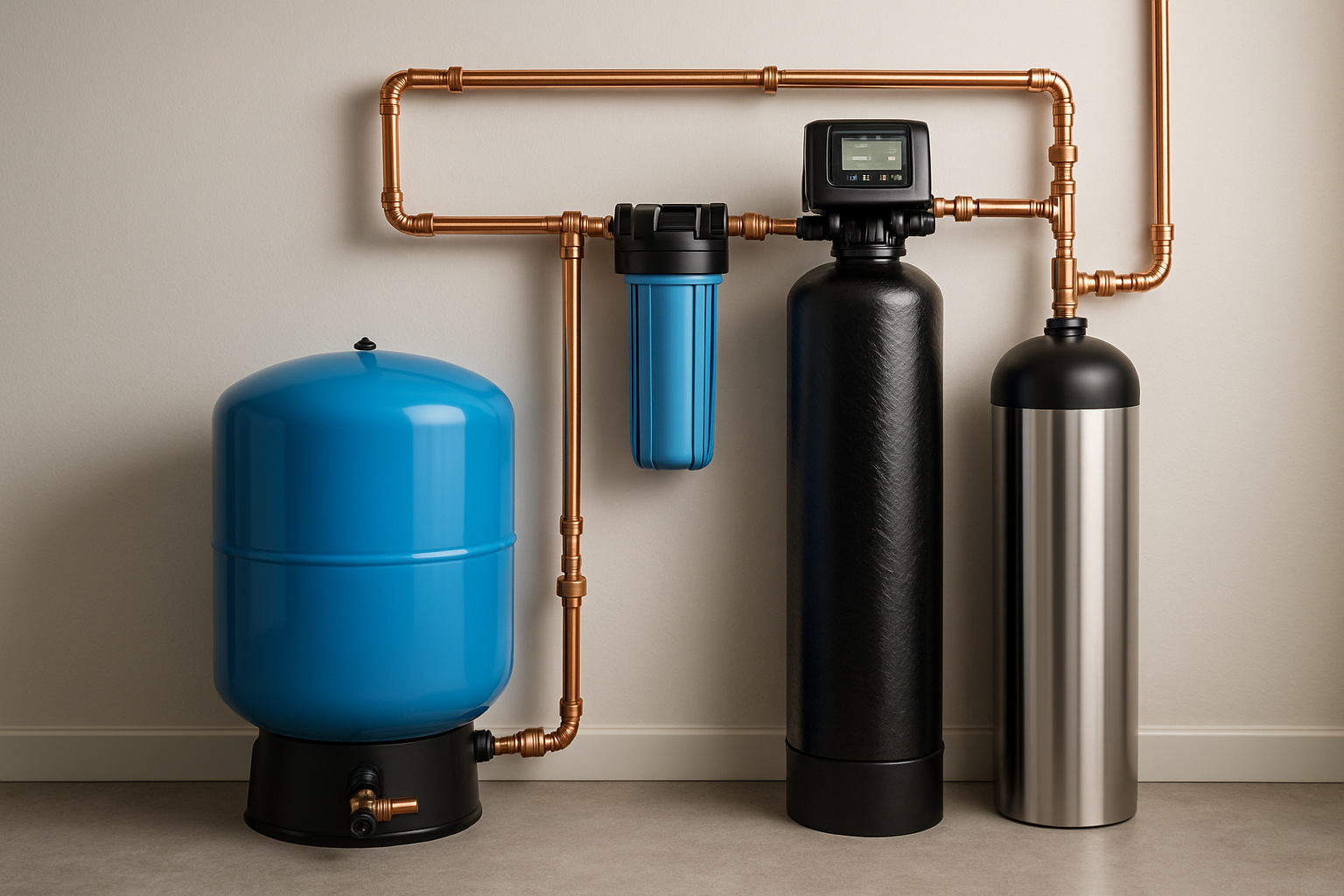
- After pressure tank
- Before water treatment systems
- Before water heater and appliances
- Accessible for filter changes
Components Needed
- Filter housing
- Mounting bracket
- Shutoff valves (before and after)
- Pressure relief button (on many housings)
- Fittings to match your plumbing
Professional vs DIY
- DIY: Possible with basic plumbing skills
- Requires soldering or SharkBite fittings
- Professional install: $100-$300 labor
- Ensures proper setup and no leaks
Installation Costs
| System Type | Installed Cost |
|---|---|
| Basic single cartridge | $150-$300 |
| Dual cartridge | $250-$450 |
| Spin-down + cartridge | $200-$400 |
| Multi-stage system | $400-$800 |
Maintenance
When to Change Cartridges
- Noticeable drop in water pressure
- Scheduled time interval (3-6 months typical)
- Visible discoloration (for clear housings)
Change Frequency
| Sediment Level | Change Interval |
|---|---|
| Low (clean water) | 6-12 months |
| Moderate | 3-6 months |
| High (sandy) | 1-3 months |
| Very high | Monthly or spin-down pre-filter |
Changing the Cartridge
- Turn off water supply (close shutoff valve)
- Release pressure (use relief button or open faucet)
- Unscrew housing
- Remove old cartridge
- Clean housing if needed
- Insert new cartridge
- Hand-tighten housing
- Turn on water, check for leaks
We service all major pump brands including Franklin Electric, Grundfos, Goulds (Xylem), and Sta-Rite (Pentair). Our trucks carry common parts and components for same-day repairs.
Frequently Asked Questions
Do I need a sediment filter for my well?
Highly recommended. Even clear-looking well water often has particles that can clog fixtures and damage appliances. It's inexpensive protection.
What micron filter is best for well water?
5 micron is standard for most wells. Use 20-30 micron pre-filter for very sandy water. Add 1 micron for high-purity needs.
How often should I change my sediment filter?
Every 3-6 months for average use. More often for high sediment; less often for clean water. Change when pressure drops.
Will a sediment filter remove iron?
Only oxidized (particulate) iron. Dissolved iron passes through and requires different treatment (iron filter, oxidation system).
Can I wash and reuse sediment filter cartridges?
Spun poly and pleated filters can sometimes be rinsed and reused once or twice. String-wound and carbon filters cannot.
Need Help with Sediment Filtration?
We can assess your water and install the right filtration system.
Related Articles
Continue learning about well maintenance and troubleshooting