Whether you're running a hobby farm, starting a homestead, or expanding a small agricultural operation, reliable water is the foundation of everything. Your well needs to supply the house, water livestock, irrigate gardens and orchards, and handle seasonal peaks — all while fitting your budget.
At Southern California Well Service, we help small farmers throughout San Diego and Riverside Counties plan and install well systems that grow with their operations. Here's everything you need to know about sizing, planning, and budgeting for your farm well.
Planning a Farm Well?
We specialize in small farm and homestead wells. Get a free on-site assessment and honest advice about your water options.
📞 Call (760) 440-8520
Request AssessmentCalculate Your Water Needs
The first step in well planning is understanding how much water you'll use. Add up all your needs:
Household Use
- Per person: 50-100 gallons/day
- Average household: 150-300 gallons/day
- Include: Drinking, cooking, bathing, laundry, dishwashing
Livestock Water Requirements
| Animal | Daily Water (Summer) | Notes |
|---|---|---|
| Horse | 10-15 gallons | More if working or lactating |
| Beef cattle | 15-25 gallons | Dairy cattle need more |
| Dairy cow | 25-35 gallons | Plus water for cleaning |
| Goat/Sheep | 2-4 gallons | Lactating does need more |
| Pig | 3-5 gallons | More in hot weather |
| Chickens (per bird) | 0.5 gallons | Increases in heat |
| Turkeys (per bird) | 0.75 gallons | |
| Rabbits (per animal) | 0.25 gallons |
Example: 3 horses (45 gal) + 10 chickens (5 gal) + 4 goats (12 gal) = 62 gallons/day for livestock
Garden and Orchard Irrigation
Irrigation needs depend on crops, soil, and season:
- Vegetable garden: 0.6-1.0 gallons per square foot per week
- Drip irrigation: More efficient, reduces water by 30-50%
- Fruit trees: 5-20 gallons per tree per day (depends on size and type)
- Raised beds: May need more frequent watering
Example: 2,000 sq ft garden × 0.6 gal/sq ft = 1,200 gallons/week = 171 gallons/day average
Other Farm Uses
- Equipment washing: 50-200 gallons per session
- Barn/coop cleaning: 20-50 gallons
- Pond/water feature filling: Calculate initial fill + evaporation makeup
- Fire protection: Consider reserve capacity
Sample Farm Water Budget
| Use | Daily Gallons |
|---|---|
| Household (4 people) | 250 |
| 3 horses | 45 |
| 20 chickens | 10 |
| 4 goats | 12 |
| Garden (2,000 sq ft) | 170 |
| 8 fruit trees | 80 |
| Misc farm use | 50 |
| Total Daily Need | 617 gallons |
Add 20% buffer: 617 × 1.2 = 740 gallons/day target
Well Sizing: GPM vs. Storage
A common misconception is that you need a high-GPM well to run a farm. Actually, lower-yield wells with adequate storage often work just as well and cost less.
How Storage Compensates for Low Flow
A 5 GPM well produces:
- 300 gallons per hour
- 7,200 gallons per day (if run continuously)
Even at only 5 GPM, you can meet 700+ gallons/day demand easily. The key is having enough storage to handle peak demand periods.
Recommended Storage Tank Sizes
| Well Yield | Minimum Storage | Recommended Storage |
|---|---|---|
| 3-5 GPM | 1,500 gallons | 2,500-5,000 gallons |
| 5-10 GPM | 1,000 gallons | 1,500-2,500 gallons |
| 10+ GPM | 500 gallons | 1,000-2,000 gallons |
Learn more: Storage Tank Systems for Low-Yield Wells
Small Farm Well System Components
The Well
- Typical depth: 200-500+ feet in San Diego County (varies by location)
- Casing: Usually 6" diameter, steel or PVC
- Target yield: 5-15 GPM adequate for most small farms
Pump System
- Submersible pump: Most common, located down in the well
- Sizing: Match to well yield and pressure needs
- Constant pressure systems: Great for farms with variable demand — learn more
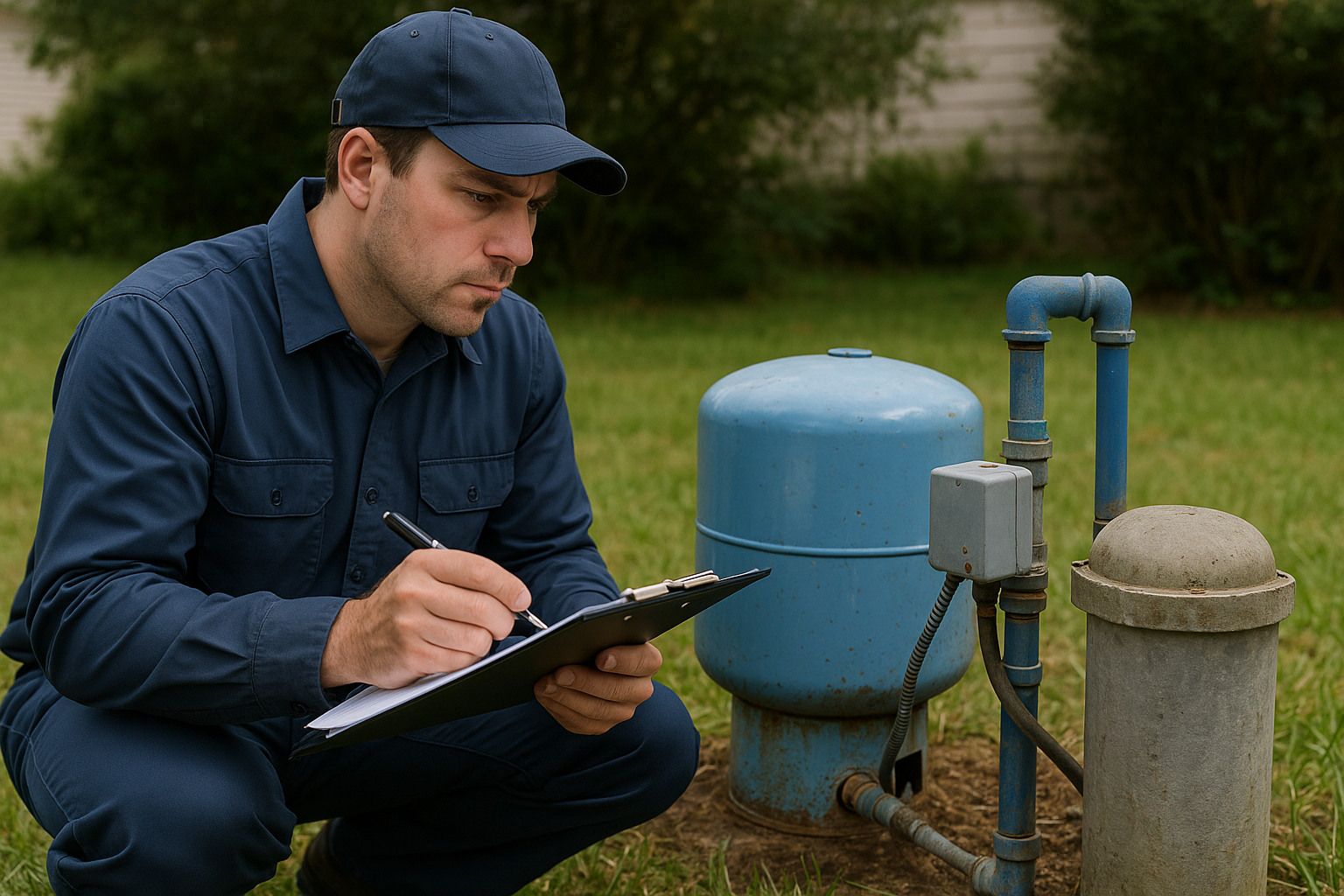
Pressure Tank
- Purpose: Maintains pressure, reduces pump cycling
- Farm sizing: Larger tanks (40-80 gallon) reduce wear on pump
Storage Tank (Optional but Recommended)
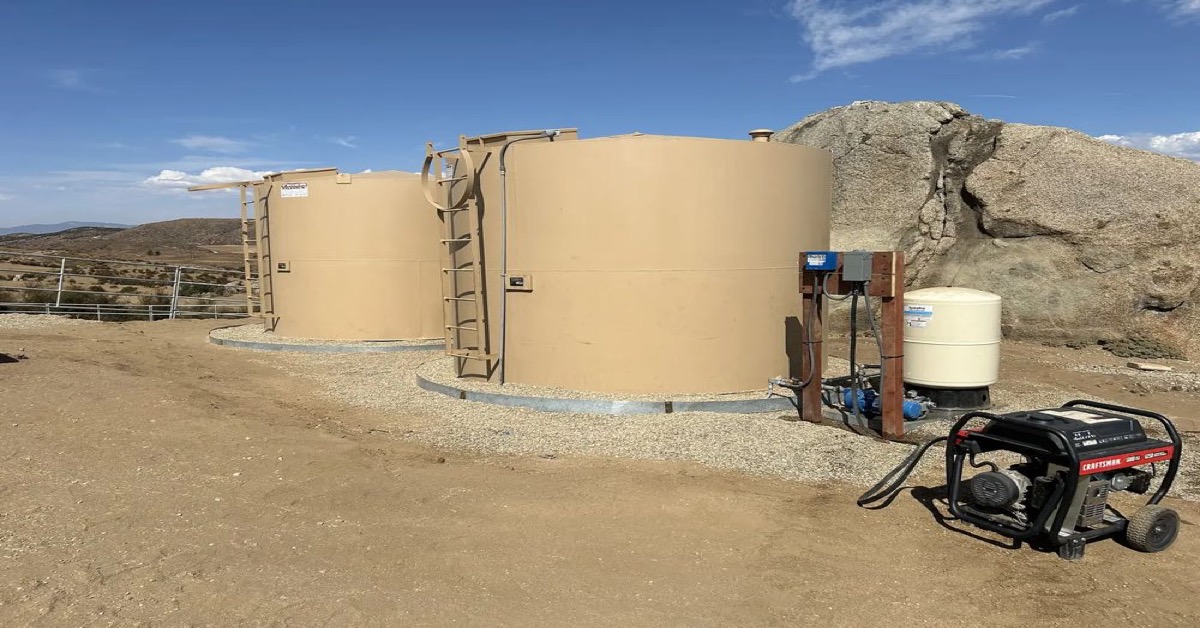
- Above-ground: Poly tanks, 500-10,000+ gallons, affordable
- Underground: More expensive but protected from heat/freezing
- Booster pump: Delivers stored water at adequate pressure
Distribution System
- Main lines: 1" or larger PVC or poly pipe
- Frost-free hydrants: Essential for livestock areas
- Irrigation zones: Drip systems for gardens, sprinklers for pasture
- Automatic waterers: Float-valve troughs for livestock
Water Quality Considerations
Farm water quality matters for both human consumption and livestock/plant health:
Testing Requirements
At minimum, test for:
- Coliform bacteria: Essential for drinking water safety
- Nitrates: Especially if near agriculture or septic systems
- pH and hardness: Affects pipes, equipment, and plants
- Iron/manganese: Can stain and clog irrigation systems
Learn more: Complete Water Testing Guide
Treatment Options
- Whole-house filtration: For sediment and basic treatment
- Water softener: If hardness is problematic
- UV sterilization: Chemical-free bacteria treatment
- Iron filter: If iron staining is an issue
Note: Livestock and irrigation water generally don't need treatment unless quality is very poor. Save treatment costs for household water.
Cost Planning
Initial Installation Costs
| Component | Cost Range |
|---|---|
| Well drilling (200-400 ft) | $10,000-$25,000 |
| Pump and installation | $3,000-$8,000 |
| Pressure tank | $500-$1,500 |
| Storage tank (2,500 gal) | $2,000-$5,000 |
| Booster pump | $1,000-$2,500 |
| Basic distribution | $2,000-$10,000 |
| Total Typical Range | $20,000-$50,000 |
Annual Operating Costs
- Electricity: $300-$1,200/year depending on usage
- Maintenance: $200-$500/year
- Water testing: $100-$300/year
- Treatment supplies: $100-$500/year if treating
Typical total: $700-$2,500/year operating cost
Compare to municipal water at $3-$8 per 1,000 gallons — even a modest farm using 1,000 gallons/day would pay $1,000-$3,000/year for municipal water, plus you'd need infrastructure to bring municipal supply to the property.
Planning for Growth
If you're starting small but plan to expand, think ahead:
- Size the well for future needs: Drilling deeper or larger initially is cheaper than drilling a second well later
- Install larger distribution mains: Easier to add branch lines later
- Plan storage tank location: Leave room for additional tanks
- Document everything: Well location, pipe routes, valves — you'll need this information later
Common Mistakes to Avoid
1. Undersizing the System
Estimate generously. Animals drink more in summer, gardens need more water than expected, and you'll probably add more livestock or expand the garden.
2. Skipping Storage
Without storage, you're at the mercy of your well's flow rate. A storage tank provides buffer for peak demands and peace of mind during pump repairs.
3. Ignoring Water Quality
Test before drilling if possible (pilot hole) and definitely test after. Some areas have naturally occurring contamination that affects usability.
4. DIY Distribution
Improperly installed pipes freeze, leak, and fail. Get professional help at least for the main lines and critical connections.
5. No Backup Plan
What happens if your pump fails? Livestock need water daily. Have a plan — generator, backup pump, or emergency water delivery contact.
Expert Small Farm Well Planning
Southern California Well Service has helped hundreds of small farmers and homesteaders get reliable water. We offer:
- ✅ Free on-site assessments
- ✅ Honest advice (we'll tell you if existing water sources might work)
- ✅ Complete system design and installation
- ✅ Ongoing maintenance and emergency service
📞 Call (760) 440-8520 to discuss your farm
Request Assessment