
Water Well Cost 2026: Complete Pricing Guide ($15,000-$50,000+)
📋 In This Guide
- Table of Contents
- 2026 Well Cost Overview
- Drilling Costs Per Foot in 2026
- Equipment & Pump Costs
- Permit & Testing Fees
- Factors That Affect Your Well Cost
- Hidden Costs to Watch For
- Return on Investment: Well vs. City Water
- Financing Options for Well Drilling
- Frequently Asked Questions
- Get Your Free 2026 Well Drilling Estimate
2026 Well Cost Overview
Planning to drill a water well in 2026? You're making a smart investment in water independence. However, understanding the true costs helps you budget properly and avoid surprises.
Here's what you can expect to pay in Southern California:
| Well Type | Depth Range | Total Cost Range |
|---|---|---|
| Shallow Domestic Well | 50-100 feet | $5,000-$15,000 |
| Standard Residential Well | 100-300 feet | $15,000-$35,000 |
| Deep Residential Well | 300-500 feet | $35,000-$50,000 |
| Agricultural/Commercial Well | 400-800+ feet | $50,000-$100,000+ |
These costs include drilling, casing, well development, pump installation, and basic electrical work. Permit fees, water testing, and site preparation are additional.
Drilling Costs Per Foot in 2026
Drilling is the largest cost component, typically representing 50-70% of your total well cost. Rates vary based on geology and equipment needed:
Cost Per Foot by Drilling Method
- Rotary Drilling (most common): $25-$50 per foot
- Cable Tool/Percussion: $30-$55 per foot
- Air Rotary (hard rock): $35-$65 per foot
- Mud Rotary (unstable soil): $30-$55 per foot
Cost Per Foot by Geology
- Sand/Gravel: $25-$35 per foot (fastest drilling)
- Clay/Sediment: $30-$45 per foot
- Decomposed Granite: $35-$50 per foot
- Hard Rock/Granite: $45-$65 per foot (slowest)
Example: 250-Foot Well in Mixed Geology
A typical 250-foot well in San Diego County might encounter:
- First 50 feet (topsoil/clay): 50 × $35 = $1,750
- Next 100 feet (decomposed granite): 100 × $45 = $4,500
- Final 100 feet (fractured rock): 100 × $55 = $5,500
- Total drilling: $11,750
Equipment & Pump Costs
After drilling, you need equipment to extract and deliver the water. Here's what to budget:
Well Casing
- 4-inch PVC casing: $8-$15 per foot
- 6-inch PVC casing: $12-$22 per foot
- Steel casing (where required): $20-$35 per foot
Well Screen & Gravel Pack
- Slotted PVC screen: $15-$25 per foot
- Stainless steel screen: $30-$50 per foot
- Filter pack gravel: $200-$500 total
Submersible Pump System
| Pump Size | Typical Use | Installed Cost |
|---|---|---|
| 1/2 HP | Small household, low demand | $1,200-$2,000 |
| 3/4 HP | Average household | $1,500-$2,500 |
| 1 HP | Large household, irrigation | $2,000-$3,500 |
| 1.5-2 HP | Deep wells, high demand | $3,000-$5,000 |
| 3-5 HP | Agricultural/commercial | $5,000-$12,000 |
Pressure Tank
- 20-gallon tank: $200-$400
- 40-gallon tank: $350-$600
- 80-gallon tank: $600-$1,000
- 120-gallon tank: $900-$1,500
Control Box & Electrical
- Control box: $200-$500
- Pressure switch: $50-$150
- Wiring & conduit: $300-$800
- Electrical panel upgrade (if needed): $500-$2,000
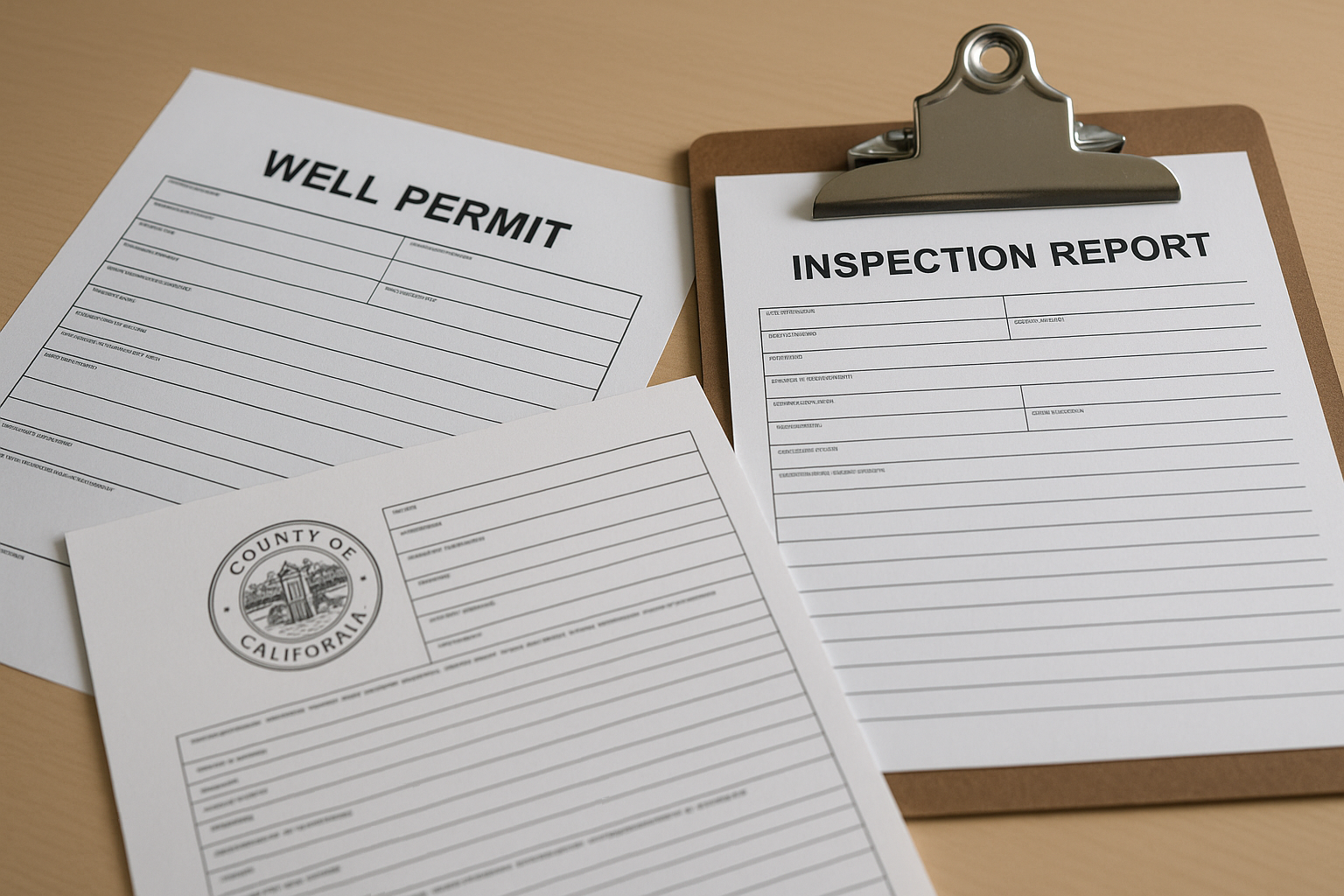
Permit & Testing Fees
California requires permits for all new wells. Budget for these regulatory costs:
Permit Fees by County
- San Diego County: $800-$1,500
- Riverside County: $600-$1,200
- San Bernardino County: $500-$1,000
- Orange County: $1,000-$2,000
Required Testing
- Basic bacteria test: $50-$100
- Standard water quality panel: $150-$300
- Comprehensive testing (Title 22): $300-$600
- Yield/pump test: $300-$800
Additional Requirements
- Well completion report: $50-$100
- Property survey (if required): $400-$800
- Environmental review (some areas): $500-$2,000
Factors That Affect Your Well Cost
1. Well Depth (Biggest Factor)
Every additional foot adds $25-$65 to your drilling cost. Depth requirements vary dramatically by location:
- Coastal areas: Often 100-200 feet
- Inland valleys: 150-350 feet typical
- Mountain/foothill areas: 200-500+ feet common
- Desert regions: 300-600+ feet not unusual
2. Geology & Rock Type
Hard rock formations (granite, basalt) require specialized equipment and drill bits, increasing costs 30-50% compared to soft formations.
3. Site Accessibility
Difficult access adds $500-$3,000+ for:
- Road building or improvement
- Compact rig requirements (tight spaces)
- Steep terrain setup
- Long water truck hauls
4. Water Quality Issues
Poor water quality may require treatment systems:
- Water softener: $1,500-$4,000
- Iron/manganese filter: $1,000-$3,000
- UV disinfection: $500-$1,500
- Reverse osmosis: $2,000-$6,000
5. Time of Year
Drilling during peak season (spring/summer) may cost 10-20% more due to demand. Winter drilling often offers better pricing but weather delays can occur.
Return on Investment: Well vs. City Water
Is a well worth the investment? Let's do the math:
10-Year Cost Comparison
City Water
- Average San Diego water bill: $150/month
- 10-year cost: $150 × 12 × 10 = $18,000
- Plus rate increases (typically 5% annually): $23,000+
Private Well
- Initial investment: $25,000 (average)
- Annual maintenance: $400/year × 10 = $4,000
- Electricity: $30/month × 12 × 10 = $3,600
- Pump replacement (year 8): $2,500
- 10-year total: $35,100
Break-even: ~12-15 years for most homeowners. After that, it's essentially free water.
Additional Well Benefits
- Water independence during droughts and restrictions
- Increased property value ($10,000-$30,000+)
- No water shutoffs or service interruptions
- Often better-tasting water (no chlorine)
- Unlimited irrigation without tiered pricing
Financing Options for Well Drilling
Don't have $15,000-$50,000 upfront? Consider these financing options:
Home Equity Loan/HELOC
Often the best rates (5-8%) since wells increase property value. Interest may be tax-deductible.
Well Drilling Company Financing
Many drilling companies offer payment plans. Rates vary (8-15%), but approval is often easier than bank loans.
USDA Rural Development Loans
If you're in a rural area, USDA loans offer favorable terms for water system improvements.
Personal Loans
Unsecured personal loans typically range 8-20% APR. Quick approval but higher rates.
Credit Cards (Short-Term)
Some 0% APR promotional offers can work for smaller wells if you can pay off within the promotional period.
Frequently Asked Questions
How much does it cost to drill a water well in 2026?
The average cost to drill a water well in 2026 ranges from $15,000 to $50,000+ in Southern California, depending on depth, location, geology, and equipment needed. Shallow wells (under 100 feet) cost $5,000-$15,000, while deep wells (300+ feet) can exceed $50,000.
What affects water well drilling costs?
Major factors include well depth (the biggest cost driver at $25-$65 per foot), geology/rock type, well diameter, pump and equipment selection, permit fees, water testing requirements, and site accessibility.
Is drilling a well cheaper than city water?
While well drilling has high upfront costs ($15,000-$50,000+), most homeowners recover their investment within 12-15 years through eliminated water bills. Annual well maintenance averages $300-$500 compared to $600-$1,800+ for city water bills.
How deep does a well need to be in Southern California?
Well depths in Southern California typically range from 100-500 feet, depending on location. Coastal areas may only need 100-200 feet, while inland and mountain areas often require 250-500+ feet to reach reliable aquifers.
Can I drill my own well to save money?
California requires licensed well drillers (C-57 license) for any well over 50 feet deep. DIY drilling is only legal for very shallow wells and often isn't practical given equipment requirements. Professional drilling ensures proper construction and protects your investment.
What's included in a well drilling quote?
A complete quote should include: drilling, casing, well screen, gravel pack, well development, pump installation, pressure tank, control box, basic electrical, and startup testing. Ask what's NOT included (permits, water testing, trenching to house, storage tanks).
How long does well drilling take?
Actual drilling typically takes 1-3 days for a residential well. However, the complete process (permits, drilling, equipment installation, testing) usually spans 2-6 weeks. Deep wells or difficult geology may take longer.
Get Your Free 2026 Well Drilling Estimate
See our well drilling services for a free site assessment.
✓ Licensed C-57 Well Drilling Contractor | ✓ 50+ Years Combined Experience | ✓ Free Estimates | ✓ Financing Available
Related Articles
Continue learning about well maintenance and troubleshooting
