Well Inspection Services in Liberty Station
Buying a property with a well in Liberty Station? Need an annual well checkup? Southern California Well Service provides thorough well inspections with detailed reports on well condition, water quality, and system performance.
📋 In This Guide
Well Inspection in Liberty Station and Coastal San Diego
Liberty Station is a mixed-use redevelopment of the former Naval Training Center, spread across the Point Loma peninsula along the eastern shore of San Diego Bay in the City of San Diego. Let's be honest about the water picture here: this is an urban, master-planned district on municipal water. Private drinking-water wells are not typical in Liberty Station or the surrounding Peninsula neighborhoods. If you own a home, a condo, or a commercial space in Liberty Station itself, your potable water almost certainly arrives through the San Diego public system, not from a well on your parcel.
So why would a well contractor matter to you here? Two reasons. First, irrigation and landscape wells still exist across coastal San Diego, and larger properties, HOAs, parks, and legacy parcels sometimes maintain a dedicated well strictly for watering turf, gardens, and grounds rather than for drinking. Second, and more commonly, many of our Liberty Station and Point Loma clients also own rural or unincorporated San Diego County property, such as a ranch in Ramona, a hillside parcel in Jamul, an avocado grove near Valley Center, or acreage out toward Anza, where private wells are the norm and a professional inspection is essential before you buy, sell, or refinance. This page speaks to both audiences: the coastal owner with an irrigation well, and the San Diego County property owner whose second property runs entirely on groundwater.
Southern California Well Service is a licensed C-57 well drilling contractor (License #1086994) (CSLB #1086994), founded in 2020, with 60+ years of family heritage across hundreds of reviews. We inspect, test, and service wells throughout San Diego County, and we bring the same equipment and standards to a coastal irrigation well in Point Loma as we do to a deep domestic well in the backcountry.
Pre-Purchase Inspections vs. Annual Preventive Checkups
Well inspections fall into two broad categories, and it helps to know which one you need before you call.
Real Estate and Pre-Purchase Inspections
If you are buying a San Diego County property that has a well, a pre-purchase inspection protects you from inheriting an expensive surprise. Buyers use our report to understand exactly what they are getting, to negotiate repairs or price, and to plan for future maintenance. Sellers order inspections ahead of listing so there are no last-minute escrow derailments. Lenders and title companies frequently require documented proof that the well produces adequate, safe water before they will fund the loan, particularly for FHA, VA, and USDA financing. Our inspection reports are written to satisfy those escrow, lender, and title requirements, with the flow data, water-quality results, and system condition notes underwriters look for.
A pre-purchase inspection is comprehensive by design. Because the buyer has no history with the property, we test yield, water quality, and every mechanical and electrical component, then document it all in writing so the finding stands up during escrow.
Annual and Preventive Inspections
If you already own a well, whether it is a Point Loma irrigation well or a domestic well on rural acreage, an annual checkup catches small problems before they become emergencies. Wells degrade slowly and quietly: pressure tanks lose their charge, pump motors draw more amperage as bearings wear, water levels drop during drought years, and sanitary seals crack. A yearly inspection establishes a baseline, tracks changes over time, and lets us schedule inexpensive maintenance instead of reacting to a dead pump on a Saturday afternoon. For coastal irrigation wells, annual testing is especially valuable because water chemistry near the bay can shift over time.
Our Complete Well Inspection Checklist
A thorough inspection is more than a quick look at the wellhead. Here is what our technicians evaluate on every visit, whether the well serves irrigation in Point Loma or a household in the backcountry.
Pump Performance
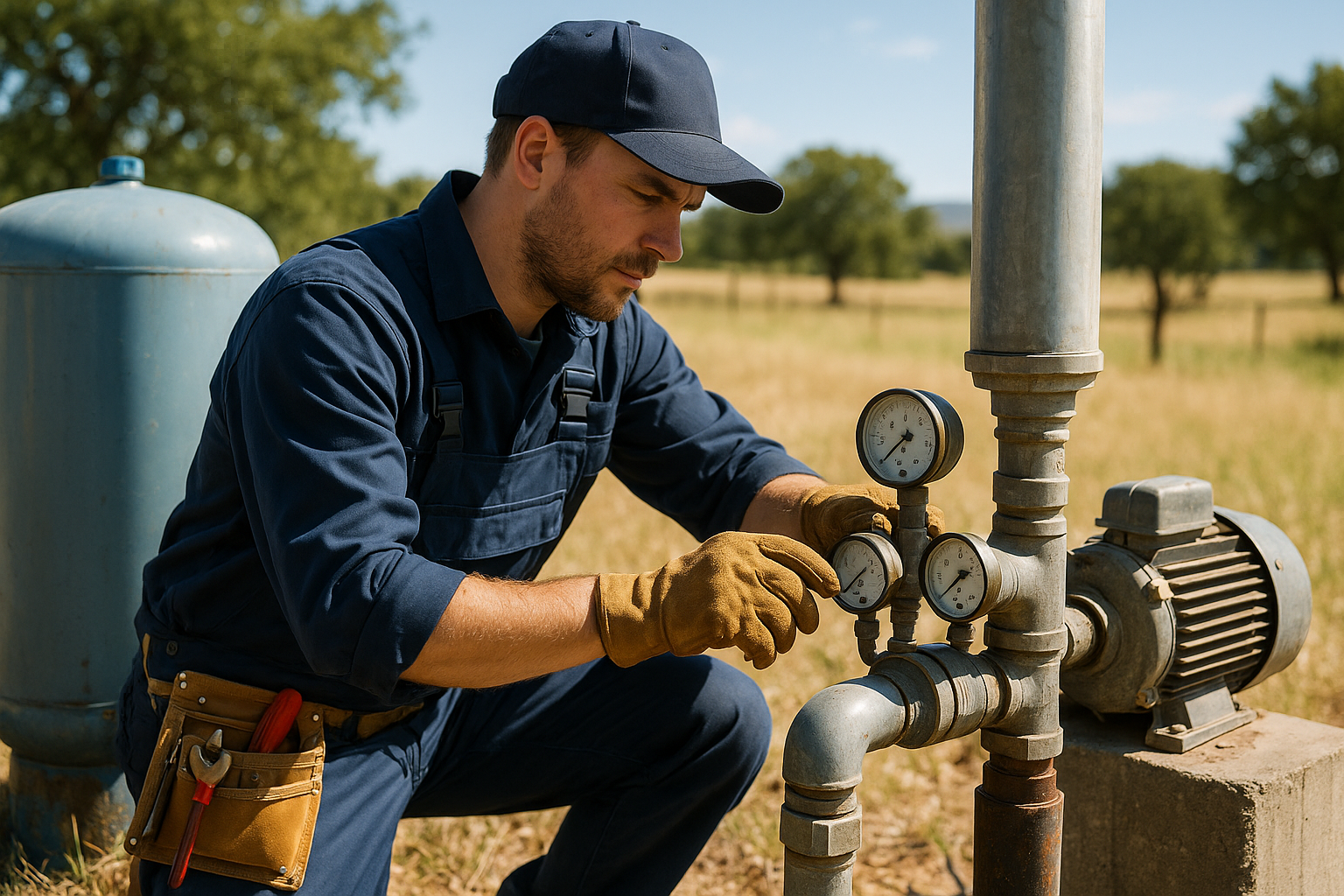
We measure the pump's actual output in gallons per minute (GPM) and check delivered pressure against what the system was designed to provide. We read the motor's amperage draw under load; a motor pulling more amps than its nameplate rating is a warning sign of wear, a failing capacitor, or a binding pump. We listen for short cycling, cavitation, and abnormal noise that point to trouble downhole.
Pressure Tank and Switch
The pressure tank buffers the system so the pump is not forced to start every time you open a valve. We verify the tank's air-charge pressure, inspect the bladder for waterlogging, and test the pressure switch's cut-in and cut-out settings. A failed tank is one of the most common causes of rapid pump cycling and premature motor failure.
Electrical, Control Box, and Wiring
We open the control box and inspect the pressure switch contacts, capacitors, relays, and wiring for corrosion, scorching, or loose connections. Coastal salt air is hard on electrical components, so on Point Loma and other bay-adjacent sites we pay particular attention to corrosion at terminals, conduit, and the disconnect.
Static Level, Pumping Level, and Recovery
We measure the static water level (the resting level before pumping), then the pumping level while the pump runs, and finally how quickly the well recovers when we shut it off. Together these numbers describe the well's yield and tell us whether the aquifer is keeping up with demand, which is critical information for a real-estate transaction or for sizing a replacement pump.
Wellhead, Sanitary Seal, and Casing
We inspect the wellhead, cap, and vent for a proper sanitary seal that keeps surface water, insects, and contaminants out of the casing. We check the casing for cracks, corrosion, and grout integrity. Coastal San Diego geology, with bay-margin and marine terrace deposits over the crystalline basement of the Peninsular Ranges, means casing condition and seal quality deserve close attention.
Water Quality Testing, Including Coastal Salt-Intrusion Screening
Water testing is where a coastal inspection earns its keep. On a standard inspection we sample for coliform and E. coli bacteria, nitrates (a red flag near septic systems and agriculture), and general mineral content such as hardness, iron, and manganese. For any well near San Diego Bay or the coast, we add total dissolved solids (TDS) and chloride testing to screen for salt-water intrusion.
Salt-water intrusion is a real risk for coastal aquifers: when a well near the shoreline is pumped hard, or when the freshwater table drops during drought, saltier water can migrate inland and upward into the well. Elevated chloride and rising TDS are the early fingerprints of that process. Catching them early lets an owner adjust pumping rates, deepen or reposition equipment, or shift irrigation strategy before the water becomes too saline for landscaping or corrodes the pump and plumbing. Even where a coastal well is used strictly for irrigation, chloride matters because salty water damages sensitive plants and soils over time.
What You Get: The Inspection Report
Every inspection ends with a written report you can actually use. It documents our findings component by component, includes photographs of the wellhead, control box, pressure tank, and any problem areas we identified, and lays out clear recommendations prioritized by urgency. When repairs or upgrades are warranted, we provide written estimates so you can make decisions with real numbers in front of you. For buyers and sellers, the report is formatted to hand directly to your agent, lender, or title company during escrow.
When You Need a Well Inspection
You should schedule an inspection when you are buying or selling any property served by a well; when a lender, title company, or escrow officer requests documentation; once a year as preventive maintenance; after a drought year or a noticeable drop in pressure or output; when water suddenly looks, smells, or tastes different; and any time a coastal irrigation well starts showing signs of increasing saltiness, staining, or plant stress. If you have just taken over a Point Loma property with an old irrigation well and have no records for it, an inspection is the fastest way to learn what you own.
What a Well Inspection Costs
Pricing depends on the scope of work and the depth and complexity of the well. As a general guide, a standard well inspection runs $150 to $400. Water quality testing typically adds $100 to $300 depending on how many contaminants you screen for; coastal salt-intrusion panels sit at the higher end because they include TDS and chloride analysis. A dedicated flow and yield test, which measures sustained output and recovery, generally runs $150 to $350. If you need a diagnostic visit to chase down a specific problem, that runs about $125, which we credit toward any repair we perform. We give you an honest quote up front, with no surprise add-ons.
When to Call a Professional
Surface-level tasks such as resetting a tripped breaker or adjusting a pressure switch are reasonable for a handy owner. But anything that involves pulling the pump, evaluating downhole conditions, interpreting water-chemistry results, or certifying a well for a real-estate transaction calls for a licensed C-57 contractor. Pulling a pump without the right rig can damage the casing and turn a modest repair into a well replacement. Coastal salt-intrusion assessment in particular requires professional sampling and interpretation. When the stakes are your water supply or your escrow, it pays to bring in a pro.
Our San Diego County Service Area
We serve Liberty Station and the greater Point Loma peninsula, and we cover coastal and inland San Diego County alike. Nearby communities we regularly work in include Point Loma, Ocean Beach, the Midway District, the Peninsula neighborhoods, and downtown San Diego. Because most private and domestic wells sit farther inland, we also serve the rural and unincorporated communities where our clients' second properties are located, from Ramona and Anza to the backcountry ranches and groves across the county. Wherever your well is, we can get to it.
Frequently Asked Questions
Are there really private wells in Liberty Station?
Drinking-water wells are not typical here. Liberty Station is an urban district on San Diego municipal water. Where wells do exist on the Point Loma peninsula, they are usually irrigation or landscape wells serving grounds and gardens, and those still benefit from inspection and water testing.
Should I test a coastal well for salt water?
Yes. Any well near San Diego Bay or the shoreline should be screened for total dissolved solids and chloride to catch salt-water intrusion early. Rising chloride is the first sign that saltier water is migrating into a coastal aquifer, and catching it early lets you protect your equipment and landscaping.
Do you inspect wells on my rural San Diego County property too?
Absolutely. Many of our Point Loma and Liberty Station clients also own rural or unincorporated acreage where a private well is the primary water source. We inspect, test, and service those domestic wells throughout San Diego County, including out to Ramona and Anza.
Will your report satisfy my lender and escrow?
Yes. Our pre-purchase reports include the flow data, water-quality results, and system-condition documentation that lenders, title companies, and escrow officers require, and they are accepted for FHA, VA, and USDA financing on well-served properties.
How much does a well inspection cost?
A standard inspection runs $150 to $400. Water testing adds $100 to $300, a flow and yield test runs $150 to $350, and a targeted diagnostic visit is about $125, which we credit toward any repair we perform. You get an honest quote before we begin.
How often should I have my well inspected?
We recommend an annual inspection for any well in regular use, plus a full inspection any time you buy or sell the property. Coastal irrigation wells benefit from yearly water testing because bay-adjacent water chemistry can shift over time.
Schedule Your Well Inspection Today
Serving Liberty Station, Point Loma, and all of San Diego County. Licensed C-57, founded 2020.
Call (760) 440-8520 or text (760) 219-5877 for a free estimate.
We service all major pump brands including Franklin Electric, Grundfos, Goulds (Xylem), and Sta-Rite (Pentair). Our trucks carry common parts and components for same-day repairs.
Related Articles
Continue learning about well maintenance and troubleshooting