Well Inspection Services in Serra Mesa
Buying a property with a well in Serra Mesa? Need an annual well checkup? Southern California Well Service provides thorough well inspections with detailed reports on well condition, water quality, and system performance.
Well Inspections for Serra Mesa and the San Diego County Backcountry
Serra Mesa sits right in the geographic center of the city of San Diego, tucked between Mission Valley to the south, Kearny Mesa to the east, and Tierrasanta to the north. It is a quiet, established neighborhood of mostly single-family homes built in the 1950s and 1960s, anchored by Sharp Memorial and Rady Children's hospitals and the open space of Ruffin Canyon. Like nearly all of central San Diego, Serra Mesa itself is served by municipal water from the city system, so most homeowners here will never own a private well.
So why does a Serra Mesa address matter for well inspection? Because Serra Mesa is the hub from which thousands of San Diego County residents reach out into the unincorporated backcountry. Families living in this central neighborhood frequently own rental property, inherited land, weekend acreage, or a future retirement parcel out in East County and the rural communities to the east. When you are buying, selling, or maintaining a property that runs on a private well, the well is one of the most important and least understood systems on the parcel, and a Serra Mesa homeowner needs the same trustworthy inspection that a full-time backcountry resident does. Southern California Well Service works across all of San Diego County, and we routinely coordinate inspections for owners based in central San Diego whose wells sit miles to the east.
San Diego County's private wells are a different animal from the alluvial valley wells you find in other parts of California. The backcountry and East County are underlain by the Peninsular Ranges batholith, a vast body of granitic and metamorphic bedrock. Water does not sit in a clean, sandy aquifer here. Instead it collects in fractures, joints, and weathered zones inside hard crystalline rock, and a successful well is one that happens to intersect a productive set of fractures. These are typically lower-yield, fractured-rock wells, often drilled several hundred feet deep, and their output can vary dramatically between two parcels that share a fence line. That geology is exactly why an inspection matters so much in this region.
Three local pressures make inspections more important than ever. First, drought. San Diego County has cycled through repeated multi-year droughts, and prolonged dry periods pull down regional groundwater levels. A fractured-rock well that produced comfortably a decade ago may now be drawing close to its limits, which is why we put so much weight on yield and drawdown testing rather than just confirming that water comes out of the tap. Second, aging infrastructure. Many backcountry wells were drilled decades ago, and steel casing, sanitary seals, pressure tanks, and submersible pumps all wear out. Problems hide underground until they become emergencies. Third, the simple fact that you cannot see most of a well. A clear inspection report is often the only honest picture a buyer or owner will ever get of what is happening below the wellhead.
What a Professional Well Inspection Covers
A complete inspection from Southern California Well Service looks at the entire water system, from the rock formation below to the pressure tank in your utility room. Here is what we evaluate on every visit.
Flow and Yield Testing
The single most important measurement for a San Diego County fractured-rock well is how much water it can actually deliver and sustain. We measure flow in gallons per minute and run a drawdown test, monitoring how far the water level falls as the pump runs and how quickly the well recovers afterward. A well that yields well for ten minutes but cannot keep up over an hour tells a very different story than the flow figure alone. In a region where drought has lowered water tables, this test is the difference between a property that comfortably supplies a household and one that runs dry every August.
Water Quality Testing
Granitic and metamorphic terrain can introduce naturally occurring minerals, hardness, iron, manganese, and in some areas elevated levels of constituents such as nitrate, arsenic, uranium, or fluoride. We collect samples and arrange laboratory testing for bacteria (total coliform and E. coli) and the chemistry that matters for both health and equipment life. Water quality results guide whether a property needs treatment, and they are usually required for a real estate transaction.
Pump, Pressure Tank, and Electrical
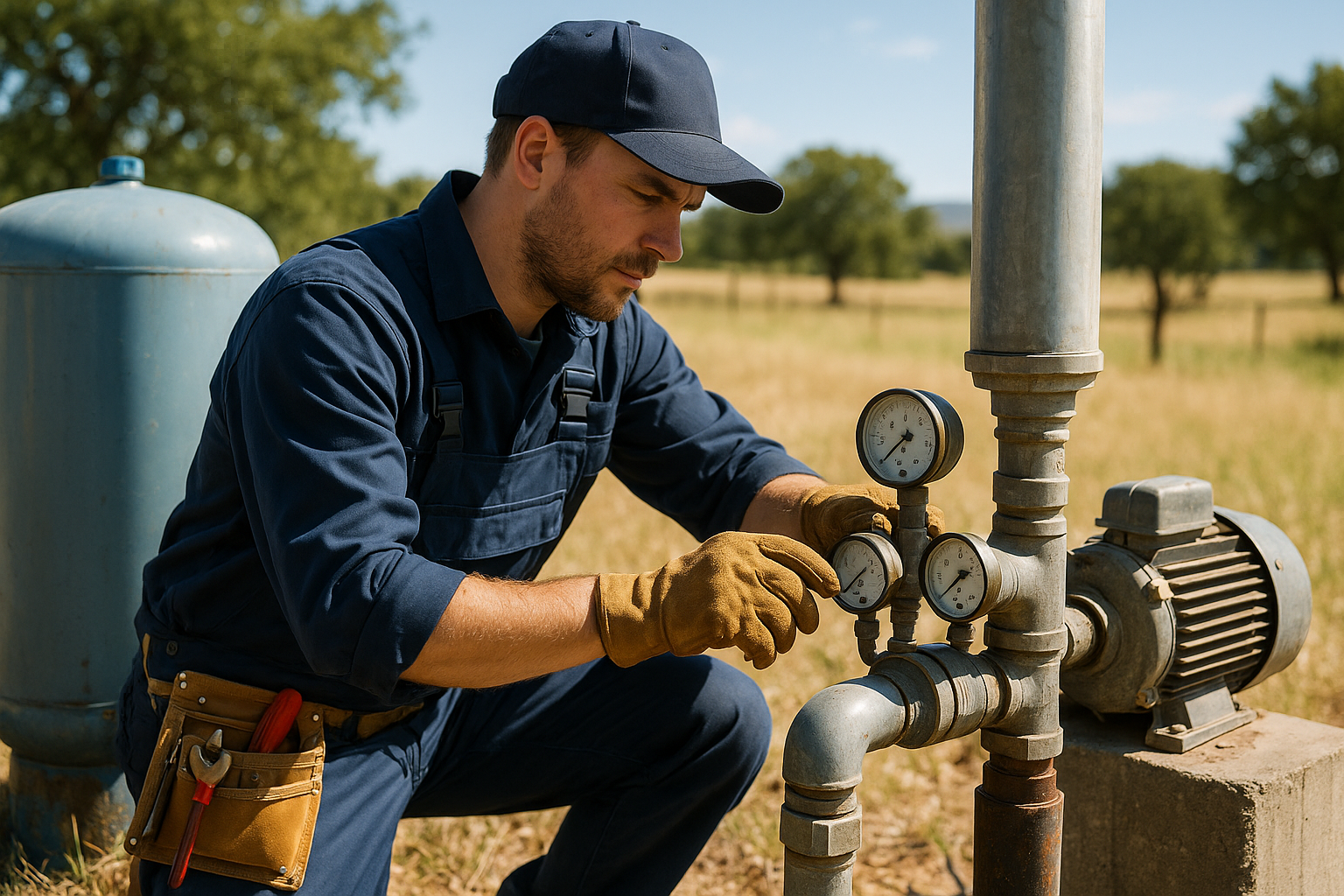
We assess the submersible or jet pump's performance, the condition and charge of the pressure tank, the pressure switch and its cut-in and cut-out settings, and the electrical components including wiring, the control box, and the breaker. Short cycling, weak pressure, or a waterlogged tank are common findings that we catch before they damage the pump.
Wellhead and Sanitary Seal
The wellhead is the well's first line of defense against contamination. We inspect the cap, the vent, the sanitary seal, and the surrounding grade to make sure surface water, insects, and debris cannot enter the casing. A compromised seal is one of the most common reasons an otherwise good well fails a bacteria test.
Casing Integrity
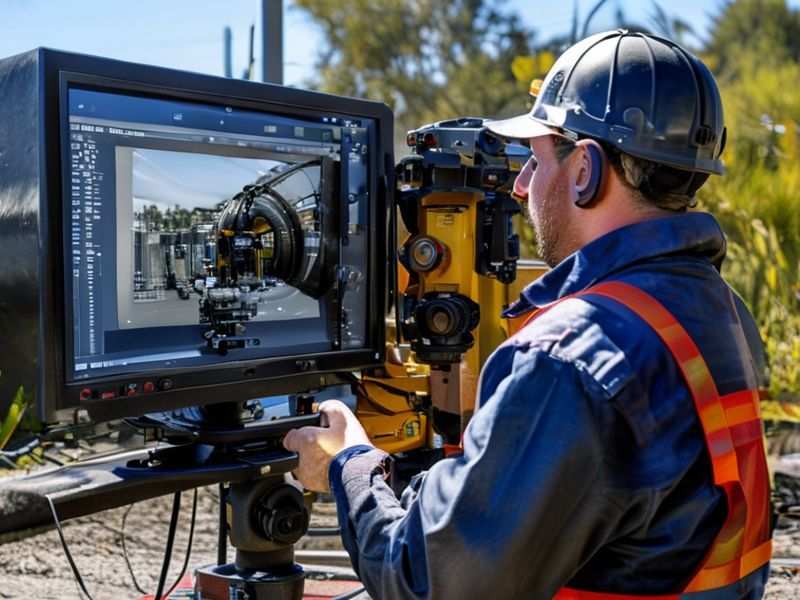
Casing keeps the borehole open and protects the water column. On older backcountry wells, steel casing can corrode, crack, or develop holes that let in sediment or shallow contaminated water. Where access allows, we evaluate casing condition and can recommend a downhole video inspection to see the casing and water column directly.
Static and Pumping Water Levels
We record the static water level (the resting level when the pump is off) and the pumping level (the level once the pump has been running). Together with yield testing, these numbers establish a baseline you can compare against in future years, which is the clearest way to detect a slowly declining water table before it becomes a crisis.
When You Need a Well Inspection
- Before buying or selling a property: A pre-purchase inspection protects buyers from inheriting a failing well, and a pre-listing inspection lets sellers price and present the property honestly. San Diego County real estate transactions involving private wells routinely call for inspection and water testing, and our reports are accepted by title companies and lenders.
- Annually, as routine maintenance: An annual checkup catches small problems while they are still cheap to fix. For backcountry owners and for Serra Mesa residents managing a property from a distance, yearly tracking of yield and water levels is the best early warning system against drought-driven decline.
- After a problem: Sudden pressure loss, sputtering faucets, sand or cloudiness in the water, a tripped breaker, or a jump in your electric bill all warrant a prompt inspection. These symptoms often point to a pump, pressure tank, or water-level issue that worsens if ignored.
Simple Checks You Can Do Yourself
While a full inspection requires professional equipment, there are a few things any well owner can monitor between visits:
- Watch your pressure gauge and note the normal cut-in and cut-out range so you can recognize when something changes.
- Listen for the pump short cycling (clicking on and off rapidly), which usually signals a pressure tank or switch problem.
- Look at the wellhead periodically to confirm the cap is secure, the seal is intact, and no landscaping, runoff, or animal activity has disturbed it.
- Keep an eye on water clarity; new sand, grit, or cloudiness is worth a phone call.
- Track your electric usage, since a pump working harder than it should often shows up as a rising bill before anything else.
What you should not do is attempt to pull the pump or open the well casing. That work requires specialized rigging, and a mistake can drop equipment downhole or damage the casing, turning a small repair into a major one.
Well Inspection Cost in San Diego County
We believe in honest, up-front pricing with no surprises. A standard well inspection generally runs $150 to $300, depending on access and scope. Water quality testing varies with the panel of contaminants tested and the laboratory fees involved, and we will explain the options before any samples are sent out. If your inspection turns into a diagnostic visit for a specific problem, our diagnostic fee is $125, and we credit that amount toward any repair we perform.
If the inspection uncovers a needed repair, here is what common work tends to cost so you can plan ahead. Pump replacement typically runs $2,500 to $5,500 depending on well depth, pump type, and horsepower. A new pressure tank generally falls between $600 and $1,500. We always diagnose the actual problem and provide a written estimate before recommending any repair, so you decide with full information.
Serving Serra Mesa and the Surrounding Region
From our offices in Ramona and Anza, Southern California Well Service covers all of San Diego County. While Serra Mesa and its neighbors in Kearny Mesa, Mission Valley, and Tierrasanta are primarily on municipal water, the private wells we inspect for residents of these central San Diego communities are most often located in the East County and backcountry corridor. We regularly serve well owners in and around Santee and Lakeside, as well as the rural communities stretching east toward Ramona and the mountains. If you live in Serra Mesa and own well-served property anywhere in the county, we can coordinate the inspection and deliver a clear report wherever you are.
Why Serra Mesa Residents Choose Us
Southern California Well Service is a licensed C-57 well drilling contractor (CSLB #1086994) serving San Diego County's fractured-rock geology. We hold CSLB #1086994 built on hundreds of customer reviews, we offer same-day emergency service, and we know the difference between a granitic backcountry well and the alluvial wells you find elsewhere. That local knowledge means our inspections measure the things that actually matter here: sustainable yield, water-level trends, casing and seal integrity, and water chemistry shaped by the Peninsular Ranges batholith.
Frequently Asked Questions
Do homes in Serra Mesa actually have private wells?
Most do not. Serra Mesa, like the rest of central San Diego, is served by city water. The demand for well inspections from Serra Mesa residents almost always involves a separate property they own, are buying, or are selling out in the unincorporated backcountry or East County, where private wells are the norm.
Why is yield testing so important for San Diego County wells?
Because backcountry wells draw from fractures in granitic bedrock rather than a sandy aquifer, their output is naturally limited and varies from parcel to parcel. Years of drought have lowered regional groundwater levels, so a well that once produced plenty may now be marginal. Yield and drawdown testing reveals what the well can truly sustain, not just whether water reaches the tap on inspection day.
How deep are private wells in this area?
It varies widely with terrain and fracture patterns. Wells near creek valleys may find water at a few hundred feet, while hillside parcels often require deeper drilling to intersect productive fractures, sometimes 400 feet or more. Two neighboring properties can have very different depths and yields, which is exactly why each well needs its own inspection rather than assumptions based on the area.
Is a well inspection required to buy or sell a property with a well?
For most real estate transactions involving a private well in San Diego County, lenders and title companies expect a current well inspection and water quality testing. Even when it is not strictly mandated, a pre-purchase inspection is the smartest money a buyer can spend, since a failing well or pump can cost thousands to address.
How long does an inspection take and what do I receive?
A typical inspection takes a few hours on site, with water quality results following from the laboratory. You receive a written report documenting yield and water levels, pump and pressure tank condition, electrical components, wellhead and casing condition, and water quality findings, along with clear recommendations and any estimates for needed work.
Can you help if I live in Serra Mesa but my well is far out in the county?
Yes. We routinely work with owners based in central San Diego whose wells sit out in the backcountry. We coordinate scheduling, perform the full inspection on the property, and deliver the report to you directly, so distance is never a barrier to knowing the true condition of your well.
Schedule Your Serra Mesa Well Inspection
Whether you are closing on a backcountry property, keeping up with annual maintenance, or chasing down a sudden water problem, Southern California Well Service gives you a clear, honest picture of your well. Call us at (760) 440-8520 or text (760) 219-5877 to schedule your inspection. With offices in Ramona and Anza, a licensed C-57 team, founded in 2020, with 60+ years of family heritage same-day emergency service, we are ready to help you protect the water system your property depends on.
Related Articles
Continue learning about well maintenance and troubleshooting