Well Inspection Services in Sorrento Valley
Buying a property with a well in Sorrento Valley? Need an annual well checkup? Southern California Well Service provides thorough well inspections with detailed reports on well condition, water quality, and system performance.
Need Well Inspection near Sorrento Valley?
Serving Sorrento Valley and the rural and estate properties of coastal San Diego County. Southern California Well Service is a licensed C-57 contractor with founded in 2020, with 60+ years of family heritage.
Call: (760) 440-8520Sorrento Valley is best known as one of San Diego's busiest biotech and business districts, spread along Los Peñasquitos Creek and its coastal lagoon. Let's be straight about the water: the Sorrento Valley district itself runs almost entirely on municipal supply, so private wells are rare inside its office parks and lab campuses. Where wells still matter is on the surrounding urban fringe. Head toward Los Peñasquitos Canyon, the Carmel Valley edge, or the Scripps Ranch and Miramar backcountry, and you find estate lots, older ranch parcels, and agricultural and nursery properties that rely on private, irrigation, or backup wells. If you own or are buying one of those properties, this guide explains what a professional well inspection covers and why the local coastal geology makes it worth doing right. Southern California Well Service inspects wells across this part of San Diego County.
Coastal San Diego County Geology
The land around Sorrento Valley is built from marine and river terrace deposits laid over a crystalline basement of granitic and metamorphic rock. Near the creek and lagoon, shallow wells may draw from those terrace and alluvial deposits, while properties up on the mesas and in the canyon backcountry often need deeper wells drilled into fractured bedrock to find reliable water. That contrast, shallow coastal sediment versus deep hard rock, changes how a well is built, how much water it yields, and what water quality issues to expect. Coastal proximity also raises the question of salinity and mineral content, which is why testing is never an afterthought here.
Real-Estate Inspections vs. Preventive Checkups
Annual and preventive inspections keep an existing well healthy. On a Los Peñasquitos Canyon estate or a Scripps Ranch-fringe property with landscape or a small grove to irrigate, the pump works hard through San Diego's dry season. A yearly checkup finds a tired pressure switch, a weakening pump, or early sand production before it leaves you without water. For backup wells that only run occasionally, an inspection confirms the system will actually perform when you finally need it, which is the whole point of having a backup.
Pre-purchase and real-estate inspections come into play when a well property changes hands. Buyers of a Carmel Valley-edge or Miramar-backcountry parcel need to know the well's real condition before closing, because a well is expensive to replace and impossible to judge by looking at it. Sellers order an inspection ahead of listing so a hidden problem does not derail escrow. Lenders and escrow officers on a rural San Diego County transaction commonly require a recent well inspection and a bacteria (potability) test before funding, and our written reports are built to meet those conditions. This is the most detailed version of the service, because the report has to satisfy the buyer, the seller, the agents, and the underwriter at the same time.
Our Full Well Inspection Checklist
A thorough inspection evaluates the whole system, from the wellhead to the water it delivers. Here is what we check.
Wellhead, Sanitary Seal & Casing
We start at the surface: the wellhead, the sanitary seal, and the accessible casing. On coastal terrace ground, a compromised seal lets surface water and contaminants reach the aquifer, so casing integrity is a top priority near the creek and lagoon.
Water Levels & Yield
We measure the static water level at rest, the pumping level while the pump runs, and the recovery rate afterward. Together these reveal the well's sustainable yield. This matters especially on deep bedrock wells in the Scripps Ranch and Miramar backcountry, where fracture-fed wells can have limited recovery that only a proper drawdown test will expose.
Pump Performance
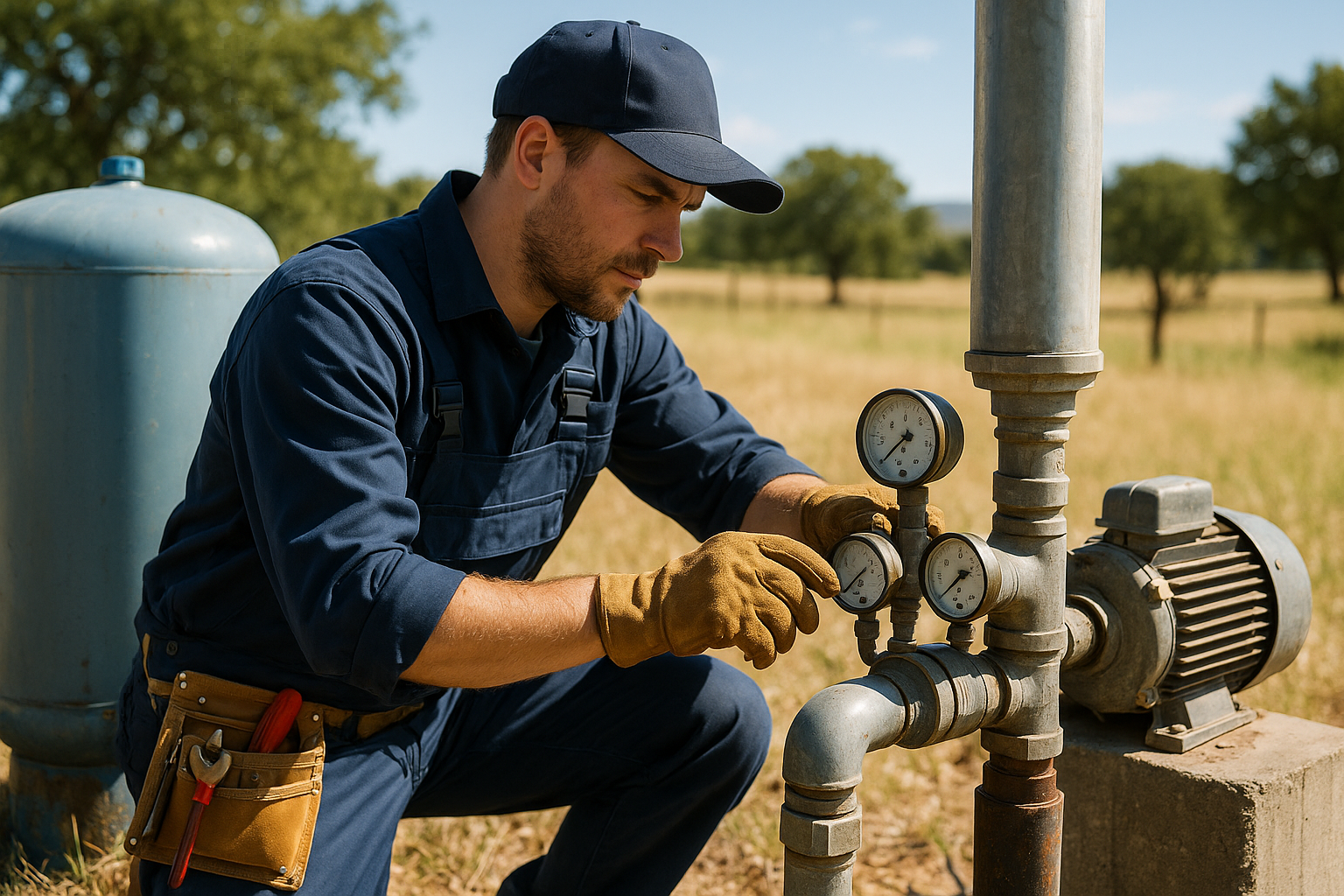
We test actual flow in gallons per minute (GPM), system pressure, and motor amperage under load. Amp draw compared against the motor nameplate is a reliable early warning of a pump straining from wear, restriction, or a dropping water level, well before it fails outright.
Pressure Tank & Switch
We inspect the pressure tank's air charge and bladder and observe the pressure switch across several cycles. A waterlogged tank or a misadjusted switch causes short cycling, which is one of the fastest ways to destroy a pump motor, and one of the cheapest problems to fix when caught early.
Electrical & Control Box
We open the control box and check wiring, breakers, and connections for corrosion, loose terminals, and moisture. In the coastal marine environment near the lagoon, salt-laden air accelerates corrosion, so wellhead electrical deserves close attention.
Water Quality Sampling
We collect samples for laboratory testing of bacteria (total coliform and E. coli), nitrates, and minerals including hardness, iron, chloride, and total dissolved solids. Near the coast, chloride and TDS readings help flag any salinity intrusion, while nitrate screening is relevant on former agricultural and nursery land.
Water Testing near the Coast
Water quality on a coastal San Diego County well can differ sharply from one property to the next. Our standard panel screens for coliform bacteria and E. coli, the clearest sign that surface contamination is reaching the well through a failed seal. We test nitrates, which matter on land with an agricultural or nursery past around Los Peñasquitos and Carmel Valley. And we measure minerals, with particular attention to chloride, sodium, and total dissolved solids near the lagoon, where salinity can affect both taste and irrigation suitability. Hard water and staining from iron or manganese are common complaints we can confirm and quantify. When a lender or escrow requires a specific potability certificate, we make sure the sampling and lab documentation meet the requirement, and we retest after any recommended treatment so you have proof the problem was resolved.
Your Inspection Report
Every inspection concludes with a written report, not just a verbal summary. It records our findings on each component, includes photos of the wellhead, tank, control box, and any concerns we identify, and provides clear recommendations that separate urgent items from things to monitor. Where work is needed, it includes itemized estimates so you can plan your budget. For a real-estate deal, this is the document your lender, escrow officer, and agent will rely on to move the transaction forward.
When You Need a Well Inspection
Schedule an inspection when you are buying or selling a well property on the Sorrento Valley fringe; when more than a year has passed since the last checkup; when you notice falling pressure, sputtering taps, or air in the lines; when the water changes color, taste, or odor; when the pump runs constantly or cycles rapidly; or after wildfire, flooding, or grading near the wellhead. Backup wells should be inspected before the dry season so you are not discovering a fault at the moment you depend on it.
What a Well Inspection Costs
A standard well inspection in the coastal San Diego County area runs $150 to $400, depending on well depth, equipment access, and the scope you need. A laboratory water quality test adds $100 to $300 based on the panel selected, and coastal properties often benefit from the fuller panel that includes chloride and TDS. A dedicated flow and yield test, valuable for confirming a deep bedrock well can support a household or irrigation, runs $150 to $350. If a specific fault needs tracing, a diagnostic visit is $125, credited toward any repair we perform. Every quote is provided up front.
When to Call a Professional
An owner can safely reset a breaker, confirm a valve is open, or read a pressure gauge. Anything involving the electrical control box, the pump, the casing, or drinking-water quality belongs to a licensed C-57 contractor. Pulling a submersible pump from a deep bedrock well in the Scripps Ranch or Miramar backcountry takes specialized rigging, and a mistake can drop the pump or damage the casing. When results touch a real-estate transaction, a lender, or your family's water, the accountability and documentation a licensed professional provides are well worth the cost.
Serving Sorrento Valley and Nearby Communities
Southern California Well Service works throughout the coastal San Diego County area. Around Sorrento Valley, that includes Mira Mesa, Torrey Pines, Del Mar Heights, and Scripps Ranch, along with the rural and estate properties toward Los Peñasquitos Canyon and the Miramar backcountry that still depend on private wells. We service all major pump brands including Franklin Electric, Grundfos, Goulds (Xylem), and Sta-Rite (Pentair), and our trucks carry common parts so many repairs are handled the same day.
Frequently Asked Questions
Are there really private wells near Sorrento Valley?
Inside the Sorrento Valley business district almost everything is on municipal water. But the surrounding fringe, toward Los Peñasquitos Canyon, the Carmel Valley edge, and the Scripps Ranch and Miramar backcountry, has estate lots, ranch parcels, and former agricultural land that still use private, irrigation, or backup wells. Those are the properties we inspect.
Do I need a well inspection to buy a rural property in this area?
If it is served by a private well, effectively yes. Lenders and escrow companies on a rural San Diego County deal typically require a recent inspection and a bacteria test before funding, and it is simply not wise to close on a well without knowing its condition. Our reports are formatted for that purpose.
Should I test for salt or salinity in a coastal well?
It is worth doing near the lagoon and creek. We include chloride, sodium, and total dissolved solids in our coastal water panel to flag any salinity that could affect drinking water or irrigation. It is a small addition that gives real peace of mind on a coastal property.
How often should a backup well be inspected?
At least once a year, ideally before the dry season. A backup well that sits idle can develop problems you will not notice until you switch to it. An annual inspection and a flow test confirm it will deliver when you actually need it.
Can you inspect deep bedrock wells in the backcountry?
Yes. Many properties on the mesas and in the Scripps Ranch and Miramar backcountry rely on deep wells drilled into fractured granitic and metamorphic rock. We inspect and service those, including the drawdown and recovery testing that fracture-fed wells specifically need.
Do you offer emergency well service near Sorrento Valley?
Yes. If you lose water or pressure suddenly, call right away. We provide same-day emergency service across the coastal San Diego County area, and our trucks carry common parts so many repairs can be completed on the first visit.
Schedule Your Well Inspection
Call or text Southern California Well Service today for a thorough inspection and an honest report.
Call (760) 440-8520 or text (760) 219-5877
Related Articles
Continue learning about well maintenance and troubleshooting