Well Pump Hums But Won't Start? Causes & Fixes
📋 In This Guide
What's Happening
The Hum Explained
- Motor is receiving power
- Motor windings are energized
- But motor shaft isn't turning
- That "hum" is motor trying to start
Why This Is Bad
- Motor draws high current when stalled
- Generates heat rapidly
- Can burn out windings
- Thermal protector may trip (good)
- Or motor may be damaged (bad)
Immediate Action
Turn off power at breaker. Don't let it hum for more than a few seconds. Each attempt risks further damage.
Common Causes
1. Bad Start Capacitor (Most Common)
- Capacitor gives motor extra "kick" to start
- When it fails, motor can't overcome starting inertia
- Motor hums, trying but unable to turn
- Common, inexpensive fix
2. Seized Pump
- Sand, sediment, or debris jammed in pump
- Motor can't turn the impeller
- Hums because it's trying
- May need pump pulled and cleaned or replaced
3. Low Voltage
- Voltage too low to start motor
- Motor hums but can't turn
- Check voltage at motor terminals
- Should be within 10% of rated voltage
4. Bad Motor Windings
- Start winding open or shorted
- Motor can't develop starting torque
- Usually means motor replacement
5. Mechanical Binding
- Bearing failure
- Shaft bent or stuck
- Something blocking rotation
6. Control Box Issues (3-Wire)
- Relay not functioning properly
- Capacitor in box failed
- Bad connection
Diagnosis Steps
⚠️ Safety First
Turn off power before any diagnosis. Well pumps use 240V. If uncomfortable with electrical work, call a professional.
For Surface/Jet Pumps
- Power off
- Try to turn motor shaft by hand
- If frozen: mechanical issue (bearings, seized)
- If turns freely: electrical issue (capacitor, windings)
For 3-Wire Submersible
- Power off
- Open control box
- Look for burned components, smell
- Check capacitor (if bulged or leaking, replace)
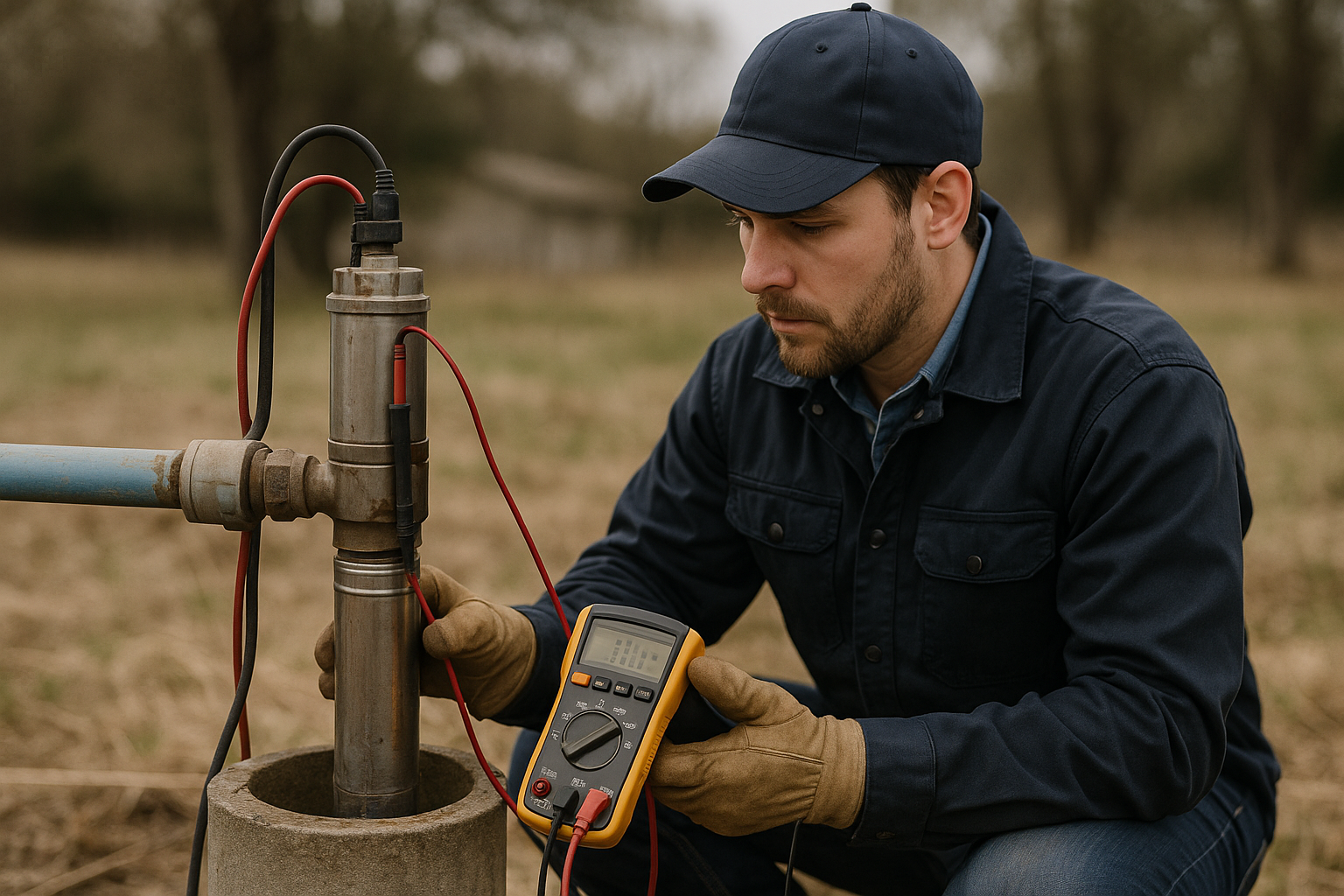
- Test capacitor with meter
For 2-Wire Submersible
- Control components are in motor (underwater)
- Less you can check without pulling pump
- May need professional diagnosis
Capacitor Test
- Visual: bulging, leaking, or burned = bad
- Meter test: check microfarads (µF)
- Should be within 10% of rating on label
Fixes
Replace Capacitor
- Match microfarads (µF) exactly
- Match or exceed voltage rating
- Cost: $20-$50 for part
- DIY possible on surface pumps and control boxes
How to Replace (Control Box):
- Power OFF at breaker
- Verify power is off
- Open control box
- Discharge capacitor (careful—can shock)
- Note wire connections
- Remove old capacitor
- Install new capacitor
- Reconnect wires
- Close box, restore power
Seized Pump
- Submersible: must pull pump
- May be cleanable or may need replacement
- Address cause (sand screen, etc.)
- Professional service needed
Low Voltage
- Check at meter—is incoming voltage correct?
- Check at motor—voltage drop in wiring?
- May need wire upgrade or utility fix
Bad Motor
- Submersible: replace pump (motor and pump are one unit)
- Surface pump: may replace motor only
- Cost: $1,500-$5,000+ depending on type and depth
Control Box
- Replace entire control box if multiple issues
- Match to pump HP and voltage
- Cost: $150-$350
Frequently Asked Questions
Why does my well pump hum but not start?
Usually bad start capacitor or seized pump. Motor getting power but can't turn. Turn off power to prevent damage.
Can I fix it myself?
Capacitor replacement on surface pumps or 3-wire control boxes: often DIY. Seized submersible pump or motor issues: need professional.
Will the pump be damaged from humming?
Yes, if left humming. Motor overheats when stalled. Turn off power immediately. Brief hum usually okay; prolonged can burn windings.
How much does a capacitor cost?
$20-$50 for the part. If a professional replaces it: $100-$200 total.
What if replacing the capacitor doesn't fix it?
Pump may be seized, motor may be bad, or wiring issue. Will need professional diagnosis and possibly pump replacement.
Pump Not Starting?
We diagnose and repair well pumps—capacitors, motors, and complete systems.
Related Articles
Continue learning about well maintenance and troubleshooting