


Well & Irrigation Services in Bankers Hill: An Honest Local Perspective
Bankers Hill is one of San Diego's most established uptown neighborhoods, perched between Hillcrest to the north and downtown to the south, with Balboa Park spilling green to the east and Interstate 5 and Little Italy marking the western edge. It is a dense, walkable district of historic Craftsman and Victorian homes, mid-century apartment buildings, modern condo towers, and dramatic finger canyons like Maple Canyon that cut down toward the bay. It is, in almost every sense, an urban neighborhood — and that one fact shapes everything we have to say about wells here.
Let us be straightforward, because it matters: nearly every property in Bankers Hill is served by municipal water from the City of San Diego Public Utilities Department. Private agricultural wells — the kind you would use to irrigate an avocado grove — are essentially nonexistent in this part of the city. If you found this page hoping to plan a backyard avocado operation watered by your own well in Bankers Hill, the honest answer is that the lot sizes, the zoning, and the groundwater simply do not support it. The genuine San Diego County “avocado belt” lies well inland, in towns such as Fallbrook, Bonsall, De Luz, Valley Center, Pauma Valley, Escondido, and Vista, where larger parcels and better aquifers make grove irrigation practical.
So who is this article actually for? It is for the rare Bankers Hill or greater San Diego County property owner who does have a private well — an older legacy well on a large canyon-edge lot, an inherited rural parcel, or a property at the urban fringe — and for anyone weighing whether well water makes sense for their situation. As a licensed C-57 water well contractor with more than 30 years of experience across San Diego County, Southern California Well Service would rather give you an accurate picture than sell you a fantasy.
How a Private Well and Irrigation System Actually Works
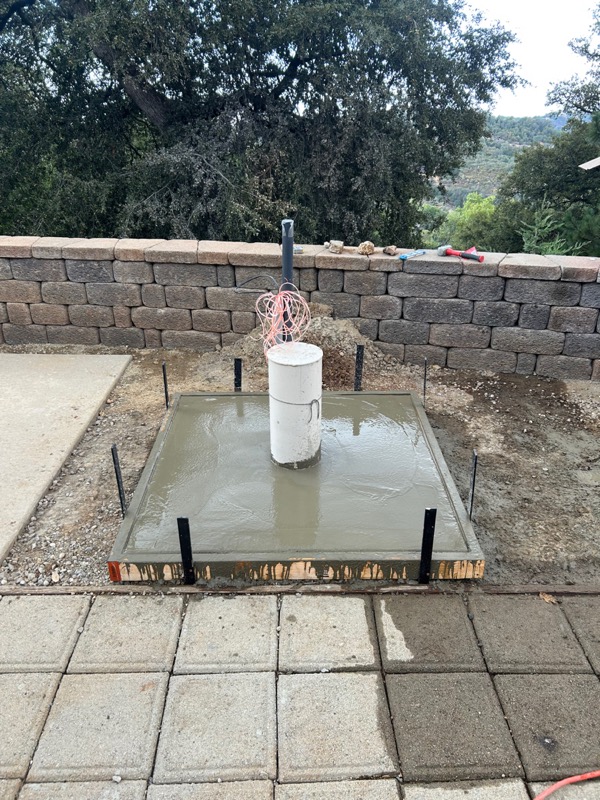
For the uncommon large-lot owner who relies on a well, understanding the basic system helps you spot trouble early. A residential well system is a chain of components, and the whole chain is only as strong as its weakest link:
- The well and casing — a bored or drilled shaft, lined with casing, that reaches down into water-bearing rock or sediment.
- The pump — usually a submersible pump set deep in the well, or sometimes a jet pump at the surface, that lifts water up and into the home.
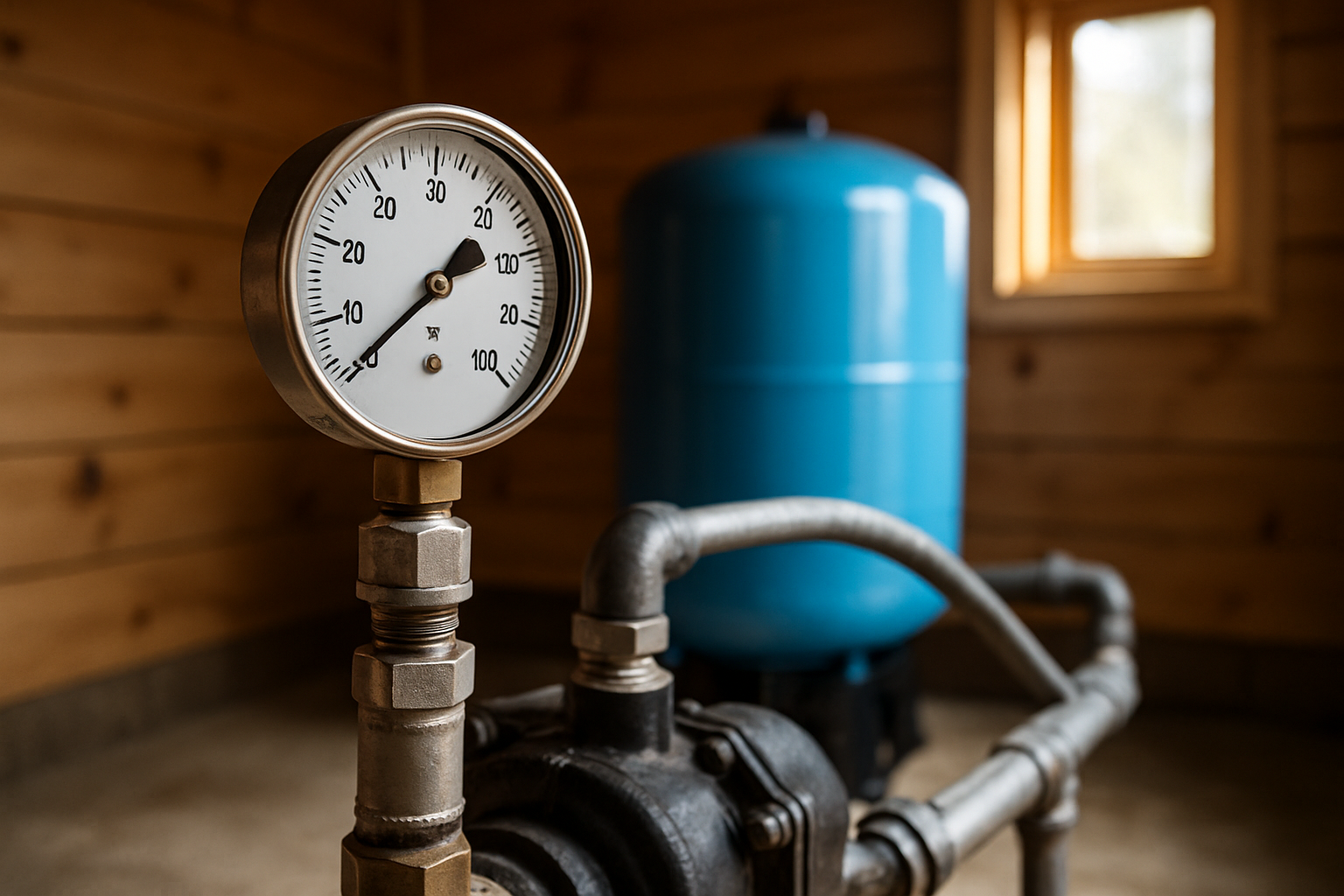
- The pressure tank — a tank that stores water under pressure so the pump does not have to switch on every time you open a tap.
- The pressure switch and controls — the electrical brain that tells the pump when to run and when to rest.
- Treatment and filtration — sediment filters, iron or manganese treatment, and softeners that condition raw groundwater so it is safe and pleasant to use.
- Distribution and irrigation — the lines, valves, and drip or sprinkler hardware that move water to fixtures and landscaping.
On a property large enough to irrigate, owners often add a storage tank and a constant-pressure or booster system so that landscape zones get even, dependable coverage without starving the household supply. Drip irrigation is far more efficient than overhead spray in our dry climate, and pressure regulation keeps emitters delivering a uniform flow across a slope.
Groundwater in San Diego County: What the Geology Means
San Diego County does not sit on a single generous aquifer. Coastal areas, including the lowland zones near the bay, are associated with the San Diego Formation — a layered sequence of sand and clay that can hold water but is highly variable in yield and quality. Inland, much of the county is underlain by hard, fractured crystalline rock and decomposed granite, where a well's success depends on intersecting water-bearing fractures rather than a continuous water table.
For anyone near the coast, the single biggest groundwater concern is salinity. Shallow coastal groundwater is frequently brackish or saline because of natural seawater influence and decades of urban development. That same brackish character is exactly why avocados — which are notoriously sensitive to chloride and salt — would struggle on coastal well water without aggressive treatment, and another reason serious avocado growing belongs inland. The practical takeaway: in and around Bankers Hill, raw groundwater is far more likely to be a treatment challenge than a clean, ready-to-use irrigation source.
Common Scenarios We See for the Rare Local Well Owner
When we do get a call from a San Diego County property owner with a private well, the issues tend to fall into a handful of recognizable patterns:
- Brackish or saline water — elevated chloride and total dissolved solids that affect taste, corrode fixtures, and harm salt-sensitive plants.
- Iron and manganese — rusty staining on sinks and laundry, metallic taste, and sometimes a slimy buildup in pipes.
- Sediment and turbidity — sand or fine silt that clogs filters, wears out pumps, and cloudies the water.
- Low yield — a well that runs short, especially during dry stretches, often because the water table has dropped or the well has aged.
- Aging private wells — legacy wells with old casing, undersized or failing pumps, and worn pressure tanks that no longer hold a stable charge.
- Sulfur odor — a rotten-egg smell from hydrogen sulfide that, while usually harmless, makes water unpleasant.
What to Check Before You Call
If your well is acting up, a few quick observations help you describe the problem and can sometimes point to a simple fix:
- Listen to the pump. Is it short-cycling — switching on and off rapidly? That often means a waterlogged pressure tank or a failing pressure switch rather than a dead pump.
- Check your pressure gauge. Note the pressure when the pump kicks on and off. Wildly swinging or stuck readings are a useful clue.
- Look at the water itself. Is it cloudy, rust-colored, gritty, or newly smelly? Changes in appearance or odor narrow down whether you have a sediment, mineral, or bacterial issue.
- Inspect the obvious electrical points. A tripped breaker or a stuck pressure switch is a common, inexpensive cause of “no water.”
- Note the timing. Problems that appear only during heavy irrigation or only in late summer suggest yield limits rather than equipment failure.
None of this requires you to open the well or touch wiring beyond resetting a breaker. When in doubt, leave the diagnosis to a licensed professional.
When to Call a Professional
Some situations should go straight to a qualified contractor. Call us when you have no water at all, when you smell or see signs of contamination, when the pump runs constantly without building pressure, when you notice air spitting from faucets, or when energy bills climb because the pump never rests. Pulling a submersible pump, diagnosing well yield, and sizing treatment all require equipment and licensing that go well beyond a handy homeowner's toolkit. Because we hold a C-57 water well contractor's license — not just a plumbing card — we are equipped to work on the well itself, not only the plumbing downstream of it.
Realistic Cost Ranges
Every well is different, but honest ballpark figures help you budget. These are typical San Diego County ranges for the relevant work:
- Diagnostic visit: $125, credited toward the job if you proceed.
- Pressure switch replacement: $150 – $350.
- Pressure tank replacement: $600 – $1,500.
- Pump replacement: $2,500 – $5,500, depending on depth and horsepower.
- Sediment filtration: $300 – $900.
- Iron, manganese, or softening systems: $1,500 – $3,500.
- Constant-pressure or booster systems: $2,000 – $4,500.
- Hydrofracturing to improve yield: $3,000 – $8,000.
- New well, turnkey: $18,000 – $42,000.
- Well abandonment or decommissioning: $1,500 – $5,000.
We give honest assessments and never upsell services you do not need. If municipal water is the smarter long-term answer for your property, we will tell you that too.
Our San Diego County Service Area
From our offices in Ramona (1077 Main St, Ramona, CA 92065) and Anza (57174 US Highway 79, Anza, CA 92539), we serve Bankers Hill and all of San Diego County, plus parts of Riverside and San Bernardino Counties. We are especially active in the county's true avocado and rural-well country — Fallbrook, Bonsall, De Luz, Valley Center, Pauma Valley, Escondido, and Vista — where private agricultural wells are common and grove irrigation is a way of life. Whether you are an urban homeowner curious about your options or an inland grower who depends on a well every single day, our 4.9-star team is ready to help, with same-day emergency service when you have no water.
Frequently Asked Questions
Do homes in Bankers Hill actually use well water?
Almost never. Bankers Hill is a dense urban neighborhood connected to City of San Diego municipal water. Private wells here are extremely rare, and we are honest about that rather than pretending otherwise.
Could I grow avocados in Bankers Hill using a private well?
Realistically, no. The lots are small, the zoning is urban, and coastal groundwater tends to be brackish — conditions avocados cannot tolerate. Anyone serious about avocados should look inland to Fallbrook, Valley Center, or Escondido.
My water smells like rotten eggs. Is it dangerous?
That odor is usually hydrogen sulfide, which is generally a nuisance rather than a health hazard. It is treatable. We can test the water and recommend the right filtration if you are on a private well.
Why is coastal San Diego groundwater often salty?
Shallow groundwater near the coast is influenced by seawater and is frequently brackish or saline. That high chloride content is hard on fixtures and on salt-sensitive landscaping, which is one reason agricultural wells work better inland.
How quickly can you respond if I lose water?
We offer same-day emergency service across San Diego County. Call (760) 440-8520 or text (619) 259-0410 and we will get a technician moving as fast as possible.
What does it cost just to find out what is wrong?
Our diagnostic visit is $125, and that amount is credited toward the repair if you decide to move forward with us.
Talk to a Licensed Local Well Team
Whether you are one of the rare Bankers Hill property owners with a private well, or you are an inland San Diego County grower who depends on yours daily, Southern California Well Service brings more than 30 years of licensed C-57 experience and a 4.9-star reputation to the job. Call us at (760) 440-8520 or text us at (619) 259-0410 for honest answers, fair pricing, and same-day emergency service when it counts.