

Wells and Irrigation in the San Gorgonio Pass: An Honest Local Guide
The Banning Pass — known on the maps as the San Gorgonio Pass — is the dramatic gap where the San Bernardino Mountains to the north nearly meet the San Jacinto Mountains to the south, with the city of Banning sitting near its floor in Riverside County. At roughly 2,300 to 2,600 feet of elevation, the pass behaves less like the gentle coastal terrain people imagine when they hear “Southern California” and far more like a high-desert wind corridor. If you own property here — in Banning, Beaumont, Cherry Valley, Cabazon, or out toward Whitewater — your well and irrigation system live in one of the most demanding microclimates in the state.
We want to be honest with you up front, because honesty saves you money. This page carries the word “avocado” in its title, but the San Gorgonio Pass is not avocado country. Commercial avocados are essentially absent here, and for good reason: avocado trees are extremely sensitive to frost, scorching heat, and — above all — wind. The pass delivers all three. The genuine Southern California avocado belt lies well to the south in San Diego County — Fallbrook, Bonsall, Valley Center, and Pauma Valley — where milder air and sheltered slopes let the trees thrive. So rather than sell you a fantasy, the rest of this guide focuses on the irrigation and well realities that actually matter in the pass: relentless wind, blowing sand, hard mineral water, declining water tables, and the large rural lots that define life out here.
What Makes the Pass Different: Wind, Sand, and Geography
The single most important fact about the San Gorgonio Pass is the wind. The narrow gap between two mountain ranges acts as a natural funnel, accelerating air moving between the inland deserts and the coastal basin. This is why the pass hosts the famous San Gorgonio Pass wind farm — thousands of turbines that exist precisely because the wind here is among the most consistent and powerful anywhere in the United States. For a homeowner, that same wind is a daily force acting on everything you plant and every gallon you pump.
Wind drives evapotranspiration — the rate at which moisture leaves soil and plants. On a calm day, an irrigated landscape might lose water at a modest pace; in a stiff pass wind, that same landscape can dry out two or three times faster. The practical result is that pass properties almost always need more irrigation water, and more frequent cycles, than a comparable lot in a sheltered valley. Drip and micro-spray emitters that would soak a root zone elsewhere can have their spray torn sideways and lost before it ever reaches the ground.
The wind also carries sand and dust. Blowing grit infiltrates pump enclosures, abrades moving parts, clogs emitters and filter screens, and settles into storage tanks and troughs. Combine that with hot, dry summers and freezing winter nights at elevation, and you have a setting where equipment works harder and wears faster than the manufacturer’s rosy lab estimates suggest. None of this is cause for alarm — it simply means systems in the pass need to be specified, protected, and maintained with the local climate firmly in mind.
How a Well and Irrigation System Works on a Large Pass Lot
Most rural properties in and around the pass sit on large parcels — an acre, several acres, or more — that may water pasture, windbreak trees, ornamental landscaping, a few backyard fruit trees, or livestock. A private well system that serves this kind of lot generally has the same core parts, whether you are in Cherry Valley or out past Cabazon:
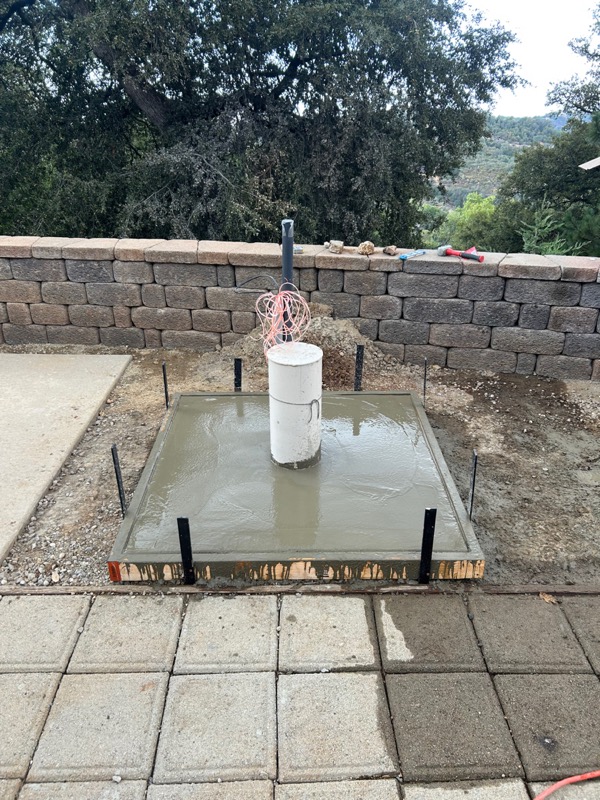
- The well and submersible pump. A pump set deep in the casing lifts groundwater to the surface. In the pass, water tables can sit well below the surface, so pumps often work against significant lift.
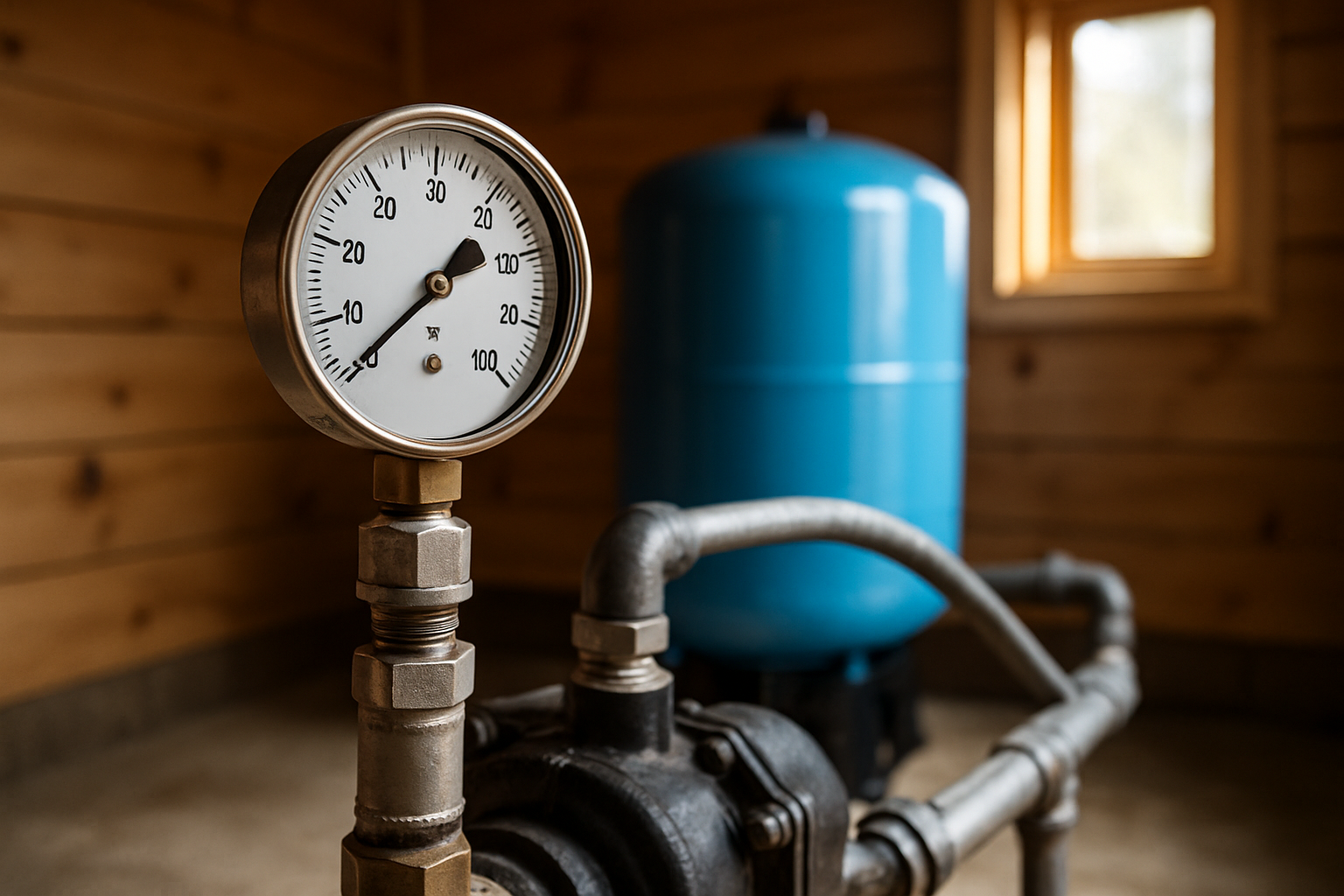
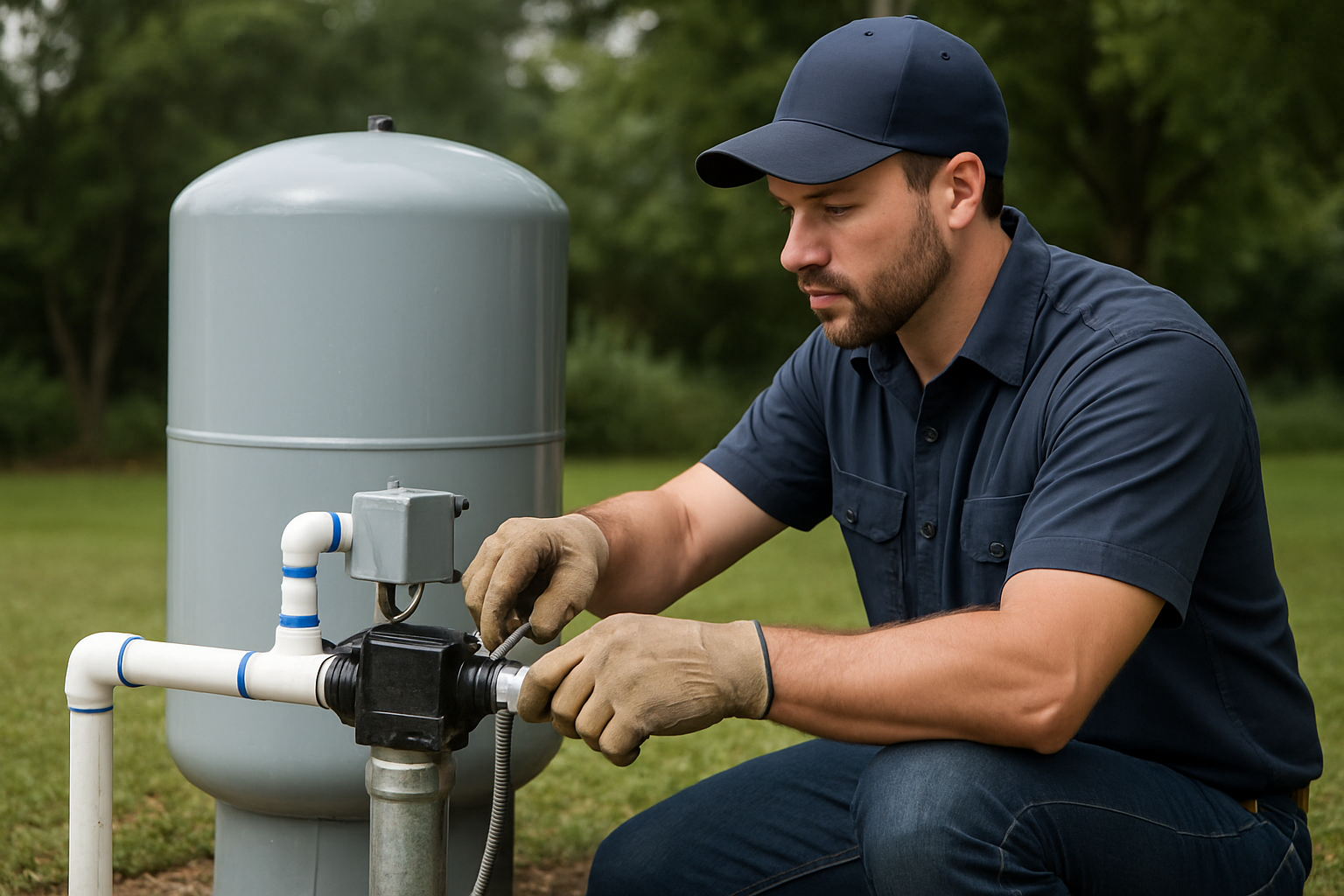
- The pressure tank and pressure switch. The tank stores pressurized water so the pump is not forced to start every time you open a tap, and the switch tells the pump when to turn on and off. These are the most common failure points on any well.
- Storage and delivery. Many pass properties add a storage tank so the well can refill it slowly overnight while a separate booster pump delivers strong, steady pressure during the windy daytime hours when irrigation demand peaks.
- Filtration and treatment. Sediment filters catch sand and grit; iron, manganese, and hardness treatment protect both your plumbing and your appliances from the mineral-heavy water common in the area.
- The irrigation network. Drip lines, micro-sprinklers, or larger sprayheads distribute water to the landscape, ideally on a schedule that runs during calmer early-morning hours to fight evaporation losses.
When all of these elements are sized correctly for your lot and your wind exposure, the system runs quietly in the background. When one is undersized or worn, you feel it immediately — usually as weak pressure, short cycling, or a well that struggles to keep up during a hot, gusty afternoon.
Common Local Scenarios in the San Gorgonio Pass
Over decades of service across Riverside County’s high country, the same situations come up again and again on pass properties:
Pressure that fades on hot, windy days
You water in the evening and everything seems fine, but during a blazing, breezy afternoon the pressure sags and coverage gets patchy. Often this is a pressure tank that has lost its air charge, a worn pump that can no longer keep up with wind-driven demand, or simply a system that was never sized for the pass’s high evapotranspiration.
Sand and sediment in the water
Grit at the bottom of a glass, sputtering faucets, or emitters that keep clogging point to sand intrusion — either windblown material entering tanks and wellheads, or fine sediment being drawn up from the aquifer. Proper sediment filtration and well-seal maintenance usually solve it.
Iron staining and hard, mineral-heavy water
Reddish-brown stains on concrete, fixtures, and stucco, scale buildup inside pipes, and spotting on glass are classic signs of iron, manganese, and hardness. These minerals are common in pass-area groundwater and are best handled with targeted treatment rather than ignored.
The well that pumps less than it used to
Groundwater basins beneath the pass are under stress; the San Gorgonio Pass Water Agency imports State Water Project water specifically to reduce local overdraft. As regional water tables decline, some older wells produce less, and the pump may need to be lowered or the well deepened or rehabilitated.
Frost and freeze damage in winter
Elevation means genuinely cold winter nights. Exposed pipes, pressure tanks, and backflow assemblies can freeze and crack if they are not insulated or drained, leaving you without water on the coldest mornings of the year.
What You Can Check Yourself
Before you call anyone, a few simple checks can tell you a lot — and sometimes save you a service visit:
- Look at your pressure gauge. Note where pressure sits when the pump kicks on and off. Wild swings or a pump that cycles on and off rapidly almost always signal a pressure tank or switch problem.
- Tap the pressure tank. A healthy tank sounds hollow near the top and solid near the bottom. If it sounds solid all the way up, it has likely lost its air charge and is waterlogged.
- Inspect and rinse your filters. Clogged sediment screens are a leading cause of low flow in the pass. Clean or replace them and see if pressure recovers.
- Check the breaker and any control box. Rural power fluctuations can trip breakers or wear pump controls. A reset sometimes restores service — but repeated tripping means something needs attention.
- Watch your irrigation timing. Shifting cycles to the calm, cool hours before dawn can dramatically improve coverage and cut waste in a wind-exposed landscape.
If everything checks out and you still have trouble, or if you are uncomfortable working around electrical and pressurized components, it is time to bring in a professional.
When to Call a Professional
Some problems are simply not safe or practical to tackle alone. Call a licensed well contractor when you have no water at all, when the pump runs continuously without building pressure, when you see a sudden change in water quality, when wiring or electrical components are involved, or when the pump itself needs to be pulled from the well. Pulling and setting a submersible pump in a deep pass well requires specialized equipment and experience — it is not a do-it-yourself job. The same goes for deepening, rehabilitating, or properly abandoning a well, all of which are regulated activities in Riverside County.
Realistic Cost Ranges
Every property is different, but these typical ranges help you plan. A pressure switch replacement generally runs $150–$350, and a new pressure tank falls between $600 and $1,500. A full pump replacement typically ranges from $2,500 to $5,500, depending on depth and horsepower. Sediment filtration runs about $300–$900, while iron, manganese, or hardness treatment systems generally fall between $1,500 and $3,500. A constant-pressure or booster system — often a smart upgrade on windy, high-demand pass lots — runs $2,000–$4,500. Larger projects include a turnkey new well at roughly $18,000–$42,000, hydrofracturing to improve a low-yield well at $3,000–$8,000, and proper well abandonment at $1,500–$5,000. Our diagnostic visit is $125, credited toward any work we perform.
Our Service Area
Southern California Well Service is a licensed C-57 water well contractor with more than 30 years of experience and a 4.9-star reputation. We serve the entire San Gorgonio Pass and the surrounding Riverside County high country — Banning, Beaumont, Cabazon, Cherry Valley, and Whitewater — with same-day emergency response when you have no water. Working from our offices in Ramona (1077 Main St, Ramona, CA 92065) and Anza (57174 US Highway 79, Anza, CA 92539), we also cover the genuine avocado belt in San Diego County, including Fallbrook, Bonsall, Valley Center, and Pauma Valley, so we understand both the wind-and-sand realities of the pass and the grove-irrigation needs farther south.
Frequently Asked Questions
Can you really grow avocados in the Banning Pass?
Realistically, no — not as a commercial crop. The pass’s relentless wind, summer heat, and freezing winter nights make it extremely difficult for frost- and wind-sensitive avocado trees. The true Southern California avocado belt is in San Diego County, in areas like Fallbrook and Valley Center. In the pass, your water system is far better aimed at pasture, windbreaks, landscaping, and hardy plantings.
Why does my irrigation seem to use so much more water here?
The wind. The San Gorgonio Pass funnels strong, steady wind that accelerates evaporation from soil and foliage, so plants dry out much faster than in sheltered areas. Watering during the calm early-morning hours and using wind-tolerant emitters helps a great deal.
What causes the sand and grit in my well water?
It can come from two directions: windblown sand entering wellheads, storage tanks, and troughs from the surface, or fine sediment drawn up from the aquifer itself. Proper sediment filtration and a well-sealed wellhead typically resolve it.
Why is my water staining everything reddish-brown?
That is almost always iron, often paired with manganese and general hardness — all common in pass-area groundwater. A targeted iron and manganese filter or a water softener will protect your fixtures, plumbing, and stucco from further staining.
My older well produces less than it used to. Is that normal here?
Declining yield is a real concern in the pass, where groundwater basins are under stress and regional water tables have been falling. Sometimes the fix is lowering the pump; other times the well benefits from rehabilitation or hydrofracturing. A professional evaluation will tell you which.
How fast can you respond in an emergency?
We offer same-day emergency service throughout the pass and Riverside County. If you have no water, call us right away and we will prioritize getting your system back online.
Get Help With Your Pass Well Today
Whether your pump quit on a windy afternoon, your water has turned gritty or rust-colored, or you simply want a system built to handle the realities of the San Gorgonio Pass, we are ready to help. Call us at (760) 440-8520 or text (619) 259-0410 for honest advice and same-day emergency service from a licensed C-57 contractor who knows the pass.