

Honest Well Guidance for Banning and the San Gorgonio Pass
Banning sits in the San Gorgonio Pass in Riverside County, wedged between the San Bernardino Mountains to the north and the San Jacinto Mountains to the south, at an elevation of roughly 2,300 feet. The pass funnels some of the strongest, most persistent wind in the United States — the reason the San Gorgonio Pass wind farm sprawls just east of town. If you came here looking for avocado-grove irrigation, we owe you the truth: Banning is not avocado country. Avocados are frost-sensitive, heat-stressed and easily damaged by sustained wind, and between the pass winds, summer heat and winter cold snaps, commercial avocado production here is essentially nonexistent. The genuine San Diego avocado belt lives well to the southwest in Fallbrook, Bonsall, Valley Center and Pauma Valley.
What Banning property owners actually need is realistic well and irrigation support for high-desert-edge conditions: large rural lots, landscape and pasture irrigation, small backyard orchards (the cooler microclimate up in nearby Cherry Valley even supports apples and cherries), and homes that depend on a private well in an area where the regional water table has been under long-term stress. Southern California Well Service has handled exactly this kind of work across Riverside County for more than 30 years, and we would rather steer you toward the services that genuinely fit your property than sell you on a crop that will not thrive.
How a Well and Irrigation System Works in the Pass
Groundwater beneath Banning comes from alluvial basins fed by runoff from the surrounding mountains and the San Gorgonio River drainage. The San Gorgonio Pass Water Agency imports State Water Project supplies to supplement local groundwater, but many rural and large-lot properties still depend on a private well. A typical system here includes:
- Submersible pump: Set down in the casing, sized to your depth and demand. As regional water levels decline, pumps sometimes have to be reset deeper to stay reliably below the water table.
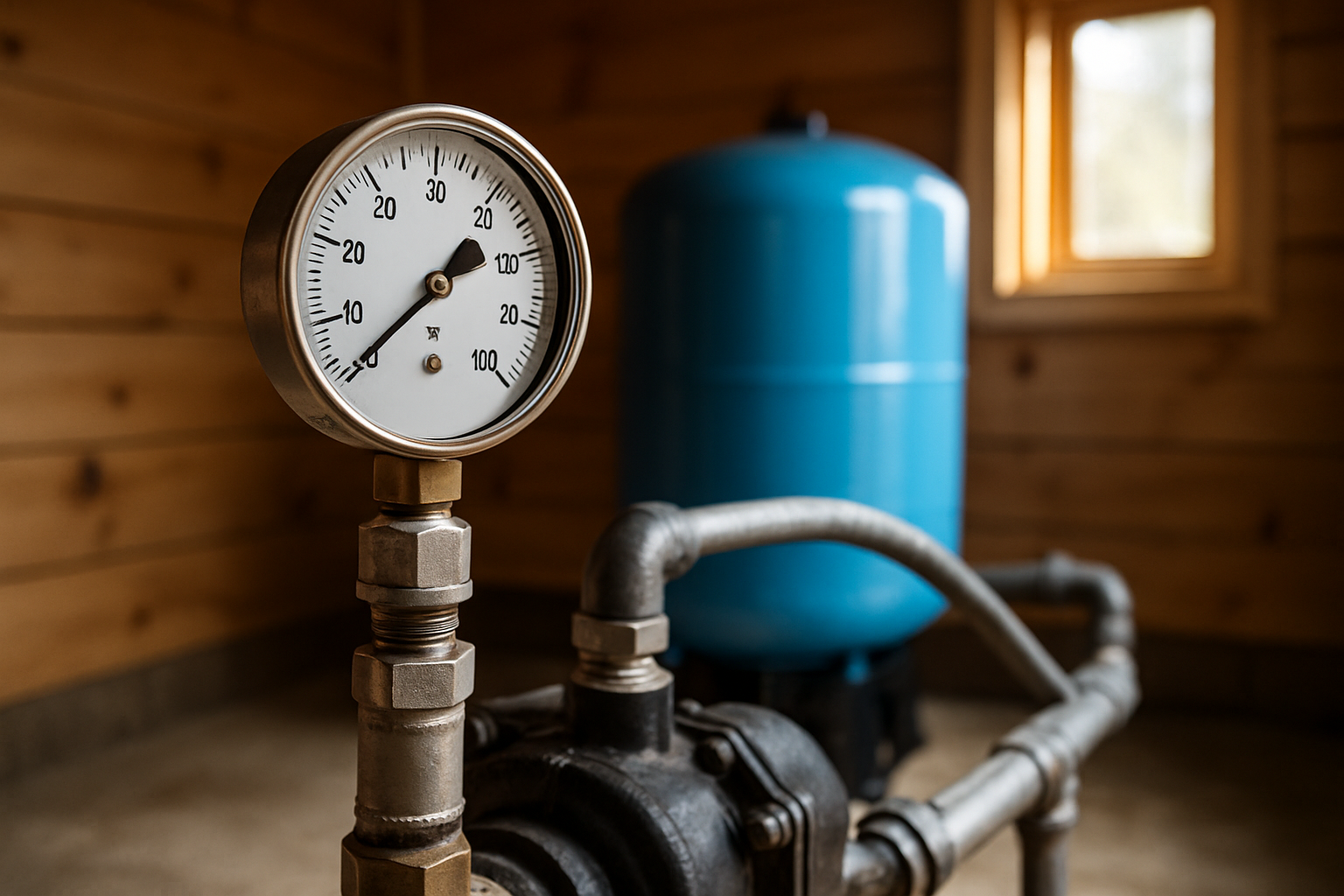
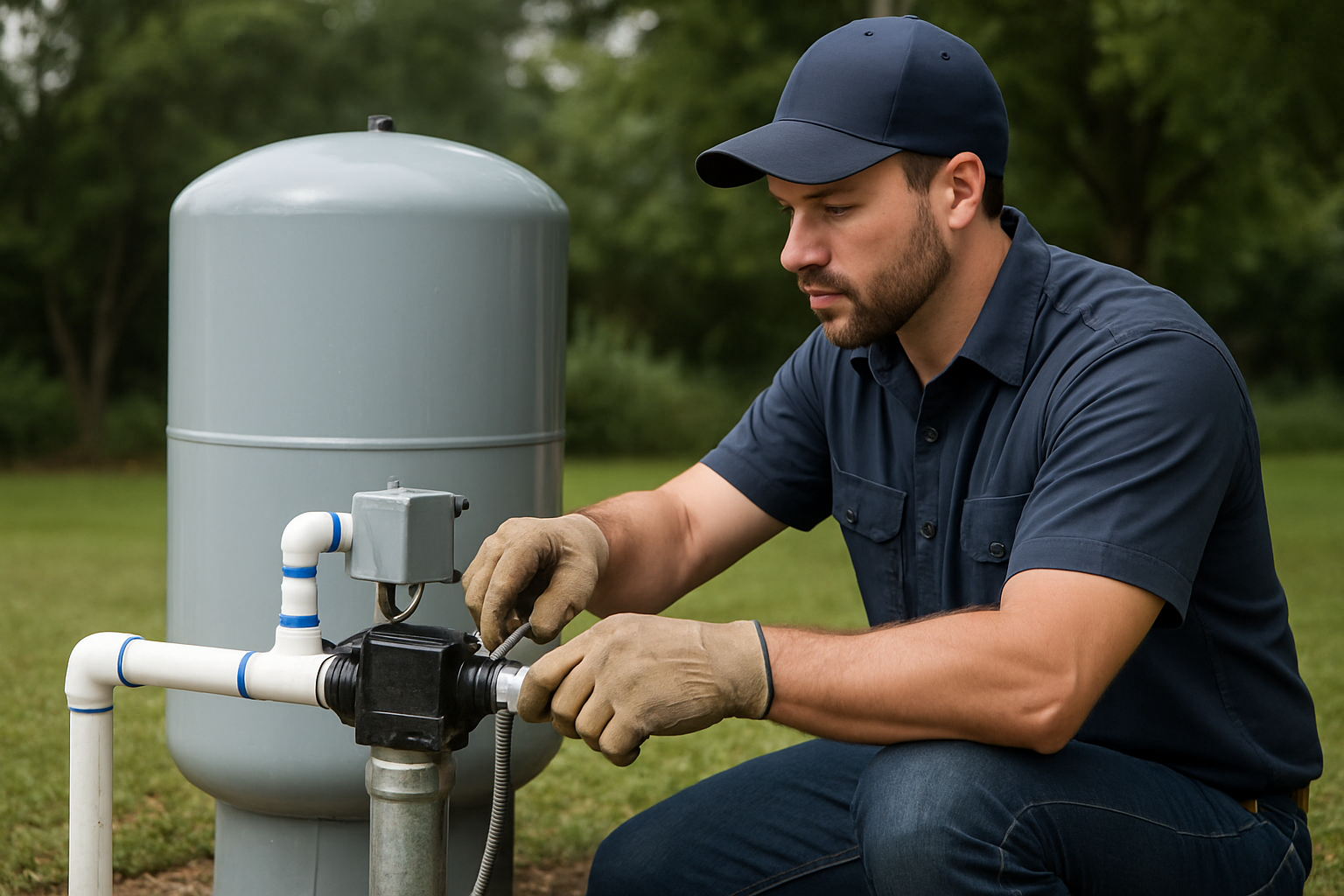
- Pressure tank and pressure switch: The tank stores water and buffers demand; the switch cycles the pump on and off. In a windy, dusty environment, these components work hard and deserve regular inspection.
- Storage tank for peak demand: Useful where a well produces a steady but moderate flow and irrigation demand spikes during hot, windy stretches.
- Drip and micro-spray irrigation: Far more efficient than overhead spray in the pass, where wind can blow a sprinkler pattern halfway across the property and waste water to evaporation.
- Sediment filtration: The combination of fine alluvial grit and wind-blown dust makes pre-filtration a smart, low-cost protection for pumps and fixtures.
The engineering goal in Banning is efficiency and resilience: deliver dependable household and landscape water while wind, heat and a declining water table all work against you.
Common Local Scenarios We See in Banning
Across the pass and the nearby communities of Beaumont, Cherry Valley, Cabazon and Morongo, several well problems come up again and again:
- Declining water table and deeper pumping. Long-term groundwater drawdown means some older wells no longer reach dependable water, requiring a lower pump setting, a deepened well, or in some cases a new well.
- Wind- and heat-driven irrigation demand. Landscapes, pastures and small orchards lose moisture fast in the pass. Undersized systems struggle to keep up in July and August.
- Sediment and dust intrusion. Fine grit clogs screens and wears pump components; blowing dust fouls exposed equipment.
- Hard, mineral-rich water. Scale builds up in plumbing, water heaters and fixtures, and shortens the life of pumps.
- Iron and manganese. Rust-colored staining on fixtures and laundry and a metallic taste are common complaints.
- Short-cycling and pressure swings. A waterlogged pressure tank or a worn pressure switch makes the pump kick on and off repeatedly, which burns out motors.
- Frost considerations. At 2,300 feet, winter nights drop below freezing; exposed wellheads and lines should be protected.
What to Check Before You Call
A quick self-check helps you describe the issue and sometimes solves it outright:
- Verify power. Confirm the well pump breaker has not tripped, especially after a high-wind event that may have caused a power flicker.
- Read the pressure gauge. A healthy system cycles roughly between 40 and 60 psi. Zero pressure or wild fluctuations point to a pump, switch or tank fault.
- Listen for short-cycling. Rapid clicking on and off usually means a waterlogged tank or a failing pressure switch.
- Check water clarity. New sediment, cloudiness or staining tells us something is changing downhole.
- Inspect the wellhead and exposed lines. Look for dust intrusion, leaks, or freeze damage after a cold night.
- Note irrigation coverage. If your landscape is browning in patches during windy weather, the system may need pressure regulation or a drip conversion rather than a well repair.
When to Call a Professional
Call us right away if you have no water, if pressure has collapsed, if the pump runs continuously without building pressure, or if the water suddenly turns muddy or smelly. Those symptoms point to a failed pump, a ruptured pressure tank, or a well that has dropped below its dependable yield as the water table falls. Pump installation and well work involve electrical and high-pressure components and, frankly, a deep well in a declining basin is not a do-it-yourself project. We provide same-day emergency service and hold a 4.9-star rating built on dependable, honest work across the pass.
Realistic Cost Ranges
Costs vary with depth, access and water conditions. We begin with a $125 diagnostic that is credited toward the work when you proceed:
- Pressure switch replacement: $150–$350
- Pressure tank replacement: $600–$1,500
- Submersible pump replacement: $2,500–$5,500 (deeper settings, common as the water table declines, trend toward the high end)
- Sediment filtration: $300–$900 — valuable against grit and blowing dust
- Iron/manganese filtration or water softener: $1,500–$3,500
- Constant-pressure or booster system: $2,000–$4,500 — steadies pressure for large-lot irrigation
- Hydrofracturing to improve a weak well: $3,000–$8,000
- New well, turnkey: $18,000–$42,000, depending on depth and formation
- Well abandonment/decommissioning: $1,500–$5,000
When a basin is declining, drilling deeper is not always the answer; sometimes resetting a pump, improving efficiency, or hydrofracturing a marginal well makes more financial sense. We will give you an honest comparison.
Serving Banning and Riverside County
Southern California Well Service supports Banning and the surrounding San Gorgonio Pass communities of Beaumont, Cherry Valley, Cabazon and Morongo, along with the broader Riverside County region. We operate from two offices — Ramona at 1077 Main St, Ramona, CA 92065, and Anza at 57174 US Highway 79, Anza, CA 92539 — which positions us to reach the pass quickly and also serve the true avocado-growing areas of San Diego County when clients there need grove irrigation. Wherever you are, you get a licensed C-57 contractor who understands the local geology rather than a generalist guessing at it.
Frequently Asked Questions
Can avocados actually be grown commercially in Banning?
Realistically, no. The pass winds, summer heat and winter frost make Banning a poor fit for avocados, which are wind- and frost-sensitive. Serious avocado growing happens in San Diego County's protected inland valleys. We focus on the well and irrigation needs that genuinely apply here.
Why is my older Banning well not producing like it used to?
The regional water table has declined over the years. An older pump set at a shallower depth may no longer stay reliably below the water level. We can evaluate whether resetting the pump, deepening the well, or hydrofracturing will restore dependable flow.
What is the best irrigation method in such a windy area?
Drip and low-profile micro-spray systems, because overhead sprinklers lose enormous amounts of water to wind drift and evaporation in the pass. Pressure regulation also keeps coverage even across a large lot.
My water leaves rusty stains and tastes metallic. What is going on?
That is typically iron, and sometimes manganese, dissolved in the groundwater. A properly sized filtration or treatment system clears it up. We test the water first so the system targets your actual chemistry.
Do I need to worry about my wellhead freezing in winter?
At Banning's elevation, winter nights do drop below freezing, so exposed wellheads, pressure tanks and above-ground lines should be insulated or protected. We can add freeze protection during a service visit.
Do you offer emergency service in the Banning area?
Yes. We provide same-day emergency response for no-water and burst-line situations throughout the San Gorgonio Pass and Riverside County.
Talk to a Local Well Expert
If your Banning well is losing pressure, running low, staining fixtures, or struggling to keep your landscape alive against the pass winds, reach out to a team that knows this terrain. Call (760) 440-8520 or text (619) 259-0410 for a fast, honest assessment. With 30+ years of experience, a C-57 license, two local offices and a 4.9-star reputation, Southern California Well Service keeps the water flowing across the San Gorgonio Pass.