
Well Services for Carlsbad Avocado Groves
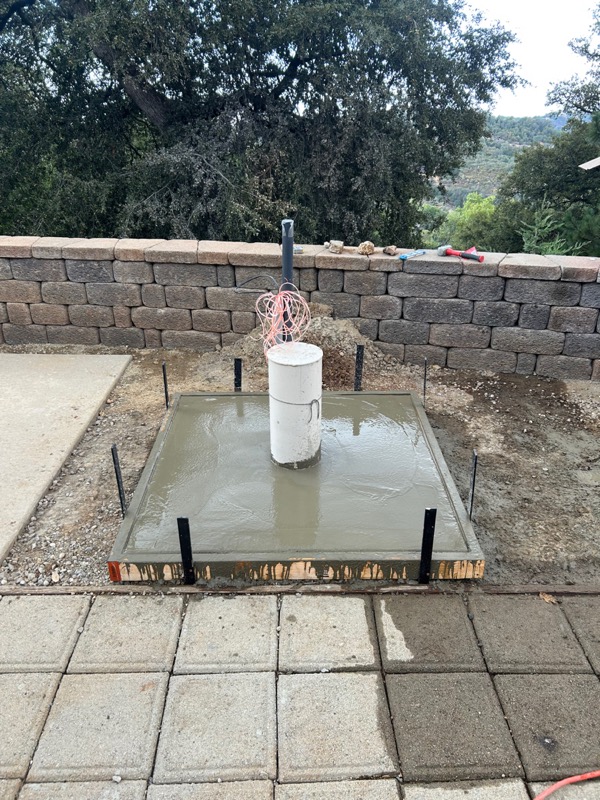
Growing avocados in Carlsbad? These water-loving trees need reliable, high-quality well water for healthy production. Southern California Well Service supports San Diego County avocado growers and rural-edge homeowners with specialized well and irrigation services.
📋 In This Guide
Avocado Water Demands
Avocados are thirsty trees:
- Mature tree: 40-70 gallons per day in summer
- Per acre: 4-6 acre-feet per year
- Critical periods: Fruit set and sizing
A reliable well is essential for profitable avocado production in San Diego County.
Well Systems for Avocado Groves
- High-capacity agricultural wells
- Storage tanks for peak demand periods
- Drip irrigation systems for efficiency
- Micro-sprinklers for young trees
- Pressure regulation for uniform coverage
Chloride Sensitivity
Avocados are highly sensitive to chloride in irrigation water. If your Carlsbad well has elevated chloride:
- Blending with lower-chloride water source
- Leaching irrigation to flush salts
- Rootstock selection for salt tolerance
- Regular soil and leaf testing
We test well water for avocado-critical parameters.
Need Help With Your Well in Carlsbad?
Our expert technicians serve Carlsbad and all of San Diego County with professional well services.
Related Articles
Continue learning about well maintenance and troubleshooting

Signs Your Well Pump Is Failing
Catch pump problems early before you lose water completely.
Low Water Pressure From Well
Diagnose and fix pressure problems before they get worse.
Well Maintenance Guide
Keep your well running smoothly with regular maintenance.
Our Locations
1077 Main St, Ramona, CA 92065
57174 CA-371 (US Hwy 79), Anza, CA 92539
Avocado Grove Well Service Solutions for Carlsbad Properties
Carlsbad holds a genuine place in San Diego County avocado history. Sam Thompson planted some of the area's first commercial groves here back in 1916, and by the late 1920s the Carlsbad district counted more than a hundred growers tending tens of thousands of trees. October "Avocado Day" was a local tradition right up until World War II. While the postwar building boom eventually turned many of those hillsides into neighborhoods and the famous flower fields, pockets of avocado and citrus heritage survive on the rural eastern edges of the city, in La Costa's canyon parcels, and across the line toward San Marcos and Vista. If you still farm a grove or simply tend a backyard stand of Hass and citrus on a larger lot, a dependable private well is the backbone of the whole operation.
Southern California Well Service is a licensed C-57 water well contractor with more than 30 years of experience and offices in Ramona and Anza. We understand North County's coastal-influenced groundwater, its decomposed-granite hill country, and the specific demands avocado trees place on a water system.
How a Grove Well and Irrigation System Works
A grove well in Carlsbad is a complete system. A submersible pump set in the casing draws water from the producing zone and pushes it to the surface, where a pressure tank and pressure switch regulate delivery. From there, water typically feeds a storage tank that buffers your peak morning irrigation demand, then runs through filtration, pressure regulation, and out to the drip lines and micro-sprinklers under the canopy. Because a mature avocado can drink 40 to 70 gallons on a hot summer day, the storage-tank-and-booster approach lets a modest well keep pace with a thirsty grove by recharging slowly overnight and delivering strong flow when every zone fires at dawn.
Carlsbad's terrain near the coast is shaped by marine sedimentary formations and coastal terrace deposits, transitioning to the fractured crystalline rock and decomposed granite common as you move inland and east. That geology, plus proximity to the ocean, makes water chemistry the defining issue for grove owners here.
Chloride, Salinity, and the Avocado Problem
Avocados are among the most salt-sensitive of all tree crops, and chloride is the specific villain. Coastal and inland wells in this part of San Diego County can carry elevated chloride and total dissolved solids, and the symptoms show up as scorched, brown leaf tips, early leaf drop, reduced fruit set, and stressed, unproductive trees. The fix is rarely one thing. We test your water for chloride, TDS, and sodium, then build a strategy that may combine blending with a cleaner source, deliberate leaching irrigation to push salts below the root zone, salt-tolerant rootstock selection, and ongoing soil and leaf-tissue monitoring. Getting the chemistry right protects both your yield and your trees' long-term health.
Common Local Well Scenarios We See
- Pump wear from mineral-rich water shortening the life of submersibles and reducing flow over a season.
- Pressure tank and switch failures that cause sprinklers to sputter or the pump to short-cycle.
- Low yield during drought years, when North County's dry climate drops the water table and stresses older wells.
- Salinity and iron staining that clog drip emitters and burn foliage.
- Aging groves switching from sprinkler to drip, which changes pressure and filtration requirements.
What to Check Before You Call
A few quick observations help us diagnose faster and sometimes save you a service visit:
- Watch the pump cycle. Rapid on-off cycling almost always means a waterlogged pressure tank or a failing pressure switch.
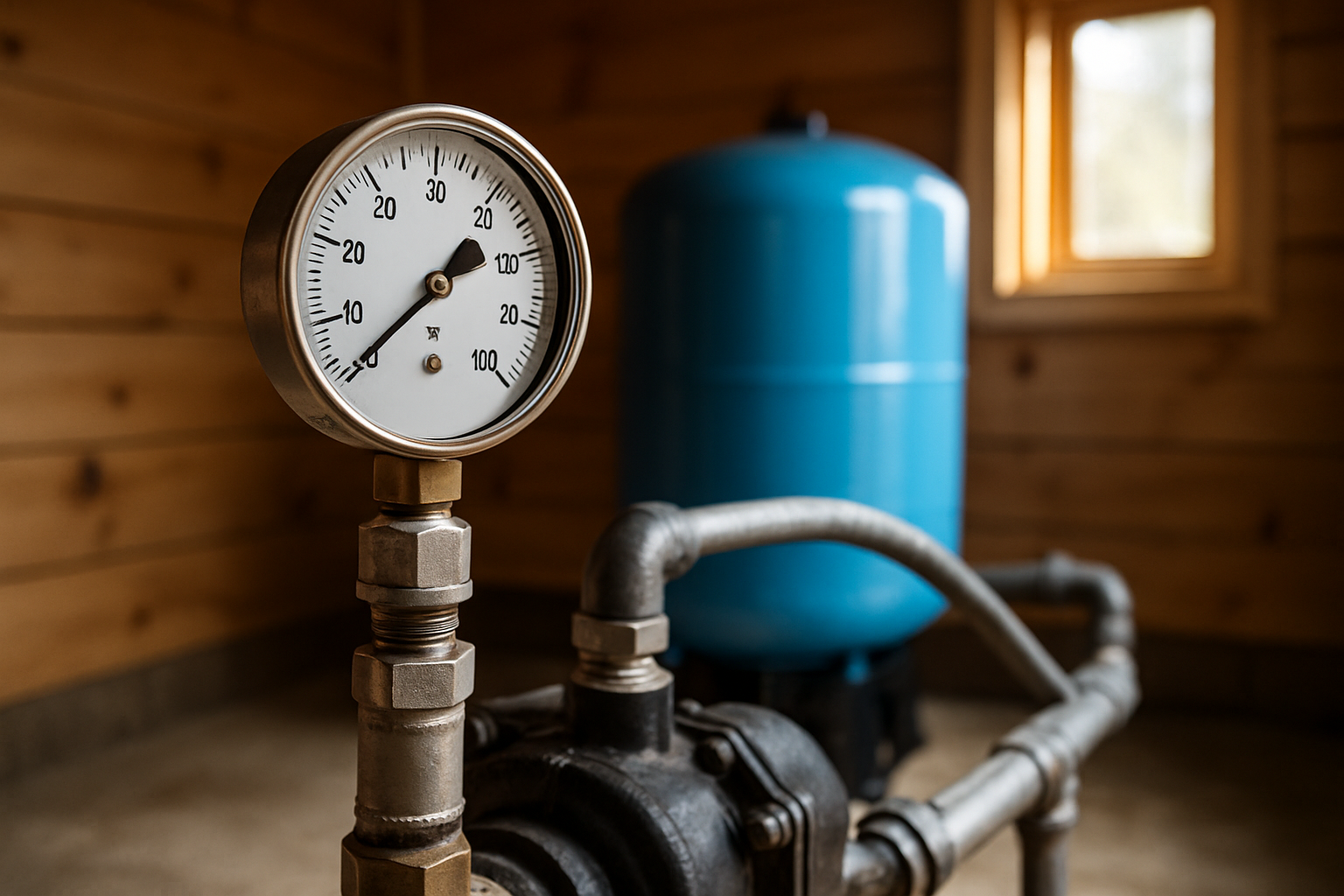
- Read your pressure gauge. Most grove systems run 40 to 60 psi at the tank; a needle that never builds or swings wildly is a warning sign.
- Inspect emitters and micro-sprayers. White scale or weak output in only some zones points to salt or sediment clogging rather than a well problem.
- Note any change in the water. New color, smell, grit, or staining and the date it started narrows the diagnosis quickly.
- Check the breaker and wellhead. Coastal moisture corrodes electrical connections; a tripped breaker is a common, inexpensive culprit.
When to Call a Professional
Anything that involves pulling the pump, opening the wellhead, working with 240-volt wiring, or interpreting a water-quality lab report belongs with a licensed contractor. If you have lost water entirely, your trees are showing salt burn, the pump runs constantly without building pressure, or yield is dropping for no obvious reason, call us rather than guessing. A mistake on a submersible pump can drop equipment down the casing and turn a routine repair into a major one. We offer same-day emergency service for no-water situations.
Realistic Cost Ranges
We give honest, itemized estimates, and our $125 diagnostic fee is credited toward any repair we perform. Typical Carlsbad ranges:
- Pressure switch replacement: $150 to $350
- Pressure tank replacement: $600 to $1,500
- Submersible pump replacement: $2,500 to $5,500
- Sediment filtration: $300 to $900
- Iron, manganese, or softening treatment: $1,500 to $3,500
- Constant-pressure or booster system: $2,000 to $4,500
- New well, turnkey: $18,000 to $42,000
- Hydrofracturing to improve a low-yield well: $3,000 to $8,000
- Well abandonment or decommissioning: $1,500 to $5,000
Serving Carlsbad and North County
From our Ramona and Anza offices we serve Carlsbad and the surrounding North County avocado belt, including La Costa, Bressi Ranch, and the rural parcels toward San Marcos, Vista, Encinitas, and Fallbrook. Whether you manage a working grove or maintain a few backyard trees on acreage, our 4.9-star-rated team brings full-service drilling, pump repair, hydrofracturing, and water-treatment expertise directly to your property, usually within the same service region we have covered for decades.
Water Testing and Seasonal Grove Care
For avocado growers, water testing is not a one-time formality. We recommend a baseline well-water panel covering chloride, total dissolved solids, sodium, pH, and iron, followed by periodic retesting because coastal-influenced groundwater chemistry can drift across wet and dry years. Pairing that well data with annual leaf-tissue analysis gives a complete picture of what your trees are actually absorbing, so you can adjust leaching fractions and fertigation before damage shows up in the canopy. Small, well-timed corrections in spring and early summer protect fruit set during the most water-critical weeks of the year.
Routine maintenance keeps the whole system reliable through Carlsbad's hot, dry late summers. We suggest checking the pressure tank's air charge and the pressure switch annually, flushing sediment filters on schedule, inspecting drip emitters and micro-sprayers for salt scale, and pulling a flow test every few years to confirm the well is still yielding what your grove needs. Catching a tired pump or a fouled screen early is far cheaper than an emergency replacement during peak irrigation season, when losing water for even a day or two can stress mature trees and threaten a crop. Our technicians can set up a simple seasonal maintenance plan tailored to the size of your grove and the condition of your well.
Frequently Asked Questions
Are there still avocado groves in Carlsbad?
Yes, though far fewer than a century ago. Most large commercial acreage gave way to housing and flower fields after World War II, but working and hobby groves survive on the rural eastern edges of the city and across the line toward San Marcos, Vista, and Fallbrook, where many properties still rely on private wells.
Why are my avocado leaves browning at the tips?
Tip burn is the classic sign of chloride or salt accumulation from irrigation water. We can test your well for chloride and total dissolved solids and recommend blending, leaching, or treatment to protect the trees.
How deep are wells in the Carlsbad area?
Depths vary widely with location and geology, from a couple hundred feet near the coast to deeper completions in the inland hills. We evaluate each parcel individually rather than assuming a one-size depth.
Can a small well support a full grove?
Often yes, with the right design. Pairing a modest well with a storage tank and a booster or constant-pressure system lets the well recharge overnight and still deliver strong flow during the morning irrigation window.
Do you offer emergency service if my grove loses water?
Yes. We provide same-day emergency response for no-water situations across San Diego County. Call (760) 440-8520 or text (760) 219-5877.
What does a diagnostic visit cost?
Our diagnostic fee is $125, and it is credited toward any repair we perform, so the assessment effectively pays for itself when you move forward with the work.