
Well and Irrigation Water Services in Carmel Mountain Ranch
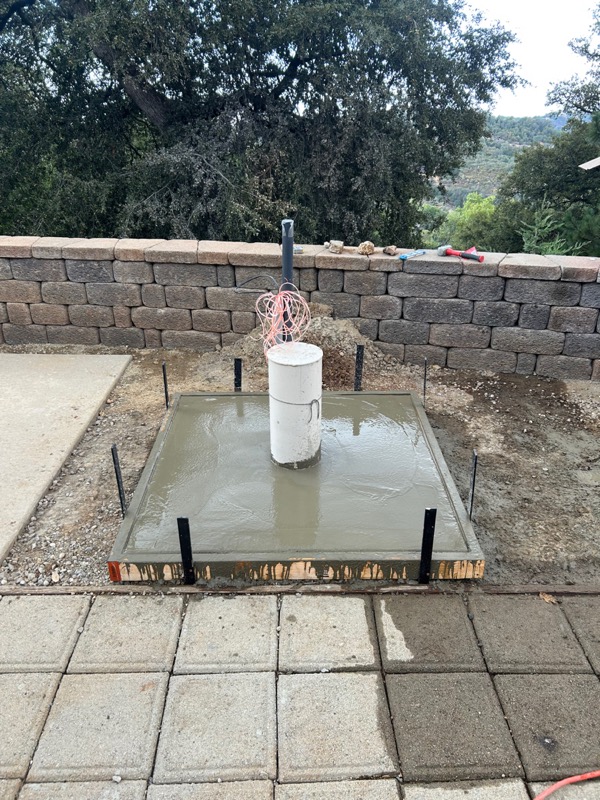
Carmel Mountain Ranch sits in the northeastern corner of the City of San Diego, a master-planned community of roughly 1,500 acres in the shadow of Black Mountain. Most homes here run on municipal water, but plenty of property owners on the rural-edge parcels and adjacent unincorporated land rely on private wells and dedicated landscape irrigation. Southern California Well Service keeps those systems running with licensed C-57 expertise.
📋 In This Guide
Water in Carmel Mountain Ranch
Carmel Mountain Ranch (often shortened to CMR) is bounded by Poway to the east and the San Diego communities of Rancho Bernardo, Rancho Penasquitos, and Sabre Springs. It is firmly suburban, served by Poway Unified schools and largely connected to piped municipal supply. This is not avocado-grove country, so we focus on what actually matters here: dependable household wells, irrigation wells that cut summer water bills, and healthy landscapes, fruit trees, and gardens.
- Suburban setting at the base of Black Mountain
- Mixed water sources with municipal supply and some private and irrigation wells nearby
- Decomposed granite terrain typical of inland San Diego County
Need Help With Your Well in Carmel Mountain Ranch?
Our expert technicians serve Carmel Mountain Ranch and all of San Diego County with professional well services.
Related Articles
Continue learning about well maintenance and troubleshooting

Signs Your Well Pump Is Failing
Catch pump problems early before you lose water completely.
Low Water Pressure From Well
Diagnose and fix pressure problems before they get worse.
Well Maintenance Guide
Keep your well running smoothly with regular maintenance.
Our Locations
1077 Main St, Ramona, CA 92065
57174 US Highway 79, Anza, CA 92539
Well and Irrigation Water Solutions for Carmel Mountain Ranch Properties
If you own a home or larger lot in or around Carmel Mountain Ranch that draws on a private well, you depend on that system every single day for drinking water, for the garden, and for keeping a San Diego landscape green through a long dry summer. Southern California Well Service has spent more than 30 years helping inland San Diego County property owners get reliable, clean water out of the ground, and we bring that same C-57 licensed experience to the CMR area and the unincorporated parcels nearby.
How a Private Well and Irrigation System Works
A residential well here is a complete system, not just a borehole. A submersible pump set deep in the casing lifts water up to a pressure tank at the surface, and a pressure switch tells the pump when to start and stop so your taps and sprinklers see steady pressure. From the tank, water branches to the house plumbing and to the irrigation manifold that feeds your drip lines, spray heads, and hose bibs. On larger landscaped lots we often add a storage tank so a modest well can recharge slowly overnight and then deliver a strong flow at dawn when an automatic controller fires every zone at once.
The ground beneath this part of northeastern San Diego is dominated by decomposed granite and fractured crystalline rock. Wells in this terrain often produce from fractures in the bedrock rather than a deep sand-and-gravel aquifer, which is exactly why local knowledge matters: yield, depth, and water chemistry can change dramatically from one ridge or canyon to the next.
Common Local Scenarios We Get Called For
Because the CMR area is largely suburban, the well work we do tends to cluster around a few recognizable situations:
- Irrigation wells losing pressure mid-summer, usually a tired pump, a waterlogged pressure tank, or a failing pressure switch that leaves sprinklers sputtering.
- Hard, mineral-rich water leaving scale on fixtures and clogging drip emitters.
- Older domestic wells on legacy lots that have not been serviced in years and need a pump pull or flow test.
- Sediment or cloudy water after a wet winter shifts fines in the fractured rock.
- Decommissioning of an abandoned well on a parcel being redeveloped, which San Diego County requires be done to code.
What You Can Check Yourself Before Calling
A few quick observations help us help you faster, and occasionally save you a service call entirely:
- Listen to the pump. Short, rapid on-off cycling almost always points to a pressure tank that has lost its air charge or a failing pressure switch.
- Read the pressure gauge. Healthy residential systems usually hold somewhere in the 40 to 60 psi band; a needle that never builds or swings wildly is a red flag.
- Check the breaker. A tripped breaker or a corroded electrical connection at the wellhead is a common and inexpensive culprit.
- Look at the water. Note any new color, smell, grit, or staining and when it started; that timeline narrows the diagnosis quickly.
- Walk your irrigation zones. If only some heads are weak, the problem may be clogging or scale rather than the well itself.
When to Call a Professional
Anything that involves pulling the pump, opening the wellhead, handling 240-volt wiring, or reading a water-quality lab report is work for a licensed contractor. If you have lost water entirely, smell rotten-egg sulfur, see a sudden change in clarity, or the pump runs constantly without building pressure, call us rather than guessing. A wrong move on a submersible can drop equipment down the casing and turn a modest repair into a major one. We offer same-day emergency service for no-water situations.
Realistic Cost Ranges
We give honest, itemized estimates, and our $125 diagnostic fee is credited toward any repair we perform. Typical Carmel Mountain Ranch-area ranges:
- Pressure switch replacement: $150 to $350
- Pressure tank replacement: $600 to $1,500
- Submersible pump replacement: $2,500 to $5,500
- Sediment filtration: $300 to $900
- Iron, manganese, or softener treatment: $1,500 to $3,500
- Constant-pressure or booster system: $2,000 to $4,500
- New well, turnkey: $18,000 to $42,000
- Hydrofracturing to improve a low-yield well: $3,000 to $8,000
- Well abandonment or decommissioning: $1,500 to $5,000
Serving Carmel Mountain Ranch and Northeastern San Diego
From our Ramona and Anza offices we serve Carmel Mountain Ranch and the surrounding communities of Rancho Bernardo, Sabre Springs, Rancho Penasquitos, Poway, and the rural parcels in between. Whether you run a household well, an irrigation-only well for a large landscape, or you are weighing a new well on acreage, our 4.9-star-rated team brings full-service drilling, pump repair, and water-treatment expertise to your property.
Why Local Expertise Matters Here
Fractured-rock wells reward technicians who actually know the area. Two wells a few hundred yards apart can have completely different yields and water chemistry depending on which fractures they intersect. An out-of-town crew that treats every well the same often misdiagnoses the problem or over-prescribes equipment. Because we work across inland San Diego County week in and week out, we can usually recommend the right pump size, the right storage and pressure strategy, and the right treatment the first time, which saves you money and downtime. We are happy to start with a straightforward diagnostic and give you an honest assessment before you commit to any larger work.
Water Quality and Treatment in the CMR Area
Inland San Diego County groundwater is typically hard, and depending on the specific well it can also carry iron, manganese, or a faint sulfur smell. None of these make a well unusable, but they do call for the right treatment. Hardness leaves scale on water heaters, fixtures, and irrigation emitters and shortens the life of appliances; a properly sized softener fixes it. Iron and manganese show up as rust-colored staining on sinks and concrete and as plugged drip lines, and a dedicated filtration system clears them. A rotten-egg odor usually points to sulfur or to bacteria in the well and is straightforward to treat once we identify the source. We start with a water test so the treatment matches what is actually in your water rather than guessing, which keeps you from paying for equipment you do not need.
Seasonal Maintenance Keeps Costs Down
The cheapest well repair is the one you prevent. We recommend a simple annual check of the pressure tank air charge and the pressure switch, a look at the wellhead seal and electrical connections, and periodic filter changes for any treatment equipment. On irrigation systems, walking the zones a couple of times each season to catch clogged emitters and broken heads protects both your landscape and your pump, since a system fighting blockages works harder and wears out sooner. For homes that depend entirely on a single well, we can also flow-test the well every few years to confirm it is still yielding what your household and landscape need before a dry summer puts it to the test. A modest maintenance habit almost always costs far less than an emergency pump replacement during a heat wave.
Frequently Asked Questions
Is Carmel Mountain Ranch on well water?
Most homes inside CMR are connected to municipal water, but private and irrigation wells are common on larger lots and the adjacent unincorporated parcels, and that is the work we handle here.
How deep are wells in this part of San Diego County?
Depths vary widely in fractured-granite terrain, often from a couple hundred feet to several hundred, depending on where the producing fractures sit. We evaluate each parcel individually rather than assuming a fixed depth.
Why does my well water leave white scale on everything?
That is hard water, high in dissolved minerals, which is typical of inland San Diego County. A softener or targeted treatment system solves it and protects your fixtures and irrigation emitters.
Can I use a well just for irrigation to lower my water bill?
Yes. An irrigation-only well paired with a storage tank and booster pump is a popular way to keep a large San Diego landscape green without paying municipal rates for every gallon.
Do you offer emergency service?
Yes. We provide same-day emergency response for no-water situations across San Diego County. Call (760) 440-8520 or text (619) 259-0410.
What does a diagnostic visit cost?
Our diagnostic fee is $125, and it is credited toward any repair we perform, so the assessment effectively pays for itself when you move forward.