
Well & Grove Irrigation Services in Chino Hills
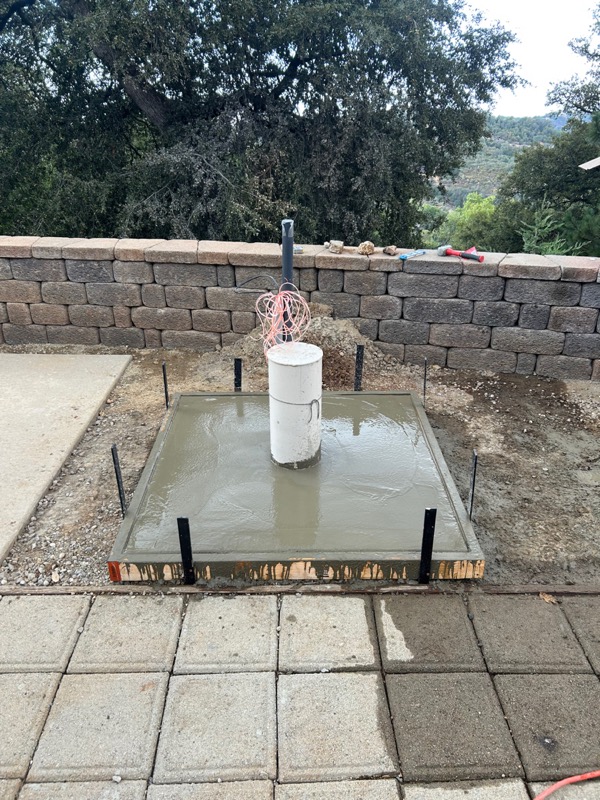
If you own a private well or irrigate a small grove, orchard, or landscape in Chino Hills, you are sitting on top of the Chino Groundwater Basin in San Bernardino County — one of the most heavily managed aquifers in California. Southern California Well Service keeps Chino Hills wells, pumps, and irrigation systems running with C-57 licensed, same-day service.
📋 In This Guide
Water Demands for Groves & Landscapes
Whether you irrigate ornamental landscaping, a backyard citrus and avocado planting, or a few acres of producing trees in the rural pockets of Chino Hills, water demand peaks hard in our hot, dry summers:
- Mature avocado or citrus tree: 40-70 gallons per day in July and August
- Per planted acre: roughly 3-5 acre-feet per year in this climate
- Critical windows: bloom, fruit set, and sizing — stress here costs you the crop
A dependable well and correctly sized pump are what carry trees through those weeks.
How a Private Well & Irrigation System Works
- Submersible pump matched to your well's depth and yield
- Pressure tank or storage tank to buffer peak irrigation demand
- Drip and micro-spray for efficient, uniform delivery
- Constant-pressure controls so distant zones still get coverage
- Filtration to keep emitters from clogging on Chino Basin sediment
Water Quality & Chloride Concerns
Avocados and many ornamentals are sensitive to salts and chloride. If your Chino Hills well water carries elevated minerals or salinity:
- Blend or install treatment to lower salt loading
- Apply periodic leaching irrigation to flush the root zone
- Test soil and water before salts show up as leaf burn
We test well water for the parameters that actually matter to plant health.
Serving Chino Hills Property Owners
Chino Hills grew out of San Bernardino County's old dairy-and-citrus country, and plenty of properties still run private wells. We help owners keep those systems reliable — contact us for service built around how you actually use your water.
Need Help With Your Well in Chino Hills?
Our C-57 licensed technicians serve Chino Hills and all of San Bernardino County with pump repair, pressure systems, water treatment, and new well work.
Related Articles
Continue learning about well maintenance and troubleshooting

Signs Your Well Pump Is Failing
Catch pump problems early before you lose water completely.

Low Water Pressure From Well
Diagnose and fix pressure problems before they get worse.

Well Maintenance Guide
Keep your well running smoothly with regular maintenance.
Our Locations
1077 Main St, Ramona, CA 92065
57174 US Highway 79, Anza, CA 92539
Well & Grove Irrigation Solutions for Chino Hills Properties
Chino Hills occupies the rolling southwestern corner of San Bernardino County, where suburban neighborhoods press right up against the old dairy-and-citrus country that once defined this whole region. If you own a private well here, you draw from the Chino Groundwater Basin — a deep alluvial aquifer, not the fractured granite of the backcountry. In the central part of the basin, sediments run more than 1,000 feet thick and good wells can yield several hundred to over a thousand gallons per minute. That geology shapes everything about how your system should be designed and maintained.
Because Chino Hills straddles the line between built-out subdivision and rural-residential acreage, we see two kinds of customers: homeowners on city water who irrigate substantial landscapes and backyard fruit trees, and owners of larger parcels who still depend on a private well for the house, the animals, and the grove. Both deserve a contractor who understands the local basin rather than a generic outfit guessing at conditions.
Why Local Knowledge of the Chino Basin Matters
The Chino Basin is one of the most intensively managed aquifers in California — it was adjudicated back in 1978, and pumping is tracked closely. Water levels, salinity, and nitrate all vary across the basin, and a technician who knows Chino Hills can read those conditions instead of treating your well like a coastal granite bore. Out-of-area companies routinely misjudge the depth, the casing condition, and the right pump for this alluvial material. We don't.
Common Well & Irrigation Issues We See in Chino Hills
After decades of service across San Bernardino County, the calls from Chino Hills cluster around a handful of problems:
- Pump wear from heavy summer cycling as trees and landscapes demand water through long, hot months
- Waterlogged pressure tanks that lose their air charge and make the pump short-cycle
- Sediment and fine silt from the alluvial aquifer clogging filters and drip emitters
- Salinity and nitrate that the basin is known for, stressing salt-sensitive avocado and citrus
- Declining yield in dry years that may call for hydrofracturing or a deeper pump setting
A Practical What-to-Check List
- Power: Is the well breaker on? Has a GFCI tripped?
- Pressure gauge: Does it read in the normal 40–60 psi band, and does it move when you open a faucet?
- Pressure tank: Tap it — a tank that sounds full of water (not air) has likely lost its charge or bladder.
- Filters: A clogged sediment or inline filter is one of the most common causes of "low pressure."
- Irrigation zones: Walk the lines for breaks, clogged emitters, or a stuck valve before blaming the pump.
- Water itself: Note any change in color, smell, or grit — it tells us a lot before we open anything up.
When to Call a Professional
A few things you can safely check yourself: confirm the breaker hasn't tripped, look at the pressure gauge, listen for the pump cycling rapidly, and check whether a filter is overdue for a change. Beyond that, call a licensed C-57 contractor — not just a handyman or plumber — the moment you see any of these:
- No water at all, or water that sputters and spits air
- A pump that runs constantly or short-cycles on and off
- Pressure that has steadily dropped over weeks
- New sand, grit, cloudiness, odor, or staining in the water
- A spike in your electric bill with no other explanation
Wells involve high-voltage wiring down a deep borehole and pressurized components — the wrong DIY move can turn a $300 repair into a pump-pulling job. We offer same-day emergency response when you have no water.
What Well & Irrigation Work Typically Costs
Every property is different, but these are realistic Southern California ranges so you can budget before we ever arrive. Our diagnostic visit is $125, credited toward any repair we perform:
- Pressure switch replacement: $150–$350
- Pressure tank: $600–$1,500
- Submersible pump replacement: $2,500–$5,500
- Sediment filtration: $300–$900
- Iron/manganese filter or water softener: $1,500–$3,500
- Constant-pressure or booster system: $2,000–$4,500
- Hydrofracturing to boost a weak well: $3,000–$8,000
- New turnkey well: $18,000–$42,000
- Well abandonment / decommissioning: $1,500–$5,000
We give honest assessments and never upsell work you don't need.
Serving Chino Hills & San Bernardino County
From our Ramona and Anza offices we cover Chino Hills, Chino, Ontario, Montclair, and the surrounding San Bernardino County communities. We are a fully licensed C-57 water well contractor — that means we can legally drill, rehabilitate, and decommission wells, not just swap a pump like a plumber. With 30-plus years in business and a 4.9-star reputation, we show up when we say we will and give you a straight answer.
If your Chino Hills well is losing pressure, your irrigation can't keep up in summer, or you just want a system checkup before the heat hits, call (760) 440-8520 or text (619) 259-0410. Same-day emergency service is available when you have no water.
How Your Well and Irrigation System Actually Works
It helps to understand the chain of equipment that gets water from the Chino Groundwater Basin to your trees. A submersible pump, set hundreds of feet down in the casing, lifts water to the surface. From there it either pressurizes the system directly through a pressure tank, or fills a storage tank that an irrigation booster then draws from. The pressure tank—or a modern constant-pressure controller—keeps delivery steady so your pump isn't slamming on and off every time a valve opens. Downstream, a sediment filter protects your drip emitters and micro-sprinklers from the fine material every alluvial aquifer carries. Each link in that chain has a failure mode, and a good diagnosis starts by figuring out which link is actually broken rather than replacing the most expensive part and hoping.
The single most common mistake we correct in Chino Hills is an oversized or undersized pump. A pump too large for the well draws it down and pulls air; a pump too small can't carry peak summer irrigation. Matching the pump to the well's tested yield and your real demand is the difference between a system that lasts fifteen years and one that burns out in three.
Seasonal Care That Prevents Emergencies
Most no-water calls are preventable. Before the heat arrives each year, it is worth checking the pressure-tank air charge, cleaning or replacing filters, inspecting the drip lines for breaks and clogs, and watching the pump's run-time for any creeping increase that signals wear. A short annual service visit costs far less than an emergency pump pull in August, and it gives us a chance to catch a failing pressure switch or a declining well before it strands you. For salt-sensitive plantings, an annual water test catches rising salinity early, while you still have options.
Why Chino Hills Owners Choose Southern California Well Service
- Genuine local presence — offices in Ramona and Anza put a crew within reach instead of dispatching from far away
- True C-57 licensing — we drill, rehabilitate, and decommission, not just swap pumps like a plumber
- 30-plus years and a 4.9-star reputation earned across San Diego, Riverside, and San Bernardino Counties
- Honest assessments — if the cheaper fix is the right one, that's what we recommend
- Same-day emergency response when you have no water
Protecting Your Investment Over the Long Run
A productive well is a serious asset, and the way you treat it determines how long it serves you. We encourage Chino Hills owners to keep simple records: the well's depth and pump setting, the static and pumping water levels measured over time, the date the pressure tank was last serviced, and the results of each water test. That history turns a future diagnosis from guesswork into a quick, confident call. It also flags slow trends—a water level dropping year over year, or salinity creeping upward—long before they become a crisis, giving you time to plan a deeper pump setting, a hydrofracturing treatment to improve yield, or a treatment system rather than scrambling during peak season. We're happy to set up that baseline on a first visit and update it each time we're out.
Frequently Asked Questions
Is Chino Hills in San Bernardino County?
Yes. Chino Hills is in southwestern San Bernardino County, sitting on top of the deep alluvial Chino Groundwater Basin rather than the fractured granite found in backcountry San Diego.
How deep are wells in the Chino Basin?
It varies, but Chino Basin sediments are more than 1,000 feet thick in the deepest sections, and productive wells in the central basin can yield several hundred to over a thousand gallons per minute. We assess each property individually.
Can you service both my house well and my grove irrigation?
Yes. We handle domestic and agricultural wells, pressure systems, storage tanks, drip and micro-spray irrigation, filtration, and water treatment as one coordinated system.
Why does my pressure tank keep making the pump short-cycle?
Almost always a lost air charge or a failed bladder. A waterlogged tank can't buffer demand, so the pump cycles rapidly and wears out early. A tank replacement runs about $600 to $1,500.
Do you charge for a diagnostic visit?
Our diagnostic is $125, and we credit it toward any repair we perform for you.
How fast can you respond to a no-water emergency in Chino Hills?
We offer same-day emergency response. Call (760) 440-8520 and we will prioritize getting your water back.