
Well Services for Corona Avocado Groves
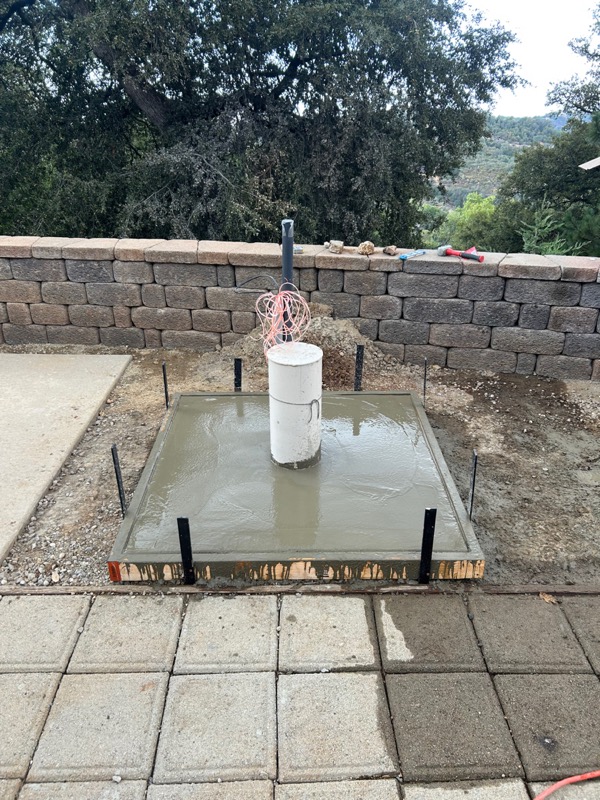
Corona has citrus and grove farming written into its very name. Founded as "South Riverside" and later renamed for the circular Grand Boulevard that rings its old town, Corona was once known as the "Lemon Capital of the World," and the foothills climbing toward the Santa Ana Mountains and Cleveland National Forest still hold groves of citrus and avocado. If you farm a hillside grove off Foothill Parkway, Green River, or in the rural canyons toward Temescal, your trees depend on a dependable private well and a well-designed irrigation system. Southern California Well Service has helped Riverside County growers keep water flowing for more than 30 years.
📋 In This Guide
- Corona's Citrus & Avocado Heritage
- How a Private Well & Grove Irrigation Works
- Common Well Problems in Corona
- What to Check Before You Call
- When to Call a Pro
- Realistic Cost Ranges
- Seasonal Care for a Corona Grove Well
- Why Local Knowledge Wins in Corona
- Our Corona Service Area
- Frequently Asked Questions
- Related Articles
Corona's Citrus & Avocado Heritage
Corona grew up around citrus. The famous circular Grand Boulevard was originally laid out to organize the lemon and orange groves that made the town's fortune, and while suburban development has replaced much of that acreage, working groves — citrus, and increasingly avocado — still climb the warmer, frost-protected hillsides toward the Santa Ana Mountains. Those slopes drain cold air and give avocados the protection they need, which is exactly why hillside parcels here remain attractive for grove growing.
Hydrogeologically, Corona sits at the western edge of Riverside County where the Temescal Valley alluvium meets the hard granite and metamorphic rock of the Santa Ana Mountains. Wells on the valley floor often draw from alluvial gravels, while hillside and canyon wells frequently tap fractured bedrock, where yield depends on intersecting water-bearing fractures. Depths vary widely — commonly 200 to 600 feet — and two neighbors a quarter-mile apart can have very different wells. Because avocados are highly chloride-sensitive, water chemistry matters as much as quantity for a Corona grove.
How a Private Well & Grove Irrigation Works
A grove irrigation system is only as strong as its weakest component. On Corona properties the typical chain runs:
- Submersible pump in the casing sized to the well's sustainable yield and the grove's peak demand.
- Pressure tank and switch that buffer the system and control pump cycling.
- Storage tank and booster pump — especially valuable on hillside groves, where a tank stores overnight production and the booster pushes water uphill to the trees during the irrigation window.
- Filtration to keep sand and scale out of drip lines.
- Micro-sprinklers or drip matched to avocado root zones, with pressure regulation so trees at the top of a slope get the same water as those at the bottom.
Elevation change is the defining design challenge in Corona's foothill groves — pressure regulation and proper zoning keep coverage uniform across the slope.
Common Well Problems in Corona
- Hard water and scale from mineral-rich groundwater, clogging emitters and shortening pump life.
- Declining yield in fractured-rock wells when productive fractures silt up or the water table drops during dry years.
- Chloride and salinity — the limiting factor for avocados, visible as leaf-tip burn.
- Pressure problems on slopes when a system was never properly zoned for the elevation change.
- Pump and switch wear from the heavy summer duty cycle Corona groves demand.
What to Check Before You Call
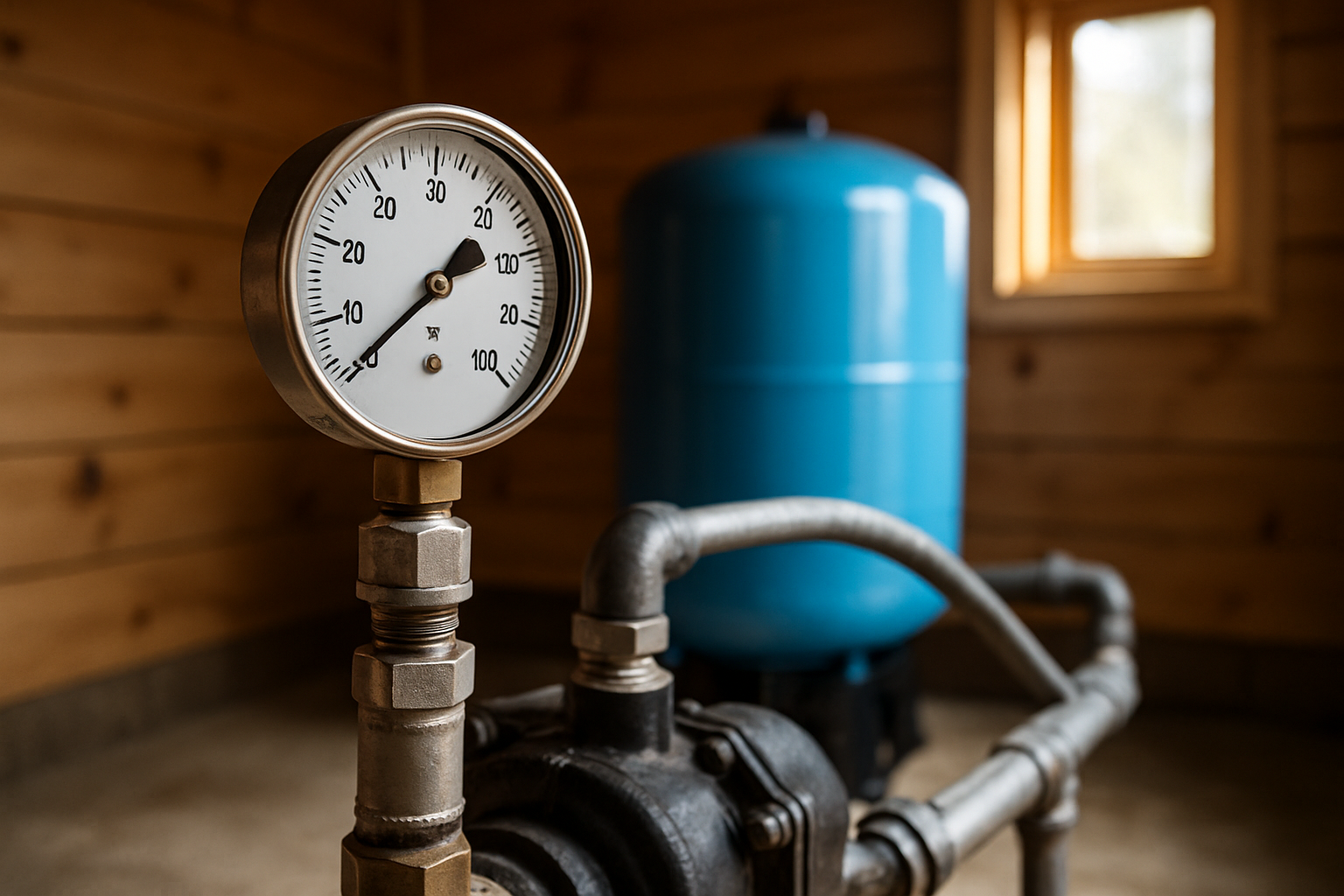
- Read the pressure gauge — zero or wildly swinging pressure points to the tank or switch.
- Listen for short-cycling and shut the pump off if you hear it; rapid cycling destroys motors.
- Check the breaker once; if it trips again, leave it off and call.
- Inspect a water sample for sand, cloudiness, or rust color.
- Walk the grove — dry trees concentrated at the top of a slope usually mean a pressure or booster issue, not the well.
Leave anything involving the casing, the submersible pump, or electrical service to a licensed contractor.
When to Call a Pro
Reach out the moment you lose water, see pressure or volume drop suddenly, notice the pump running without delivering water, or detect a change in taste, color, or smell — the latter especially important for a chloride-sensitive crop. Our diagnostic visit is $125 and credited toward any repair, so an expert assessment is inexpensive insurance for your grove's most valuable input: water.
Realistic Cost Ranges
- Pressure switch: $150 – $350
- Pressure tank: $600 – $1,500
- Submersible pump: $2,500 – $5,500
- Sediment filtration: $300 – $900
- Iron/manganese or softener: $1,500 – $3,500
- Constant-pressure / booster system: $2,000 – $4,500
- New well, turnkey: $18,000 – $42,000
- Hydrofracturing to boost yield: $3,000 – $8,000
- Abandonment / decommissioning: $1,500 – $5,000
Our Corona Service Area
From our Anza and Ramona offices we serve Corona and the surrounding western Riverside County region, including Temescal Valley, Norco, Eastvale, the Green River corridor, Coronita, and the foothill groves toward the Cleveland National Forest. We are a licensed C-57 well contractor with 30-plus years of experience, a 4.9-star rating, and same-day emergency service. Call (760) 440-8520 or text (619) 259-0410.
Seasonal Care for a Corona Grove Well
Corona's grove-growing slopes demand a well that performs reliably through a long, hot Riverside County summer, and a little seasonal discipline keeps that well dependable. In spring, before peak irrigation, we check the pressure tank charge, inspect the switch, confirm the pump's amp draw, and flush the drip and micro-sprinkler lines that feed your trees. On a fractured-rock hillside well, spring is also when we like to measure the static and pumping water levels, because the previous winter's rainfall — or lack of it — tells us a great deal about how the well will hold up under summer load.
Through summer, a hillside grove pushes both the pump and the distribution system hard, especially where water must climb significant elevation to reach upper terraces. Watch for trees at the top of a slope showing stress first; that is the classic signature of a booster or pressure-regulation issue rather than a well problem. Late summer is the right time to test chloride and salinity, since these concentrate over the dry months and avocados are unforgiving of salt. By fall and winter, with demand low, we tackle the larger work — hydrofracturing a marginal well, adding storage, or replacing aging pumps — while the trees rest.
Designing Around Corona's Terrain
The defining feature of Corona grove water systems is elevation. A grove that climbs from a valley-floor wellhead to frost-protected upper slopes needs a design that delivers uniform water across that grade, and that almost always means a storage tank paired with a booster pump and carefully zoned, pressure-regulated drip. Done right, this approach lets even a moderate-yield bedrock well support a productive grove: the well fills the tank around the clock, and the booster delivers the high, steady flow the trees need during their few hours of daily irrigation. We design these systems with the long view in mind, sizing storage for the hottest weeks and building in the filtration that keeps Corona's mineral-rich water from clogging emitters over the years.
Why Local Knowledge Wins in Corona
Western Riverside County is geologically complicated in a way that catches out-of-area contractors off guard. Within a few miles you can move from deep alluvial gravels on the Temescal Valley floor to hard granitic and metamorphic bedrock on the slopes of the Santa Ana Mountains, and the right drilling approach, casing design, and pump selection differ completely between the two. A crew that does not know this terrain may quote a valley-style well for a hillside parcel and end up with a dry or low-yield hole. We have worked these grounds for more than three decades, and that experience translates into faster diagnoses and fewer surprises.
It matters for water chemistry too. Some Corona groundwater carries enough hardness, iron, or chloride to threaten both equipment and the avocado crop itself, and recognizing those patterns from experience lets us specify the right filtration and treatment from the start rather than after a season of clogged emitters and stressed trees. When we evaluate a Corona grove, we look at the whole system — well, pump, storage, distribution, and water quality — because a grove succeeds or fails on the weakest link. Our goal is simple: design and maintain a system that delivers the right volume of clean, low-salinity water to every tree, on every slope, through the hottest weeks of a Riverside County summer.
Frequently Asked Questions
Does Corona really have a citrus and avocado heritage?
Yes. Corona was famously known as the 'Lemon Capital of the World,' and its circular Grand Boulevard was laid out around the original groves. Working citrus and avocado groves still occupy the frost-protected hillsides toward the Santa Ana Mountains.
How deep are wells in the Corona foothills?
It varies widely — commonly 200 to 600 feet. Valley-floor wells often tap alluvial gravels, while hillside and canyon wells draw from fractured bedrock where yield depends on water-bearing fractures.
Why do my hillside avocado trees get less water than the lower ones?
That is almost always a pressure and zoning issue on sloped ground. Proper pressure regulation, zoning, and often a booster pump ensure trees at the top of the slope get the same coverage as those at the bottom.
Is my Corona well water safe for avocados?
Avocados are very chloride-sensitive, so it depends on your water chemistry. We test for the parameters that matter to avocados and recommend treatment, blending, or leaching irrigation where needed.
Can hydrofracturing improve a low-yield bedrock well?
Often yes. Hydrofracturing uses pressurized water to open and connect existing fractures, which can meaningfully improve flow in a hard-rock well. It typically runs $3,000 to $8,000.
Do you handle emergency well repairs in Corona?
Yes, we offer same-day emergency response across western Riverside County. Call (760) 440-8520 if you have lost water.
Need Help With Your Well in Corona?
Our expert technicians serve Corona and all of Riverside County with professional well services.
Related Articles
Continue learning about well maintenance and troubleshooting

Signs Your Well Pump Is Failing
Catch pump problems early before you lose water completely.
Low Water Pressure From Well
Diagnose and fix pressure problems before they get worse.
Well Maintenance Guide
Keep your well running smoothly with regular maintenance.
Our Locations
1077 Main St, Ramona, CA 92065
57174 US Highway 79, Anza, CA 92539