
Well & Irrigation Services in Crest Park
Crest Park is a small forested community in the San Bernardino Mountains, tucked among the pines along Highway 18 between Lake Arrowhead and the Rim of the World corridor, in San Bernardino County. At roughly a mile high, this is cool, alpine country — not avocado-grove territory. Honesty matters here: commercial avocado growing in Crest Park is not realistic at this elevation and climate. What Crest Park properties do need is reliable mountain water for households, cabins, and forest landscaping, often drawn from wells in fractured granite. Southern California Well Service brings 30-plus years of mountain and backcountry well experience to the region.
📋 In This Guide
- The Crest Park Mountain Water Picture
- How a Mountain Well System Works
- Common Well Problems in Crest Park
- What to Check Before You Call
- When to Call a Pro
- Realistic Cost Ranges
- Seasonal Care for a Crest Park Well
- The Value of a Mountain-Experienced Crew
- Our Mountain Service Area
- Frequently Asked Questions
- Related Articles
The Crest Park Mountain Water Picture
Crest Park sits in the San Bernardino Mountains near Lake Gregory and Crestline, at an elevation around 5,000 feet where the dominant rock is fractured granite and weathered crystalline bedrock. That geology shapes everything about water here. Mountain wells generally produce from water-bearing fractures in the rock rather than from thick gravel aquifers, so two wells on the same ridge can yield very differently depending on which fractures they intersect. Depths commonly run from a couple hundred feet to well over 500 feet. Many parcels are also served by mountain water districts, so some homes have wells, some have district water, and some have both.
This is a four-season climate with hard winters — snow, freezing temperatures, and the occasional power outage. The water-system priorities in Crest Park are freeze protection, dependable yield from fractured rock, and good filtration, not the high-volume grove irrigation you would design in the valley below. We are honest about that: trying to grow a commercial avocado grove at a mile of elevation would fight the climate at every turn.
How a Mountain Well System Works
- Submersible pump set deep in a fractured-rock well, sized to the well's real-world yield.
- Pressure tank and switch buffering the system — often kept inside a heated space or insulated well house to prevent freezing.
- Storage tank on lower-yield wells, letting a slow well fill a reserve overnight for daytime use.
- Sediment and iron/manganese filtration, common needs in mountain groundwater.
- Freeze protection — heat tape, insulation, and proper burial depth on lines.
For forest landscaping and gardens, efficient drip and careful scheduling stretch a modest mountain well further.
Common Well Problems in Crest Park
- Low or declining yield when productive fractures silt up or seasonal water levels drop.
- Frozen lines, tanks, or switches during hard winters — the signature mountain failure.
- Sediment and turbidity from fractured rock, abrasive to pumps.
- Iron, manganese, and sulfur causing staining and odor.
- Power-outage damage to pumps and controls from winter storms.
What to Check Before You Call
- In cold weather, suspect a freeze first — check exposed lines, the pressure switch, and the well house for ice.
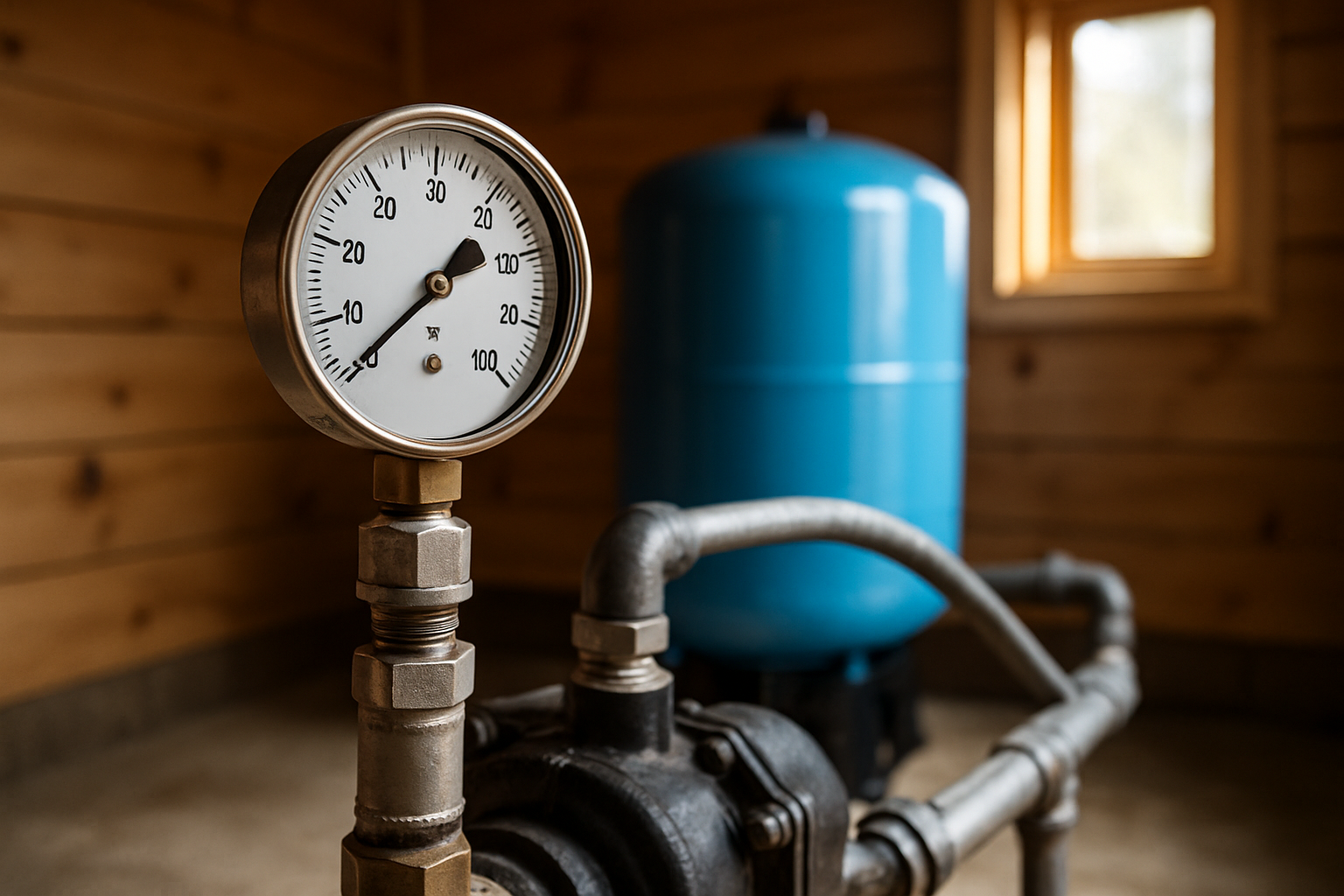
- Read the pressure gauge; zero or erratic pressure points to the tank or switch.
- Listen for short-cycling and shut the pump off if you hear it.
- Check the breaker once after a storm; if it trips again, leave it off.
- Inspect a water sample for sediment, rust, or odor.
When to Call a Pro
Call when you lose water, when a winter freeze damages equipment, when yield drops noticeably, or when water quality changes. Mountain wells, casings, and electrical work belong to a licensed C-57 contractor with backcountry experience. Our diagnostic visit is $125, credited toward any repair.
Realistic Cost Ranges
- Pressure switch: $150 â $350
- Pressure tank: $600 â $1,500
- Submersible pump: $2,500 â $5,500
- Sediment filtration: $300 â $900
- Iron/manganese treatment or softener: $1,500 â $3,500
- Constant-pressure / booster system: $2,000 â $4,500
- New well, turnkey: $18,000 â $42,000
- Hydrofracturing to improve yield: $3,000 â $8,000
- Abandonment / decommissioning: $1,500 â $5,000
Our Mountain Service Area
From our Ramona and Anza offices we serve Crest Park and the surrounding San Bernardino Mountain communities — Crestline, Lake Gregory, Valley of Enchantment, Rimforest, Lake Arrowhead, and the Rim of the World corridor. We are a licensed C-57 contractor with 30-plus years of experience, a 4.9-star rating, and same-day emergency service. Call (760) 440-8520 or text (619) 259-0410.
Seasonal Care for a Crest Park Well
In the San Bernardino Mountains, the calendar drives everything. The most important season for a Crest Park well is the run-up to winter. Before the first hard freeze, exposed pipe should be insulated or heat-taped, the pressure tank and switch should be protected inside a heated or well-insulated enclosure, and any above-ground lines should be checked for vulnerability. A single overnight freeze can split a pipe, crack a tank fitting, or seize a switch, leaving a cabin without water in the worst possible weather. A short pre-winter visit is far cheaper than an emergency thaw-and-repair after pipes burst.
Spring brings its own checklist as the snow recedes: inspect for any freeze damage that went unnoticed, verify the pump's performance after a season of cold, and test water quality, since snowmelt can shift mineral and sediment levels. Summer, mild and dry at this elevation, is the easy season — the right time for any planned work like pump replacement, storage-tank additions, or well rehabilitation, all best done while the weather cooperates. Throughout the year, fractured-rock wells in this granite country benefit from steady, moderate use rather than sudden heavy draws that can pull sediment and air into the system.
Storage Is Your Friend in the Mountains
Many Crest Park wells produce modestly because they draw from rock fractures rather than thick aquifers. The proven answer is storage. A tank that fills slowly around the clock can bank thousands of gallons, so that a low-yield well comfortably covers household peaks, garden irrigation, and — importantly in this fire-prone country — a reserve for defensible-space watering and emergency suppression. We size storage to your real usage and the well's true overnight recovery, then add the filtration that clears the iron, manganese, and sediment so common in mountain groundwater. The result is a system that feels generous even when the well underneath it is humble.
The Value of a Mountain-Experienced Crew
Servicing a well at 5,000 feet is not the same as servicing one in the valley, and the difference is exactly where an inexperienced contractor gets into trouble. Fractured-granite wells behave unpredictably, freeze protection is a year-round design concern rather than an afterthought, and winter access can be limited when storms roll through the San Bernardino Mountains. A crew that knows this country plans for all of it: they size pumps to realistic fracture yields, build freeze resilience into every exposed component, and understand that a mountain emergency in January is a different animal than one in July.
Our three-plus decades of backcountry and mountain experience mean we have seen the failure modes specific to communities like Crest Park — the burst lines after a cold snap, the slow-recovering wells in a dry year, the iron and manganese staining that comes with mineralized rock. We bring the right diagnostic approach and the right parts, and we design systems with storage and treatment that make a modest mountain well genuinely dependable. When you call us for a Crest Park property, you are getting a contractor who treats the mountain's challenges as the normal conditions they are, not as obstacles to be improvised around on the spot.
Planning Ahead Pays Off
The Crest Park property owners who avoid mid-winter water emergencies are almost always the ones who plan ahead. A single seasonal service visit — ideally in early fall before the cold sets in — lets us catch a tired pump, a weak pressure tank, or an unprotected line before it becomes a 2 a.m. failure in freezing weather. We document your well's static and pumping levels, test recovery, check every freeze-vulnerable component, and pull a water-quality sample so you have a clear baseline. For a mountain community where a hard freeze and a winding access road can turn a small problem into a major one, that bit of foresight is the single best investment you can make in your water system. Call us before winter, and we will help you walk into the cold season prepared.
Frequently Asked Questions
Can you grow avocados in Crest Park?
Realistically, no. Crest Park sits around a mile high in the San Bernardino Mountains, with freezing winters and snow — conditions that fight avocado growing at every turn. We are honest about that and focus on reliable household, cabin, and landscape water instead.
How deep are wells in the Crest Park area?
Mountain wells here typically run from a couple hundred feet to over 500 feet, producing from water-bearing fractures in granite rather than gravel aquifers. Yield can vary a lot from one parcel to the next.
Why does my mountain well lose water or pressure in winter?
The usual culprit is freezing. Exposed lines, pressure switches, and tanks can freeze in hard mountain winters. Proper insulation, heat tape, well-house heating, and adequate burial depth prevent most freeze failures.
My Crest Park well water stains fixtures and smells — why?
That points to iron, manganese, or sulfur, which are common in mountain groundwater. Targeted filtration or treatment resolves the staining and odor.
Do you provide emergency service in the mountains?
Yes. We offer same-day emergency response across the San Bernardino Mountain communities. Call (760) 440-8520 if you have lost water.
Can hydrofracturing help a weak mountain well?
Often, yes. Hydrofracturing opens and connects existing fractures in the bedrock, which can improve flow in a low-yield granite well. It typically costs $3,000 to $8,000.
Need Help With Your Well in Crest Park?
Our expert technicians serve Crest Park and all of San Bernardino County with professional well services.
Related Articles
Continue learning about well maintenance and troubleshooting

Signs Your Well Pump Is Failing
Catch pump problems early before you lose water completely.
Low Water Pressure From Well
Diagnose and fix pressure problems before they get worse.
Well Maintenance Guide
Keep your well running smoothly with regular maintenance.
Our Locations
1077 Main St, Ramona, CA 92065
57174 US Highway 79, Anza, CA 92539