
Well Services for De Luz Avocado Groves
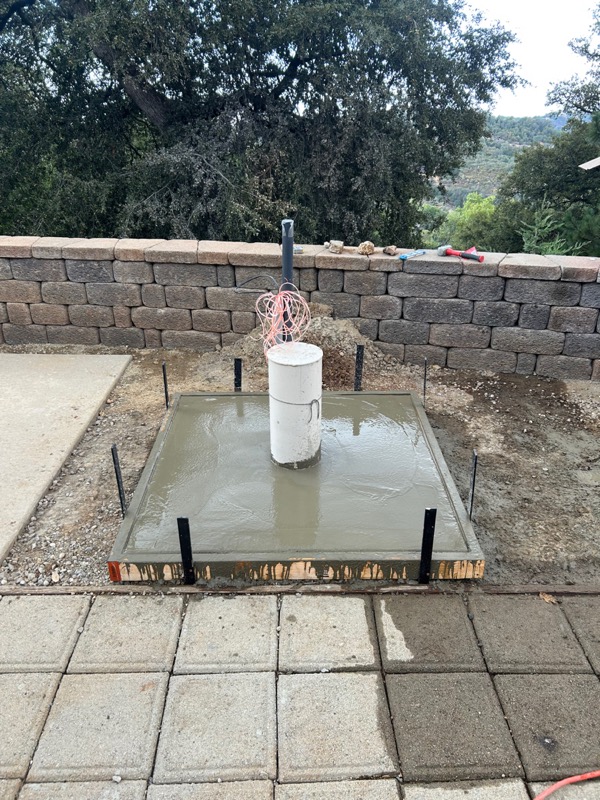
Growing avocados in De Luz? These water-loving trees need reliable, high-quality well water for healthy production. Southern California Well Service supports San Diego County avocado growers with specialized well services.
📋 In This Guide
- Avocado Water Demands
- Well Systems for Avocado Groves
- Chloride Sensitivity
- Partnering with De Luz Avocado Growers
- Related Articles
Avocado Water Demands
Avocados are thirsty trees:
- Mature tree: 40-70 gallons per day in summer
- Per acre: 4-6 acre-feet per year
- Critical periods: Fruit set and sizing
A reliable well is essential for profitable avocado production in San Diego County.
Well Systems for Avocado Groves
- High-capacity agricultural wells
- Storage tanks for peak demand periods
- Drip irrigation systems for efficiency
- Micro-sprinklers for young trees
- Pressure regulation for uniform coverage
Chloride Sensitivity
Avocados are highly sensitive to chloride in irrigation water. If your De Luz well has elevated chloride:
- Blending with lower-chloride water source
- Leaching irrigation to flush salts
- Rootstock selection for salt tolerance
- Regular soil and leaf testing
We test well water for avocado-critical parameters.
Partnering with De Luz Avocado Growers
Avocados are a major crop in San Diego County, and reliable water is essential for success. Contact us for well services designed for avocado production.
Need Help With Your Well in De Luz?
Our expert technicians serve De Luz and all of San Diego County with professional well services.
Related Articles
Continue learning about well maintenance and troubleshooting

Signs Your Well Pump Is Failing
Catch pump problems early before you lose water completely.
Low Water Pressure From Well
Diagnose and fix pressure problems before they get worse.
Well Maintenance Guide
Keep your well running smoothly with regular maintenance.
Our Locations
1077 Main St, Ramona, CA 92065
57174 US Highway 79, Anza, CA 92539
De Luz: Remote Canyons, Premium Groves, Private Wells
De Luz is one of the most beautiful and most rural corners of San Diego County — a network of steep canyons and creek bottoms northwest of Fallbrook, running up toward the Riverside line and the Santa Rosa Plateau. There is no city here, no dense water district, just winding roads, De Luz Creek, and some of the finest avocado and citrus ground in the state planted on canyon walls. Almost everyone who farms or lives in De Luz relies on a private well, because extending district water into this terrain is impractical and expensive.
The subsurface is dominated by granitic and metamorphic bedrock cut by fractures, with thin alluvium only in the creek bottoms. Wells draw from those fractures, which makes yield highly site-specific: a productive well on one bench may sit a short distance from a marginal one. Add steep elevation changes that complicate pressure and pump placement, and De Luz becomes terrain where local well experience genuinely pays off.
How an Avocado Irrigation Well Works in Steep Country
A grove well in De Luz has the same core job as any avocado well — delivering sustained water through the dry season, since a mature tree drinks 40 to 70 gallons a day and an acre needs four to six acre-feet a year — but the canyon setting adds challenges. Elevation differences between the wellhead and the upper blocks create real pressure swings that the system has to manage.
Pressure Management on Canyon Slopes
On steep De Luz groves, pressure-regulating valves, properly staged booster pumps, and carefully zoned irrigation blocks keep every tree — top of the ridge to bottom of the canyon — getting uniform water. Getting this right is the difference between an even grove and one where half the trees are over-watered while the other half struggle.
Storage as Insurance
Because many De Luz wells are fracture-fed and moderate in yield, storage tanks are especially valuable here. The well fills storage continuously at its natural rate, and a booster delivers full irrigation pressure on demand. In remote canyons where a service truck can't arrive in minutes, that stored buffer is also genuine insurance against an interruption.
Common De Luz Grove Water Problems
Low and Variable Yield
Fracture-fed bedrock wells can decline after dry winters or simply produce less than a grower hoped. A drawdown and recovery test tells us whether the formation is the limit or whether a worn pump or fouled perforations are the real cause — and whether hydrofracturing could open additional fractures and raise output.
Chloride Sensitivity
Avocados tolerate very little chloride, and even good-looking De Luz well water deserves testing before it's trusted on a high-value grove. We check chloride, TDS, and related parameters and recommend blending, leaching, or treatment when the numbers call for it.
Sediment From Fractured Rock
Fractured-granite wells often carry fine sand and mineral particles that clog emitters and micro-sprinklers. Wellhead filtration and periodic line flushing protect irrigation uniformity across the grove.
Drought Resilience in the De Luz Canyons
De Luz growers feel dry years before almost anyone else, because fracture-fed wells respond directly to how much rain recharged the bedrock the previous winter. Building resilience into a canyon grove is less about any single piece of equipment and more about margin: a well that produces comfortably above your peak demand, storage that carries you through the well's slowest hours, and an irrigation design efficient enough that every gallon reaches the root zone.
We routinely help De Luz growers stretch limited water without sacrificing the crop. Converting older sprinkler blocks to high-efficiency micro-irrigation, tightening scheduling so sets run during cooler hours to cut evaporative loss, and mulching to hold soil moisture all reduce the draw on a stressed well. Where a well has slowly declined over several seasons, we evaluate whether the drop is true aquifer decline or recoverable fouling and mineral scaling on the screen and casing — the latter responds well to rehabilitation, which can restore much of a well's lost capacity for a fraction of the cost of drilling.
For groves where the formation simply can't keep up with a maturing canopy, hydrofracturing is frequently the most cost-effective next step in this fractured terrain, opening additional water-bearing fractures without the expense of a new well. We always test and measure before recommending it, because honest assessment — not selling the biggest job — is what keeps De Luz growers calling us back.
What to Check Before You Call
Confirm the pump breaker and disconnect are on, check the pressure tank's air charge, listen for rapid short-cycling, and walk the lines for an obvious break or open valve. Given the long lines common in De Luz, a single break can bleed enough pressure to mimic a pump failure, so the lines are always worth a look first.
When to Call a Professional
Servicing a deep fracture well on steep ground is not a do-it-yourself job. Southern California Well Service is a licensed C-57 contractor with more than 30 years in San Diego County backcountry, offices in Ramona and Anza, a 4.9-star reputation, and same-day emergency response — which matters a great deal when your grove is at the end of a long canyon road.
What Avocado Well Service Costs in De Luz
Typical ranges: pressure switch $150 to $350; pressure tank $600 to $1,500; replacement submersible pump $2,500 to $5,500; sediment filtration $300 to $900; constant-pressure or booster system $2,000 to $4,500; softening or conditioning $1,500 to $3,500. Hydrofracturing a low-yield bedrock well runs $3,000 to $8,000, and a complete new well $18,000 to $42,000. Our diagnostic visit is $125, credited toward the repair.
Serving De Luz and the Surrounding Canyons
From the creek-bottom groves to the high benches toward the Riverside line and back toward Fallbrook, we keep avocado and citrus wells producing throughout De Luz. We work this rugged country regularly and understand both its fracture geology and its access challenges.
Protect Your De Luz Grove
For a low-yield well, a failing pump, or a professional evaluation, call Southern California Well Service at (760) 440-8520 or text (619) 259-0410. Same-day emergency service reaches even the remote canyons of De Luz.
Backup Power and Reliability in Remote Canyons
Because De Luz sits at the end of long, winding canyon roads, two reliability issues matter more here than almost anywhere in our service area: utility power and access time. Rural power lines in steep terrain are more exposed to outages from wind, fire-season shutoffs, and storms, and an outage that stops your well during a summer heat wave can stress a high-value grove within a day. We help De Luz growers plan for that with adequate storage that buys time through a short outage and, for larger operations, backup generator capacity sized to start and run the pump.
Access time is the second factor. When a service truck may be an hour away, prevention matters more than reaction. We encourage De Luz growers to schedule off-season inspections, keep spare critical components on hand where it makes sense, and install simple wellhead monitoring so a developing problem is caught while it is still a planned repair. A little foresight in this remote country avoids the worst-case scenario of losing irrigation to a grove that is hard to reach quickly.
Frequently Asked Questions
Why does well yield vary so much between De Luz properties?
De Luz wells are finished in fractured granitic and metamorphic bedrock, and yield depends on intercepting productive fractures. Because those fractures are unevenly distributed, two wells a short distance apart can produce very differently. We measure each well's static level, pumping level, and recovery to understand what yours can actually sustain.
Can hydrofracturing help a weak De Luz well?
Frequently, yes. Most De Luz wells rely on bedrock fractures, and hydrofracturing uses controlled water pressure to clear and widen them, which can raise a marginal well's output. It runs about $3,000 to $8,000 — far less than a new well. We evaluate whether your well is a strong candidate first.
How do you keep pressure even on a steep canyon grove?
We use pressure-regulating valves, staged booster pumps, and carefully zoned irrigation blocks so that the elevation difference between your wellhead and your highest trees doesn't leave some blocks starved and others flooded. Proper zoning is essential on De Luz's slopes.
Is a storage tank worth it for a remote De Luz grove?
Usually. A storage tank lets a moderate-yield well fill continuously while a booster delivers full irrigation pressure on demand, and the stored water is a genuine buffer if service to a remote canyon is delayed. It protects both your trees and a marginal well.
Should I test my De Luz well water even if it looks clean?
Yes. Avocados are extremely chloride-sensitive, and water that looks and tastes fine can still carry enough salt to burn leaves and drop fruit on a high-value grove. We test for chloride, TDS, and other avocado-critical parameters before you rely on it.
Do you really provide emergency service this far out?
Yes. We serve the De Luz canyons with same-day emergency response. Because access can take time, we encourage growers to call (760) 440-8520 at the first sign of a problem so we can prioritize getting your irrigation back online.