
Well Services for Descanso Avocado Groves
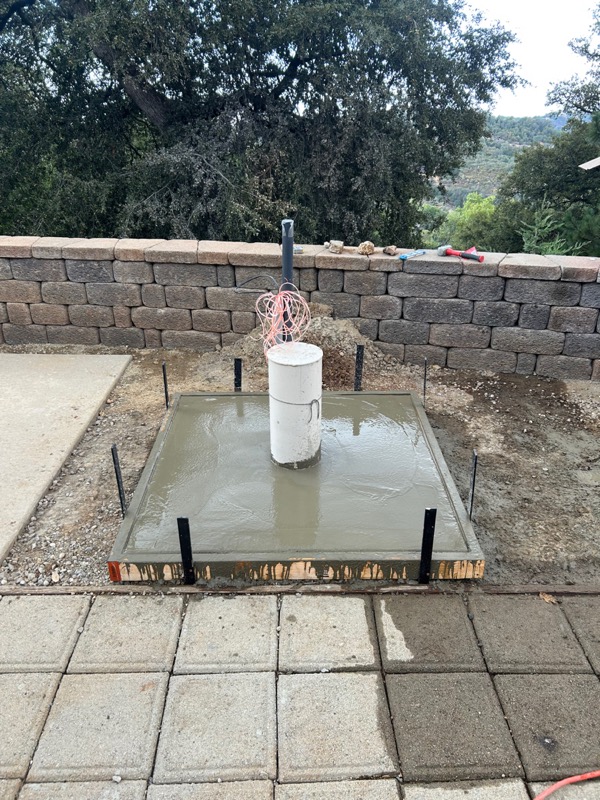
Growing avocados in Descanso? These water-loving trees need reliable, high-quality well water for healthy production. Southern California Well Service supports San Diego County avocado growers with specialized well services.
📋 In This Guide
- Avocado Water Demands
- Well Systems for Avocado Groves
- Chloride Sensitivity
- Partnering with Descanso Avocado Growers
- Related Articles
Avocado Water Demands
Avocados are thirsty trees:
- Mature tree: 40-70 gallons per day in summer
- Per acre: 4-6 acre-feet per year
- Critical periods: Fruit set and sizing
A reliable well is essential for profitable avocado production in San Diego County.
Well Systems for Avocado Groves
- High-capacity agricultural wells
- Storage tanks for peak demand periods
- Drip irrigation systems for efficiency
- Micro-sprinklers for young trees
- Pressure regulation for uniform coverage
Chloride Sensitivity
Avocados are highly sensitive to chloride in irrigation water. If your Descanso well has elevated chloride:
- Blending with lower-chloride water source
- Leaching irrigation to flush salts
- Rootstock selection for salt tolerance
- Regular soil and leaf testing
We test well water for avocado-critical parameters.
Partnering with Descanso Avocado Growers
Avocados are a major crop in San Diego County, and reliable water is essential for success. Contact us for well services designed for avocado production.
Need Help With Your Well in Descanso?
Our expert technicians serve Descanso and all of San Diego County with professional well services.
Related Articles
Continue learning about well maintenance and troubleshooting

Signs Your Well Pump Is Failing
Catch pump problems early before you lose water completely.
Low Water Pressure From Well
Diagnose and fix pressure problems before they get worse.
Well Maintenance Guide
Keep your well running smoothly with regular maintenance.
Our Locations
1077 Main St, Ramona, CA 92065
57174 US Highway 79, Anza, CA 92539
Private Well Service for Descanso's Mountain Backcountry
Descanso sits in the high backcountry of eastern San Diego County, tucked into the oak woodlands and mountain meadows below the Cuyamaca and Laguna ranges at roughly 3,400 feet of elevation. It is a small, rural community surrounded by names familiar to anyone who knows this part of the county: Pine Valley, Guatay, Alpine, and the trails of nearby Cuyamaca Rancho State Park. Out here there is no municipal water main running down the lane. Almost every home, ranchette, small orchard, and homestead garden depends on a private well drilled into the granitic bedrock beneath the property. When that well works, daily life simply hums along. When it does not, there is no city utility to call, which is exactly why dependable, locally experienced well service matters so much in Descanso.
Southern California Well Service has spent more than 30 years working the wells of San Diego County's mountains and valleys. We are a licensed C-57 water well contractor, and we understand that the backcountry around Descanso behaves very differently from coastal or valley-floor properties. The decomposed granite and fractured crystalline rock under these hills produce wells with their own quirks, and treating them like a typical lowland well is a recipe for repeat visits and wasted money.
How a Fractured-Rock Well and Irrigation System Works Here
Most Descanso wells are drilled fractured-rock wells. Rather than drawing from a deep sand-and-gravel aquifer like you find in farm valleys, these wells pull water from cracks and fractures running through granitic and crystalline bedrock. Drillers often go anywhere from 200 to 600 feet deep, and sometimes deeper, chasing water-bearing fractures. Because the water lives in those fractures rather than in porous ground, the yield can be modest, sometimes only a few gallons per minute. A well producing 2 to 5 gallons per minute is common in this kind of geology, and that reality shapes how the entire system is built.
A typical mountain well system in Descanso includes a submersible pump set down in the borehole, a pressure tank near the house, a pressure switch that tells the pump when to run, and very often a storage tank. The storage tank is the key to living comfortably on a low-yield granite well. The pump slowly fills a large holding tank over the course of the day, and a separate booster or pressure pump then delivers water to the house, garden, livestock troughs, and any small orchard or fruit trees at strong, steady pressure. This two-stage approach lets a slow well meet the brief, heavy demands of morning showers, irrigation cycles, and watering animals without running the well dry.
For properties with garden beds, small homestead groves, or scattered fruit trees, drip lines and micro-sprinklers fed from the storage tank are the efficient choice. They stretch a limited water supply across more plants and reduce the strain on the well during the dry season.
Common Well Scenarios and Causes in Descanso
Across years of service in the county's backcountry, a handful of issues come up again and again on Descanso properties:
- Low yield from fractured-rock wells. If your faucets sputter or the pump runs constantly during summer, the well may simply not be keeping up. Granite wells can lose productivity as the water table drops in a dry year, or as nearby fractures dewater under heavy use.
- Granite sand and sediment. Decomposed granite means fine sand can work its way into the system, clogging screens, scoring pump components, and filling the bottom of pressure and storage tanks. Gritty water and shortened pump life are classic symptoms.
- Hard water and mineral buildup. Water moving through crystalline rock often picks up calcium and magnesium, leaving scale on fixtures, water heaters, and irrigation emitters. Hard water shortens the life of appliances and pumps alike.
- Iron and manganese. These minerals show up as rust-colored or black staining on sinks, laundry, and concrete, and can give water a metallic taste.
- Drought stress. Southern California's recurring dry cycles hit mountain wells hard. A well that performed for years can suddenly run low when seasonal recharge falls short.
- Wildfire-area power and access. This is fire country, and rural power can flicker or drop during red-flag conditions and public-safety shutoffs. Power fluctuations are tough on pump motors and controls, and a well with no backup means no water during an outage.
What to Check Before You Call
A few quick observations help you describe the problem and sometimes solve it outright:
- Check your breaker and well pump disconnect. Rural power blips trip breakers regularly, and a reset sometimes restores water.
- Look at the pressure gauge on your tank. Note whether the needle is stuck, pinned low, or cycling rapidly.
- Listen for the pump cycling on and off too frequently, a sign of a waterlogged pressure tank or a failing pressure switch.
- Inspect for sediment or sand by running water into a clean glass and letting it settle.
- Check your storage tank level, if you have one, to learn whether the well is filling it or the booster pump is the problem.
- Note any staining, odor, or change in taste, which points toward a water-quality rather than a mechanical issue.
When to Call a Professional
Some situations call for a licensed well contractor rather than a do-it-yourself fix. Pulling a submersible pump from a 400-foot borehole, diagnosing a low-yield well, evaluating whether hydrofracturing could open up new fractures, or sizing a storage and booster system all require the right equipment and experience. If you have no water at all, if sand is steadily damaging your fixtures, if your pump short-cycles or trips repeatedly, or if water testing shows iron, manganese, or hardness beyond what a simple filter handles, it is time to bring in a pro. Trying to force a struggling granite well to perform without addressing the underlying cause usually leads to a burned-out pump and a bigger bill.
Realistic Cost Ranges
Every Descanso property is different, but these ranges give you an honest sense of what backcountry well work typically runs:
- Pressure switch replacement: $150 to $350
- Pressure tank replacement: $600 to $1,500
- Submersible pump replacement: $2,500 to $5,500
- Sediment filtration (for granite sand): $300 to $900
- Iron/manganese treatment or water softener: $1,500 to $3,500
- Constant-pressure or booster system: $2,000 to $4,500
- New well, turnkey: $18,000 to $42,000
- Hydrofracturing (to boost a low-yield granite well): $3,000 to $8,000
- Well abandonment / decommissioning: $1,500 to $5,000
Our standard diagnostic visit is $125, and that fee is credited toward any repair work we perform. You get a clear assessment before committing to anything larger.
Hydrofracturing deserves a special note in Descanso. Because so many local wells draw from fractured granite, a well with disappointing yield is not always a lost cause. High-pressure water injected into the borehole can open or extend existing fractures and connect the well to additional water-bearing cracks, often improving production for a fraction of the cost of drilling a new well.
Serving Descanso and the Surrounding Backcountry
We proudly serve Descanso and the neighboring mountain communities of Pine Valley, Guatay, Alpine, Julian, Cuyamaca, and the ranch properties scattered throughout the Cuyamaca and Laguna foothills. Our Ramona office at 1077 Main St, Ramona, CA 92065 is relatively close, which means faster response times for backcountry calls than most out-of-area outfits can manage. We also operate from our Anza office at 57174 US Highway 79, Anza, CA 92539, giving us strong coverage across the region's rural high country. With a 4.9-star reputation and same-day emergency service, we are the local team backcountry homeowners count on when the water stops.
Frequently Asked Questions
Why is my Descanso well producing less water than it used to?
Fractured-rock wells depend on water-bearing cracks in the granite, and those can dewater during drought or after years of heavy use. Declining yield may also mean a worn pump or a clogged intake from granite sand. A professional drawdown test tells us whether the issue is the well itself or the equipment, and whether hydrofracturing could restore production.
Do I really need a storage tank on a mountain property?
If your well produces only a few gallons per minute, a storage tank is often the single best investment you can make. It lets a slow well fill a reserve over the day so you have strong pressure for showers, irrigation, and livestock when you actually need it, instead of running the well dry during peak demand.
What causes the sand and grit in my water?
Decomposed granite is the usual culprit. Fine sand migrates into the borehole and gets pulled up by the pump, clogging screens and wearing out components. Proper sediment filtration, and sometimes adjusting the pump setting depth, keeps the grit out of your home and protects your equipment.
Can avocados or fruit trees grow on a Descanso well?
Some homesteads do keep small orchards and fruit trees, though mountain frost at this elevation limits true avocado groves, and the warmer lower pockets are the exception rather than the rule. Apples and other cold-hardy fruit do better in the nearby high country. For any small grove or garden, the priority is an efficient drip system fed from storage so your limited well water goes as far as possible.
How deep are wells in this area?
It varies with the local fracture pattern, but many Descanso wells fall between 200 and 600 feet, and some go deeper to reach productive fractures. Because depth and yield are unpredictable in granite, an experienced local driller and a clear understanding of nearby wells make a real difference in results.
What should I do if I lose power during fire season?
Power outages and public-safety shutoffs are a fact of backcountry life, and without electricity your pump cannot run. A storage tank gives you a buffer of usable water, and a properly sized generator or backup system keeps water flowing during extended outages. We can help you plan a setup that fits your property and your risk.
Talk to a Local Well Team Today
Whether your Descanso well has slowed to a trickle, your water has turned gritty or stained, or you simply want a straight assessment of your mountain water system, Southern California Well Service is ready to help. Call (760) 440-8520 or text (619) 259-0410 to reach our team. With more than 30 years of C-57 experience in San Diego County's backcountry, a 4.9-star reputation, same-day emergency response, and a $125 diagnostic credited toward your repair, we will get your water flowing reliably again.