
Well & Irrigation Service for Granite Hills Groves and Acreage
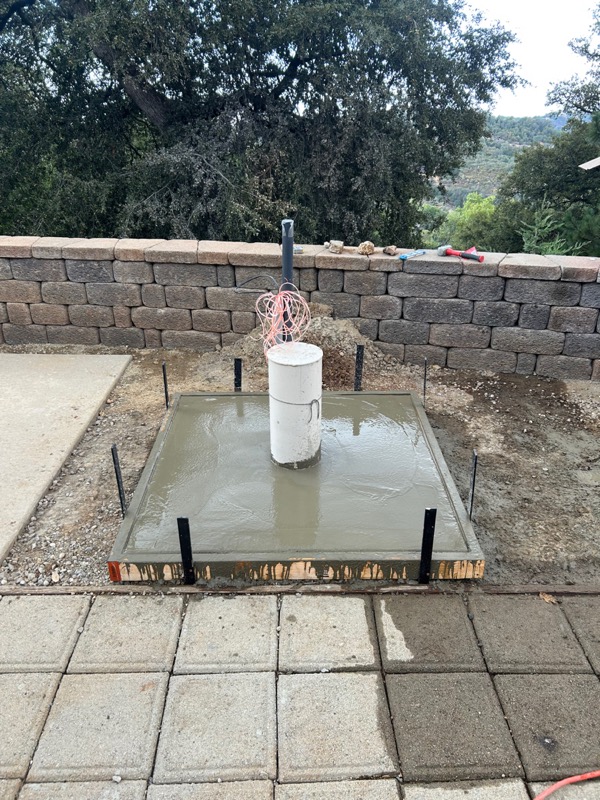
Tucked into the gently sloping hills above El Cajon, between the Dehesa Valley and Crest, Granite Hills is one of the few corners of urbanized East County where homes still sit on usable acreage. Many of those parcels carry a handful of avocado or citrus trees, ornamental groves, pasture, or large drought-tolerant landscapes — and a surprising number still draw at least part of their water from a private well sunk into the area’s namesake decomposed granite. Southern California Well Service helps Granite Hills owners keep those wells, pumps, and irrigation lines running so the trees and grounds stay healthy through San Diego County’s long dry season.
📋 In This Guide
- Water on a Granite Hills Property
- How Well Water Reaches Your Trees and Landscape
- Common Well Scenarios in Granite Hills
- What to Check Before You Call
- When to Call a Licensed Pro
- Realistic Cost Ranges
- Serving Granite Hills and East County
- Seasonal Water Demand in the Dehesa Foothills
- Water Quality Considerations for Granite Hills Trees
- Keeping a Granite Hills Well Healthy
- Granite Hills Well FAQ
- Related Articles
Water on a Granite Hills Property
Granite Hills sits on weathered crystalline rock — the decomposed granite (locals just call it “DG”) that gives the community its name. Wells here are typically drilled into fractured granite rather than a deep sand-and-gravel aquifer, which means yield depends heavily on how many water-bearing fractures the borehole happens to intersect. Depths in the 200- to 500-foot range are common for the El Cajon–Dehesa foothills, and two wells a few hundred feet apart can produce very differently.
For a homeowner with a small avocado or citrus block, a few ornamental olives, or a large landscaped lot, that geology has practical consequences: a moderate, steady-yielding well paired with storage usually outperforms chasing a high instantaneous flow. We design around what your fractured-rock well can realistically deliver instead of overselling a system it can’t sustain.
How Well Water Reaches Your Trees and Landscape
A private well system in Granite Hills generally moves water through four stages, and a problem at any one of them shows up as stressed trees or a dry irrigation zone:
- The pump — a submersible motor down in the casing lifts water from the fractured granite to the surface.
- Pressure tank and switch — these hold a buffer of pressurized water and tell the pump when to cycle on and off.
- Storage (optional but smart) — a poly or steel tank lets a modest well refill slowly overnight, then deliver a strong irrigation set in the morning.
- Irrigation — drip emitters or micro-sprinklers carry filtered water to each tree, hedge, or planter without wasting it on bare DG.
Because avocado roots are shallow and salt-sensitive, we favor frequent, lighter drip cycles over occasional flooding, and we keep an eye on chloride and total dissolved solids in the well water — a real issue for sensitive trees across inland San Diego County.
Common Well Scenarios in Granite Hills
Across our years of service in East County, the calls we get from Granite Hills tend to cluster around a few recognizable patterns:
- Declining yield in a fractured-rock well as summer demand peaks and the static water level drops between feeder fractures.
- Pump short-cycling from a waterlogged pressure tank or a failing pressure switch — the most common “my pressure is weird” complaint.
- Sediment and fine grit from decomposed granite clogging emitters and screens on the irrigation side.
- Iron or manganese staining on hardscape, tanks, and fittings.
- An older well that needs rehabilitation — or, occasionally, hydrofracturing to open additional fractures and recover lost production.
What to Check Before You Call
A few safe checks can tell you a lot and sometimes save a service trip:
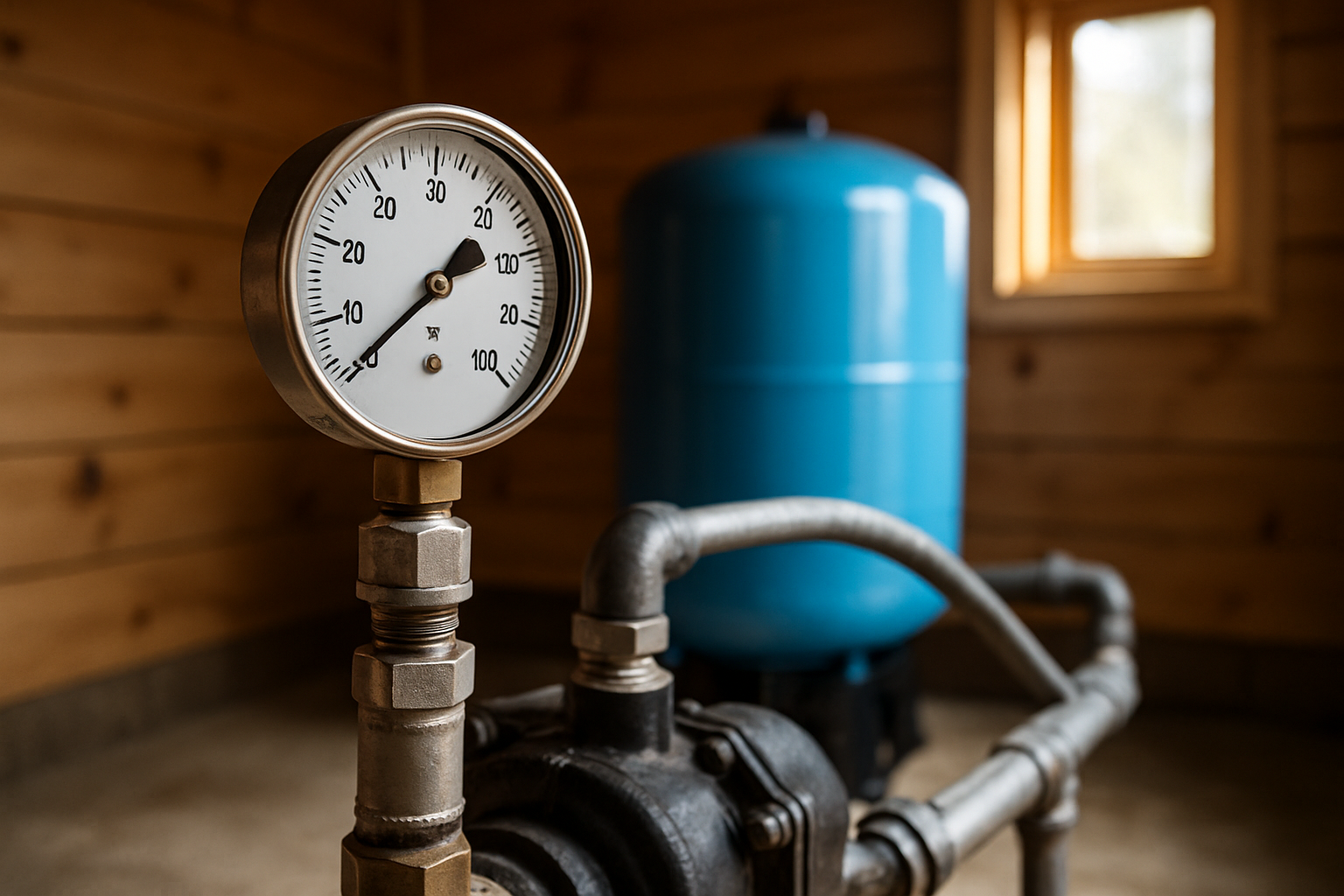
- Look at the pressure gauge on the tank. Is it cycling rapidly, stuck low, or pinned high?
- Check the breaker for the well pump — a tripped breaker is a common cause of “no water.”
- Tap the pressure tank: a hollow ring up top and a dull thud at the bottom is normal; a tank that’s heavy all the way up is waterlogged.
- Walk the irrigation zones for clogged emitters, broken lines, or pooling that signals a leak.
- Note any change in water clarity, smell, or staining — these point to quality issues rather than mechanical ones.
Please don’t pull a submersible pump or open the wellhead yourself — that is genuinely a job for licensed crews with the right rigging.
When to Call a Licensed Pro
Call us right away if you have no water at all, air spitting from the lines, a breaker that keeps tripping, or a sudden drop in pressure across the whole property. Those usually mean a pump, wiring, or pressure-control failure that a same-day visit can resolve.
As a licensed C-57 water well contractor with more than 30 years in San Diego, Riverside, and San Bernardino counties, we handle the work a handyman or general plumber legally and practically shouldn’t: pump pulls, well rehabilitation, hydrofracturing, water-quality treatment, and full system design for grove and landscape irrigation.
Realistic Cost Ranges
Every property is different, but these Granite Hills–area ranges help you budget. Our diagnostic visit is $125 and is credited toward any repair we perform:
- Pressure switch replacement: $150–$350
- Pressure tank replacement: $600–$1,500
- Submersible pump replacement: $2,500–$5,500
- Sediment filtration for DG grit: $300–$900
- Iron/manganese treatment or softening: $1,500–$3,500
- Constant-pressure / booster system: $2,000–$4,500
- Hydrofracturing to improve yield: $3,000–$8,000
- New turnkey well: $18,000–$42,000
Serving Granite Hills and East County
Granite Hills is right in the heart of our San Diego service territory. From our Ramona office at 1077 Main St, our trucks reach Granite Hills, Crest, Dehesa, Harbison Canyon, El Cajon, Bostonia, and the surrounding East County foothills quickly — which matters when a grove is going a hot afternoon without irrigation. We also operate an Anza office at 57174 US Highway 79 for our Riverside-side customers.
Reach us at (760) 440-8520, or text (619) 259-0410. We hold a 4.9-star rating and offer same-day emergency response.
Seasonal Water Demand in the Dehesa Foothills
Water demand on a Granite Hills property is anything but flat. From roughly May through October, a small avocado or citrus block and a mature landscape can easily triple the draw they place on a well compared with the cool, wetter winter months. A single mature avocado tree can transpire 40 to 70 gallons on a hot summer day, and a handful of them plus turf and ornamentals adds up fast. That seasonal swing is exactly when a fractured-granite well is most likely to show its limits, because the static water level naturally declines as the dry season wears on and feeder fractures yield less.
The practical answer for most Granite Hills owners is buffering. A storage tank lets a moderate well run steadily through the night and bank water you then deliver in a concentrated morning irrigation set, when evaporation is lowest. Pairing storage with a constant-pressure pump means the trees never notice that the well itself is only producing a few gallons a minute. We routinely design these hybrid setups for East County acreage, and they turn a marginal well into a dependable one without the cost of redrilling.
Water Quality Considerations for Granite Hills Trees
Decomposed-granite aquifers in eastern San Diego County tend to produce hard water carrying calcium, magnesium, and often iron or manganese. For household use that shows up as scale and reddish staining; for irrigation it can gradually plug drip emitters and, more importantly, build salts in the root zone. Avocados are among the most salt- and chloride-sensitive trees grown in the region, so even moderate chloride levels that wouldn’t bother citrus can scorch avocado leaf margins and cut yield over time.
Because of that, we treat water testing as part of grove and landscape planning, not an afterthought. Knowing your well’s chloride, total dissolved solids, hardness, and iron lets us recommend the right combination of filtration, occasional leaching irrigation to flush accumulated salts, and emitter selection. It also tells you which trees and rootstocks will thrive on your particular water and which will struggle — information that saves a Granite Hills owner from replanting a failed block two years in.
Keeping a Granite Hills Well Healthy
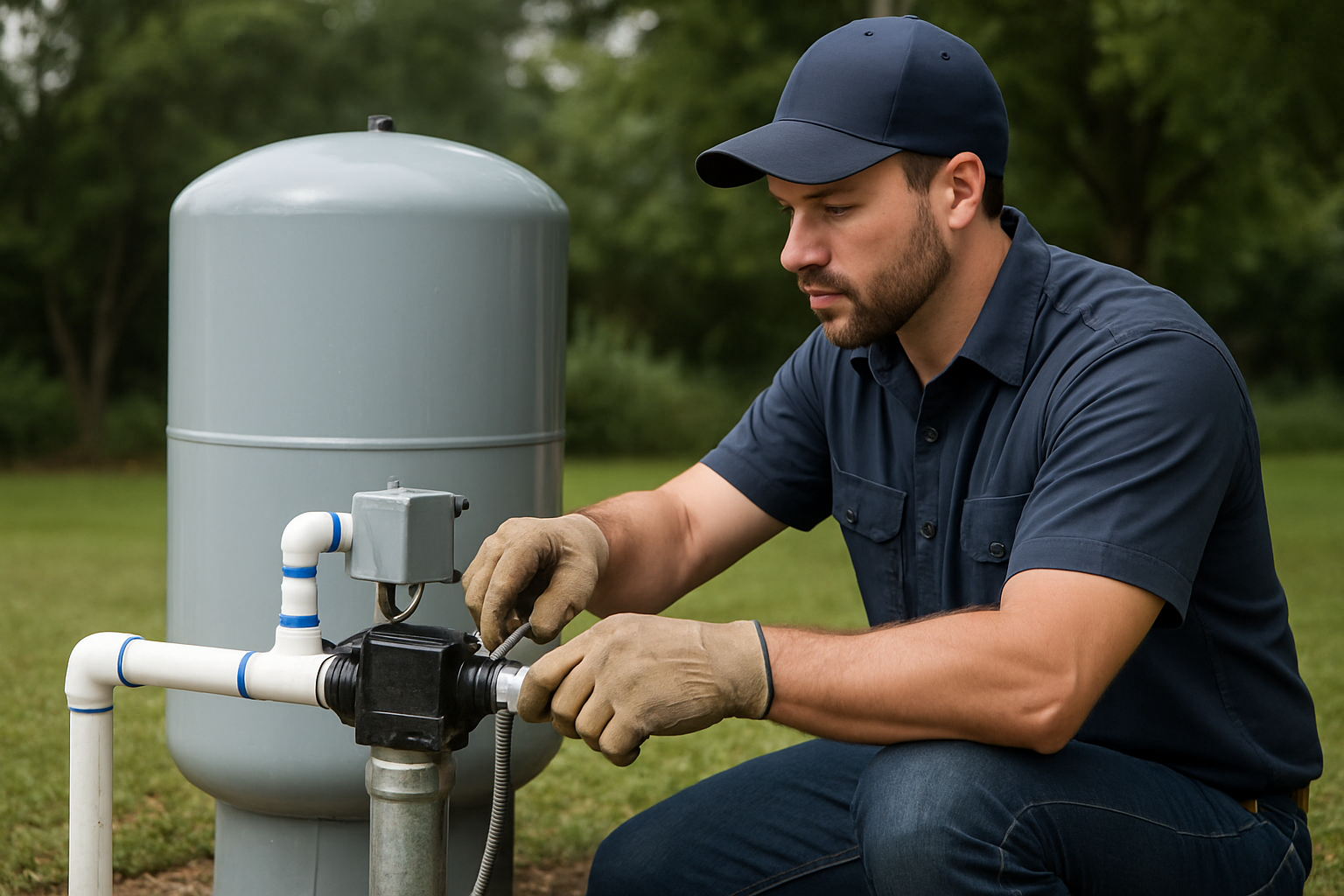
The least expensive well problem is the one you prevent. We encourage Granite Hills owners to have their system looked over roughly once a year, ideally before the summer demand peak. A check of the pressure tank’s air charge, the pressure switch contacts, the pump’s amperage draw, and the irrigation filters catches small issues — a tank losing its charge, a switch starting to chatter, emitters silting up — while they’re still cheap fixes rather than a midsummer no-water emergency.
Annual or periodic water testing belongs on that same schedule, especially if you notice new staining, a change in taste, or cloudiness. Catching a rising iron or chloride trend early lets you adjust treatment before it damages sensitive trees. For owners who’d rather not track all of this, we can set up a simple maintenance rhythm and remind you when it’s time.
Frequently Asked Questions: Granite Hills Wells & Irrigation
How deep are wells in Granite Hills?
Most Granite Hills and Dehesa-area wells are drilled into fractured decomposed granite somewhere between roughly 200 and 500 feet. Because yield depends on intersecting water-bearing fractures, depth alone doesn’t predict production — we evaluate each well on its own.
Can I really grow avocados on a Granite Hills lot?
Yes, on a backyard or small-grove scale many owners do, but avocados are salt- and chloride-sensitive, so water quality matters. We test your well water and design drip irrigation that keeps roots evenly moist without salt buildup.
Why does my well water leave reddish stains?
That’s usually iron, sometimes with manganese, dissolved out of the granitic rock. It’s common in East County and is treatable with the right filtration or oxidation system, typically in the $1,500–$3,500 range.
My pump keeps turning on and off rapidly — what’s wrong?
Rapid short-cycling almost always means a waterlogged pressure tank or a failing pressure switch. Both are affordable fixes ($150–$1,500) and worth addressing quickly because short-cycling burns out pumps.
Do you offer same-day service in Granite Hills?
Yes. Granite Hills is close to our Ramona office, so we can usually reach no-water emergencies the same day. Call (760) 440-8520 to get on the schedule.
What does it cost just to diagnose the problem?
Our diagnostic visit is $125, and we credit that amount toward any repair we go on to perform, so the assessment effectively pays for itself when you move forward.
Need Help With Your Well in Granite Hills?
Our expert technicians serve Granite Hills and all of San Diego County with professional well, pump, and irrigation services.
Related Articles
Continue learning about well maintenance and troubleshooting

Signs Your Well Pump Is Failing
Catch pump problems early before you lose water completely.
Low Water Pressure From Well
Diagnose and fix pressure problems before they get worse.
Well Maintenance Guide
Keep your well running smoothly with regular maintenance.
Our Locations
1077 Main St, Ramona, CA 92065
57174 US Highway 79, Anza, CA 92539