
Well & Irrigation Service for Guatay Mountain Properties
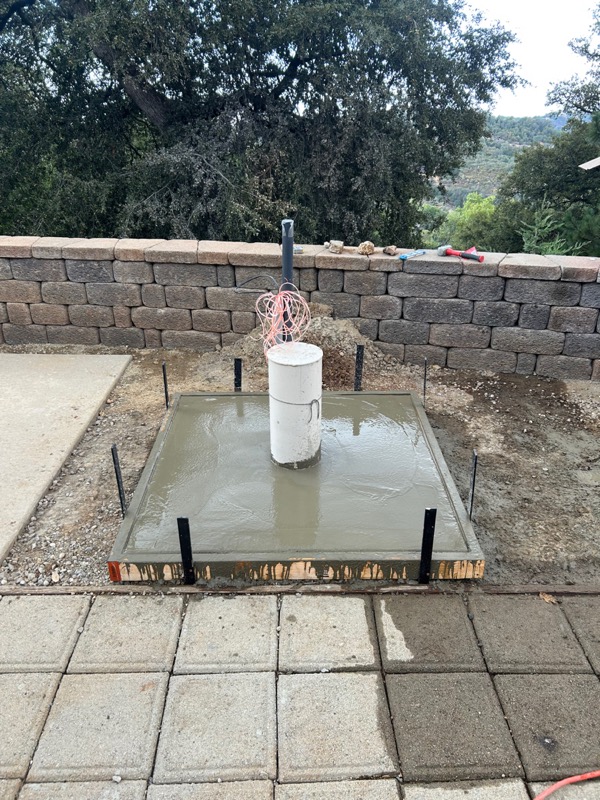
Guatay is a small backcountry community at about 4,000 feet in the Cuyamaca Mountains of eastern San Diego County, tucked along Highway 79 between Descanso and Pine Valley and bordered by the Cleveland National Forest. With only a few hundred residents living among oak woodland and chaparral, this is rural mountain country — not a commercial avocado belt — and most homes here rely entirely on private wells. What Guatay owners need is dependable backcountry well water, dependable pumps, and efficient irrigation for orchards, garden plots, hobby fruit trees, and defensible-space landscaping. Southern California Well Service has served this kind of San Diego backcountry for over 30 years.
📋 In This Guide
- Backcountry Water in Guatay
- How Mountain Wells and Irrigation Work
- Common Well Scenarios in Guatay
- What to Check Before You Call
- When to Call a Licensed Pro
- Realistic Cost Ranges
- Serving Guatay and the San Diego Backcountry
- Why Storage Matters for a Guatay Well
- Drought, Yield, and Well Rehabilitation
- Water, Fire Resilience, and Backcountry Living
- What to Expect When You Call Us
- Guatay Well FAQ
- Related Articles
Backcountry Water in Guatay
Guatay sits in fractured granitic mountain rock in the Cuyamacas, and local wells generally run shallower than the deepest backcountry — commonly in the 300- to 400-foot range — tapping fractures in the bedrock. Yield depends on those fractures, so two neighboring wells can behave very differently. The cooler mountain climate is gentler on equipment than the desert; submersible pumps up here often last well into the 15- to 20-year range. Because nearly everyone is on a private well, water reliability is the difference between a comfortable property and a constant headache.
We size and service Guatay wells around real Cuyamaca conditions: modest, steady fractured-rock yields paired with storage, plus irrigation matched to a mild mountain growing season.
How Mountain Wells and Irrigation Work
A Guatay well system runs on the same core components, tuned for the backcountry:
- Submersible pump lifting water from the fractured granite.
- Pressure tank and switch buffering supply and protecting the pump.
- Storage tank — valuable for a modest-yield mountain well, letting it refill overnight for a strong irrigation set.
- Drip and micro-spray irrigation for fruit trees, gardens, and defensible-space plantings.
For hobby orchards and fruit trees, we favor filtered drip on frequent light cycles, which conserves a limited mountain well while keeping roots evenly moist.
Common Well Scenarios in Guatay
The Guatay-area calls we see most often:
- Low or declining yield from fractured-rock wells, especially during drought.
- Aging pumps and pressure tanks on long-serving backcountry wells.
- Sediment and grit from the granitic formation clogging emitters and screens.
- Pressure problems on sloped mountain lots.
- Wells in need of rehabilitation or hydrofracturing to recover lost production.
What to Check Before You Call
Safe checks you can do first:
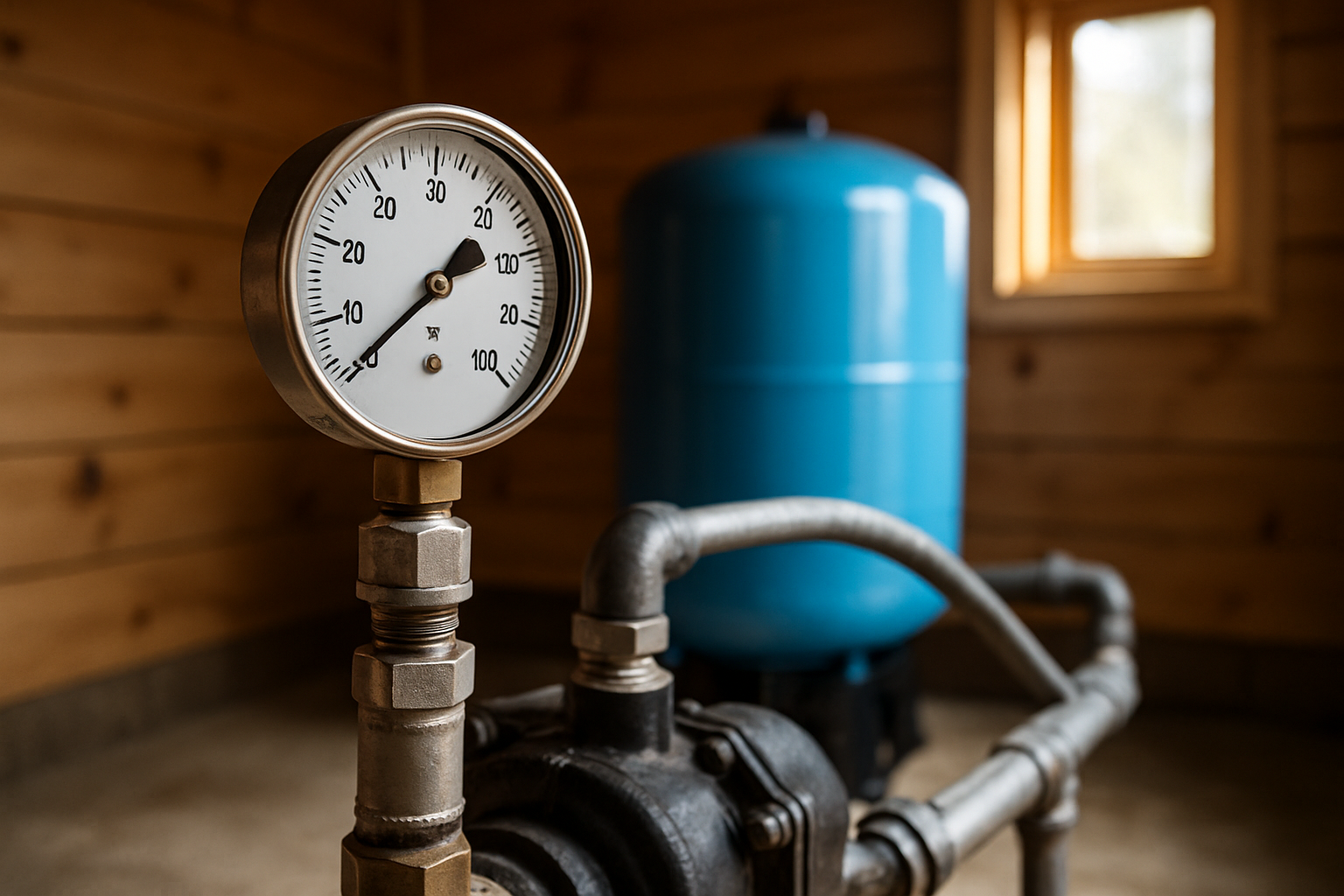
- Read the pressure gauge — rapid cycling, stuck low, or pinned high each mean something different.
- Check the pump breaker for a trip.
- Tap the pressure tank to detect a waterlogged tank.
- Walk the drip lines for clogs, breaks, or dry zones.
- Note any change in clarity, smell, or staining.
Don’t attempt to pull the pump or open the wellhead yourself — that’s licensed-crew work.
When to Call a Licensed Pro
Call us for no water, air in the lines, repeated breaker trips, or a sudden pressure drop. As a licensed C-57 contractor with 30-plus years in the San Diego backcountry, we handle pump pulls, well rehabilitation, hydrofracturing, water treatment, and full irrigation design — the work a general handyman can’t legally or practically do.
Realistic Cost Ranges
Guatay-area budget ranges; the $125 diagnostic is credited toward any repair:
- Pressure switch: $150–$350
- Pressure tank: $600–$1,500
- Submersible pump: $2,500–$5,500
- Sediment filtration: $300–$900
- Iron/manganese or softener: $1,500–$3,500
- Constant-pressure / booster: $2,000–$4,500
- Hydrofracturing to improve yield: $3,000–$8,000
- New turnkey well: $18,000–$42,000
Serving Guatay and the San Diego Backcountry
Guatay is core backcountry territory for us. From our Ramona office at 1077 Main St we serve Guatay, Descanso, Pine Valley, Alpine, Julian, and the surrounding Highway 79 corridor, and our Anza office at 57174 US Highway 79 covers the Riverside side. Call (760) 440-8520 or text (619) 259-0410. We’re rated 4.9 stars with same-day emergency service.
Why Storage Matters for a Guatay Well
Most Guatay wells are honest, modest producers — a few gallons a minute drawn from fractures in the Cuyamaca granite. That’s plenty for a backcountry home and a hobby orchard, but only if the system is built to bank water rather than demand it all at once. A storage tank lets the well trickle steadily around the clock and fills a reserve you then draw on for a strong morning irrigation or a household peak, so the trees and the tap never feel the well’s natural rhythm.
We size storage to match real demand on a Guatay property: household use plus whatever orchard, garden, and defensible-space irrigation the owner runs. Combined with a constant-pressure pump, this approach turns a low-but-steady fractured-rock well into a dependable supply — and it’s almost always cheaper than the alternative of redrilling in hopes of hitting a richer fracture.
Drought, Yield, and Well Rehabilitation
Fractured-rock wells in the San Diego backcountry are sensitive to drought. When the region goes through dry years, the water table in the Cuyamacas drops and the feeder fractures that supply a Guatay well can yield less, sometimes noticeably. Owners often experience this as a well that “ran fine for years” and then started running short by late summer. It doesn’t necessarily mean the well is finished.
Rehabilitation can clean mineral and sediment buildup that’s choking the borehole, and hydrofracturing — injecting water under pressure to open and extend existing fractures — can reconnect the well to additional water-bearing seams and recover lost production. We evaluate each well’s history and construction before recommending either, because the right move depends on why the yield fell. When rehabilitation isn’t enough, deepening or a new well may be the answer, and we’ll give you a straight assessment of the tradeoffs.
Water, Fire Resilience, and Backcountry Living
Guatay sits surrounded by the Cleveland National Forest in genuine high-fire-risk country, and a reliable well is part of living here safely. Defensible-space landscaping needs enough water to stay green through the dangerous late-summer months, and many owners value having stored water on hand. A well-designed system with storage does double duty: it irrigates the property efficiently and provides a reserve that adds peace of mind during fire season.
We help backcountry owners think this through — sizing storage with a margin, keeping pumps and controls protected and serviceable, and making sure the system is something you can rely on when conditions are at their worst. Combined with the cooler mountain climate that’s easy on equipment, a properly built Guatay well system is a long-term asset, not a recurring worry.
What to Expect When You Call Us
When you call about a Guatay property, we start by understanding how your well has behaved and what you’re seeing now — low yield, pressure trouble, a pump that won’t start, or a water-quality change — so we can route the right crew and equipment up Highway 79. Our on-site diagnostic is a flat $125, credited toward any repair, so the visit pays for itself when you proceed.
You’ll get a candid assessment grounded in decades of backcountry experience. For a fractured-rock Guatay well that means telling you honestly whether the fix is a simple component swap, whether storage will solve a yield problem more cheaply than redrilling, or whether rehabilitation or hydrofracturing is genuinely warranted. We don’t oversell, and we don’t pretend a mountain well will perform like a valley one — we build the most dependable system your geology will support, which is exactly what backcountry living requires.
We also make a point of leaving you better informed than we found you. Backcountry owners rarely get a clear explanation of how their fractured-rock well actually works, so we walk you through your pressure tank, your storage, and your irrigation so you understand the system you depend on. That knowledge helps you spot small problems early — a chattering switch, a silting filter, a slow pressure drift — and call before a minor issue becomes a no-water weekend in the mountains.
Frequently Asked Questions: Guatay Wells & Irrigation
How deep are wells in Guatay?
Guatay wells are commonly in the 300–400-foot range, drilled into fractured Cuyamaca granite — shallower than the deepest backcountry areas. Yield depends on the fractures the borehole intersects, so we evaluate each well individually.
Is Guatay avocado-growing country?
Not commercially — it’s rural mountain country at about 4,000 feet. But hobby orchards and fruit trees do grow here, and we help keep them irrigated efficiently from your well.
How long do pumps last up here?
The cool mountain climate is easier on equipment than the desert, so submersible pumps in Guatay often last 15–20 years, versus shorter lifespans in hot low-desert locations.
My well yield dropped — can it be recovered?
Often, yes. Well rehabilitation cleans and restores the borehole, and hydrofracturing ($3,000–$8,000) can open new fractures to improve production in fractured-rock wells like Guatay’s.
Do you serve Guatay the same day?
Guatay is in our core San Diego backcountry route from Ramona, so we can usually reach no-water emergencies the same day. Call (760) 440-8520.
What does a diagnostic visit cost?
$125, and we credit it toward any repair we perform, so the assessment pays for itself when you proceed.
Need Help With Your Well in Guatay?
Our expert technicians serve Guatay and all of San Diego County with professional well, pump, and irrigation services.
Related Articles
Continue learning about well maintenance and troubleshooting

Signs Your Well Pump Is Failing
Catch pump problems early before you lose water completely.
Low Water Pressure From Well
Diagnose and fix pressure problems before they get worse.
Well Maintenance Guide
Keep your well running smoothly with regular maintenance.
Our Locations
1077 Main St, Ramona, CA 92065
57174 US Highway 79, Anza, CA 92539