
Well & Irrigation Service for Hesperia Desert Properties
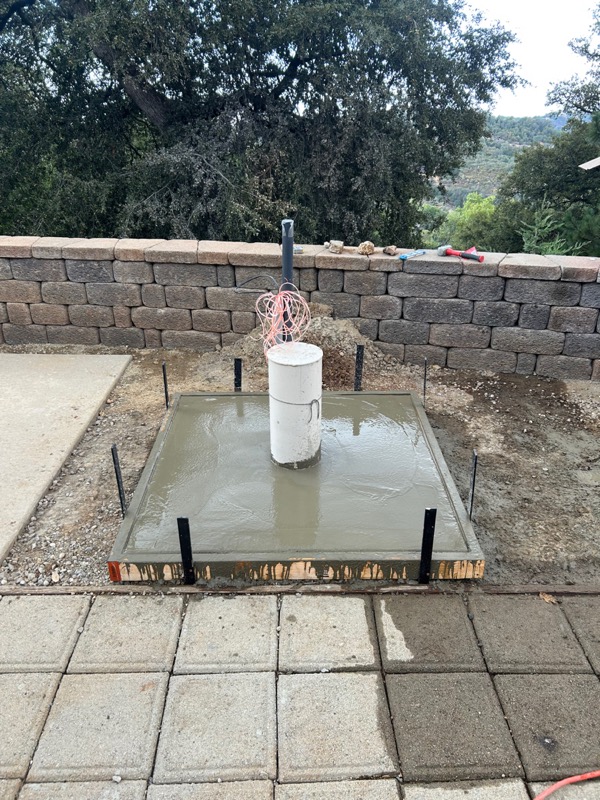
Hesperia is a High Desert city in the Victor Valley of San Bernardino County, perched along the Mojave River basin where the desert floor climbs toward the Cajon Pass and the San Bernardino Mountains. It’s a desert community, not avocado country, and we won’t pretend a grove belt grows here. What Hesperia property owners genuinely need is dependable desert well water, pumps built for heat and mineral content, and water-wise irrigation for landscaping, gardens, pasture, and the hardy fruit trees that thrive with shelter and careful watering. Southern California Well Service keeps Victor Valley well and irrigation systems running.
📋 In This Guide
- Desert Water in the Victor Valley
- How Desert Wells and Irrigation Work
- Common Well Scenarios in Hesperia
- What to Check Before You Call
- When to Call a Licensed Pro
- Realistic Cost Ranges
- Serving Hesperia and the Victor Valley
- Engineering for Heat and Freeze
- Treating Hard Victor Valley Groundwater
- Water-Wise Irrigation in the Victor Valley
- What to Expect When You Call Us
- Hesperia Well FAQ
- Related Articles
Desert Water in the Victor Valley
Hesperia sits in the Mojave River groundwater basin, near the axis where the basin runs deep beneath the Victor Valley. Wells here tap the alluvial aquifers of the basin — permeable river deposits and the thick regional aquifer of older alluvium and fan material. Yields are generally workable, but Mojave groundwater is frequently hard and mineral-rich, and the High Desert climate — hot summers, cold winters, big swings — is demanding on pumps, tanks, and irrigation lines alike.
We design and service Hesperia systems for that desert reality: heat- and freeze-aware equipment, storage to meet peak summer demand, and treatment for hardness and minerals.
How Desert Wells and Irrigation Work
A Hesperia well system runs through the usual stages, adapted for the desert:
- Submersible pump drawing from the Mojave River basin aquifer.
- Pressure tank and switch buffering and controlling the pump.
- Storage tank — valuable for banking water against high evaporative demand.
- Filtered drip irrigation delivering measured water to trees and beds with minimal evaporation.
In the Victor Valley, deep, infrequent drip cycles run early or late in the day stretch scarce water and keep salts from concentrating in the root zone — important for any productive landscape or fruit tree.
Common Well Scenarios in Hesperia
Typical Hesperia-area service calls:
- Pumps stressed by desert heat, sometimes failing earlier than in cooler regions.
- Hard-water scale and minerals clogging emitters and coating fixtures.
- Pressure tank failures accelerated by heat and mineral content.
- Winter freeze damage to exposed lines and components.
- High summer evaporative demand outpacing an undersized system.
What to Check Before You Call
Safe checks first:
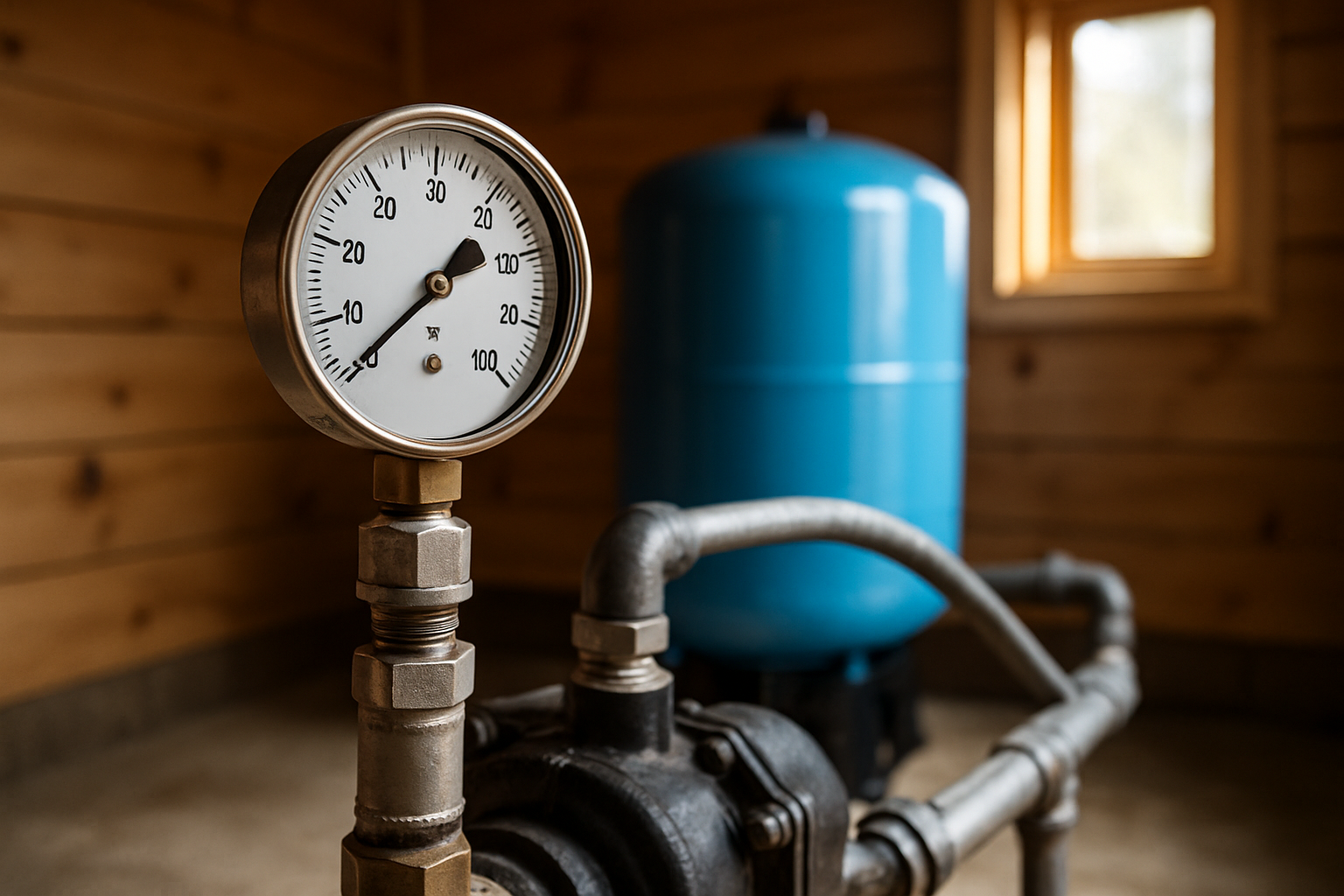
- Read the pressure gauge for fast cycling, stuck-low, or pinned-high behavior.
- Check the pump breaker for a trip.
- Tap the pressure tank for a waterlogged condition.
- Inspect drip emitters and filters for scale and sediment.
- In winter, look for freeze-cracked fittings and note any quality changes.
Leave pump pulls and wellhead work to a licensed crew.
When to Call a Licensed Pro
Call right away for no water in desert heat, repeated breaker trips, air in the lines, or a property-wide pressure drop — and for suspected winter freeze damage. As a licensed C-57 contractor with 30-plus years across San Bernardino, Riverside, and San Diego counties, we handle desert pump work, well rehabilitation, hydrofracturing, freeze-proofing, and hardness/mineral treatment.
Realistic Cost Ranges
Hesperia-area budget ranges; the $125 diagnostic is credited toward repairs:
- Pressure switch: $150–$350
- Pressure tank: $600–$1,500
- Submersible pump: $2,500–$5,500
- Sediment filtration: $300–$900
- Iron/manganese or softener: $1,500–$3,500
- Constant-pressure / booster: $2,000–$4,500
- Hydrofracturing to improve yield: $3,000–$8,000
- New turnkey well: $18,000–$42,000
Serving Hesperia and the Victor Valley
We cover the High Desert from our regional network. Our Anza office at 57174 CA-371 (US Hwy 79) anchors our San Bernardino–Riverside coverage, with our Ramona office at 1077 Main St backing the team. We reach Hesperia, Victorville, Apple Valley, Oak Hills, Phelan, and Adelanto. Call (760) 440-8520 or text (760) 219-5877. We’re a 4.9-star team with same-day emergency response.
Engineering for Heat and Freeze
The Victor Valley climate swings hard, and a Hesperia well system has to survive both ends of it. Summer afternoons push well past 100 degrees, stressing motors, pressure tanks, and switches and driving demand to its peak. Winter nights, by contrast, drop below freezing often enough that exposed lines, above-ground tanks, and unheated equipment closets are genuinely at risk of freezing and splitting. Designing for only one season leaves the system vulnerable in the other.
We build Hesperia systems to handle the full range: equipment sized with margin to ride out the heat, storage so the pump isn’t running flat-out during summer peaks, and freeze protection — insulation, heat tape, and properly buried components — so winter doesn’t crack the system open. That dual-season approach is what keeps a High Desert well dependable year-round instead of failing the first time the weather goes to an extreme.
Treating Hard Victor Valley Groundwater
Groundwater from the Mojave River basin beneath Hesperia is frequently hard and mineral-laden. In the home that shows up as scale on fixtures and appliances and the endless battle with spotting; in the irrigation system it gradually plugs drip emitters and concentrates salts in the soil, which stresses landscaping and fruit trees. The fix depends on what the water actually contains, which is why we start every treatment recommendation with a test.
From there, a softener or iron and manganese removal system addresses the household side where it pays off, sediment filtration protects the irrigation network, and a thoughtful watering schedule periodically leaches accumulated salts below the root zone. Choosing plants suited to the water chemistry rounds it out. In the High Desert, working with your water rather than against it is what makes a landscape sustainable instead of a constant fight.
Water-Wise Irrigation in the Victor Valley
With high evaporation and limited water, irrigation efficiency is everything in Hesperia. Watering in the heat of the day loses much of every gallon before it reaches the roots, while deep, infrequent drip cycles run early or late put water where plants actually use it and keep the soil from drying and salting between waterings. Good filtration keeps mineral-rich water from clogging emitters, and storage lets you deliver a strong irrigation set during the cool hours.
We design Victor Valley irrigation around those principles — right-sized drip and micro-spray, clean distribution, and scheduling matched to the desert — so that the hardy fruit trees and landscaping that can succeed here get what they need without wasting a scarce resource. For Hesperia owners that means a green, productive property and a water system that holds up to the climate instead of constantly fighting it.
What to Expect When You Call Us
A Hesperia call starts with a quick understanding of your system and what you’re experiencing — a pump down in summer heat, a freeze problem in winter, hard staining water, or falling pressure — so we can prioritize and bring the right equipment. No water in desert heat is an emergency to us. Our on-site diagnostic is a flat $125, credited toward any repair we perform.
On site you get an honest, experience-based explanation and realistic options suited to the Victor Valley’s extremes — right-sized equipment to handle the heat, freeze protection for winter, storage for peak demand, and treatment matched to your specific water test. We’ve serviced High Desert wells long enough to know what survives here, and we’d rather solve the root problem once than keep coming back for the same climate-driven failure. That approach is behind our 4.9-star rating across the region.
We also take time to leave Hesperia owners better informed. Because Victor Valley systems have to handle both extreme heat and winter freeze, understanding your own setup pays off, so we explain how the pump, storage, treatment, and freeze protection work together. Knowing the early signs of trouble — a waterlogging tank, a chattering switch, scale building on emitters — lets you call for a small fix instead of waiting for a seasonal breakdown. A few minutes of explanation now saves a stressful service call later, and it is part of how we have earned a 4.9-star reputation across the High Desert.
Frequently Asked Questions: Hesperia Wells & Irrigation
Can you grow avocados in Hesperia?
Not commercially — Hesperia is High Desert with extreme heat, hard freezes, and water-quality limits. Hardy fruit trees can grow with wind shelter and careful drip irrigation, but this isn’t avocado-grove country, and we’ll be honest about that.
Where does Hesperia well water come from?
From the Mojave River groundwater basin, which runs deep beneath the Victor Valley — permeable river deposits over a thick regional aquifer. Yields are generally workable, though water is often hard and mineral-rich.
Why do desert pumps fail sooner?
Heat is hard on motors and tanks, and mineral water speeds wear. Right-sizing the system, adding storage, and treating the water all extend equipment life in the High Desert.
Do I need to worry about winter freezes?
Yes. The Victor Valley gets cold winters, so exposed lines, tanks, and fittings need freeze protection. We can insulate and winterize vulnerable components.
How should I irrigate in Hesperia?
Drip on deep, infrequent cycles run early morning or evening minimizes evaporation and keeps salts from building up in the root zone. Storage helps you meet peak summer demand.
What does a diagnostic visit cost?
$125, credited toward any repair we perform, so the assessment pays for itself once you proceed.
Need Help With Your Well in Hesperia?
Our expert technicians serve Hesperia and all of San Bernardino County with professional well, pump, and irrigation services.
Related Articles
Continue learning about well maintenance and troubleshooting

Signs Your Well Pump Is Failing
Catch pump problems early before you lose water completely.
Low Water Pressure From Well
Diagnose and fix pressure problems before they get worse.

Well Maintenance Guide
Keep your well running smoothly with regular maintenance.
Our Locations
1077 Main St, Ramona, CA 92065
57174 CA-371 (US Hwy 79), Anza, CA 92539