
Well Services for Lake Hodges Avocado Groves
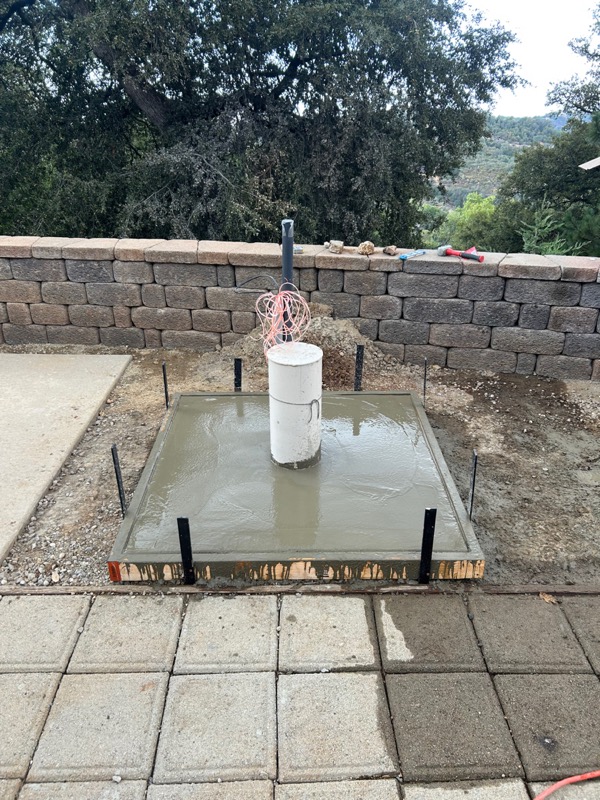
Growing avocados in Lake Hodges? These water-loving trees need reliable, high-quality well water for healthy production. Southern California Well Service supports San Diego County avocado growers with specialized well services.
📋 In This Guide
- Avocado Water Demands
- Well Systems for Avocado Groves
- Chloride Sensitivity
- Partnering with Lake Hodges Avocado Growers
- Related Articles
Avocado Water Demands
Avocados are thirsty trees:
- Mature tree: 40-70 gallons per day in summer
- Per acre: 4-6 acre-feet per year
- Critical periods: Fruit set and sizing
A reliable well is essential for profitable avocado production in San Diego County.
Well Systems for Avocado Groves
- High-capacity agricultural wells
- Storage tanks for peak demand periods
- Drip irrigation systems for efficiency
- Micro-sprinklers for young trees
- Pressure regulation for uniform coverage
Chloride Sensitivity
Avocados are highly sensitive to chloride in irrigation water. If your Lake Hodges well has elevated chloride:
- Blending with lower-chloride water source
- Leaching irrigation to flush salts
- Rootstock selection for salt tolerance
- Regular soil and leaf testing
We test well water for avocado-critical parameters.
Partnering with Lake Hodges Avocado Growers
Avocados are a major crop in San Diego County, and reliable water is essential for success. Contact us for well services designed for avocado production.
Need Help With Your Well in Lake Hodges?
Our expert technicians serve Lake Hodges and all of San Diego County with professional well services.
Related Articles
Continue learning about well maintenance and troubleshooting

Signs Your Well Pump Is Failing
Catch pump problems early before you lose water completely.
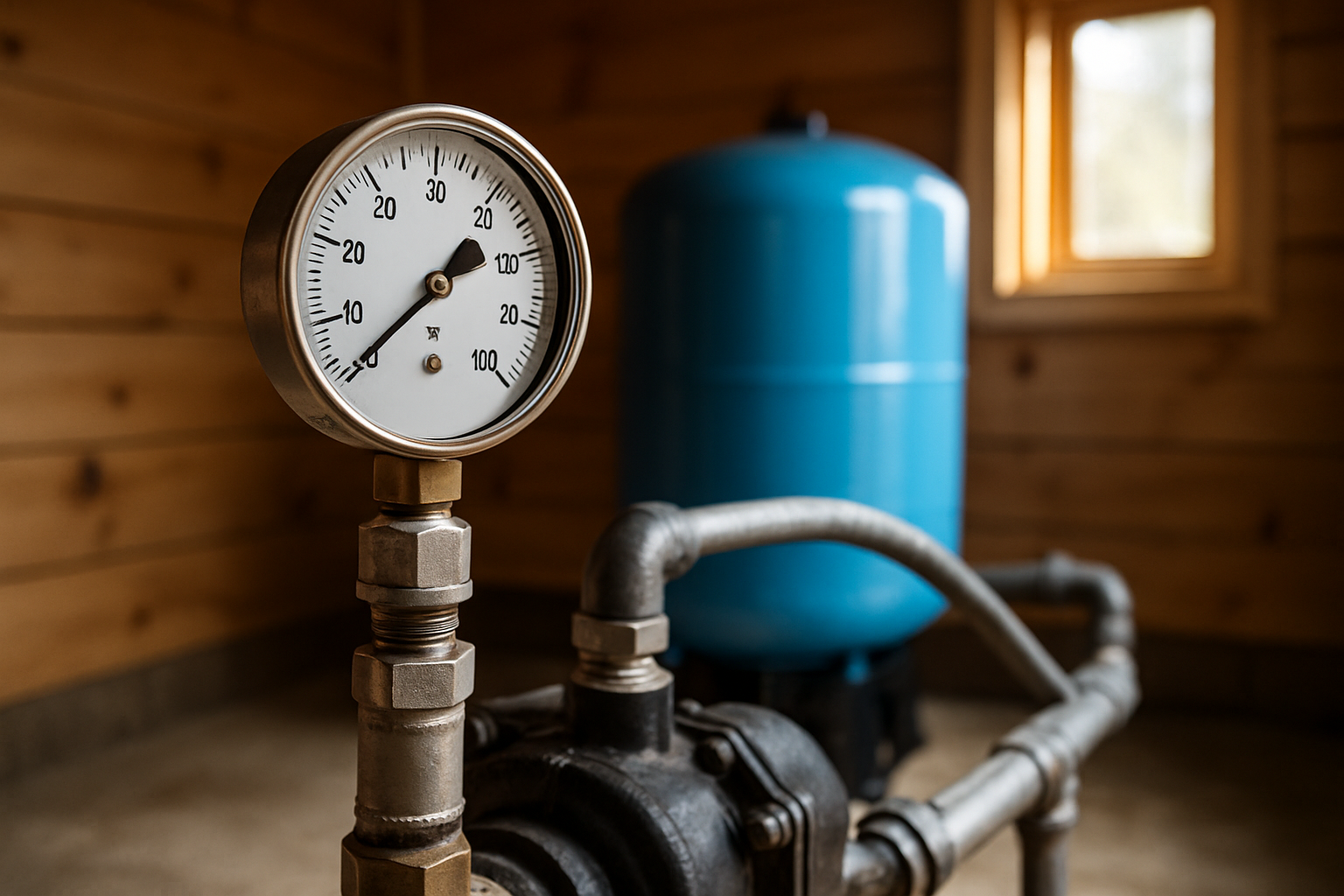
Low Water Pressure From Well
Diagnose and fix pressure problems before they get worse.
Well Maintenance Guide
Keep your well running smoothly with regular maintenance.
Our Locations
1077 Main St, Ramona, CA 92065
57174 US Highway 79, Anza, CA 92539
Grove Well Service Around Lake Hodges
The country around Lake Hodges, southwest of Escondido, is a landscape of granite hills, rural estates, and quiet groves. From Del Dios on the lake's southern shore to the slopes running toward Rancho Santa Fe and San Pasqual, this is estate-and-orchard land, properties where an avocado or citrus grove shares the acreage with a home, and where the water nearly always comes from a private well. The reservoir itself may dominate the view, but for the grower, the water that matters is the water underground, drawn from the fractured granite beneath these hills.
Southern California Well Service has spent more than 30 years serving exactly this kind of inland San Diego County property. We hold a C-57 water well contractor's license (CSLB #1086994), carry a 4.9-star reputation, and offer same-day emergency service. Our Ramona office is a short drive from the Lake Hodges area, and the granite our crews work here is the same crystalline rock we have drilled and serviced across the backcountry for decades.
Granite Country and What It Means for Your Well
Wells around Lake Hodges are finished in fractured granite and decomposed-granite formations. Unlike a deep sand-and-gravel aquifer that holds water uniformly, a granite well produces from the cracks and fractures it happens to intersect. That has two practical consequences. First, yields vary widely from one property to the next, two neighbors can have wells that perform very differently. Second, granite wells are often steady but modest producers rather than gushers, which makes how you store and manage that water just as important as the well itself. A grower who pairs a modest granite well with smart storage will out-irrigate a neighbor with a stronger well and no tank.
There is a particular rhythm to estate-grove ownership in this area. Many of the properties here were planted decades ago, when an owner put in a few acres of avocados or citrus as much for the love of it as for income. Over the years the trees matured, the original well equipment aged, and the irrigation system that was perfectly adequate in 1995 quietly fell behind the grove it was built to serve. A large share of our work around Lake Hodges is not emergency repair at all, it is modernizing these long-established systems so the trees an owner has tended for a generation keep producing.
The Components of a Working Grove Irrigation System
- Submersible pump, sized to the granite well's sustainable output so it is not over-pumped.
- Storage tank, filling overnight to deliver a strong daytime irrigation burst, the key to making a modest well serve a real grove.
- Constant-pressure or booster pump, essential on the rolling Lake Hodges terrain so the high rows get the same pressure as the low ones.
- Filtration, to keep granite fines out of drip lines.
- Drip and micro-sprinklers, drip for established trees, micro-sprinklers for young plantings.
Water Quality and the Salt-Sensitive Avocado
Avocados are the most salt-sensitive of the common subtropicals, and chloride is the main culprit. The first warning is leaf-tip burn, scorching that begins at the leaf margins, frequently accompanied by smaller fruit and stalled growth. Inland granite water around Lake Hodges is generally more favorable to avocados than coastal water, but it can still carry elevated minerals, and concentrations tend to rise in drought years as the water table falls. We recommend a water panel covering chloride, sodium, boron, and total dissolved solids. When the chemistry is marginal, the response is well established:
- Periodic leaching irrigation to push salts below the root zone.
- Salt-tolerant rootstock selection.
- Blending with a cleaner source if one is available.
- Regular soil and leaf-tissue testing.
What Goes Wrong on Lake Hodges Properties
Modest well, growing grove
The most common story: a well that comfortably served a young planting can no longer keep up once the grove matures. A mature avocado uses 40 to 70 gallons on a hot day, and an acre needs 4 to 6 acre-feet a year. The fix is usually more storage, not a new well.
Pressure loss on the slopes
On hilly estate properties, an aging pressure system struggles to deliver uniform flow to the upper rows.
Granite fines and clogged emitters
Fine sediment from the formation gradually plugs drip emitters, thinning the grove before anyone notices.
Pump short cycling
A waterlogged pressure tank or failing switch makes the pump start and stop too often, wearing it out early.
The economics of storage versus drilling
When a grower complains that the well "cannot keep up," the temptation is to assume they need a new, deeper well. That is the most expensive possible answer and frequently the wrong one. A granite well that produces a steady, modest flow can irrigate a surprising amount of grove if that flow is banked in a tank overnight and delivered hard during the day. Adding storage and a booster typically costs a fraction of a new well, and it solves the underlying problem, which is almost always peak-demand mismatch rather than a dead aquifer. We walk every Lake Hodges grower through this math before anyone talks about drilling.
A Sensible Self-Check Before You Call
- Read the pressure gauge at rest and while irrigating; big swings indicate a tank or switch issue.
- Listen for rapid pump cycling.
- Confirm the highest and farthest trees are getting water.
- See whether the storage tank refills overnight, a tank that never recovers points to a yield or fill-pump problem.
- Note any change in clarity, smell, or staining.
These checks are safe and they help our technician arrive with the right parts. Wellhead and electrical work should always go to a licensed professional.
When to Call, and What It Costs
Reach out when you lose water, when pressure fails, when grove-wide flow drops, or when leaf burn spreads and the water is suspect. Our diagnostic visit is $125, credited toward any work. In our service area, expect roughly $150 to $350 for a pressure switch, $600 to $1,500 for a pressure tank, $300 to $900 for sediment filtration, and $2,500 to $5,500 for a submersible pump. Where hardness or minerals warrant it, a water softener runs $1,500 to $3,500, and a constant-pressure or booster system $2,000 to $4,500. Hydrofracturing to open up a tight granite well runs $3,000 to $8,000, and a complete new well falls between $18,000 and $42,000.
Serving the Lake Hodges Area
We serve the communities around the reservoir, Del Dios, the estate properties toward Rancho Santa Fe, and the groves stretching into the San Pasqual Valley, along with nearby Escondido and Rancho Bernardo. Lake Hodges sits in San Diego County, and because both our Ramona and Anza offices work the same backcountry granite, our crews understand the ground here before they arrive.
Frequently Asked Questions
Why do wells near Lake Hodges vary so much?
Because they draw from fractured granite, a well's output depends on the specific cracks it intersects. Two nearby properties can have very different yields, which is why local drilling and siting experience matters so much here.
Can I rely on a granite well for an avocado grove?
Often yes. Granite wells tend to be steady but modest, so the secret is pairing the well with adequate storage and a good pressure system, which lets it irrigate a full grove even at a moderate flow rate.
Is Lake Hodges water hard on avocados?
Inland granite water is generally friendlier to avocados than coastal water, but it can still carry minerals and salts that climb in dry years. A water test for chloride, boron, and total dissolved solids tells you where you stand.
Does proximity to the reservoir affect my well?
Your well draws from the fractured granite aquifer, not directly from the lake, so the reservoir level does not feed your well. Drought, which lowers both, can affect water quality and yield over time.
How fast can you reach the Lake Hodges area?
We offer same-day emergency service, and our Ramona office is close by, so this is one of the faster areas for us to reach during summer demand.
Talk to a Grove Well Specialist
If your grove near Lake Hodges is under stress or your well is acting up, call Southern California Well Service at (760) 440-8520 or text (619) 259-0410. We will help you keep both your trees and your investment healthy, and we will give you an honest assessment of what your system actually needs before you spend a dollar.