
Well Services for Ontario Avocado Groves
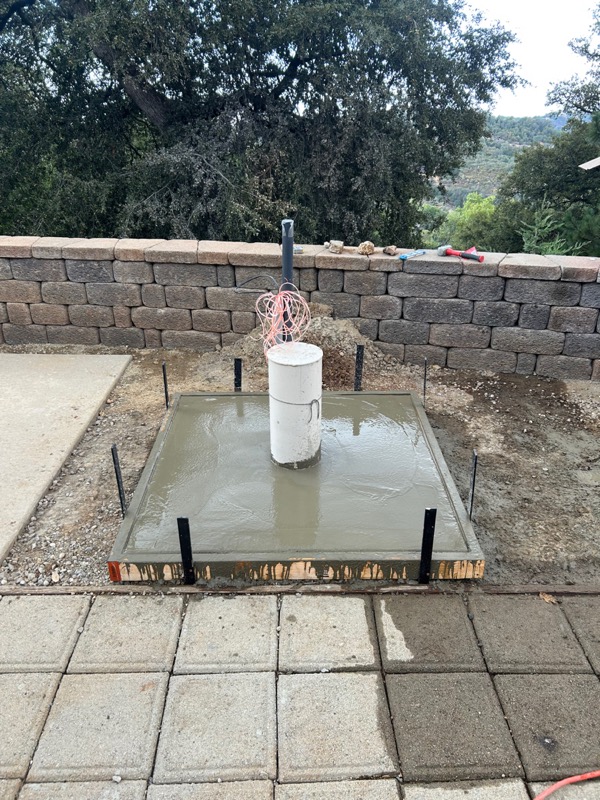
Growing avocados in Ontario? These water-loving trees need reliable, high-quality well water for healthy production. Southern California Well Service supports San Bernardino County avocado growers with specialized well services.
📋 In This Guide
- Avocado Water Demands
- Well Systems for Avocado Groves
- Chloride Sensitivity
- Partnering with Ontario Avocado Growers
- Related Articles
Avocado Water Demands
Avocados are thirsty trees:
- Mature tree: 40-70 gallons per day in summer
- Per acre: 4-6 acre-feet per year
- Critical periods: Fruit set and sizing
A reliable well is essential for profitable avocado production in San Bernardino County.
Well Systems for Avocado Groves
- High-capacity agricultural wells
- Storage tanks for peak demand periods
- Drip irrigation systems for efficiency
- Micro-sprinklers for young trees
- Pressure regulation for uniform coverage
Chloride Sensitivity
Avocados are highly sensitive to chloride in irrigation water. If your Ontario well has elevated chloride:
- Blending with lower-chloride water source
- Leaching irrigation to flush salts
- Rootstock selection for salt tolerance
- Regular soil and leaf testing
We test well water for avocado-critical parameters.
Partnering with Ontario Avocado Growers
Avocados are a major crop in San Bernardino County, and reliable water is essential for success. Contact us for well services designed for avocado production.
Need Help With Your Well in Ontario?
Our expert technicians serve Ontario and all of San Bernardino County with professional well services.
Related Articles
Continue learning about well maintenance and troubleshooting

Signs Your Well Pump Is Failing
Catch pump problems early before you lose water completely.
Low Water Pressure From Well
Diagnose and fix pressure problems before they get worse.

Well Maintenance Guide
Keep your well running smoothly with regular maintenance.
Our Locations
1077 Main St, Ramona, CA 92065
57174 US Highway 79, Anza, CA 92539
Grove and Orchard Well Water in Ontario and the Inland Empire
Ontario sits at the heart of the Inland Empire in San Bernardino County, ringed by Rancho Cucamonga, Upland, Chino, Montclair, and Fontana. This is historic farm country. When George and William Chaffey laid out the Ontario Model Colony in the 1880s, they engineered a gravity irrigation system that carried water from San Antonio Creek down off the slopes of Mount San Antonio to citrus groves, vineyards, and orchards below. Lemons, oranges, and grapes, not avocados, built the town. That agricultural DNA still runs through the rural fringes, the foothill parcels above the valley floor, and the working ground around Chino and the Chino Basin where private wells still water trees and vines today.
Southern California Well Service brings that same water-first mindset to growers and rural property owners across the region. Whether you are tending a citrus block, a small avocado planting on a cooler foothill slope, an orchard, or a vineyard, the well at the center of your operation has to deliver clean, dependable water. We size, service, and maintain those systems so your trees never go thirsty when summer hits.
Where Avocados Fit in the Ontario Region
Let us be straight about the crop. Ontario and the surrounding valley floor are far better known for citrus and vineyard heritage than for avocados; the commercial avocado belt of Southern California lies mostly to the south and west, in San Diego and Ventura counties. But avocados do appear here and there on the warmer, frost-protected foothill slopes of the Inland Empire, planted by hobbyists and small growers who have the right microclimate and good well water. Wherever avocados grow, their water demands are the same, and they are unforgiving.
- Mature tree: 40 to 70 gallons per day in summer heat
- Per acre: roughly four to six acre-feet across a year
- Critical periods: fruit set and sizing, when water stress costs you the crop
For the more common citrus and deciduous orchards in this area, the well-and-irrigation principles are nearly identical: steady yield, clean water, and uniform pressure win the season.
How a Well System Feeds a Grove or Orchard
A reliable irrigation system is built from several parts working together. When one weakens, the trees show it first.
The Well and Pump
Around Ontario, many wells draw from the deep alluvial fill of the Chino Basin, while foothill parcels often hit fractured granite. A submersible pump matched to the well's safe yield lifts the water. Oversize that pump and you draw the well down faster than it recovers, pulling sand and air and shortening the motor's life. We measure recovery and set the pump to what the formation can sustain, then add controls that protect against dry running.
Pressure, Storage, and Delivery
Most grove wells cannot push enough instantaneous flow to run a full irrigation set on their own, so growers store water in a tank or pond and pressurize from there with a booster pump. A pressure tank and pressure switch tame cycling on smaller systems. For larger or hilly plantings, a constant-pressure (variable-frequency) booster holds steady PSI as demand changes, which keeps every emitter delivering the same amount from the first tree to the last.
The Irrigation System
Drip and micro-sprinkler systems dominate tree-crop irrigation because they place water slowly and precisely. Avocados in particular have shallow, oxygen-loving roots that reward gentle, frequent watering. Clean water and good filtration keep the tiny emitter orifices open, which is why filtration at the wellhead and the manifold matters as much as the pump.
Water Quality: What the Trees Care About
The Inland Empire's groundwater is hard and mineral-rich, and the Chino Basin has its own salinity history from a century of agriculture and dairy. For sensitive tree crops, water chemistry is not an afterthought.
Chloride and Salinity
Avocados are the canaries here. They are exceptionally sensitive to chloride; growers generally try to keep irrigation-water chloride below roughly 100 ppm, because above that, leaf tips burn, foliage drops, and yield falls. Sodium and overall salinity, measured as electrical conductivity, add to the stress, especially on salt-sensitive rootstocks. Citrus tolerates a bit more but still suffers as salts climb. Where well water runs salty, growers blend with lower-salinity supply, apply extra leaching irrigation to push salts below the root zone, and select tolerant rootstocks. We test for chloride, sodium, EC, and the sodium adsorption ratio so the numbers guide the plan.
Hardness, Iron, and Manganese
Calcium and magnesium scale crusts emitters and shortens pump life. Iron and manganese stain, feed slime-forming bacteria, and plug drip lines from the inside out. Fine sand and sediment grind impellers and blind filters. Each problem has a fix, from sediment filtration to iron and manganese removal to softening, but the right solution starts with an accurate water test rather than guesswork.
Common Scenarios Around Inland Empire Properties
- Summer drawdown. A foothill well that ran fine in spring starts spitting air or sand on the hottest afternoons, exactly when the grove needs water most.
- Rising salts. In parts of the Chino Basin, salinity has long been a management concern; leaf burn on sensitive trees is often the first visible sign.
- Plugged emitters. Iron bacteria or scale slowly starve the tail end of a drip run, and those trees decline before anyone suspects the water.
- Aging equipment. Short-cycling, swinging pressure, and climbing power bills point to a waterlogged pressure tank or a tired pump on an older planting.
- Power-quality damage. Rural feeders sag and surge, cooking unprotected pump motors and control boxes.
What to Check Before You Call
- Determine whether the whole property or just one zone has weak flow; a single zone usually points to a line, valve, or filter rather than the well.
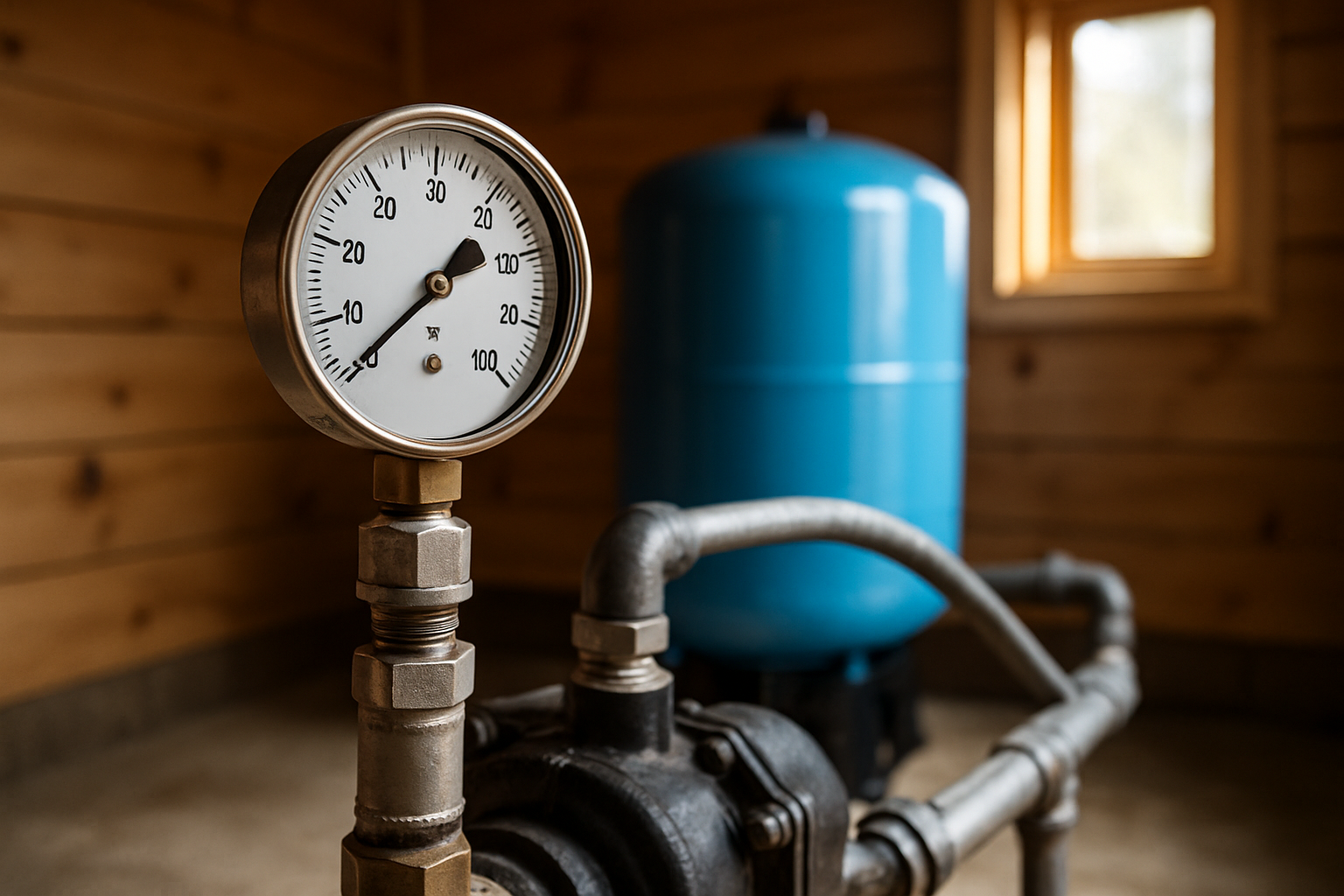
- Watch the pressure gauge while the booster runs. Rapid on-off cycling or wild swings suggest a tank or switch issue.
- Listen for short-cycling or air spitting from emitters, both signs the well may be drawing down.
- Open your filters and screens and look for sand, rust-colored slime, or white scale.
- Read the trees: uniform tip burn says water chemistry, while patchy decline says delivery or clogging.
Sharing these observations up front helps our technician arrive prepared and cut your downtime.
When to Call a Professional
Pulling and inspecting a submersible pump, diagnosing electrical faults, running drawdown tests, hydrofracturing a weak well, and designing water treatment are jobs for a licensed contractor. Southern California Well Service is a licensed C-57 contractor (CSLB #1086994) with more than 30 years of experience and a 4.9-star reputation. We provide same-day emergency service and free estimates, and our $125 diagnostic fee is credited toward the repair when you proceed.
Realistic Cost Ranges
Costs vary with depth, water quality, and access, but these ranges help you budget:
- Submersible pump replacement: $2,500-$5,500
- Pressure switch: $150-$350
- Pressure tank: $600-$1,500
- Sediment filtration: $300-$900
- Iron/manganese removal or softening: $1,500-$3,500
- Constant-pressure / booster system: $2,000-$4,500
- Hydrofracturing to improve yield: $3,000-$8,000
- New well, turnkey: $18,000-$42,000
- Well abandonment: $1,500-$5,000
- Diagnostic visit: $125 (credited to your repair)
Serving Ontario and the Surrounding Agricultural Areas
Working from our Ramona and Anza offices, we reach Ontario and the rural and foothill ground around Rancho Cucamonga, Upland, Chino, Montclair, and Fontana. Whether you are caring for citrus, an orchard, a vineyard, or a small avocado planting on a favorable slope, we bring practical knowledge of San Bernardino County's aquifers, Chino Basin water quality, and the irrigation pumping that ties it all together.
Frequently Asked Questions
Are avocados really grown around Ontario?
Not on a large commercial scale. Ontario's agricultural heritage is citrus and vineyards, and the big avocado regions are farther south. That said, small avocado plantings do exist on warmer, frost-protected foothill slopes nearby, and they need the same careful well water as groves anywhere else.
How much water does an avocado tree use here?
A mature tree drinks 40 to 70 gallons per day in summer heat, and a producing acre can need four to six acre-feet a year. We size pumps and storage around that peak summer demand, not the lighter spring load.
Is Chino Basin well water a problem for sensitive trees?
It can be. The basin has a long history of salinity management, and hardness is common across the Inland Empire. We test your well for chloride, sodium, EC, and minerals, then recommend blending, leaching, or treatment as the numbers warrant.
Why are my drip emitters clogging?
Usually iron, manganese, scale, or sediment. Sediment filtration handles sand, while iron and manganese removal stops the bacterial slime that plugs lines internally. The fix follows your actual water test.
Can you service citrus and orchard irrigation too, or only avocados?
We service all tree-crop and orchard irrigation. The well, pump, storage, booster, pressure controls, and water treatment are the same backbone whether you grow citrus, deciduous fruit, grapes, or avocados.
How quickly can you respond in an emergency?
We offer same-day emergency service. If your grove or orchard loses water during a heat spell, call right away and we will prioritize restoring flow before your trees suffer.
Keep Your Trees Watered With a Well You Can Trust
From citrus to a backyard avocado on the foothills, healthy trees start with reliable, low-salinity water and a well system built to deliver it. Let Southern California Well Service test your water, tune your pumping, and keep your property green. Call (760) 440-8520 or text (619) 259-0410 for a free estimate and same-day emergency help.