
Well Services for Riverside Avocado Groves
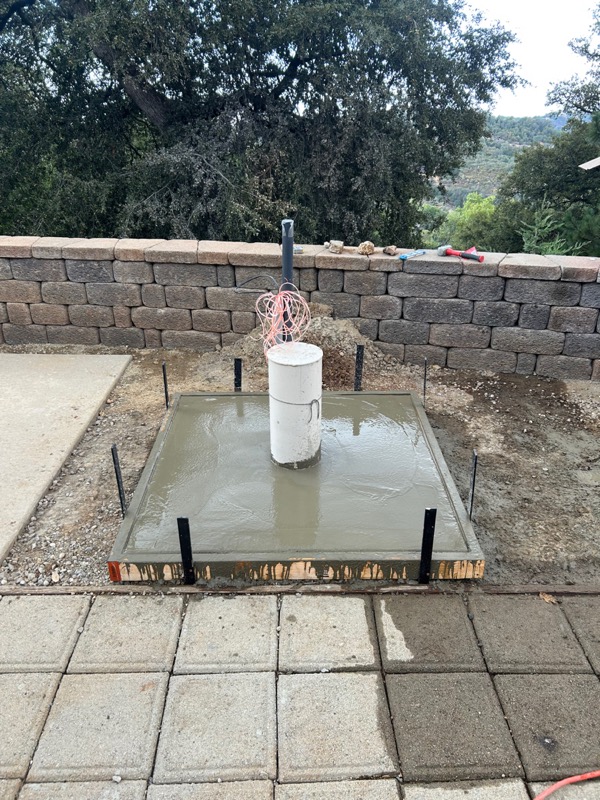
Growing avocados in Riverside? These water-loving trees need reliable, high-quality well water for healthy production. Southern California Well Service supports Riverside County avocado growers with specialized well services.
📋 In This Guide
- Avocado Water Demands
- Well Systems for Avocado Groves
- Chloride Sensitivity
- Partnering with Riverside Avocado Growers
- Related Articles
Avocado Water Demands
Avocados are thirsty trees:
- Mature tree: 40-70 gallons per day in summer
- Per acre: 4-6 acre-feet per year
- Critical periods: Fruit set and sizing
A reliable well is essential for profitable avocado production in Riverside County.
Well Systems for Avocado Groves
- High-capacity agricultural wells
- Storage tanks for peak demand periods
- Drip irrigation systems for efficiency
- Micro-sprinklers for young trees
- Pressure regulation for uniform coverage
Chloride Sensitivity
Avocados are highly sensitive to chloride in irrigation water. If your Riverside well has elevated chloride:
- Blending with lower-chloride water source
- Leaching irrigation to flush salts
- Rootstock selection for salt tolerance
- Regular soil and leaf testing
We test well water for avocado-critical parameters.
Partnering with Riverside Avocado Growers
Avocados are a major crop in Riverside County, and reliable water is essential for success. Contact us for well services designed for avocado production.
Need Help With Your Well in Riverside?
Our expert technicians serve Riverside and all of Riverside County with professional well services.
Related Articles
Continue learning about well maintenance and troubleshooting

Signs Your Well Pump Is Failing
Catch pump problems early before you lose water completely.

Low Water Pressure From Well
Diagnose and fix pressure problems before they get worse.

Well Maintenance Guide
Keep your well running smoothly with regular maintenance.
Our Locations
1077 Main St, Ramona, CA 92065
57174 US Highway 79, Anza, CA 92539
Well and Irrigation Service in the City of Riverside
Riverside is the county seat and largest city of Riverside County, anchoring the western Inland Empire along the Santa Ana River. The city stretches from the river plain up into the surrounding hills, with neighbors including Jurupa Valley to the north, Moreno Valley to the east, Corona and Norco to the west, and Colton and Grand Terrace to the north. Established neighborhoods and districts such as Arlington, La Sierra, Canyon Crest, Orangecrest, Mission Grove, Victoria, Woodcrest, and Arlanza each sit on slightly different ground, which matters a great deal when you depend on a private well.
Riverside is the historic birthplace of the California navel orange. The original Parent Washington Navel orange tree still stands here, and the city's citrus-grove heritage runs deep. While most of Riverside is now on municipal water, a real number of large-lot and rural-residential parcels in areas like Woodcrest, Mockingbird Canyon, and toward Gavilan Hills still rely on private wells for household supply, landscape irrigation, and remaining citrus and avocado groves. Southern California Well Service is a licensed C-57 water well contractor with more than 30 years of experience keeping these systems running.
Geology drives almost everything about a Riverside well. The lower city sits on the alluvial Santa Ana River plain over the Riverside and Bunker Hill-Colton groundwater subbasins, where sand-and-gravel aquifers hold and move water readily. Alluvial wells here are commonly a few hundred feet deep, often in the range of 150 to 600 feet. Out in the surrounding hills, such as Gavilan Hills and Mockingbird Canyon, wells are typically drilled into fractured granitic bedrock. Those hillside wells can be deeper, lower-yielding, and far more dependent on how many water-bearing fractures the borehole happens to intersect.
How a Riverside Well and Irrigation System Works
A private water system in Riverside is a chain of components, and a weakness in any link shows up at the tap or the irrigation valve. Understanding the parts helps you describe problems clearly when you call.
- The well and casing: A drilled borehole lined with steel or PVC casing, screened across the water-bearing zone. In alluvial ground this is sand and gravel; in the hills it is fractured granite.
- The submersible pump: Set down in the water column, it pushes water to the surface. Pump sizing depends on well depth, yield, and how much water your home, landscape, or grove demands.
- The pressure tank: Stores a cushion of pressurized water so the pump is not cycling on and off every time you open a faucet. A waterlogged or failed tank causes rapid cycling that burns out pumps.
- The pressure switch and controls: Tell the pump when to start and stop. These wear out and are one of the most common, least expensive failures we see.
- Treatment: Sediment filtration, iron and manganese removal, or softening, depending on water chemistry.
For Riverside's citrus and avocado growers, the irrigation side matters just as much. Groves typically run drip lines or micro-sprinklers fed from the well, sometimes through a storage tank that lets a modest well keep up with peak summer demand. Avocados in particular are sensitive to chloride and salt in irrigation water, so water chemistry and steady pressure are not luxuries, they are what keeps trees productive. A constant-pressure or booster system often pays for itself by delivering uniform coverage across a sloped grove.
Common Well Scenarios in Riverside
After three decades in the Inland Empire, certain patterns repeat across Riverside properties:
- Air spitting and rapid cycling: Usually a failing pressure tank bladder or a pressure switch out of adjustment, not the pump itself.
- Gradual loss of yield in hillside wells: Fractured-bedrock wells around Gavilan Hills and Mockingbird Canyon can decline as fractures silt up or the water level drops during dry years. Hydrofracturing sometimes restores flow.
- Sediment and turbidity: Alluvial wells on the river plain can pull fine sand, especially as a well ages or a pump sits too low. Sediment chews up fixtures, valves, and irrigation emitters.
- Hard water and mineral scale: Inland Empire groundwater is typically hard, leaving scale in pipes, water heaters, and drip lines.
- Iron, manganese, or sulfur: Staining and odor that point to a need for targeted filtration.
- Pump or motor failure: The end of the line for a pump that has run many years, sometimes hastened by power fluctuations common on rural circuits.
What to Check Before You Call
A few quick observations help us arrive prepared, and occasionally let you solve a minor issue yourself:
- Check your pressure gauge. A normal system usually rests between 40 and 60 psi. A pinned-low or wildly swinging needle tells a story.
- Confirm the well breaker has not tripped, and look for a tripped GFCI or pressure-switch problem before assuming the pump has failed.
- Tap the pressure tank near the top and bottom. A tank that sounds full of water all the way up has likely lost its air charge.
- Note whether the problem affects the whole property or only one zone, which separates a well-side issue from a plumbing or irrigation-valve issue.
- Look for visible leaks at the pressure tank, pump wiring, or wellhead.
- If the water suddenly looks, smells, or tastes different, jot down when it started so we can connect it to recent pump or aquifer changes.
Never remove a well cap or attempt electrical work at the wellhead yourself. The voltages and pump weights involved make that genuinely dangerous.
When to Call a Professional
Some situations should go straight to a licensed contractor. Call us if you have no water at all, if the pump runs continuously without building pressure, if your breaker trips every time the pump starts, or if you see sand, cloudiness, or a sudden change in water quality. Hillside Riverside wells that have lost yield, grove irrigation systems delivering uneven coverage, and any well older than 20 to 30 years due for inspection all warrant a professional eye. As a C-57 licensed contractor, we are legally able to perform well drilling, pump work, hydrofracturing, and decommissioning that a general plumber cannot.
Realistic Cost Ranges
Every well is different, but these ranges reflect typical Riverside-area work so you can budget with confidence:
- Pressure switch replacement: $150 to $350
- Pressure tank replacement: $600 to $1,500
- Pump replacement: $2,500 to $5,500
- Sediment filtration: $300 to $900
- Iron/manganese filter or water softener: $1,500 to $3,500
- Constant-pressure or booster system: $2,000 to $4,500
- Hydrofracturing to improve yield: $3,000 to $8,000
- New well, turnkey: $18,000 to $42,000
- Well abandonment or decommissioning: $1,500 to $5,000
Our diagnostic visit is $125, and that fee is credited toward any repair we perform. You get a clear assessment first, with no pressure to buy services you do not need.
Serving Riverside and All of Riverside County
Southern California Well Service runs from two offices, in Ramona (1077 Main St, Ramona, CA 92065) and Anza (57174 US Highway 79, Anza, CA 92539), which lets us cover Riverside and the surrounding Inland Empire efficiently. We work throughout the City of Riverside, from Arlington and La Sierra to Canyon Crest, Orangecrest, Mission Grove, and the rural-residential stretches of Woodcrest, Mockingbird Canyon, and Gavilan Hills. We offer same-day emergency service when you have no water, and we carry a 4.9-star reputation built over more than 30 years. Call (760) 440-8520 or text (619) 259-0410.
Frequently Asked Questions
How deep are wells in Riverside?
It depends on where you are. Alluvial wells on the Santa Ana River plain are commonly 150 to 600 feet deep, drawing from sand-and-gravel aquifers. Wells up in the surrounding hills, like Gavilan Hills and Mockingbird Canyon, are drilled into fractured granite and can be deeper and lower-yielding, since their output depends on intersecting water-bearing fractures.
Is the water in Riverside hard?
Yes. Inland Empire groundwater is typically hard and mineral-rich, which leaves scale in pipes, water heaters, and irrigation emitters. Many Riverside well owners benefit from a softener or targeted filtration, and we can test your water and recommend the right approach.
Can you service avocado and citrus grove irrigation?
Absolutely. Riverside has deep citrus-grove heritage and remaining hillside groves, and we design and maintain well-fed drip and micro-sprinkler systems for them. Avocados are sensitive to chloride and salt, so we pay close attention to water chemistry, storage, and steady pressure across sloped ground.
My well lost pressure. Is it the pump?
Not necessarily. Rapid cycling and pressure loss are often caused by a failing pressure tank or a worn pressure switch, both far cheaper to fix than a pump. Our $125 diagnostic, credited toward the repair, pinpoints the real cause before anyone replaces expensive parts.
Do you offer emergency service in Riverside?
Yes. We provide same-day emergency response for no-water situations across Riverside and Riverside County. Call (760) 440-8520 and we will get a technician to you as quickly as possible.
Can an old hillside well be improved instead of replaced?
Often, yes. For low-yield fractured-bedrock wells around Gavilan Hills and Mockingbird Canyon, hydrofracturing can open existing fractures and restore flow at a fraction of the cost of a new well. We assess whether that is realistic before recommending a full replacement.
If your Riverside well or grove irrigation needs attention, do not wait for a small problem to become a no-water emergency. Call Southern California Well Service at (760) 440-8520 or text us at (619) 259-0410 for honest, local, C-57 licensed service.