
Well Services for the San Carlos Area of San Diego
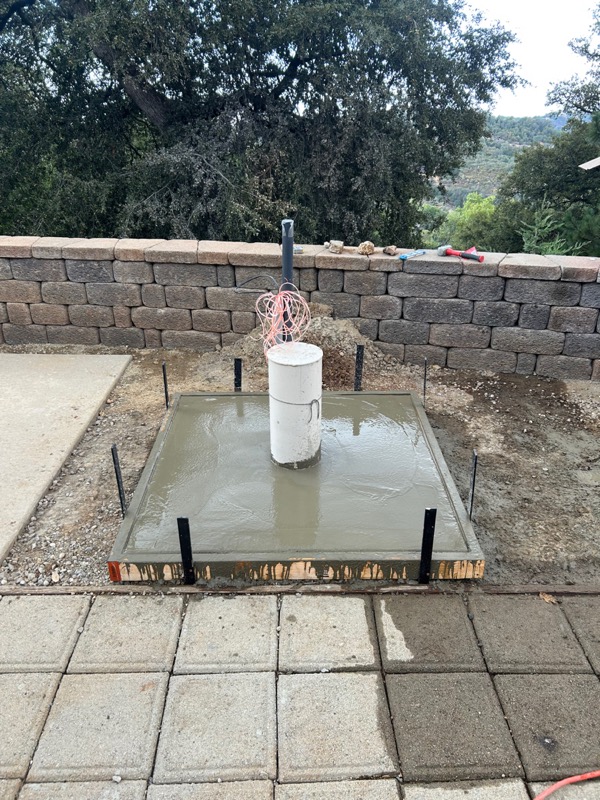
Well and Water-System Service for the San Carlos Community
San Carlos is a well-loved residential neighborhood in eastern San Diego, sitting in the shadow of Cowles Mountain and bordered by Lake Murray and the sprawling Mission Trails Regional Park. While San Carlos homes are served by city water, many residents own additional property in the surrounding East County hills and backcountry where private wells are a way of life. Southern California Well Service supports those property owners with experienced, licensed well work, and we are glad to advise any San Carlos homeowner thinking about wells, irrigation, or water quality.
We are a licensed C-57 water well contractor with more than 30 years of experience and offices in Ramona and Anza. That gives us deep familiarity with the granite-and-fracture groundwater that defines this part of San Diego County.
The Geology Around San Carlos and Mission Trails
The same decomposed granite and fractured crystalline rock that hikers scramble over on Cowles Mountain and throughout Mission Trails Regional Park is what shapes groundwater in the surrounding hills. This is classic Peninsular Ranges terrain: water does not sit in a deep, even sand-and-gravel basin but instead lives in fractures and weathered pockets within hard rock. The result is that well yield can swing sharply between neighboring parcels, and that local experience counts for a great deal when siting, sizing, or repairing a well.
On the rural parcels where private wells exist, a submersible pump is lowered into the water column, pushes water up to a pressure tank, and the tank holds a cushion of pressurized water so the pump is not cycling constantly. When the pump, tank, switch, or wiring weakens, the owner notices low pressure, sputtering taps, or a pump that runs nonstop.
Why Local Knowledge Matters Here
Fractured-rock wells are unforgiving of guesswork. Oversize a pump on a low-yield well and it pulls air and burns out; ignore the water chemistry and iron and scale quietly wreck the equipment. A technician who knows eastern San Diego County's granite measures recovery rate and tests water before recommending anything. That habit is why we routinely correct problems that out-of-area outfits got wrong.
Common Water-System Issues We See
For the rural and backcountry properties our San Carlos customers own, the most frequent issues include:
- Low or declining yield in fractured-rock wells, particularly during drought years.
- Iron, manganese, and hardness that stain fixtures, clog emitters, and scale pipes.
- Hydrogen sulfide odor, the rotten-egg smell common in some backcountry wells.
- Pressure tank failure from a waterlogged bladder, causing rapid pump short-cycling.
- Electrical and control faults typical of remote services, including failed switches and storm-related wiring damage.
Backyard Trees and Landscape Irrigation
The mild climate around Lake Murray and the Navajo area is friendly to citrus and even backyard avocado trees. Most San Carlos homes irrigate from city water, but the principles of good irrigation are the same whether the source is a meter or a well: uniform pressure produces uniform coverage, which means healthier plants and less waste. For property owners running larger plantings on a rural well, avocados are realistic provided volume and salt are managed. Avocados are notably sensitive to chloride, so we pair a well with storage and a constant-pressure system, and we plan periodic leaching where water quality requires it.
Water Independence in San Diego's East County
For property owners just beyond San Carlos, in the hills toward Lakeside, Santee, and the open backcountry, a well represents real water independence. As city water rates climb and drought rules tighten, a dependable private well protects both the household budget and any landscape or grove the property supports. That independence, though, depends entirely on the well being maintained. During the recent run of dry years, the owners who fared best were the ones with adequate storage and a recovery-aware pump setup rather than a single oversized pump straining a stressed aquifer.
If a well in your portfolio has slowed over time, the cause is often a falling water level rather than a failing pump. The right answer may be added storage, a lower pump setting, or hydrofracturing to open new water-bearing fractures. We always diagnose the actual cause before recommending costly equipment, because a new pump cannot solve a yield problem.
Maintenance That Prevents Emergencies
A brief annual inspection of pressure settings, tank charge, pump amperage, and water chemistry catches small problems long before they leave you without water. For anyone irrigating trees or a larger landscape, that preventive attention protects an entire growing season. We are happy to set up a simple maintenance rhythm that fits your property, and to give you advance warning when a well is beginning to decline so you can plan calmly rather than react in a crisis.
What to Check Before You Call
If you have a well acting up, a few quick observations help us diagnose faster:
- Read the pressure gauge for low, swinging, or zero readings.
- Listen to the pump for constant running, rapid cycling, or silence.
- Check the breaker and pressure switch for tripped or burned parts.
- Tap the pressure tank to judge whether it has lost its air charge.
- Note changes in water color, smell, or sediment, which signal a quality issue rather than a mechanical one.
When to Call a Professional
A private well combines high-voltage wiring, heavy equipment hanging deep in a borehole, and pressurized water. If you have no water, smell burning, see the pump running constantly, or notice a sudden yield drop, call us before pulling equipment yourself. Removing a submersible pump and drop pipe without the right hoist and training is dangerous.
Realistic Cost Ranges
Costs depend on depth and scope, but typical ranges are: pressure switch $150 to $350, pressure tank $600 to $1,500, submersible pump replacement $2,500 to $5,500, sediment filtration $300 to $900, iron, manganese, or softening $1,500 to $3,500, and a constant-pressure or booster system $2,000 to $4,500. Hydrofracturing to revive a weak well runs $3,000 to $8,000, and a brand-new turnkey well runs $18,000 to $42,000. Our diagnostic visit is $125, credited toward any approved work.
Serving San Carlos and the East County
We serve San Carlos along with the surrounding San Diego communities of Del Cerro, Allied Gardens, Tierrasanta, La Mesa, Santee, and Lakeside, and we reach the rural backcountry parcels beyond. With crews based in Ramona and Anza, we cover the region efficiently and keep common pumps, tanks, and switches on the truck so many repairs finish in one visit. We are licensed, insured, and rated 4.9 stars by our customers.
Talk to a Local Well Expert
Whether you own a backcountry well or simply want sound advice on water and irrigation near San Carlos, we are ready to help. Call (760) 440-8520 or text (619) 259-0410 for same-day emergency service and straightforward guidance from a team that knows San Diego County groundwater.
Frequently Asked Questions
Are there private wells in San Carlos?
San Carlos itself is an established residential neighborhood of San Diego served by municipal water, so most homes here are on the city system rather than private wells. We serve San Carlos residents who own rural or backcountry parcels elsewhere, manage agricultural property, or are researching wells, and we cover the surrounding East County areas where private wells are common.
What is the geology around San Carlos and East County?
This part of eastern San Diego sits over decomposed granite and fractured crystalline rock, the same Peninsular Ranges batholith that forms Cowles Mountain and Mission Trails Regional Park. Where private wells exist in the surrounding hills, they draw water from fractures in that hard rock, so yields vary considerably from parcel to parcel.
Can I grow avocados or fruit trees in the San Carlos area?
The mild inland climate around Lake Murray and Mission Trails suits citrus and avocado on a backyard scale, though most properties irrigate from municipal water rather than a well. If you have a larger rural parcel nearby with a well, avocados are realistic provided the water volume and salt levels are managed, which is the part we handle.
Why does my well water near San Diego stain or smell?
Backcountry groundwater in eastern San Diego County commonly carries iron, manganese, hardness minerals, or hydrogen sulfide. These produce rust staining, scale, and a sulfur odor. We test the water and recommend targeted filtration, iron removal, softening, or aeration as needed.
How fast can you respond to a no-water emergency?
We provide same-day emergency service across San Diego County. If a well pump fails on a property you own, call (760) 440-8520 or text (619) 259-0410 and we will prioritize restoring water.
What do common well repairs cost?
A pressure switch is roughly $150 to $350, a pressure tank $600 to $1,500, and a full submersible pump replacement $2,500 to $5,500 depending on depth and horsepower. Water treatment ranges $300 to $3,500. Our $125 diagnostic is credited toward any repair.
Need Help With Your Well Near San Carlos?
Our licensed C-57 technicians serve San Carlos and the greater San Diego area with same-day emergency well service, pump repair, and water treatment.
Related Articles
Continue learning about well maintenance and troubleshooting

Signs Your Well Pump Is Failing
Catch pump problems early before you lose water completely.
Low Water Pressure From Well
Diagnose and fix pressure problems before they get worse.
Well Maintenance Guide
Keep your well running smoothly with regular maintenance.
Our Locations
1077 Main St, Ramona, CA 92065
57174 US Highway 79, Anza, CA 92539