
Well Services for San Elijo Hills Avocado Groves
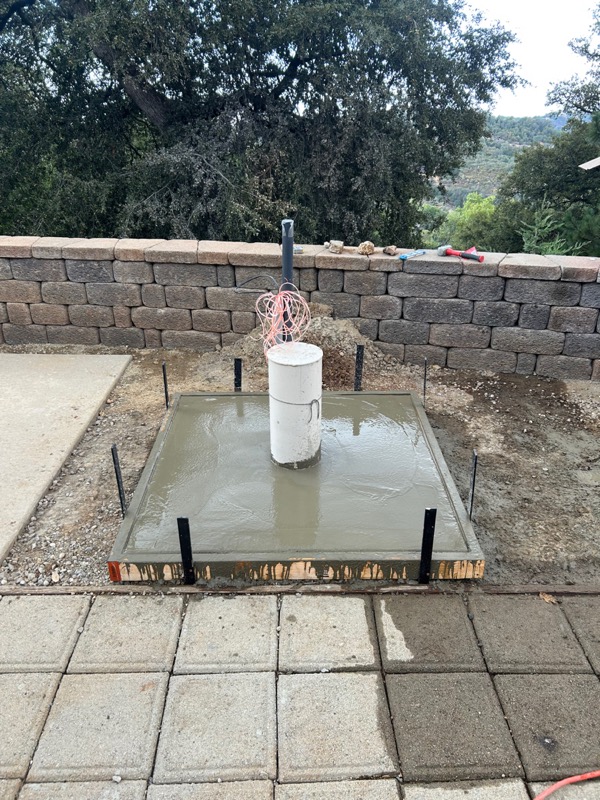
Growing avocados in San Elijo Hills? These water-loving trees need reliable, high-quality well water for healthy production. Southern California Well Service supports San Diego County avocado growers with specialized well services.
📋 In This Guide
- Avocado Water Demands
- Well Systems for Avocado Groves
- Chloride Sensitivity
- Partnering with San Elijo Hills Avocado Growers
- Related Articles
Avocado Water Demands
Avocados are thirsty trees:
- Mature tree: 40-70 gallons per day in summer
- Per acre: 4-6 acre-feet per year
- Critical periods: Fruit set and sizing
A reliable well is essential for profitable avocado production in San Diego County.
Well Systems for Avocado Groves
- High-capacity agricultural wells
- Storage tanks for peak demand periods
- Drip irrigation systems for efficiency
- Micro-sprinklers for young trees
- Pressure regulation for uniform coverage
Chloride Sensitivity
Avocados are highly sensitive to chloride in irrigation water. If your San Elijo Hills well has elevated chloride:
- Blending with lower-chloride water source
- Leaching irrigation to flush salts
- Rootstock selection for salt tolerance
- Regular soil and leaf testing
We test well water for avocado-critical parameters.
Partnering with San Elijo Hills Avocado Growers
Avocados are a major crop in San Diego County, and reliable water is essential for success. Contact us for well services designed for avocado production.
Need Help With Your Well in San Elijo Hills?
Our expert technicians serve San Elijo Hills and all of San Diego County with professional well services.
Related Articles
Continue learning about well maintenance and troubleshooting

Signs Your Well Pump Is Failing
Catch pump problems early before you lose water completely.
Low Water Pressure From Well
Diagnose and fix pressure problems before they get worse.

Well Maintenance Guide
Keep your well running smoothly with regular maintenance.
Our Locations
1077 Main St, Ramona, CA 92065
57174 US Highway 79, Anza, CA 92539
Well and Irrigation Service for San Elijo Hills Avocado Groves and Hillside Homes
San Elijo Hills sits in the rolling coastal hills of San Marcos, in northern San Diego County, where the elevation climbs above 1,000 feet and the marine layer keeps mornings cool well into summer. While much of the community itself is newer master-planned housing, the surrounding canyons and the older parcels along the ridgelines toward Elfin Forest and Harmony Grove still hold avocado groves, citrus, and large-lot properties that depend on private wells rather than municipal water. If you grow Hass avocados here, or simply irrigate landscaping and a few backyard trees on well water, the quality and reliability of that well decides how your season goes.
Southern California Well Service has worked the hills, valleys, and granite country of San Diego County for more than 30 years. We are a licensed C-57 water well drilling contractor, not a general plumber, and our two offices in Ramona and Anza put a crew within reach of San Elijo Hills for everything from a stuck pump to a full new well.
How a Hillside Well System Actually Works
A typical San Elijo Hills-area well draws from fractured granite and the decomposed-granite overburden common across the San Marcos hills. Water collects in fractures rather than in a sandy aquifer, so yields vary sharply from one parcel to the next — a neighbor 300 feet away can have a very different well. A submersible pump set near the bottom of the casing pushes water up to a pressure tank at the surface; the tank holds a cushion of pressurized water so the pump is not forced to restart every time you open a valve. A pressure switch tells the pump when to run, and on groves a larger storage tank often buffers the well so a modest 8-15 gallon-per-minute well can still feed a thirsty drip system on a hot afternoon.
Avocados are unforgiving customers. A mature tree can drink 40 to 70 gallons on a hot July day, and an acre of grove can need four to six acre-feet across a year. Miss water during fruit set or sizing and you lose crop you cannot get back. That is why grove owners here lean on storage tanks, constant-pressure systems, and well-matched pumps rather than running a small domestic pump to exhaustion.
Common Well Scenarios in the San Elijo Hills Area
- Hard, mineral-rich water. San Diego County granite country tends to produce hard water. Scale builds inside pump components, pressure tanks, and drip emitters, slowly choking flow.
- Chloride and salinity creep. Avocados are among the most chloride-sensitive crops grown. Drought years and heavy pumping can pull saltier water into a fracture system, showing up as leaf-tip burn before you ever see it in a lab.
- Pressure-tank waterlogging. A failed tank bladder makes the pump cycle on and off rapidly — "short cycling" — which is the single fastest way to burn out a pump motor.
- Low yield in late summer. Fracture-fed wells recharge slowly. By September a well that was fine in spring may struggle, especially after a dry winter.
- Sediment and iron staining. Fines from decomposed granite and dissolved iron clog filters and stain hardscape and fruit.
What You Can Check Before You Call
A few quick observations help us help you faster:
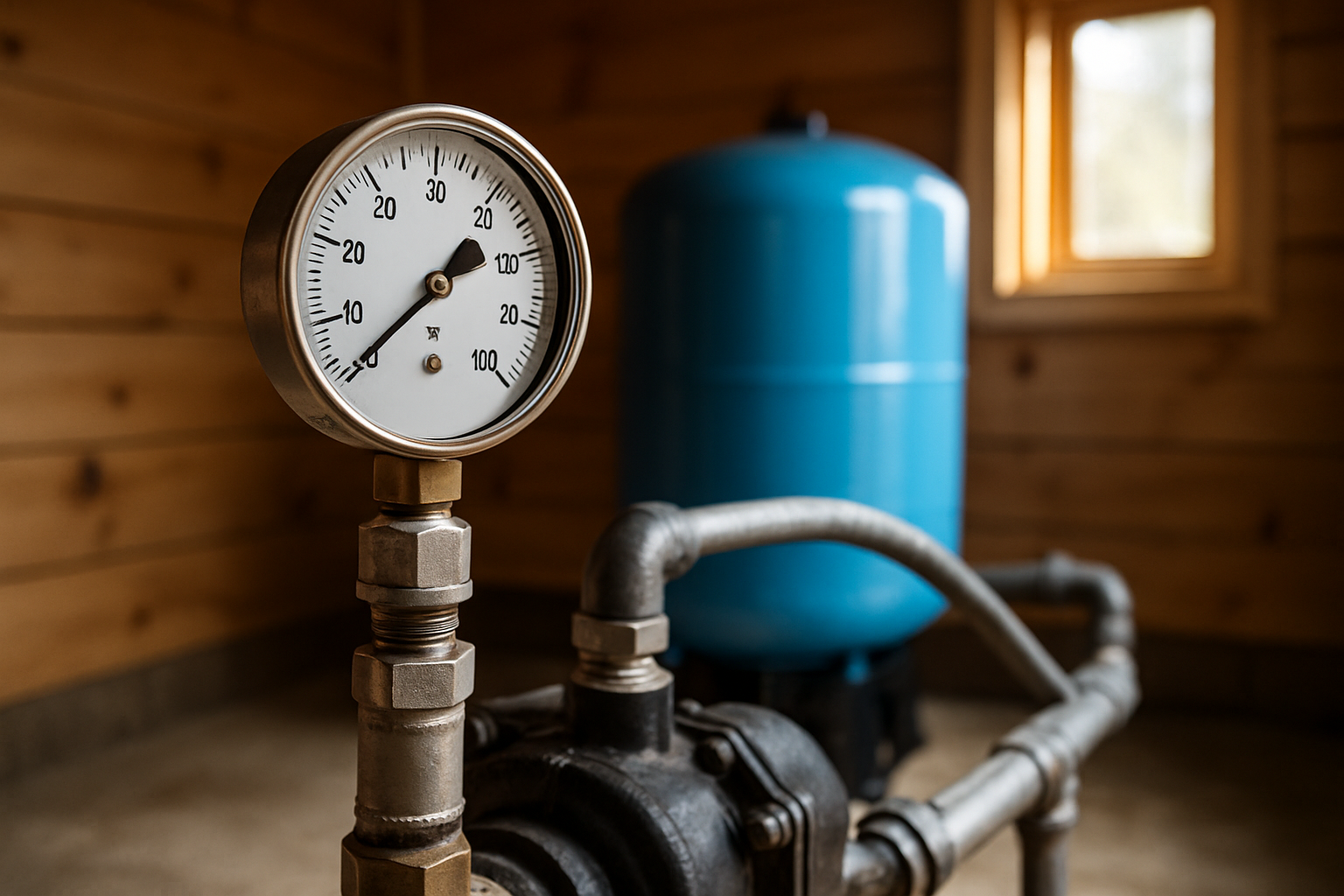
- Look at your pressure gauge. Healthy systems usually cycle between roughly 40 and 60 psi. A needle that bounces rapidly points to a waterlogged tank or failing switch.
- Listen at the pressure tank. Rapid clicking of the pressure switch with the pump kicking on every few seconds is classic short cycling.
- Check whether the problem is everywhere or at one zone. No water anywhere suggests the pump, switch, or well itself; one weak drip block usually means a clogged filter or emitter line.
- Note any change in taste, smell, or color. A new sulfur smell, rusty tint, or sandy grit tells us what to test for.
- Confirm power. Tripped breakers and failed pressure switches mimic far more expensive problems.
When to Call a Professional
Call us when you have no water at all, when the pump runs but no water arrives, when you smell a burning motor, or when pressure has quietly fallen over weeks. Pulling a submersible pump out of a deep hillside well is not a homeowner job — it involves heavy pipe, electrical work, and a real risk of dropping equipment down the casing. For groves, call before peak demand season rather than during it; a well that is marginal in June will fail in August when replacement crews are busiest.
Realistic Cost Ranges
Every well is different, but these San Diego County ranges give you a starting point:
- Pressure switch replacement: $150-$350
- Pressure tank replacement: $600-$1,500
- Submersible pump replacement: $2,500-$5,500
- Sediment filtration: $300-$900
- Iron/manganese filtration or a softener: $1,500-$3,500
- Constant-pressure or booster system: $2,000-$4,500
- Hydrofracturing to improve a low-yield well: $3,000-$8,000
- New turnkey well: $18,000-$42,000
- Well abandonment/decommissioning: $1,500-$5,000
Our diagnostic visit is $125, credited toward any repair we perform.
Seasonal Care That Keeps a Hillside Well Healthy
The coastal hills around San Elijo Hills swing from a damp, foggy spring to a bone-dry autumn, and your well feels every bit of that cycle. A little seasonal attention prevents most emergencies. In late winter, while the water table is at its highest after the rains, it is worth running a flow test so you know your true yield heading into summer. In late spring, before avocado demand peaks, check pressure-tank air charge and inspect drip filters and emitters for the mineral scale that hard water leaves behind. Through summer, watch your run times. A pump that has to run longer and longer to fill the same tank is telling you the well is drawing down. And every couple of years, a water test catches slow shifts in hardness, chloride, iron, and nitrate before they damage trees or equipment.
Grove owners especially benefit from sizing storage to the worst week of the year rather than the average. A tank that comfortably carries a hot, windy Santa Ana stretch will never leave you scrambling during the mild months. We help growers right-size storage and pumps so the well is never the bottleneck during fruit set.
Why Local Knowledge Beats a Generic Well Company
Crews that drift in from outside San Diego County often misjudge this granite country. They guess at depths, oversize or undersize pumps, and overlook the chloride sensitivity that makes avocado irrigation different from feeding a lawn. We have pulled pumps, fractured wells, and built storage systems all over these hills for three decades. That experience means faster diagnosis, fewer return trips, and recommendations matched to how water actually behaves on your parcel rather than a generic playbook.
Serving San Elijo Hills and the Surrounding Area
We serve San Elijo Hills, Double Peak, the San Marcos hills, Elfin Forest, Harmony Grove, Lake San Marcos, and the surrounding ridgelines and canyons across northern San Diego County. With offices in Ramona and Anza and same-day emergency response, we can usually reach a no-water call quickly. We carry a 4.9-star reputation built on honest assessments — if your tank only needs a switch, we will not sell you a pump.
Frequently Asked Questions
How deep are wells near San Elijo Hills?
In the San Marcos hills, wells commonly run from about 200 to 600 feet, chasing water-bearing fractures in granite. Depth varies widely parcel to parcel, which is why a site assessment matters more than a neighbor's number.
Why does my avocado grove need a storage tank?
Fracture-fed wells often produce a steady but modest flow. A storage tank lets that flow accumulate overnight so your drip system can deliver a high burst of water during the hot afternoon hours when trees need it most, without overdrawing the well.
My water suddenly smells like sulfur. Is that dangerous?
A rotten-egg smell usually means hydrogen sulfide or sulfur bacteria. It is generally a nuisance rather than an emergency, but it signals a water-quality change worth testing. We can identify the source and recommend filtration or treatment.
Can you improve a well that is running low?
Sometimes. Hydrofracturing — injecting water under pressure to open existing fractures — can boost yield on a marginal granite well. We will evaluate whether it makes sense before recommending it.
How fast can you respond to a no-water emergency?
We offer same-day emergency service and dispatch from Ramona and Anza. Call (760) 440-8520 and we will get a technician headed your way as soon as possible.
Do you handle both grove and household wells?
Yes. We service everything from a single-family domestic well to high-capacity agricultural wells feeding multi-acre avocado groves.
Talk to a Local Well Expert
Whether you are protecting a producing avocado grove or just keeping water flowing to a hillside home, Southern California Well Service is ready to help. Call (760) 440-8520, text us at (619) 259-0410, or request a free estimate. Licensed C-57, 30+ years of San Diego County experience, same-day emergency service.