
Well Services for Talmadge Avocado Groves
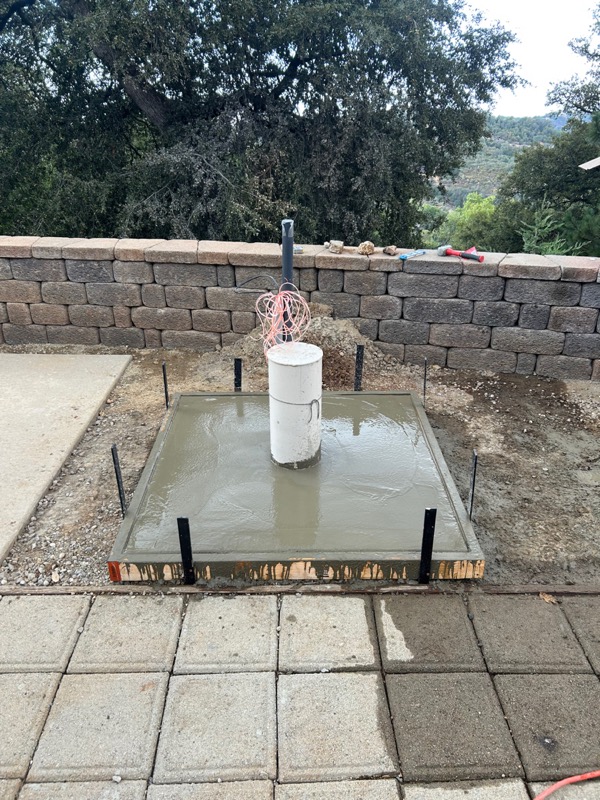
Growing avocados in Talmadge? These water-loving trees need reliable, high-quality well water for healthy production. Southern California Well Service supports San Diego County avocado growers with specialized well services.
📋 In This Guide
- Avocado Water Demands
- Well Systems for Avocado Groves
- Chloride Sensitivity
- Partnering with Talmadge Avocado Growers
- Related Articles
Avocado Water Demands
Avocados are thirsty trees:
- Mature tree: 40-70 gallons per day in summer
- Per acre: 4-6 acre-feet per year
- Critical periods: Fruit set and sizing
A reliable well is essential for profitable avocado production in San Diego County.
Well Systems for Avocado Groves
- High-capacity agricultural wells
- Storage tanks for peak demand periods
- Drip irrigation systems for efficiency
- Micro-sprinklers for young trees
- Pressure regulation for uniform coverage
Chloride Sensitivity
Avocados are highly sensitive to chloride in irrigation water. If your Talmadge well has elevated chloride:
- Blending with lower-chloride water source
- Leaching irrigation to flush salts
- Rootstock selection for salt tolerance
- Regular soil and leaf testing
We test well water for avocado-critical parameters.
Partnering with Talmadge Avocado Growers
Avocados are a major crop in San Diego County, and reliable water is essential for success. Contact us for well services designed for avocado production.
Need Help With Your Well in Talmadge?
Our expert technicians serve Talmadge and all of San Diego County with professional well services.
Related Articles
Continue learning about well maintenance and troubleshooting

Signs Your Well Pump Is Failing
Catch pump problems early before you lose water completely.
Low Water Pressure From Well
Diagnose and fix pressure problems before they get worse.

Well Maintenance Guide
Keep your well running smoothly with regular maintenance.
Our Locations
1077 Main St, Ramona, CA 92065
57174 US Highway 79, Anza, CA 92539
Well and Irrigation Service for the Talmadge Area
Talmadge is a historic residential neighborhood in the City of San Diego, just east of Kensington and north of City Heights, known for its Spanish Revival homes, mature street trees, and the ornamental gateways that mark its entrances. It is fully built out and served by the City of San Diego municipal water system, so there are no commercial avocado groves and no private agricultural wells inside the neighborhood. We would rather be straight with you than pretend a 1920s streetcar suburb is grove country. What Talmadge does have is homeowners who take pride in lush gardens and established trees, and a connection to the broader San Diego County, where private wells remain common on larger inland and rural parcels. Southern California Well Service serves those well owners every day, and we are happy to advise Talmadge residents on water and irrigation questions too.
If you own well-served property elsewhere in the county, manage a rural parcel, or are researching how wells work before buying land, this guide explains the system, the failures we see most, what you can check, and what fair pricing looks like.
The Building Blocks of a Well System
Understanding the parts makes troubleshooting straightforward and conversations with a technician far more productive.
- Casing and borehole: the lined drilled shaft. In the decomposed granite and fractured bedrock of inland San Diego County, wells routinely reach 200 to 600 feet.
- Submersible pump and motor: the unit that lifts water from depth, sized to the well and the demand.
- Pressure tank: stores a cushion of pressurized water and spares the pump from constant starts.
- Pressure switch: the small control that turns the pump on and off at set pressures.
- Treatment and storage: filters, softeners, and tanks added as water quality and demand require.
Common Well Problems in the County
Sudden Loss of Water
This usually means a tripped breaker, a failed pressure switch, a dead pump, or a control problem, and occasionally a dropped water table after a dry spell. Several causes share one symptom, which is why a structured diagnosis beats replacing parts on a hunch.
Pressure Problems
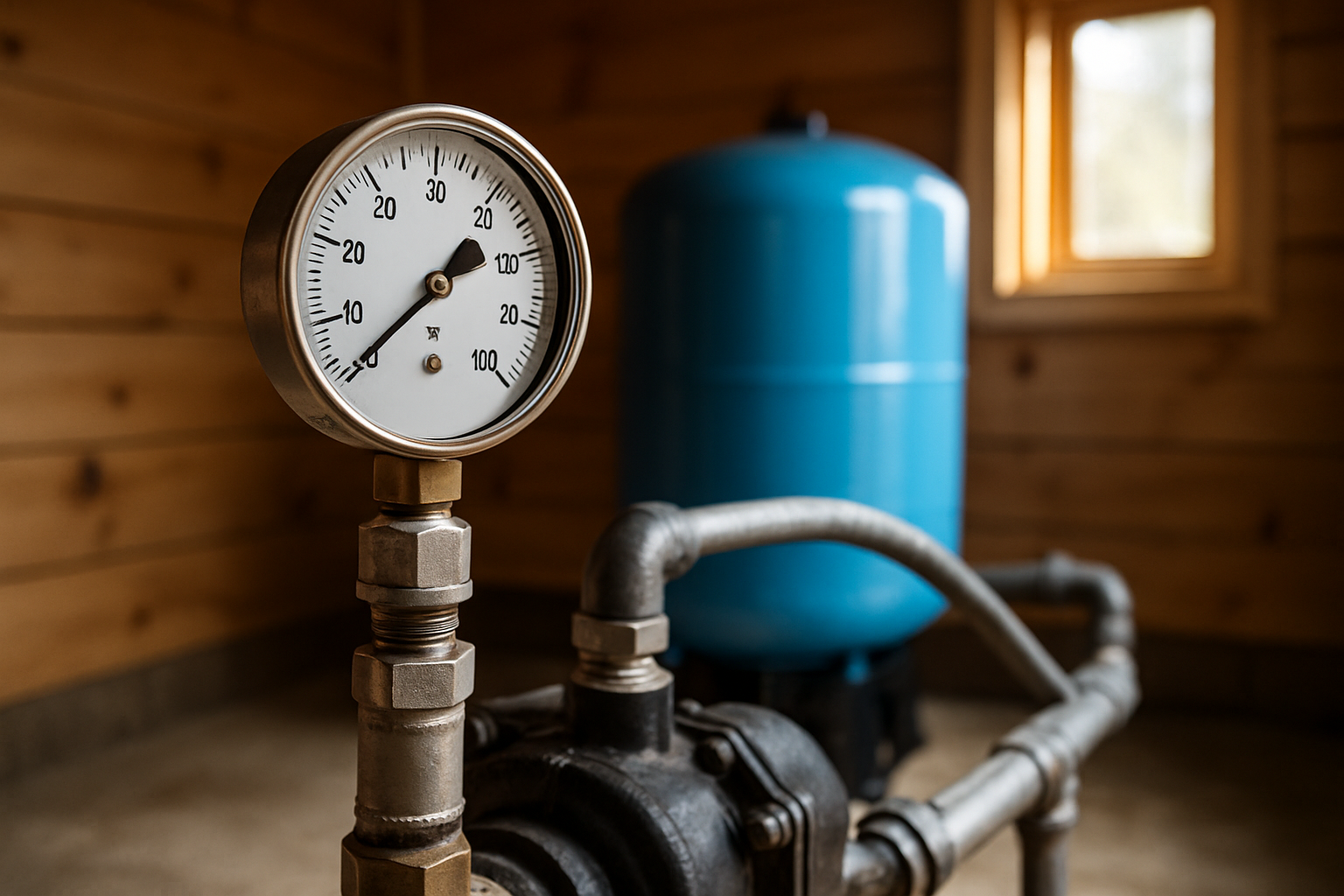
A pump that cycles rapidly or pressure that sags when fixtures run is most often a waterlogged pressure tank. Clogged filters and hidden leaks can produce similar symptoms.
Hard Water and Staining
Mineral-rich inland groundwater scales pipes and appliances and leaves rusty iron stains. Softening and iron removal protect equipment and improve daily water.
Short Pump Life
Pumps that fail repeatedly are usually a symptom of rapid cycling, poor sizing, scaling, or rural power fluctuations. Fixing the root cause is cheaper than swapping pumps again and again.
What You Can Safely Check
- Reset the breaker once. Immediate re-tripping signals an electrical fault; stop and call.
- Read the pressure gauge. A reading stuck at zero or pinned high is a useful clue.
- Test the tank. A waterlogged pressure tank feels heavy from top to bottom.
- Walk the line. Wet ground between wellhead and house can reveal a buried leak.
- Note the timeline. Whether the issue appeared suddenly or built up over weeks guides the diagnosis.
Pulling a pump or opening a control box is not a homeowner job; high voltage and heavy, deep equipment make those tasks work for a licensed crew.
Preventive Maintenance
Most emergency calls are preventable. We recommend an annual review of the pressure-tank charge, pump cycling, and water quality, a water test every year or two for bacteria, nitrates, iron, and hardness, and sediment-filter changes on a schedule. If your well is more than fifteen or twenty years old, a proactive pump and wiring inspection lets you plan a replacement rather than face a failure during a heat wave. Owners with irrigation should clear drip emitters each spring so clogs do not stress trees during peak summer demand.
When to Call a Pro
Call us when you have no water, when pressure issues persist after a tank check, when the breaker keeps tripping, when water changes color or odor, or any time the pump or wiring is involved. We are a licensed C-57 contractor with more than 30 years of service and a 4.9-star rating, equipped to service wells to full depth and to respond the same day in a no-water emergency.
Realistic Pricing
Final costs depend on depth, equipment, and access, but these ranges are realistic across San Diego County. Our diagnostic visit is $125, credited toward any repair we complete.
- Pressure switch: $150 to $350
- Pressure tank: $600 to $1,500
- Submersible pump: $2,500 to $5,500
- Sediment filtration: $300 to $900
- Iron, manganese, or softener systems: $1,500 to $3,500
- Constant-pressure or booster systems: $2,000 to $4,500
- New well, turnkey: $18,000 to $42,000
- Hydrofracturing a low-yield well: $3,000 to $8,000
- Abandonment or decommissioning: $1,500 to $5,000
Helping Talmadge Homeowners With Landscape Water
Even though Talmadge runs on city water, plenty of residents want to use it wisely on their gardens and heritage trees. We can advise on efficient drip and micro-sprinkler layouts, smart controllers that adjust to weather, and rainwater capture systems that store winter runoff for the dry months. The same pumps, tanks, and controls we install on wells power these systems, so designing one is familiar work for our crews. A well-planned irrigation system keeps mature landscaping healthy while trimming the water bill, which matters in a neighborhood that prizes its greenery.
Buying Rural Land? What to Ask About the Well
Many of our Talmadge-area clients reach out not because of a problem at home, but because they are buying a rural parcel in the county and the property comes with a well. That is a smart moment to involve a licensed contractor. Before you close, it is worth confirming the well's depth and age, testing the water for bacteria, nitrates, and minerals, and verifying that the pump and pressure system are in serviceable condition. A modest pre-purchase inspection can reveal whether you are inheriting a dependable water source or a looming replacement, and it gives you real numbers for negotiation. We perform these assessments routinely and explain the findings in plain terms so you can make a confident decision.
Understanding Well Yield Versus Depth
A common misconception is that a deeper well always means more water. In reality, yield depends on the fractures a well intersects, not simply how far down it goes. A shallower well that hits a productive fracture can outperform a much deeper one in tight rock. This matters if you are planning to expand a garden, add livestock, or plant trees, because the right answer to limited yield is often storage and a constant-pressure system rather than an expensive new well. Where production has declined over the years, hydrofracturing can sometimes reopen fractures and restore flow. We measure the actual yield and recommend the least costly path that genuinely meets your needs.
Serving Talmadge and Inland San Diego County
From our Ramona office at 1077 Main St and our Anza office at 57174 US Highway 79, we serve Talmadge and the neighboring Kensington and City Heights area along with the inland and backcountry communities where private wells are the norm, from El Cajon and Lakeside toward Ramona, Julian, and beyond. We know the granite terrain and the mineral profile of local groundwater, which translates to faster, more accurate service for the properties we cover.
Frequently Asked Questions
Does Talmadge have private wells or avocado groves?
No. Talmadge is a built-out residential neighborhood on city water, with no commercial groves or agricultural wells. We serve county growers and well owners from our Ramona office.
Why is my inland well water staining fixtures?
That is iron, often with manganese, in the groundwater. It is usually cosmetic and is readily handled with an iron-removal or filtration system.
How deep are wells in inland San Diego County?
Many fall in the 200 to 600 foot range, depending on where a productive water-bearing fracture is found in the fractured granite.
Is the diagnostic fee credited?
Yes. The visit is $125, and we apply that amount to any repair we perform.
Do you offer same-day emergency service?
We do, when you have lost water. Call (760) 440-8520 or text (619) 259-0410 and describe the problem.
Can you design irrigation for a garden or hobby orchard?
Yes. We size pumps, storage, and drip or micro-sprinkler systems for anything from a backyard garden to several acres of trees.
Talk to Us
Whether you have a true well need or just want a clear answer about water on your Talmadge property, reach out. Call (760) 440-8520, text (619) 259-0410, or request a free estimate. Southern California Well Service has served San Diego County for more than 30 years and is ready to help.