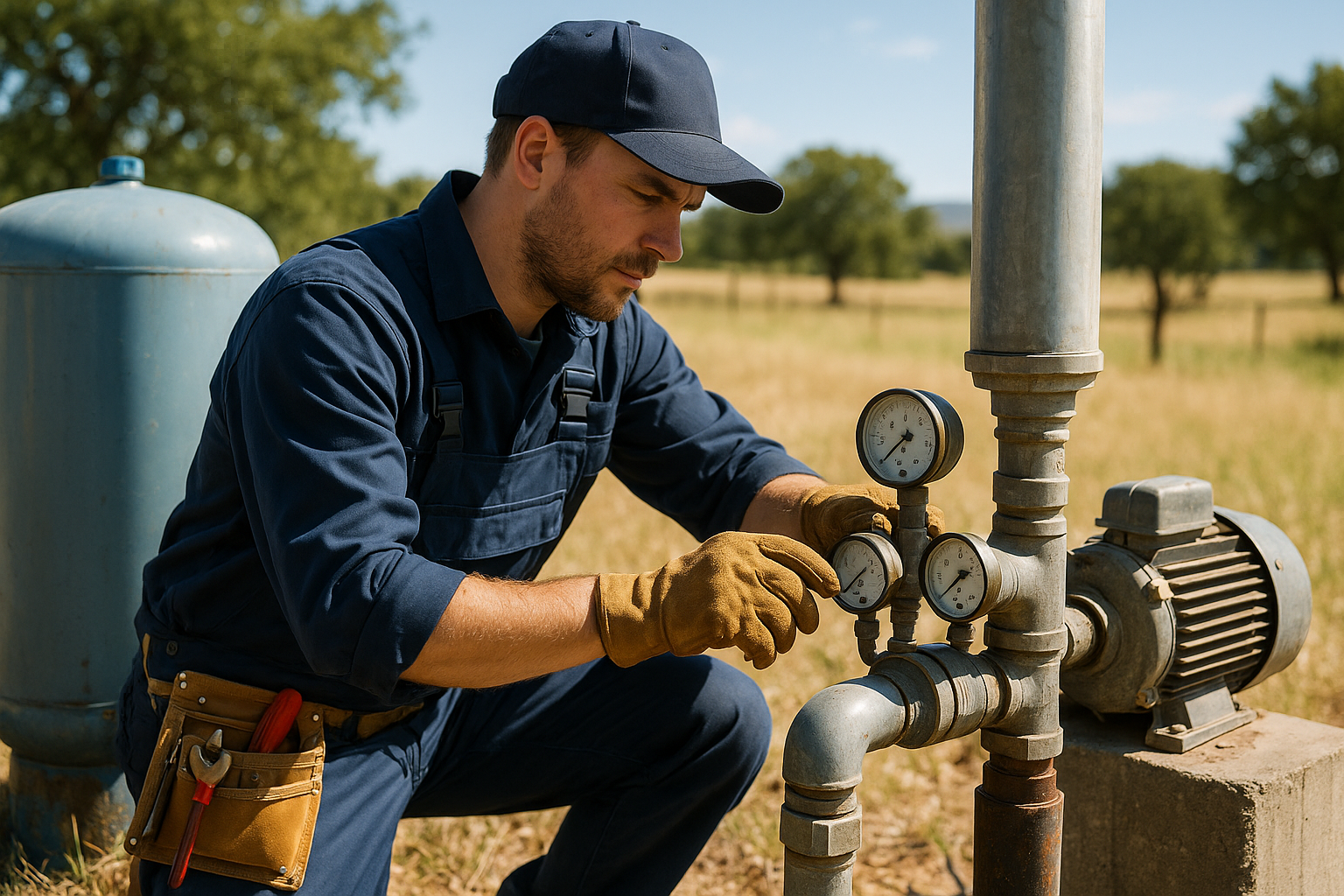
Booster Pump Installation in Woodcrest, CA
Low water pressure in Woodcrest? A booster pump can solve the problem — often in a single day. Southern California Well Service installs, repairs, and maintains booster pump systems throughout Woodcrest and Riverside County.
📋 In This Guide
- Why Woodcrest Homes Need Booster Pumps
- Signs You Need a Booster Pump
- How Booster Pumps Work
- Types of Booster Pump Systems
- Constant Pressure Systems (VFD)
- How to Size a Booster Pump
- Installation Process
- Booster Pump Cost in Woodcrest
- Maintenance & Troubleshooting
- Booster Pump vs. Well Pump Replacement
- Frequently Asked Questions
- Service Areas Near Woodcrest
Why Woodcrest Homes Need Booster Pumps
Woodcrest sits in the rolling hills east of Riverside, in the 92508 zip code. The area's topography — with elevation changes across residential neighborhoods — creates natural challenges for water pressure. Homes on higher ground or at the end of long service lines from the municipal system frequently experience low pressure that makes daily life frustrating.
Properties on private wells face similar challenges. Many Woodcrest homes were built on larger lots with wells that may be aging or undersized for modern water demands. As families grow, add bathrooms, install irrigation systems, or expand their properties, the existing water system struggles to keep up. A booster pump is often the most cost-effective solution — far less expensive than replacing an entire well pump or re-drilling.
Common situations where Woodcrest property owners install booster pumps include:
- Hilltop properties — Gravity works against water delivery to elevated homesites, which are common throughout the Woodcrest hills
- Large lot homes — Many Woodcrest properties sit on 1-5+ acre lots where water must travel long distances from the well or meter to the house
- Multi-story homes — Two and three-story homes need extra pressure to reach upper-floor fixtures and showers
- Agricultural and equestrian properties — Horse properties and small farms in the area need consistent pressure for animal watering systems and irrigation
- Homes with irrigation systems — Sprinkler zones that won't fully pop up or cover properly are a classic low-pressure symptom
- Older homes with galvanized pipes — Corrosion buildup inside old pipes reduces effective diameter and pressure; a booster pump can compensate while you plan a repipe
Signs You Need a Booster Pump
Not sure if low pressure is your problem? Here are the telltale signs that a booster pump would help:
Pressure Drops When Multiple Fixtures Run
You're in the shower and someone turns on the kitchen faucet — suddenly the shower pressure drops to a trickle. This happens when your system can't deliver enough volume at adequate pressure to serve multiple outlets simultaneously. A booster pump maintains pressure even during peak demand periods like morning routines when showers, toilets, and the dishwasher all run at once.
Weak Flow on Upper Floors
Water pressure naturally decreases as it climbs. Every vertical foot of rise costs you about 0.43 PSI. In a two-story home, that can mean 5-8 PSI less on the second floor. If your incoming pressure is already marginal (below 40 PSI), upper floors may feel genuinely unusable. A booster pump installed at ground level pushes water upward with consistent force.
Irrigation Systems Won't Cover Properly
Sprinkler heads that barely pop up, rotors that don't reach their full radius, or drip systems with uneven coverage all point to insufficient pressure. Most irrigation systems need 30-50 PSI to operate correctly. If your static pressure is fine but drops below 30 PSI when the irrigation runs, a dedicated booster pump on the irrigation line solves this without affecting household pressure.
Long Pipe Runs from Well or Meter
Friction loss is real. Water loses pressure as it travels through pipes — roughly 1-3 PSI per 100 feet of horizontal run, depending on pipe diameter and flow rate. Woodcrest properties with wells set back hundreds of feet from the house, or homes at the end of long municipal service laterals, lose significant pressure before water even reaches the building. A booster pump at the house recovers that lost pressure.
Pressure Gauge Reads Below 40 PSI
Normal residential water pressure should be 40-60 PSI. Below 40 PSI, you'll notice problems. Below 30 PSI, code requirements for fire sprinkler systems may not be met. If your pressure gauge at the pressure tank (for well systems) or at the main shutoff (for municipal) reads consistently below 40 PSI, a booster pump is the standard fix.
How Booster Pumps Work
A booster pump is an inline pump installed on your water supply line that increases the pressure of water passing through it. Think of it as a turbocharger for your plumbing. The pump sits between your water source (well or municipal supply) and your house, adding pressure before water enters your plumbing system.
The basic components of a booster pump system include:
- The pump itself — A centrifugal pump with one or more impeller stages that accelerate water and convert velocity into pressure
- A pressure tank — Stores pressurized water and prevents the pump from cycling on and off with every small draw (short cycling kills pumps)
- A pressure switch or controller — Monitors system pressure and turns the pump on when pressure drops below a set point and off when it reaches the cut-out pressure
- Check valve — Prevents backflow so pressurized water doesn't push backward through the system
- Pressure relief valve — Safety device that opens if pressure exceeds safe limits (typically set at 75-80 PSI for residential)
When you open a faucet, pressure in the tank drops. When it reaches the cut-in pressure (usually 40 PSI), the pressure switch activates the pump. The pump runs until the tank reaches cut-out pressure (usually 60 PSI), then shuts off. The tank provides a buffer so the pump doesn't start and stop constantly — this cycling is the number one killer of booster pumps and well pumps alike.
Types of Booster Pump Systems
Single-Stage Booster Pumps
The simplest and most affordable option. A single-stage booster pump has one impeller and provides a moderate pressure increase — typically 20-40 PSI of boost. These work well for homes with municipal water that just need a bump, or well systems where the well pump delivers decent volume but not quite enough pressure. Installation is straightforward and these units are easy to service. Expect to pay $800-$2,000 for the pump plus installation.
Multi-Stage Booster Pumps
Multi-stage pumps stack multiple impellers in series, with each stage adding more pressure. These generate 40-80+ PSI of boost and handle higher flow rates. They're the right choice for large homes, commercial properties, agricultural operations, or any situation requiring significant pressure gain over long distances or elevation changes. The Grundfos CM series and Franklin Electric inline boosters are two brands we commonly install for Woodcrest properties. Cost is higher — typically $2,000-$5,000 installed — but performance and longevity justify the investment for demanding applications.
Constant Pressure Systems (VFD)
A constant pressure system uses a variable frequency drive (VFD) to adjust the pump motor speed in real time based on demand. Instead of cycling between a fixed cut-in and cut-out pressure, the pump ramps up and down smoothly to maintain a constant target pressure — usually 50 or 60 PSI regardless of how many fixtures are running.
The advantages of constant pressure are significant:
- No pressure fluctuations — Shower pressure stays the same whether one fixture is running or five
- Energy efficiency — The pump only works as hard as it needs to, reducing electrical consumption by 30-50% compared to fixed-speed systems
- Longer pump life — Soft starting and variable speed operation dramatically reduce mechanical stress and eliminate hard starts that wear motors
- Smaller pressure tank — Because the pump modulates speed, you can use a much smaller tank (or in some cases, a minimal buffer tank), saving space
- Quiet operation — No more loud pump kicks at 2 AM when someone flushes a toilet
Constant pressure systems cost more upfront — typically $3,000-$6,000 installed — but the reduced energy costs, longer equipment life, and superior performance make them the best long-term value. We install Grundfos SQE, Franklin Electric SubDrive, and Pentair Intellidrive systems depending on the application.
How to Size a Booster Pump for Your Woodcrest Property
Choosing the right booster pump isn't guesswork — it requires measuring your current conditions and calculating what you need. An undersized pump won't solve the problem; an oversized pump wastes energy and can actually damage plumbing. Here's how we determine the right system:
Step 1: Measure Current Pressure
We use a calibrated pressure gauge at the point of entry to establish your baseline static pressure (no water flowing) and dynamic pressure (with fixtures running). The difference between these two numbers tells us about flow capacity and pipe losses in your system.
Step 2: Determine Required Pressure
Most Woodcrest homes need 50-60 PSI at the point of use. If your highest fixture is 20 feet above the pump, add 9 PSI for elevation (20 ft × 0.43 PSI/ft). If you have 200 feet of pipe run, add 4-6 PSI for friction loss. The target discharge pressure from the booster pump equals: desired fixture pressure + elevation loss + friction loss.
Step 3: Calculate Flow Rate Needs
Each fixture has a standard flow rate: showers use 2-2.5 GPM, faucets 1.5-2 GPM, toilets 3 GPM during fill, irrigation zones 5-15 GPM. We add up the fixtures likely to run simultaneously during peak demand. A typical 3-bedroom home with irrigation needs 10-15 GPM of capacity. Larger homes or properties with agricultural use may need 20-30+ GPM.
Step 4: Select the Pump
With target pressure and flow rate defined, we match a pump whose performance curve delivers the required PSI at the required GPM. We always select a pump that operates in its most efficient range at your typical demand — this ensures the best combination of performance, energy efficiency, and longevity.
Booster Pump Installation Process
A professional booster pump installation in Woodcrest typically takes 4-8 hours depending on the complexity. Here's what to expect:
Site Assessment (30-60 minutes)
We inspect your existing plumbing, measure pressure and flow, evaluate the electrical supply, and identify the optimal location for the pump. For well systems, we also check well production to make sure the well can sustain the flow rate the booster pump will demand. There's no point boosting pressure if the well can't keep up — you'll just burn out equipment.
Plumbing Connection (2-4 hours)
We cut into the main supply line and install the pump with isolation valves on both sides (so the pump can be serviced without shutting off the entire water supply), a check valve to prevent backflow, a pressure relief valve for safety, and a properly sized pressure tank. All connections use brass fittings — never galvanized to copper connections that create galvanic corrosion.
Electrical Work (1-2 hours)
Most residential booster pumps run on 230V single-phase power, though smaller units may use 115V. We install a dedicated circuit with a properly sized breaker, a disconnect switch at the pump for service access, and lightning/surge protection — critical in the Riverside County area where summer thunderstorms can send power surges through the grid.
Testing and Calibration (30-60 minutes)
We set the pressure switch cut-in and cut-out points, verify the pressure tank pre-charge matches the cut-in pressure, run multiple fixtures simultaneously to confirm adequate pressure and flow, check for leaks at all connections, and verify the pump cycles correctly without short-cycling.
Owner Training
Before we leave, we walk you through how the system works, where the shutoff valves are, what the pressure gauge should read normally, and warning signs of trouble. We also set the pressure relief valve and explain why you should never adjust it yourself.
Booster Pump Cost in Woodcrest
The total cost of a booster pump system depends on the type of pump, the complexity of installation, and any additional plumbing or electrical work needed. Here's what Woodcrest homeowners typically pay:
| System Type | Equipment Cost | Installed Cost | Best For |
|---|---|---|---|
| Single-stage booster | $400-$1,000 | $1,200-$2,500 | Small homes, moderate pressure boost |
| Multi-stage booster | $800-$2,500 | $2,000-$4,500 | Large homes, high elevation, long runs |
| Constant pressure (VFD) | $1,500-$3,500 | $3,000-$6,000 | Whole-house, best performance |
| Irrigation-only booster | $300-$800 | $800-$1,800 | Dedicated landscape irrigation |
Factors that affect cost in the Woodcrest area include:
- Electrical requirements — If no 230V circuit exists near the installation point, running a new circuit adds $300-$800
- Pipe material and size — Older homes with galvanized pipe may need a section upgraded to copper or PEX near the pump
- Permit requirements — Riverside County requires permits for new plumbing installations; we handle the paperwork as part of our service
- Tank size — Larger pressure tanks (44-86 gallon) cost more but provide better performance and reduce pump cycling
- Accessibility — Pumps installed in tight crawl spaces or requiring excavation add labor time
We provide free on-site estimates for all booster pump installations in Woodcrest. No pressure, no obligation — we'll tell you exactly what you need and what it costs before any work begins.
Booster Pump Maintenance & Troubleshooting
A well-installed booster pump should run for 10-15+ years with minimal maintenance. But like any mechanical system, some periodic attention keeps things running right:
Annual Maintenance Checklist
- Check pressure tank air charge — The air bladder in your pressure tank should match the cut-in pressure (typically 38 PSI for a 40/60 system). Low air charge causes rapid cycling, which burns out pumps. Use a tire gauge on the tank's Schrader valve with the pump off and system depressurized.
- Inspect for leaks — Check all fittings, the pump casing, and the pressure relief valve for drips or weeping
- Test the pressure relief valve — Lift the lever briefly to verify it opens and reseats properly. A stuck relief valve is a safety hazard.
- Listen to the pump — Unusual noises (grinding, rattling, humming without running) indicate bearing wear or impeller damage
- Check amp draw — If you have a clamp meter, compare the running amps to the nameplate rating. Higher than rated amps means the pump is working harder than designed — usually from wear, a restriction, or a failing motor winding.
Common Booster Pump Problems
Pump Runs But Pressure is Low
Usually a worn impeller, a failing check valve allowing backflow, or a waterlogged pressure tank. In Woodcrest's hard water conditions (Riverside County water averages 15-25 grains of hardness), mineral scale can build up on impellers and reduce efficiency over time. Descaling or impeller replacement typically restores performance.
Pump Short-Cycles (Turns On and Off Rapidly)
Almost always a waterlogged pressure tank. When the bladder fails, the tank loses its air cushion and the pump has to cycle every time a small amount of water is used. This is the number one pump killer — if you hear your pump cycling every few seconds, shut it off and call us. A new pressure tank costs $200-$500; a new pump costs $1,500-$4,000.
Pump Won't Start
Check the breaker first — it's the most common cause and the easiest fix. If the breaker is on, check for a tripped thermal overload on the pump (reset button on the motor). If the pump hums but doesn't spin, the start capacitor or motor may have failed. For VFD systems, error codes on the controller display tell us exactly what's wrong.
Pressure Surges or Water Hammer
Banging pipes when the pump kicks on or off usually mean the check valve is worn or the pressure tank is undersized. Water hammer arrestors and properly sized tanks eliminate this problem. Ignoring it leads to pipe joint failures and fitting leaks over time.
Booster Pump vs. Well Pump Replacement
If you're on a private well in Woodcrest, low pressure might be a well pump issue rather than a booster pump situation. Here's how to know which solution you need:
| Symptom | Booster Pump | Well Pump Replacement |
|---|---|---|
| Good volume, low pressure | ✅ Best solution | Not needed |
| Low volume AND low pressure | Won't help enough | ✅ Likely needed |
| Pressure fine, then drops over time | Temporary fix only | ✅ Well pump is failing |
| Municipal water, low pressure | ✅ Only solution | N/A (no well) |
| Pressure good near well, bad at house | ✅ Best solution | Not the problem |
When you call us, we diagnose the root cause before recommending a solution. We won't sell you a booster pump if your well pump is the real problem — and vice versa. A proper diagnosis saves you from paying for equipment you don't need.
Frequently Asked Questions
How long does booster pump installation take?
Most residential installations take 4-8 hours. Your water will be off for 1-2 hours during the plumbing cutover, but we try to minimize downtime. Complex installations (long electrical runs, concrete cutting, etc.) may take a full day.
Do I need a permit for a booster pump in Woodcrest?
Yes — Riverside County requires a plumbing permit for new pump installations. We pull the permit, schedule the inspection, and handle all the paperwork. The permit cost (typically $150-$300) is included in our quoted price.
Will a booster pump increase my electric bill?
Modestly. A standard residential booster pump uses 500-1500 watts — similar to a hair dryer, but it only runs when water is flowing. Expect $10-$30/month added to your electric bill depending on usage. Constant pressure (VFD) systems use less energy because they adjust motor speed to actual demand rather than always running at full power.
Can a booster pump be too powerful?
Yes. Excessive pressure (above 80 PSI) damages plumbing fixtures, appliance solenoid valves, and pipe joints. It also wastes water because every fixture flows faster than designed. We always install a pressure relief valve and set the system to deliver 50-60 PSI — the sweet spot for residential use. If incoming pressure varies, we may also install a pressure reducing valve upstream of the booster.
How loud is a booster pump?
Modern booster pumps are relatively quiet — typically 50-65 decibels, about the volume of a normal conversation. VFD-driven systems are even quieter because they ramp up gradually instead of kicking on at full speed. We recommend installing pumps on vibration-dampening pads and using flexible connectors to further reduce noise transmission into the house.
What's the warranty on a booster pump installation?
We provide a 1-year warranty on our labor and all plumbing connections. Pump manufacturers typically offer 2-5 year warranties on the equipment itself. We register your warranty at installation so you're covered from day one.
Can I install a booster pump myself?
While technically possible for a skilled DIYer, we strongly recommend professional installation. Improper installation causes most booster pump failures — wrong pipe sizing, inadequate electrical supply, missing check valves, or incorrect pressure tank sizing lead to premature pump failure and potential water damage. Plus, a permit and inspection are required in Riverside County.
Serving Woodcrest and Nearby Areas
Southern California Well Service installs booster pumps throughout the Woodcrest area (92508) and surrounding Riverside County communities:
- Woodcrest — Including neighborhoods along Wood Road, Limonite Avenue, and Van Buren Boulevard
- Riverside — All areas including Arlington, La Sierra, and Canyon Crest
- Orangecrest — The planned community south of Woodcrest
- Mission Grove — Eastern Riverside neighborhoods
- Lake Mathews — Rural properties with private wells
- Perris — Including the Perris Valley and surrounding rural areas
- Mead Valley — Unincorporated Riverside County
- Gavilan Hills — Rural hillside properties with well water
- Nuevo — Agricultural and residential properties
- Lake Elsinore — Western Riverside County communities
Our service area extends throughout Riverside County, San Diego County, San Bernardino County, and surrounding areas. Whether you're on municipal water or a private well, we have the experience and equipment to solve your pressure problems.
Get a Free Booster Pump Estimate in Woodcrest
Don't live with low water pressure. Southern California Well Service provides free on-site estimates for booster pump installation in Woodcrest and throughout Riverside County. We'll diagnose the problem, recommend the right solution, and give you an honest price before any work begins.
- Phone: (760) 440-8520
- Available: 24/7 emergency service
- Service Area: Woodcrest, Riverside County, and all of Southern California
- License: CSLB C-57 #1086994
Related Articles
Continue learning about well pumps and water pressure