

Set among the wooded foothills of eastern San Diego County, between Crest to the northwest, Alpine to the east, and El Cajon to the west, the small community of Harbison Canyon stretches along the floor and slopes of its namesake canyon. This is a quiet, semi-rural pocket of the county — oak-shaded lots, steep hillsides, and the seasonal channel of Harbison Canyon Creek threading down toward the Sweetwater River. Many homes here sit beyond a municipal main and draw their water from private wells, which makes water quality a hands-on, everyday matter. When the tap runs brown, rusty, or muddy, it is the kind of problem foothill well owners want explained and solved, not patched over.
Local conditions go a long way toward explaining why discoloration shows up here. Harbison Canyon sits on granitic bedrock that weathers into sand and grit, and wells in the area typically draw from fractured rock or from the alluvium that has collected along the canyon bottom. Both can carry iron and manganese and shed fine particles into a well. The canyon also has a documented history of flooding, and the seasonal creek means that heavy winter storms can wash sediment toward shallow wells and stir up settled material. Add the older wells and plumbing found on long-established lots, and brown water becomes a recurring issue. The good news is that it almost always traces to an identifiable cause with a proven, lasting fix.
What Causes Brown Well Water in Harbison Canyon
Brown water is a symptom rather than a single problem, and several distinct causes are common in these foothills. Pinpointing the right one is what makes it stop for good.
- Dissolved iron and manganese: A leading cause in foothill wells. Groundwater moving through iron-bearing granite and creekside alluvium carries dissolved iron and manganese in an invisible form. Once it meets air in your pressure tank or plumbing, the iron oxidizes to a rusty orange-brown, and manganese can leave darker brown-to-black staining on fixtures, sinks, and laundry.
- Sediment and turbidity: Fine clay, silt, sand, and weathered granite are easily drawn into a well, especially where the water table is shallow along the canyon floor or the well screen has worn. This produces cloudy, muddy water rather than rust.
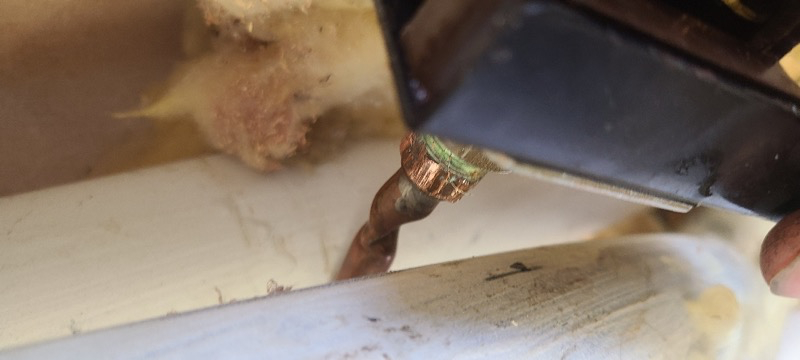
- Rusting steel casing or old galvanized pipe: Many established Harbison Canyon properties still have older steel well casings and galvanized iron plumbing. As these corrode over the years, they release rust directly into the water, often worst on the morning's first draw.
- A stirred-up well after heavy pumping or storms: A hard summer draw, recent pump service, or a strong winter storm running down the canyon can disturb settled sediment in the well and cloud the water for several days.
- Iron bacteria: These nuisance organisms feed on iron and form a slimy, reddish-brown buildup that discolors water and clogs screens, filters, and pipe — a concern that can follow flooding and surface intrusion.
- Tannins: Where organic matter and decaying vegetation from the oak woodland reach a shallow creekside well, tannins can tint water a tea-like yellow-brown that needs different treatment than iron.
In Harbison Canyon it is common to find more than one cause at work at once — for instance, dissolved iron from the bedrock alongside rust from an aging casing, or storm-driven sediment combined with iron bacteria.
How to Diagnose the Problem
A few simple checks will tell you a great deal before you spend any money on equipment.
- Hot water only vs. cold too: If only the hot water runs brown, suspect the water heater — sediment buildup or a corroding tank — rather than the well.
- One fixture vs. the whole house: Discoloration at a single faucet usually means localized plumbing. Brown water everywhere points to the well, pressure tank, or main line.
- After rain or sudden vs. gradual: Brown water right after a storm — especially when the creek is running — suggests a stirred-up well or surface intrusion. A gradual worsening over months suggests rising mineral content or corroding pipe and casing.
- The clear-glass test: Fill a clear glass and let it stand. If particles settle to the bottom, you have sediment. If it starts clear and turns brown as it sits and contacts air, you have dissolved ferrous iron oxidizing into ferric iron.
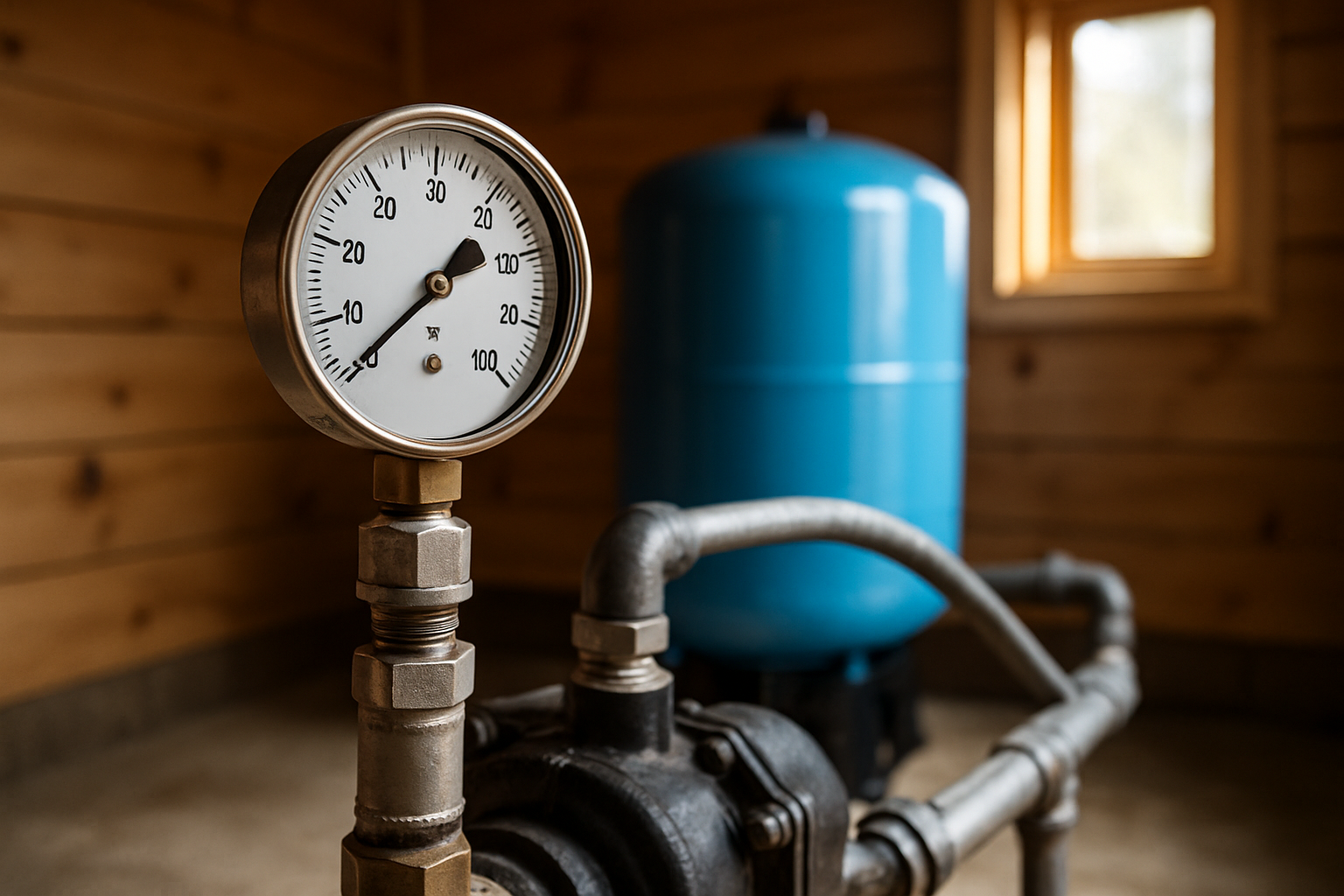
- Check filters and the pressure tank: An overdue sediment filter or a waterlogged pressure tank can release accumulated rust and grit into your water.
- Get a water test: The definitive step. A proper test measures iron, manganese, turbidity, hardness, and bacteria, and distinguishes ferric iron (already oxidized and visible) from ferrous iron (dissolved and clear at the tap). After flooding, testing for bacteria is especially important. That information points directly to the right treatment.
Treatment Options
The correct fix follows directly from the cause. Matching the solution to the actual problem is what turns a recurring nuisance into a permanent result.
- Sediment filtration: For clay, silt, sand, and weathered granite, a whole-house sediment filter — often staged with a spin-down pre-filter — captures particles before they reach your plumbing. This is frequently the first step for the creekside and fractured-rock wells around Harbison Canyon.
- Iron and manganese oxidizing filters: For dissolved iron and manganese, a greensand or air-injection (AIO) oxidizing filter converts the minerals into a filterable solid and removes them. This is the standard solution for the rusty, staining water common in these foothills.
- Chlorination or aeration: For heavier iron loads, iron bacteria, or odor — and after flooding when bacteria are a concern — injecting chlorine or aerating the water oxidizes contaminants ahead of filtration and helps control bacterial slime.
- Water softener: A softener handles hardness and removes modest amounts of dissolved iron while protecting plumbing and appliances. System selection should follow the full water chemistry the test reveals.
- Casing or pipe repair and replacement: When a corroding steel casing or galvanized line is shedding rust, downstream filtration only masks it. Repairing the casing or replacing failing pipe solves the problem at its source — and in a flood-prone canyon, a sound, well-sealed casing also helps keep surface water out.
For many Harbison Canyon homes, the best result combines systems — for example, an oxidizing iron filter followed by a softener — each sized to the specific water chemistry on the property.
Prevention & Maintenance
Keeping foothill well water clear comes down to steady, routine care. Test your water at least once a year for bacteria, nitrates, iron, manganese, and hardness, and again after any flooding event in the canyon. Replace sediment and cartridge filters on schedule rather than waiting for color or pressure loss to return. Have the pressure tank and pump inspected periodically, since failing equipment can stir sediment and strain the well. If iron bacteria are present, periodic shock chlorination keeps the slime in check. Make sure your wellhead is properly sealed and sits above potential flood levels, since Harbison Canyon Creek can rise quickly in heavy storms. And during peak summer demand, avoid drawing the well down unusually hard when you can, since aggressive drawdown pulls sediment into the system.
When to Call a Professional
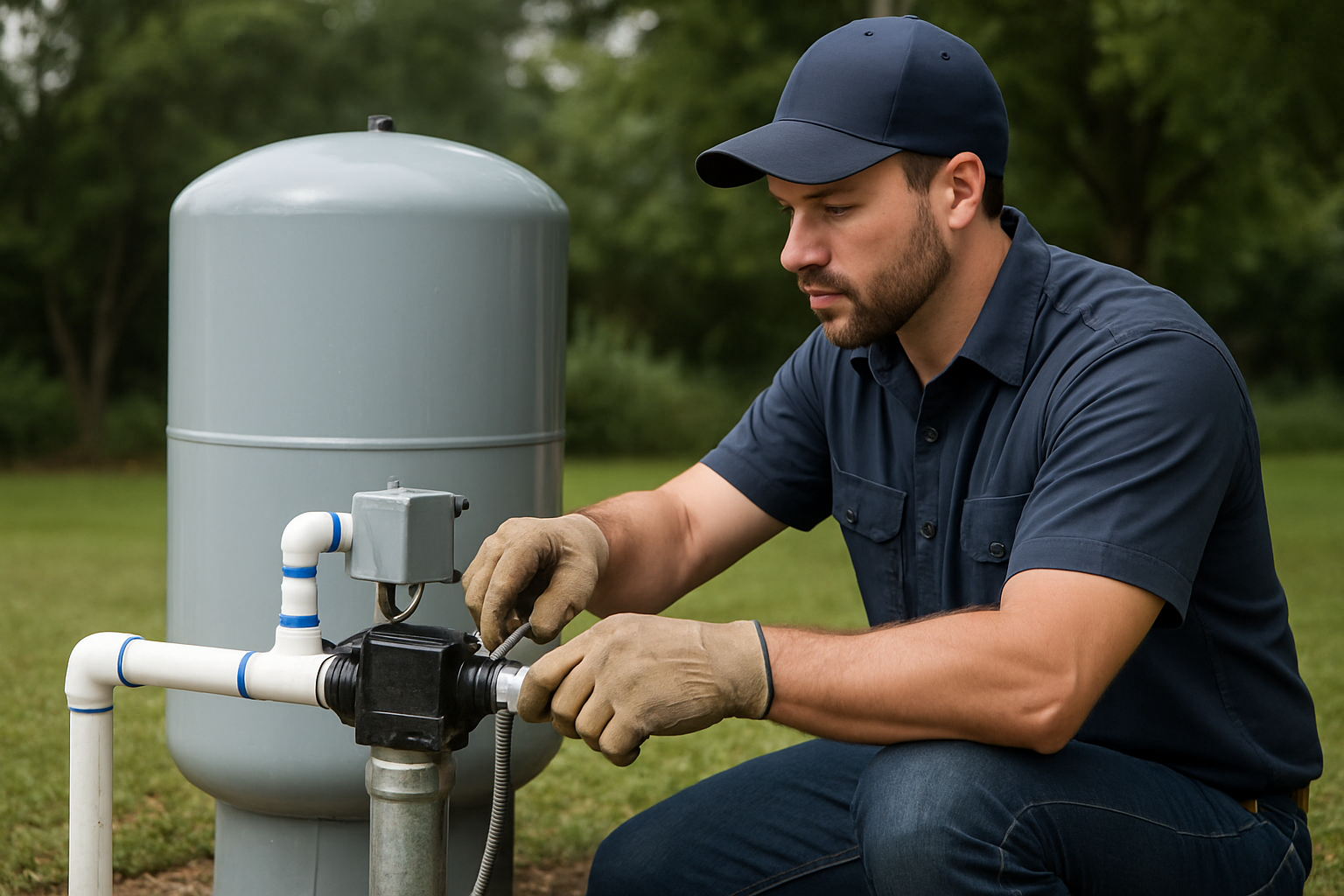
Some situations call for professional help without delay. Reach out to a pro if brown water appears suddenly with no recent well work, follows flooding or a heavy canyon storm, comes with a foul odor, or carries visible sand and grit. The same is true when filters clog repeatedly, when pressure drops alongside the discoloration, or when you simply want an accurate diagnosis before buying equipment. A licensed well contractor can run a downhole video inspection, test the water properly, evaluate the pump and pressure tank, check the wellhead seal, and recommend a solution scaled to your real conditions — which matters all the more in a canyon with a history of flooding.
What It Costs in Harbison Canyon
Pricing depends on the cause and the scale of your property, but these ranges reflect typical Harbison Canyon-area work:
- Diagnostic visit and water test: $125, credited toward any service you move forward with.
- Sediment filtration: $300 to $900, depending on system type and capacity.
- Iron and manganese filter: $1,500 to $3,500, depending on technology and flow requirements.
- Water softener: $1,500 to $3,500, sized to your hardness and demand.
- Pump replacement: $2,500 to $5,500, depending on well depth and pump specifications — relevant when worn equipment is stirring up sediment.
Final cost always depends on the specific problem, which is exactly why we begin with a proper diagnosis instead of selling equipment sight unseen.
Serving Harbison Canyon and Nearby Communities
Southern California Well Service is a licensed C-57 water well drilling contractor with more than 30 years of experience and a 4.9-star reputation. We serve Harbison Canyon and the surrounding eastern foothills — including Crest, Alpine, Dehesa, Granite Hills, and the El Cajon area — from our offices in Ramona (1077 Main St, Ramona, CA 92065) and Anza (57174 US Hwy 79, Anza, CA 92539). Our technicians understand San Diego County wells and the particular conditions of fractured-rock foothill groundwater, including iron, manganese, sediment, and post-flood concerns. We offer same-day emergency service for no-water and urgent water-quality problems, and we always lead with an honest, diagnosis-first recommendation. Call (760) 440-8520 or text (619) 259-0410 to schedule.
Frequently Asked Questions
Is brown well water in Harbison Canyon safe to drink?
Brown water from iron, manganese, or sediment is usually an aesthetic and nuisance problem rather than a health hazard, but it should never be assumed safe. After flooding along Harbison Canyon Creek, surface intrusion or iron bacteria can signal contamination, so a laboratory water test is the only reliable way to know what is in your well.
Why does my water turn brown after a storm in the canyon?
Harbison Canyon has a seasonal creek and a history of flooding, and heavy rain washes silt and clay toward shallow wells while stirring up sediment that has settled in the well. Wells in fractured rock and creekside alluvium are especially prone to this, and it usually clears within a few days unless surface water is actually entering the wellhead.
Why is my water rusty only on the first draw of the day?
Water that sits overnight in a corroding steel casing or old galvanized pipe picks up rust, which appears on the first draw. If running the tap clears it within a minute or two, aging casing or plumbing is the likely cause rather than the aquifer.
Will a water softener remove the brown color?
A softener removes hardness and small amounts of dissolved iron, but it is not built for heavy iron, manganese, or sediment. For the rusty water common in foothill wells, an oxidizing iron filter is usually the right tool, often paired with a softener for hardness.
How do I tell dissolved iron from sediment?
Fill a clear glass and let it stand. If particles settle to the bottom, you have sediment such as silt, sand, or weathered granite. If the water is clear at the tap but browns as it sits and meets air, you have dissolved ferrous iron oxidizing into ferric iron. Each calls for a different fix, which is why testing matters.
How quickly can you get to Harbison Canyon?
Harbison Canyon sits in the eastern foothills near Alpine and El Cajon, well within our service area from our Ramona and Anza offices. We offer same-day emergency service for urgent water problems and can usually schedule routine diagnostics within a few days. Call (760) 440-8520 to get on the calendar.
Brown water from your Harbison Canyon well does not have to be something you simply live with. With an accurate diagnosis and the right treatment, clear, clean water can be flowing again — and stay that way. Call Southern California Well Service today at (760) 440-8520 or text us at (619) 259-0410 to schedule your diagnostic visit and get a straight answer about your water.