

Out in the far southeastern corner of San Diego County, where the mountains give way to the desert and the Mexican border is just over the ridge, sits the small community of Jacumba Hot Springs. Folks who live here on a private well treasure the remoteness and the famous mineral waters, but that same geology has a downside that shows up at the kitchen sink: brown, rust-tinted, or mineral-heavy water. Discolored water is a recurring concern for well owners in Jacumba, and the reasons are written into the unusual landscape beneath your feet.
Jacumba Hot Springs is a high-desert community in the Mountain Empire region, sitting in a fault-influenced valley near neighbors like Boulevard, Campo, and Ocotillo just over the Imperial County line. The bedrock here is part of the Peninsular Ranges batholith, granitic and metasedimentary rock cut by faults that allow deep, heated groundwater to circulate, the very mechanism that feeds the area's namesake hot springs. Wells draw from fractured rock and coarse, well-drained desert soils. The combination of geothermal influence and mineral-rich granitic groundwater is exactly why so many Jacumba wells produce water with iron, manganese, elevated dissolved solids, and the occasional whiff of sulfur.
The reassuring news is that even out here, brown water almost always has a clear, fixable cause. Below is what is likely going on in your Jacumba well, how we narrow it down, and what it costs to set it right.
What Causes Brown Well Water in Jacumba
Desert wells in a geothermal zone have their own quirks. These are the causes we see most often around Jacumba Hot Springs.
Dissolved Iron and Manganese
This is the leading culprit across the region. Groundwater moving through fractured granitic and metasedimentary rock dissolves iron and manganese, especially where deep, fault-fed circulation keeps the water in long contact with mineral-rich rock. Underground and oxygen-starved, those minerals stay invisible. The moment the water meets air at your faucet, iron oxidizes into rust-colored particles that stain fixtures reddish-brown, while manganese leaves darker brown or black stains and a metallic taste.
Geothermal Minerals and High Dissolved Solids
Jacumba's geothermal setting is part of what makes its water distinctive. Wells here frequently draw water that is mineral-rich, sometimes warm, and occasionally carrying a sulfur odor. Elevated total dissolved solids can contribute to discoloration, scaling, and taste problems beyond what you would see in an ordinary valley well.
Sediment and Turbidity
The coarse, well-drained desert soils and decomposed granite around Jacumba shed fine sand, silt, and clay. These particles get pulled into a well through the fractures it taps, producing cloudy, gritty water. You may notice sand settling at the bottom of a glass or collecting in faucet aerators and screens.
Rusting Steel Casing or Old Galvanized Pipe
Many wells and homes in this long-established community were built with steel casing and galvanized plumbing. Decades of corrosion shed rust into the water, and because heat accelerates the reaction, this kind of discoloration is often worse on the hot-water side.
A Stirred-Up Well After Heavy Pumping or Rare Storms
Rain is infrequent in the desert, but when a strong storm does roll through, runoff can raise the water table and flush loose material through the fractured rock. Hard pumping during dry stretches has the same effect. Either can make brown water appear suddenly, then clear partway as the well settles.
Iron Bacteria
These naturally occurring, non-pathogenic bacteria feed on iron in the groundwater and leave a slimy, reddish-brown buildup that clogs screens and plumbing and can produce an oily sheen and a musty smell along with the color.
How to Diagnose the Problem
A few observations at home help narrow the cause before any money is spent on equipment.
- Hot side or cold side? Brown water only on the hot side usually points to the water heater rather than the well. If both hot and cold are discolored, the source is the well or the main plumbing.
- One fixture or the whole house? A single brown faucet usually means a corroded fixture or a clogged aerator. Color throughout the house indicates a well or whole-house problem.
- Did it follow a storm or heavy pumping? Discoloration after a rare desert downpour or a long pumping run points to stirred-up sediment or surface intrusion.
- Sudden or gradual? A slow change over months usually means corrosion or rising mineral levels, common in this geothermal setting. A sudden change can signal a failed screen, a casing breach, or contamination that warrants prompt attention.
- Run a clear-glass test. Let a clean glass stand. Particles sinking to the bottom mean sediment. Water clearing from the bottom up suggests ferric iron. A uniform tint that does not settle can indicate dissolved minerals.
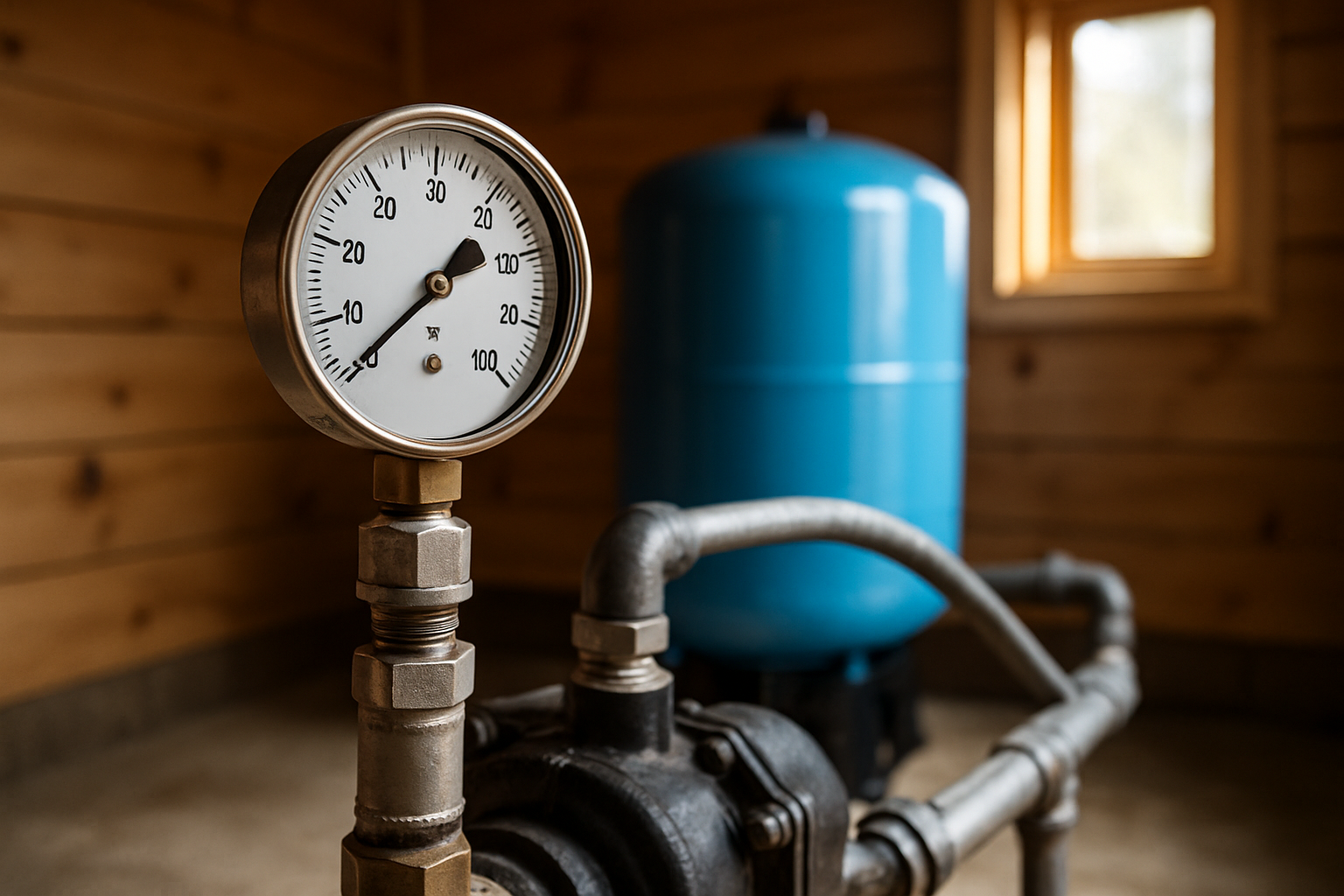
- Check filters and the pressure tank. A sediment cartridge that loads quickly, or a waterlogged pressure tank, can reveal or add to the problem.
- Get a water test. The definitive step is a test for iron, manganese, turbidity, and total dissolved solids, and to distinguish ferric (already oxidized) from ferrous (still dissolved) iron. In a mineral-rich area like Jacumba, that test is what determines which treatment will actually work.
Treatment Options
The right equipment depends on the diagnosis, which is why we test first and recommend hardware second.
Sediment Filtration
For desert sand, silt, and clay, a whole-house sediment filter, often a spin-down screen ahead of a cartridge or a backwashing media filter, traps particles before they reach your fixtures.
Iron and Manganese Oxidizing Filters
When dissolved iron and manganese cause the staining, an oxidizing filter is the workhorse. Manganese greensand and air-injection systems convert the dissolved minerals into solid particles and filter them out, backwashing themselves clean on a schedule. These handle the rust staining that mineral-rich Jacumba groundwater so often produces.
Chlorination or Aeration
For heavy iron, manganese, iron bacteria, or sulfur odor, which is not unusual in this geothermal area, a chlorination or aeration step ahead of filtration oxidizes the minerals and controls bacterial growth. Aeration is especially effective at driving off sulfur smell.
Water Softener and Dissolved-Solids Treatment
Jacumba water is frequently hard and high in dissolved solids. A softener removes hardness and small amounts of dissolved iron, and where dissolved solids are very high, a reverse-osmosis system at the kitchen tap can polish drinking and cooking water. These are usually paired with an iron filter rather than asked to do the whole job.
Casing or Pipe Repair and Replacement
If a camera inspection shows a corroded steel casing or the home still runs on galvanized pipe, no filter will permanently solve a problem being generated inside the plumbing itself. Repairing or replacing the failing component is the durable fix.
Prevention & Maintenance
A desert well rewards routine care, especially given the mineral load out here. We recommend an annual water test so rising iron, manganese, dissolved solids, or bacteria are caught before they become visible. Service and flush your water heater on schedule to clear settled sediment and scale. Replace sediment cartridges before they clog and bypass. Keep treatment equipment backwashing on its proper cycle, and have your pump and pressure tank checked periodically so the well is not being over-pumped, which stirs sediment. If your well is older with original steel casing, plan ahead for an eventual inspection so corrosion does not catch you by surprise in a place where a service call takes longer to arrange.
When to Call a Professional
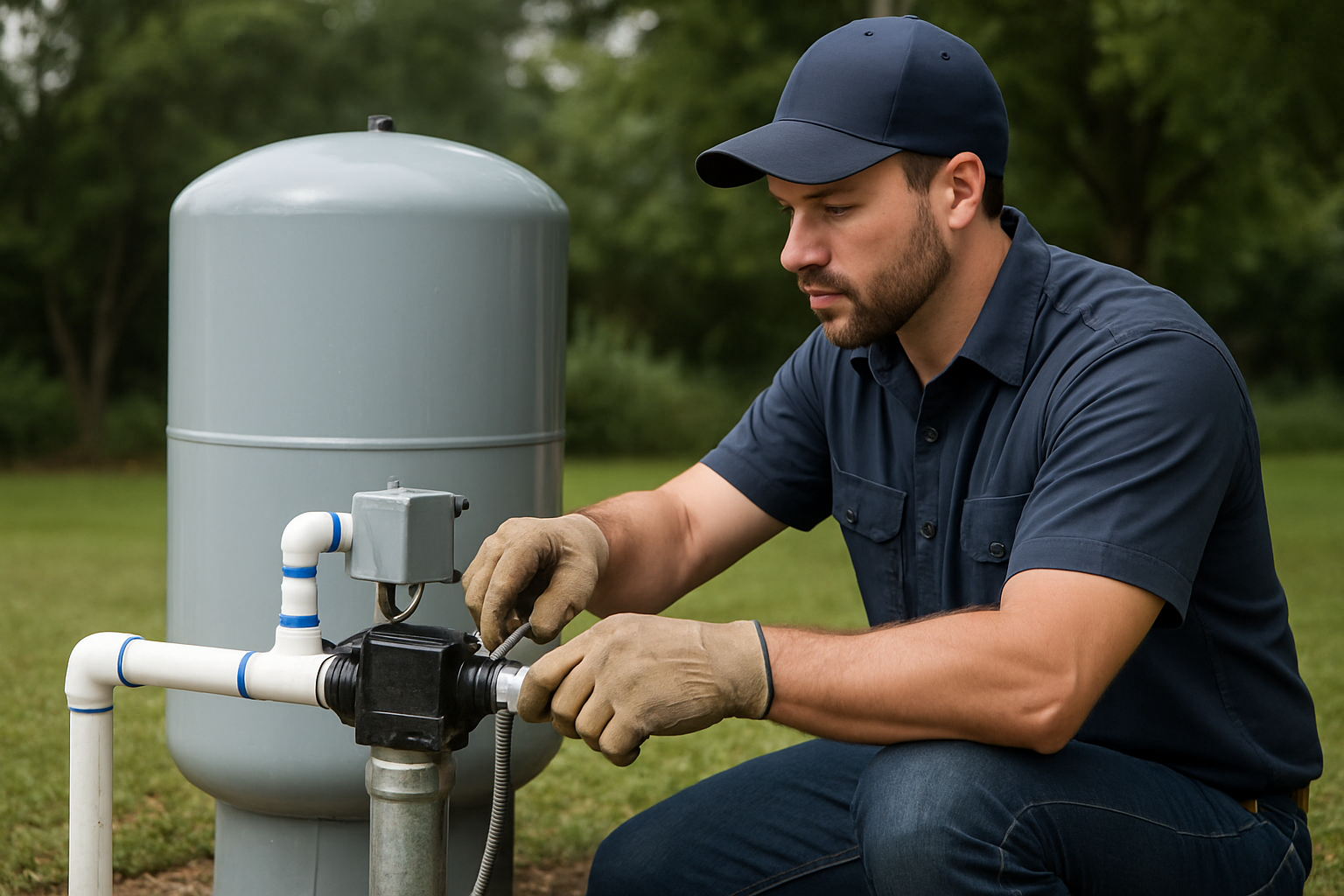
Some situations call for prompt professional attention rather than waiting. Reach out right away if brown water appears suddenly with no recent work on the well, if it follows a heavy storm or flooding, if there is a strong sulfur or sewage-like odor, if you see sand or grit, or if neighbors on nearby wells report the same. These can indicate a compromised casing, a failing screen, or surface-water intrusion that needs immediate diagnosis. Even for gradual discoloration, a professional water test and, where needed, a downhole camera inspection take the guesswork out, which is doubly valuable in a remote community where you do not want to buy the wrong equipment and wait for a return trip.
What It Costs in Jacumba
Final pricing depends on what is actually wrong, but these ranges help you plan for work in the Jacumba area.
- Water test and diagnostic: $125, credited toward your service if you proceed with the recommended work.
- Sediment filtration: $300 to $900, depending on flow rate and media type.
- Iron or manganese filter: $1,500 to $3,500, depending on system size and oxidation method.
- Water softener: $1,500 to $3,500, depending on capacity and configuration.
- Pump replacement: $2,500 to $5,500, depending on depth, horsepower, and wiring.
Because Jacumba's geothermal water frequently combines more than one issue, such as iron plus elevated dissolved solids or sulfur, the final price always depends on the specific problem found during diagnosis. You get a clear, itemized quote before any work begins.
Serving Jacumba and Nearby Communities
Southern California Well Service is a licensed C-57 water well drilling contractor with more than 30 years of experience and a 4.9-star rating from the well owners we serve. We operate two offices that let us reach the far corners of San Diego County and the desert beyond: our Ramona office at 1077 Main St, Ramona, CA 92065, and our Anza office at 57174 CA-371 (US Hwy 79), Anza, CA 92539. From there we serve Jacumba Hot Springs and the surrounding Mountain Empire communities including Boulevard, Campo, Live Oak Springs, Tecate, and the rural desert reaches of eastern San Diego County. We offer same-day emergency service when you are out of water or facing a sudden water-quality problem. Call us at (760) 440-8520 or text (760) 219-5877.
Frequently Asked Questions
Why is my Jacumba well water brown and high in minerals?
Jacumba Hot Springs sits in a fault-influenced, geothermally active desert valley where groundwater moves through fractured granitic and metasedimentary rock. That setting tends to leave water mineral-rich, with iron and manganese that oxidize to a brown stain when they reach air. A water test for iron, manganese and total dissolved solids confirms what is in yours.
Does the geothermal activity around Jacumba affect my well water?
It can. Jacumba's hot springs come from deep, fault-fed circulation, and wells in the area often draw mineral-rich water with elevated dissolved solids, sulfur odor, or warmth. These minerals are mostly aesthetic but can stain fixtures and need oxidizing filtration to remove. Testing tells us exactly what your well is producing.
Is brown desert well water safe to drink in Jacumba?
Iron and manganese are mostly aesthetic, affecting color, taste and staining. But high dissolved solids, sulfur, or possible contamination after a rare heavy rain can make water unpleasant or unsafe. In a remote area like Jacumba we strongly recommend testing discolored water before drinking it.
Why does my Jacumba well pump sand or grit?
Wells in the coarse, well-drained desert soils and fractured granite around Jacumba can draw fine sand and decomposed-granite particles, especially through a worn screen or when a pump runs hard. Persistent sand wears out pumps and usually points to a screen or well-construction issue that should be inspected.
How much does it cost to fix brown well water in Jacumba?
A diagnostic water test is $125 and is credited toward service if you proceed. Sediment filtration generally runs $300 to $900, an iron or manganese filter $1,500 to $3,500, a water softener $1,500 to $3,500, and a pump replacement $2,500 to $5,500. Because Jacumba is remote, the final price depends on the specific problem and access.
Will a water softener fix discolored desert well water?
A softener removes hardness and small amounts of dissolved iron, but Jacumba's mineral-rich, geothermally influenced water often needs an oxidizing iron or manganese filter, and sometimes aeration, to remove the brown color and odor. We match the equipment to your test results rather than guessing.
Brown water from your Jacumba well does not have to be a permanent part of desert life. With an accurate test and the right treatment, whether that is an iron filter, an aeration system, or a casing repair, nearly all of our customers are back to clear, clean water quickly. Call Southern California Well Service today at (760) 440-8520 or text us at (760) 219-5877 to schedule your water test and get a straightforward plan to fix it for good.