
Brown Water from Your Navajo Well?
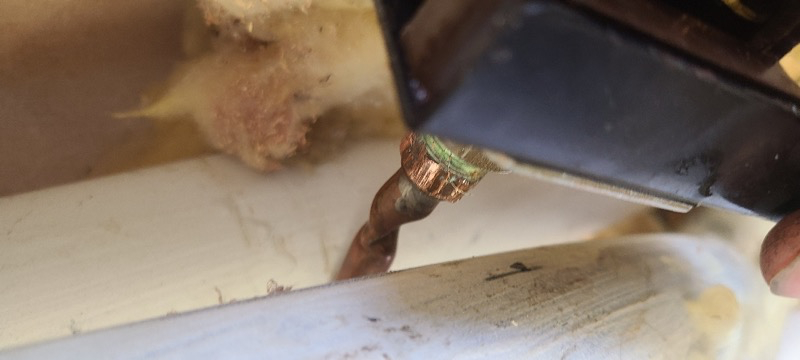
Is your Navajo well producing brown, muddy, or discolored water? This issue can range from a temporary disturbance to a sign of serious well problems. Let's identify the cause and fix it.
In This Guide
- Common Causes of Brown Well Water
- When Brown Water is an Emergency
- Solutions for Brown Well Water in Navajo
- Professional Diagnosis
- Related Articles
Common Causes of Brown Well Water
- Sediment Disturbance: Recent pump work, earthquakes, or construction
- Iron/Manganese: Dissolved minerals oxidizing when exposed to air
- Tannins: Organic matter from decaying vegetation
- Surface Water Intrusion: Contamination from runoff entering well
- Failing Well Screen: Sand and sediment entering well
- Clay/Silt: Fine particles from the aquifer
When Brown Water is an Emergency
Contact us immediately if brown water is accompanied by:
- Sudden change after no recent work on well
- Foul odor (possible contamination)
- Recent flooding or heavy rains
- Sand or grit in the water
- Neighbors reporting similar issues
Solutions for Brown Well Water in Navajo
- Water Testing: Identify what's causing the discoloration
- Well Cleaning: Remove accumulated sediment
- Sediment Filter: Whole-house filtration system
- Screen Repair: Fix damaged well screen letting in sediment
- Grout Seal: Prevent surface water intrusion
Professional Diagnosis
Brown water can have multiple causes, and the solution depends on accurate diagnosis. Our technicians use video inspection, water testing, and systematic evaluation to identify exactly what's causing your water quality issues.
Need Help With Your Well in Navajo?
Our expert technicians serve Navajo and all of San Diego County with professional well services.
Related Articles
Continue learning about well maintenance and troubleshooting

Signs Your Well Pump Is Failing
Catch pump problems early before you lose water completely.
Low Water Pressure From Well
Diagnose and fix pressure problems before they get worse.
Well Maintenance Guide
Keep your well running smoothly with regular maintenance.
Our Locations
1077 Main St, Ramona, CA 92065
57174 CA-371 (US Hwy 79), Anza, CA 92539
Brown or Discolored Water on a Navajo-Area Well? Here's What's Going On
Navajo is a built-up community in east San Diego — San Carlos, Del Cerro, Allied Gardens, and the neighborhoods around Lake Murray. The overwhelming majority of homes here are on municipal water, so a true private well inside the neighborhood is uncommon. Where wells still matter in this part of San Diego County is on the rural and back-country parcels just east and north, on legacy properties, and on irrigation or landscape wells that have served a site for decades. If you own or manage one of those wells and the water has turned brown, orange, or cloudy, this guide explains why it happens and what it takes to fix it. Southern California Well Service has worked San Diego County wells for more than 30 years, and brown water is one of the most common calls we get.
Local Geology and What It Means for Your Water
Wells in the back-country and rural fringes of eastern San Diego County typically draw from fractured crystalline bedrock and the decomposed granite that blankets much of the region, sometimes supplemented by shallow alluvium along creek and canyon bottoms. That setting drives the discoloration problems we see most:
- Iron and manganese leach out of the granitic and metamorphic rock and stay dissolved underground. Exposed to air, they oxidize into the rust and dark stains homeowners recognize.
- Fine sediment, sand, and weathered-rock grit can enter a well through a worn screen or a fracture, especially in fractured-rock wells where flow can be uneven.
- Lower, slower-recharging water tables on older rural wells mean the pump sometimes draws closer to the bottom, pulling up settled material.
What Actually Turns the Water Brown
1. Iron and Manganese Oxidation
The most frequent cause. Reddish-brown staining points to iron; brown-to-black staining points to manganese. The classic tell is water that pours clear and then darkens as it sits, because the dissolved minerals are reacting with oxygen.
2. Sediment, Silt, and Clay
Cloudy, muddy water that does not darken over time but instead drops particles to the bottom of a glass is particulate — sand, silt, or clay carried in from the formation.
3. Corroding Steel Casing or Galvanized Pipe
On legacy properties especially, decades-old steel casing and galvanized household plumbing rust from the inside out. If your discoloration is worst first thing in the morning or noticeably worse on the hot side, internal corrosion is a prime suspect.
4. A Recently Disturbed Well
A pump replacement, new pressure tank, or heavy pump cycling can stir up sediment that had settled at the bottom of the well. A sudden spike in irrigation demand on a landscape well does the same thing.
5. A Failing Well Screen
When the screen corrodes or fails, sand and grit flow straight into the system. You will often feel grit at the faucet and find it piling up in the toilet tank.
6. Surface-Water Intrusion
If the well cap, seal, or grout has degraded, rainfall runoff can get into the casing — carrying mud and potentially bacteria. Discoloration that shows up right after a storm deserves a cautious, test-first approach.
Diagnosing It Before You Call
- Let a clear glass settle. Particles on the bottom mean sediment; darkening from the surface down means oxidizing iron or manganese.
- Compare hot and cold. Brown only on the hot side usually means the water heater or hot piping, not the well.
- First draw vs. after running. Clears after a minute or two? The issue is in your plumbing or pressure tank. Stays brown? The source is the well.
- One fixture or the whole house? A single faucet is a local plumbing problem; whole-house discoloration is a supply or well problem.
- Read the stains. Rust-red equals iron; dark brown or black equals manganese; tea-colored or yellow can mean organic tannins.
- Inspect the toilet tank. Sand or rusty sludge in the bottom is a reliable indicator of a sediment or screen issue.
How We Fix Brown Well Water
- Sediment filtration for sand, silt, and clay — typically $300–$900.
- Oxidizing iron/manganese filtration that oxidizes the minerals and backwashes them out — typically $1,500–$3,500.
- Water softener where hardness accompanies the iron and is scaling fixtures and appliances — typically $1,500–$3,500.
- Well rehabilitation and screen repair when sand is entering through a damaged screen and the well needs re-development.
- Casing replacement for corroded steel casing shedding rust.
- Shock chlorination to disinfect after suspected surface-water or bacterial intrusion.
- Pump and pressure-system service when worn equipment or short-cycling is the root cause — pump work typically $2,500–$5,500.
Why Discoloration Is Worth Taking Seriously
It is tempting to write off brown water as a cosmetic annoyance, and sometimes that is all it is. But on the older legacy and rural wells around eastern San Diego County, persistent discoloration is frequently the first visible symptom of a mechanical problem that is quietly getting worse — a screen that is beginning to fail, casing that is corroding through, or a pump that is short-cycling and drawing sediment. Brown water also chews through everyday life: it stains laundry and porcelain, leaves residue in dishwashers and water heaters, clogs aerators and irrigation emitters, and shortens the life of every appliance the water touches. Catching the underlying cause early is almost always cheaper than waiting for the well or pump to fail outright.
For irrigation and landscape wells in particular — common on the larger parcels at the rural edge of the Navajo area — iron and sediment can plug drip lines and sprinkler heads and rust-stain hardscape, driveways, and stucco. What looks like a water-quality nuisance can become a maintenance and curb-appeal problem fast.
How Long Does the Fix Last?
A properly sized and maintained treatment system does not need constant attention. An oxidizing iron/manganese filter with regular backwashing and periodic media service can run for many years; a sediment filter mostly needs cartridge or screen changes on a predictable schedule; and a softener needs salt and occasional servicing. Where discoloration comes from a mechanical fault — a failing screen, corroded casing, or a worn pump — the repair addresses the root cause directly rather than just filtering the symptom downstream. We will always tell you honestly which path your specific well needs, and we do not upsell equipment a property does not require.
When You Should Call Us Right Away
Some brown-water situations are not worth waiting on. Reach out immediately if the discoloration appeared suddenly with no recent service, carries a foul or musty odor, contains visible sand or grit, followed heavy rain, or is affecting more than one well on the road. Those are signs of possible contamination, a failing screen, or casing failure. Our diagnostic visit is $125 and is credited toward whatever service you decide to move forward with.
Serving the Navajo Area and East San Diego County
Southern California Well Service is a licensed C-57 water well drilling contractor with 30-plus years of experience and a 4.9-star rating. We operate from offices in Ramona (1077 Main St, Ramona, CA 92065) and Anza (57174 CA-371 (US Hwy 79), Anza, CA 92539), and we serve the rural and back-country wells around the Navajo area — the eastern reaches of San Diego County near San Carlos, Del Cerro, Allied Gardens, and beyond. Same-day emergency service is available when you have no usable water. Call (760) 440-8520 or text (760) 219-5877.
Frequently Asked Questions
Most homes near Navajo are on city water — do private wells even apply here?
Inside the built-up neighborhoods, almost everyone is on municipal water. Private wells become relevant on the rural and back-country parcels just east and north, on older legacy properties, and on irrigation or landscape wells. If you have one of those, everything in this guide applies to you.
Is the brown water dangerous?
Iron and manganese discoloration is generally a nuisance, not a health emergency, though it stains laundry and fixtures. Brown water that appears suddenly after rain or smells foul can indicate bacterial contamination — do not drink it until it has been tested.
My irrigation well runs brown only when it first kicks on. Why?
That is usually settled sediment being stirred up at startup, or a small slug of oxidized iron sitting in the line. If it clears quickly it is mostly cosmetic, but persistent grit can point to a screen problem worth inspecting.
Can I just put a filter under the sink and be done with it?
An under-sink filter only protects one tap and clogs fast against well-level iron or sediment. Well discoloration is a whole-house problem and needs whole-house treatment sized to your actual water chemistry.
How do you figure out the exact cause?
We combine a water test with a physical inspection of the well, casing, and pressure system — and, when needed, downhole video. That tells us whether you are dealing with minerals, sediment, a screen failure, corrosion, or intrusion before any money is spent on equipment.
What does fixing it cost?
Sediment filtration is $300–$900, iron/manganese filtration is $1,500–$3,500, a softener is $1,500–$3,500, and pump work is $2,500–$5,500. We begin with a $125 diagnostic credited toward your service.