
Brown Water from Your Poway Well?
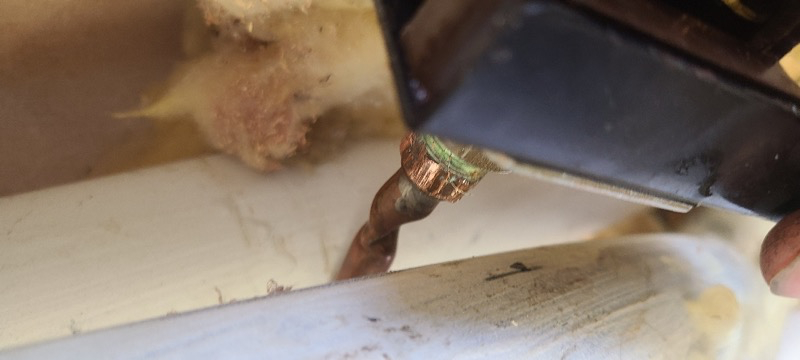
Is your Poway well producing brown, muddy, or discolored water? This issue can range from a temporary disturbance to a sign of serious well problems. Let's identify the cause and fix it.
📋 In This Guide
- Common Causes of Brown Well Water
- When Brown Water is an Emergency
- Solutions for Brown Well Water in Poway
- Professional Diagnosis
- Related Articles
Common Causes of Brown Well Water
- Sediment Disturbance: Recent pump work, earthquakes, or construction
- Iron/Manganese: Dissolved minerals oxidizing when exposed to air
- Tannins: Organic matter from decaying vegetation
- Surface Water Intrusion: Contamination from runoff entering well
- Failing Well Screen: Sand and sediment entering well
- Clay/Silt: Fine particles from the aquifer
When Brown Water is an Emergency
Contact us immediately if brown water is accompanied by:
- Sudden change after no recent work on well
- Foul odor (possible contamination)
- Recent flooding or heavy rains
- Sand or grit in the water
- Neighbors reporting similar issues
Solutions for Brown Well Water in Poway
- Water Testing: Identify what's causing the discoloration
- Well Cleaning: Remove accumulated sediment
- Sediment Filter: Whole-house filtration system
- Screen Repair: Fix damaged well screen letting in sediment
- Grout Seal: Prevent surface water intrusion
Professional Diagnosis
Brown water can have multiple causes, and the solution depends on accurate diagnosis. Our technicians use video inspection, water testing, and systematic evaluation to identify exactly what's causing your water quality issues.
Need Help With Your Well in Poway?
Our expert technicians serve Poway and all of San Diego County with professional well services.
Related Articles
Continue learning about well maintenance and troubleshooting
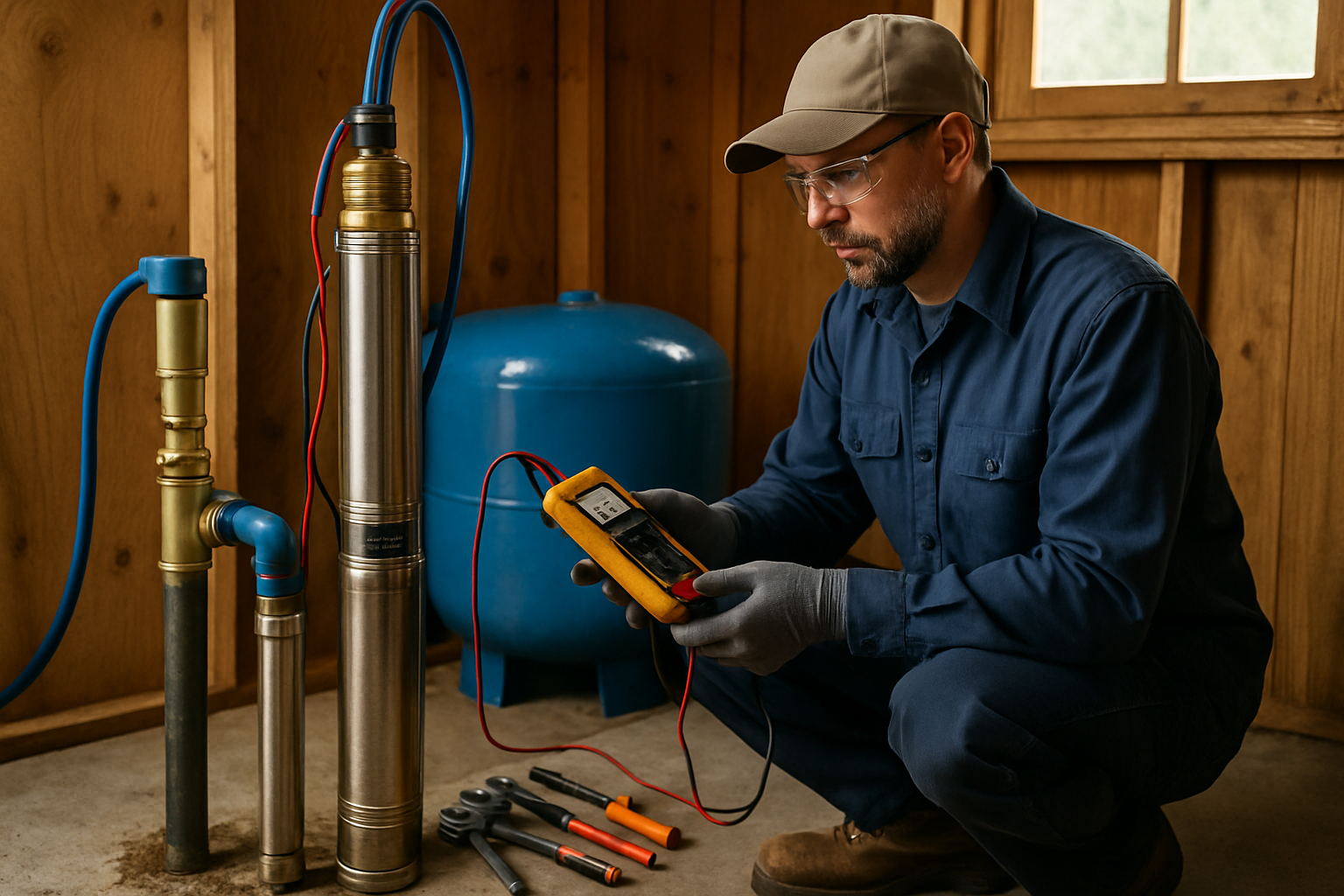
Signs Your Well Pump Is Failing
Catch pump problems early before you lose water completely.
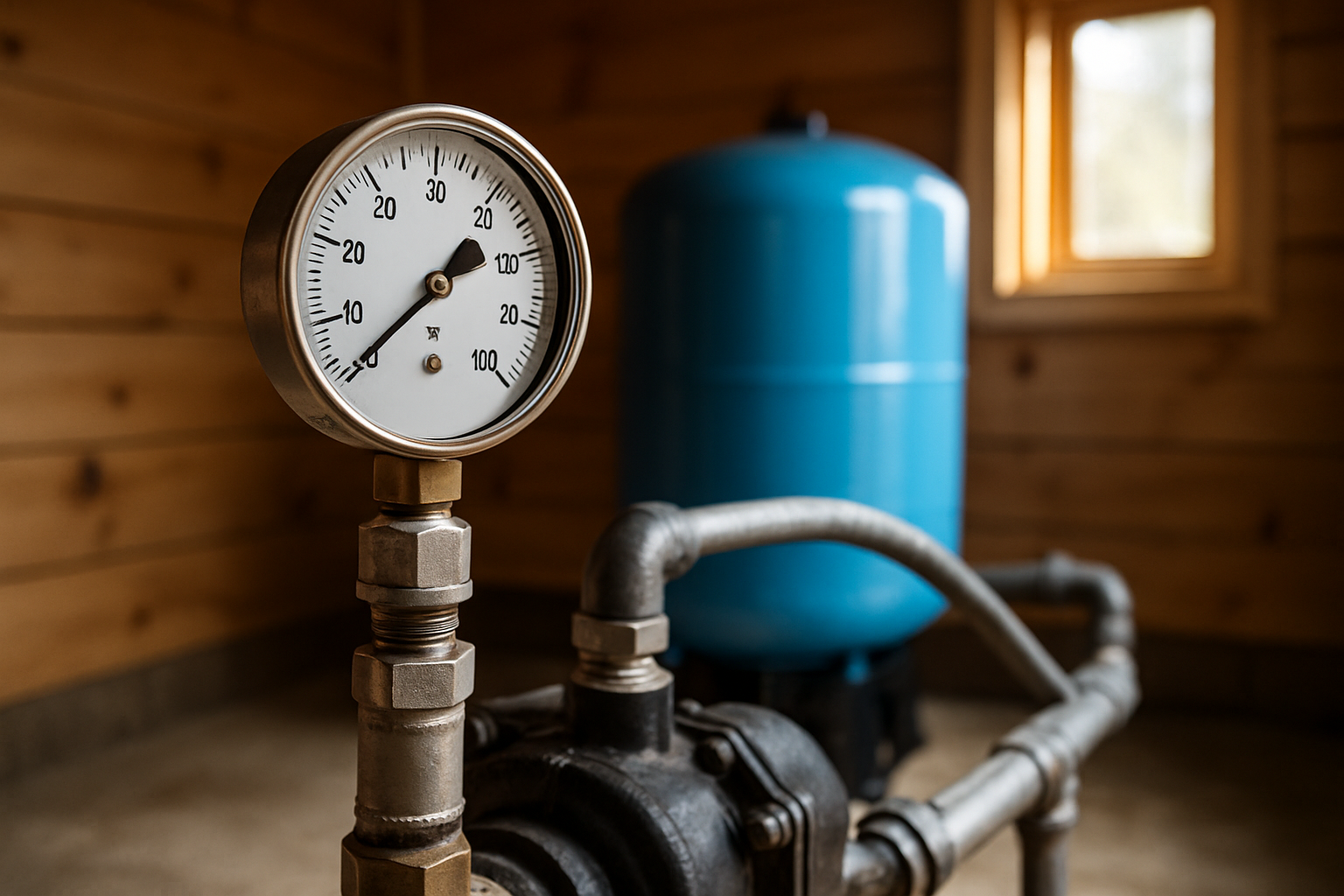
Low Water Pressure From Well
Diagnose and fix pressure problems before they get worse.
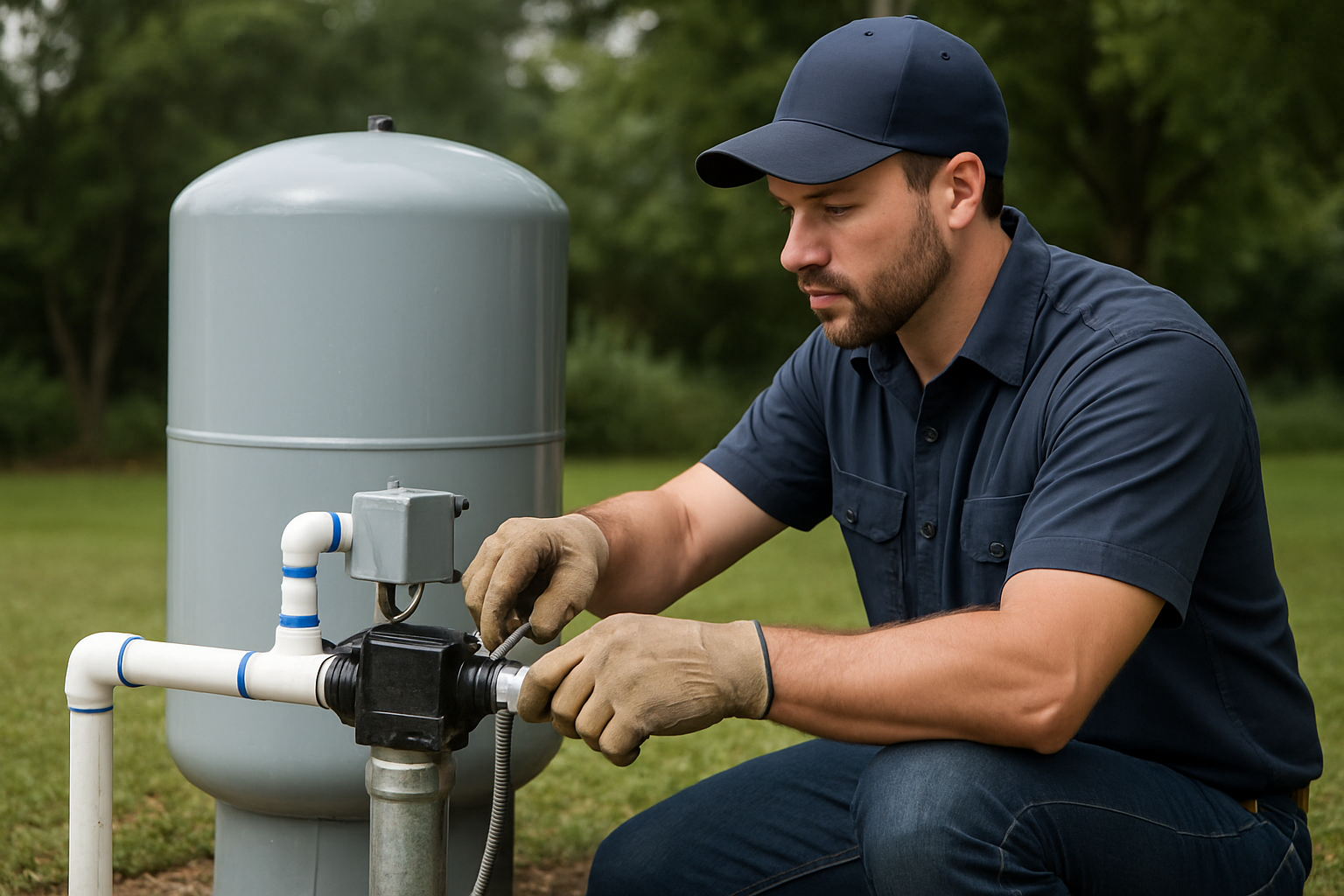
Well Maintenance Guide
Keep your well running smoothly with regular maintenance.
Our Locations
1077 Main St, Ramona, CA 92065
57174 US Highway 79, Anza, CA 92539
Brown Well Water in Poway: A Guide for "City in the Country" Well Owners
Poway proudly calls itself "The City in the Country," and nowhere is that truer than on its eastern and northern edges, where San Diego County's rolling hills climb from around 500 feet up past 1,500 feet toward the backcountry. The developed valley core is on municipal water, but out where the lots get bigger and the roads get winding, toward Old Coach, the eastern ridgelines, and the fringes bordering Ramona and Escondido, many homes run on private wells drilled deep into hard granitic bedrock. Those wells reliably deliver good water for years, so it is unsettling when the tap suddenly runs brown, rusty, or cloudy. This guide explains why that happens here and how to get back to clear water.
The good news: discolored water almost always comes from one of a few well-understood causes. Pinning down the right one is the difference between an easy fix and money wasted on the wrong equipment.
Why Poway Well Water Turns Brown
Poway's wells sit in decomposed granite and fractured tonalite and granodiorite bedrock, often 200 to 500 feet deep or more, and that geology drives the causes we see most often.
- Dissolved iron and manganese. Water moving slowly through fractured granite around Poway dissolves iron and manganese from the rock. It emerges clear, then oxidizes on contact with air, iron leaving reddish-brown flecks, manganese a darker, almost inky brown. If your water is clear from the tap but browns as it stands, dissolved metals are the usual answer, and they are common in the deeper hard-rock wells here.
- Rust from steel casing or galvanized plumbing. Many older Poway-area wells were completed with steel casing, and older homes may still have galvanized supply lines. As those corrode internally they release orange-brown rust. A telltale sign is brown water on the hot side only, or a rusty first draw in the morning, which points at the water heater or house plumbing rather than the well.
- Silt and sediment. After a pump swap, heavy irrigation on a large rural parcel, or the drop in the water table that follows a dry Southern California stretch, a pump can begin pulling fine rock flour and grit off the bottom of a deep borehole. This water is cloudy-brown and settles into sediment when left to stand.
- Tannins. Shallower wells near oak canyons and decaying vegetation can take on a clear, tea-colored tint from tannins that stays uniform and does not settle.
- Iron bacteria. Common in intermittently used wells on second homes and larger properties, these nuisance bacteria leave a slimy, rust-colored film in tanks and a filmy sheen on standing water.
Real Poway Scenarios
An owner on a multi-acre parcel toward Old Coach calls after the water browned during a hot, high-demand week, then cleared, a classic sign the deep pump briefly drew sediment as the water level dropped. A homeowner in an older east-Poway house reports rust only on the hot water and in the dishwasher, which we can usually trace to a corroding water heater rather than the aquifer. And buyers of a rural Poway property whose well sat idle between owners often see rusty, metallic-smelling water for the first few weeks, typically settled iron combined with iron bacteria that responds well to shock chlorination.
What to Check First
A few minutes of observation will point you toward the cause and make any service call faster.
- Settle a glass. Fill a clear glass from the cold tap and wait an hour. Grit at the bottom means sediment. A uniform color that does not settle suggests tannins or already-oxidized metals.
- Hot versus cold. Brown limited to the hot tap usually means your water heater or interior plumbing, a much smaller job than well work.
- First draw versus continuous. If it clears after running a minute, the color is from your pipes or pressure tank. If it stays brown continuously, the source is the well or aquifer.
- Test the water. A kit for iron, manganese, and pH, or the lab-grade testing we bring to every diagnostic, confirms whether metals are behind the discoloration.
How We Fix It
The solution follows the diagnosis, so we test before recommending any equipment.
- Oxidizing iron filters (greensand or air-injection). For the moderate-to-high iron and manganese typical of Poway's hard-rock wells, an oxidizing filter converts the dissolved metal to a solid, captures it, and backwashes it away, the go-to fix for the brown-when-it-sits problem.
- Sediment and spin-down filtration. For grit and silt, a spin-down pre-filter plus whole-house sediment cartridges keep particles out of your fixtures. Sediment filtration typically runs $300 to $900 installed.
- Water softener. Where iron is low and hardness dominates, a softener, sometimes with iron-capable resin, tackles both. Softeners run about $1,500 to $3,500.
- Chlorination and shock treatment. Iron bacteria are handled by shocking the well and lines with chlorine, occasionally followed by a light continuous feed.
- Casing and pump service. When rust comes from deteriorating steel casing, a downhole camera confirms it and we discuss options. A well inspection runs $150 to $400, a submersible pump replacement $2,500 to $5,500, and our diagnostic visit is $125, credited toward the repair.
There is one more Poway-specific wrinkle worth mentioning. Because so many wells here are drilled deep into fractured granite to intercept enough water-bearing fractures, the pumps sit far down the borehole and work hard, particularly on the large rural lots that need water for landscaping, livestock, or orchards. That heavy duty cycle means Poway wells are somewhat more prone to sediment episodes and to the mineral buildup that stresses pumps over time. Staying ahead of it with periodic testing and the right filtration not only keeps your water clear, it protects an expensive submersible pump and pressure system from premature wear, which is a meaningful consideration when replacements run into the thousands.
When to Call a Professional in Poway
Call promptly if brown water appears suddenly with no recent well work, if there is a foul or sulfur smell, if you feel sand or grit, if it follows heavy rain, or if neighboring well owners see the same thing. Those signs can indicate surface-water intrusion or a failing well screen, issues worth diagnosing quickly rather than filtering around, especially on the deep bedrock wells common in Poway where a compromised casing is a serious matter.
Serving Poway and the Inland Communities
Southern California Well Service has maintained San Diego County wells for more than 30 years. From our Ramona and Anza offices we are close to Poway and serve the surrounding communities of Ramona, Escondido, Rancho Bernardo, Rancho Peñasquitos, and the rural properties across the county's inland hills. As a licensed C-57 water well contractor with a 4.9-star reputation and same-day emergency response, we understand the deep, hard-rock wells that define Poway's backcountry and diagnose the whole system, from aquifer to faucet, so the fix is the right one.
Frequently Asked Questions
Is brown well water safe to drink in Poway?
Iron and manganese are mainly a staining and taste nuisance, but brown water can also indicate bacteria or, in some cases, surface-water intrusion. Until it is tested, avoid drinking it. We can test on-site during a diagnostic visit and tell you exactly what is going on.
My Poway well is very deep. Why is it producing sediment?
Even deep bedrock wells can draw fine rock flour and grit, especially after a pump change or when the water level drops during dry spells and the pump reaches siltier zones. Sediment filtration usually resolves it, and we can confirm the pump is set correctly.
Why is only my hot water rusty?
Rust confined to the hot side almost always means a corroding water heater or old galvanized plumbing, not your well. Flushing or replacing the heater typically clears it, a far smaller project than well repair.
The water browns after it sits in a glass. What does that mean?
That is the classic signature of dissolved iron or manganese oxidizing on contact with air, very common in Poway's granitic aquifers. An oxidizing iron filter is the typical fix once testing confirms the levels.
How much does it cost to fix brown well water?
It depends on the cause: sediment filtration $300 to $900, a softener $1,500 to $3,500, iron treatment more, and casing or pump work higher still. Our $125 diagnostic identifies the real cause and is credited toward the repair.
How soon can you reach Poway?
We offer same-day emergency service for urgent situations and can usually schedule routine diagnostics within a day or two. Call (760) 440-8520 or text (619) 259-0410.
Get Your Water Running Clear Again
You do not have to settle for rusty stains and cloudy water on your Poway property. Let a licensed, local team find out precisely why your well is running brown and fix it right the first time. Call Southern California Well Service at (760) 440-8520, text (619) 259-0410, or request a free estimate today.