
Cloudy or Milky Well Water in City Heights
Noticing cloudy, milky, or white-colored water from your City Heights well? This issue has several possible causes—some harmless, others requiring attention.
📋 In This Guide
Causes of Cloudy Well Water
- Air Bubbles: Tiny air bubbles (harmless, clears in minutes)
- Hard Water: High mineral content causing cloudiness
- Methane Gas: Natural gas dissolved in groundwater
- Bacteria: Bacterial growth in well or pipes
- TSS (Total Suspended Solids): Fine particles in water
The Glass Test
Fill a clear glass with water and let it sit:
- Clears from bottom up: Likely air bubbles (harmless)
- Clears from top down: Sediment settling (filtration needed)
- Stays cloudy: Dissolved minerals or bacteria (testing needed)
Treatment Options
- Aeration System: Removes dissolved gases
- Sediment Filtration: Removes suspended particles
- Water Softener: Reduces mineral hardness
- UV Disinfection: Kills bacteria without chemicals
- Shock Chlorination: One-time bacteria treatment
When to Be Concerned
While air bubbles are harmless, persistent cloudiness warrants investigation. Bacterial contamination or methane require professional attention for your family's safety.
Need Help With Your Well in City Heights?
Our expert technicians serve City Heights and all of San Diego County with professional well services.
Related Articles
Continue learning about well maintenance and troubleshooting

Signs Your Well Pump Is Failing
Catch pump problems early before you lose water completely.
Low Water Pressure From Well
Diagnose and fix pressure problems before they get worse.
Well Maintenance Guide
Keep your well running smoothly with regular maintenance.
Our Locations
1077 Main St, Ramona, CA 92065
57174 CA-371 (US Hwy 79), Anza, CA 92539
Understanding Cloudy Well Water in City Heights
City Heights is a densely populated urban neighborhood in central San Diego, but a small number of older properties on the edges still rely on private wells drilled decades ago. If you're one of those property owners, cloudy water can be especially concerning given the neighborhood's urban setting and older infrastructure.
What Makes Cloudy Water Different in City Heights?
Unlike rural areas where wells draw from pristine aquifers, City Heights sits in a developed area where groundwater quality has been affected by urban runoff, aging infrastructure, and decades of development. Wells drilled here typically reach 150-300 feet and tap into the San Diego Formation — a mix of sandstone and shale that can produce excellent water, but also presents unique challenges.
The most common cause of cloudy water in City Heights wells is dissolved air entering the system due to pump cavitation or pressure tank issues. However, the urban setting means you should also consider contamination from aging sewer lines, storm drains, or industrial sites that operated in the area decades ago.
The Glass Test: Your First Step
Before calling a technician, run this simple test:
- Fill a clear glass with cold water from your well
- Set it on a dark surface
- Wait 5-10 minutes
- Observe what happens
If it clears from the bottom up: This is almost always entrained air — tiny bubbles that give water a milky appearance. It's harmless and usually indicates your pump is drawing air from a dropping water level, a cracked drop pipe, or a failing pressure tank bladder.
If it clears from the top down: You're seeing sediment settling out. This could be fine sand, silt, or mineral particles. In City Heights, sediment often comes from aging well screens that have corroded, allowing sand infiltration from the formation.
If it stays cloudy after 10+ minutes: You likely have bacterial growth, chemical contamination, or colloidal particles (extremely fine suspended solids that don't settle). This requires professional testing.
Common Causes in City Heights Wells
1. Air Entrainment (Most Common)
When a submersible pump draws air into the system, it creates millions of microscopic bubbles that give water a white or milky appearance. In City Heights, this typically happens when:
- Water table drops during summer: San Diego's seasonal water table fluctuations mean your pump may sit closer to the water surface during dry months, especially after years of drought.
- Pump intake is too shallow: Many older wells in City Heights were drilled when the water table was higher. As groundwater levels dropped over decades, pumps that were once submerged now sit too close to the water surface.
- Drop pipe has a crack or loose fitting: Older galvanized drop pipes corrode from the inside out. A small crack above the water line lets air get sucked in.
- Pressure tank bladder has failed: The rubber bladder inside your pressure tank separates air from water. When it fails, water becomes over-aerated.
Air entrainment is harmless to drink (it's just dissolved oxygen), but it indicates a system problem that can shorten pump life and waste electricity.
2. Hard Water Minerals
San Diego County has notoriously hard water. City Heights wells typically produce water with 200-400 mg/L total dissolved solids (TDS), mostly calcium and magnesium carbonates. When this mineral-rich water is under pressure in your pipes, it stays clear. The moment it exits your faucet and hits atmospheric pressure, dissolved minerals can precipitate out, creating a cloudy or chalky appearance.
This is especially noticeable in hot water, which holds fewer dissolved minerals. If your cold water is clear but hot water is cloudy, you're almost certainly seeing calcium carbonate precipitation — the same stuff that forms scale in your water heater.
Hard water cloudiness is harmless but indicates you could benefit from a water softener to protect your appliances and plumbing from scale buildup.
3. Methane Gas
Some San Diego County wells — especially those drilled into deeper formations — can produce water with dissolved methane gas. When you open a faucet and reduce pressure, the methane comes out of solution as tiny bubbles, similar to opening a carbonated beverage.
Methane-caused cloudiness clears quickly (1-2 minutes) and the water may have a slight earthy or musty smell. While the methane itself isn't harmful to drink, it's a flammable gas that can accumulate in enclosed spaces. If you suspect methane, DO NOT dismiss it — call a professional immediately for testing and mitigation.
4. Iron Bacteria
City Heights wells that tap into iron-rich zones can develop iron bacteria — naturally occurring organisms that feed on dissolved iron in groundwater. These bacteria produce a slimy biofilm that can cause:
- Cloudy or turbid water (especially after the pump runs)
- Rusty or reddish-brown slime in toilet tanks
- Oily sheen on water surface
- Musty, earthy, or swampy odor
Iron bacteria aren't harmful to humans, but they foul well screens, pumps, and pressure tanks. Treatment requires shock chlorination of the entire well system — not just adding chlorine tablets, but pulling the pump and properly disinfecting the well, pump, and all piping.
5. Colloidal Particles (Fine Clay or Silt)
Some older wells in City Heights have corroded well screens or were drilled in areas with high clay content. When the screen fails, extremely fine clay particles (colloids) can enter your water. These particles are so small they remain suspended indefinitely — your water never clears in a glass, and you can see a slight haze even after hours of settling.
Colloids require special filtration (typically a multimedia filter or ultrafiltration system). Standard sediment filters are too coarse to capture particles this small.
When to Call a Professional
Contact a licensed well contractor immediately if you experience:
- Sudden onset of cloudiness that doesn't match any prior pattern
- Cloudiness plus odor (sulfur, sewage, chemical, fuel)
- Cloudiness plus illness — nausea, diarrhea, skin rashes
- Cloudiness that gets worse over time
- Bubbles plus pump cycling rapidly (indicates major system problem)
Do NOT wait if you suspect contamination. In an urban area like City Heights, nearby contamination sources (old gas stations, dry cleaners, industrial sites) can affect groundwater. The California State Water Resources Control Board maintains a GeoTracker database showing contaminated sites — City Heights has several.
Treatment Options for Cloudy Water
The right solution depends entirely on the cause:
For Air Entrainment:
- Lower the pump: If your water table has dropped, we can lower the pump deeper into the well (if depth allows) to keep it fully submerged
- Replace the drop pipe: Cracked or corroded galvanized pipes should be replaced with modern HDPE or stainless steel
- Replace the pressure tank: A failed bladder requires tank replacement — they typically last 10-15 years
- Install a check valve: A one-way valve near the pump prevents water from draining back into the well, maintaining prime
For Hard Water Minerals:
- Water softener: An ion-exchange softener removes calcium and magnesium, preventing cloudiness and protecting appliances from scale
- Whole-house sediment filter: A 5-micron filter before the softener protects the resin bed from fouling
- pH adjustment: Raising pH slightly can keep minerals in solution longer (consult a water treatment specialist)
For Iron Bacteria:
- Shock chlorination: Full-well disinfection using sodium hypochlorite or calcium hypochlorite
- Chemical feed pump: Continuous low-level chlorination for wells with recurring problems
- UV disinfection: Kills bacteria as water enters the home (doesn't treat the well itself)
- Iron filtration system: Removes dissolved iron before bacteria can colonize your system
For Sediment/Colloids:
- Well screen rehabilitation: Jetting or brushing to clean the screen; replacement if corroded
- Multimedia filter: Removes fine particles down to 5-10 microns
- Ultrafiltration: For colloidal particles, a 0.01-micron UF system provides near-absolute removal
Costs and What to Expect
Diagnostic service call and water testing: $150-400 depending on tests required
Simple fixes (pressure tank replacement, check valve): $500-1,200
Drop pipe replacement: $1,200-3,500 depending on well depth
Pump replacement or relocation: $2,500-6,000 (City Heights wells typically 200-300 feet deep)
Water softener system: $1,200-3,000 installed
Shock chlorination: $400-1,200 (well must be out of service 12-24 hours)
Advanced filtration (iron filter, UV, multimedia): $1,800-5,000 depending on system complexity
DIY Testing You Can Do
Before spending money on a service call, try these free diagnostics:
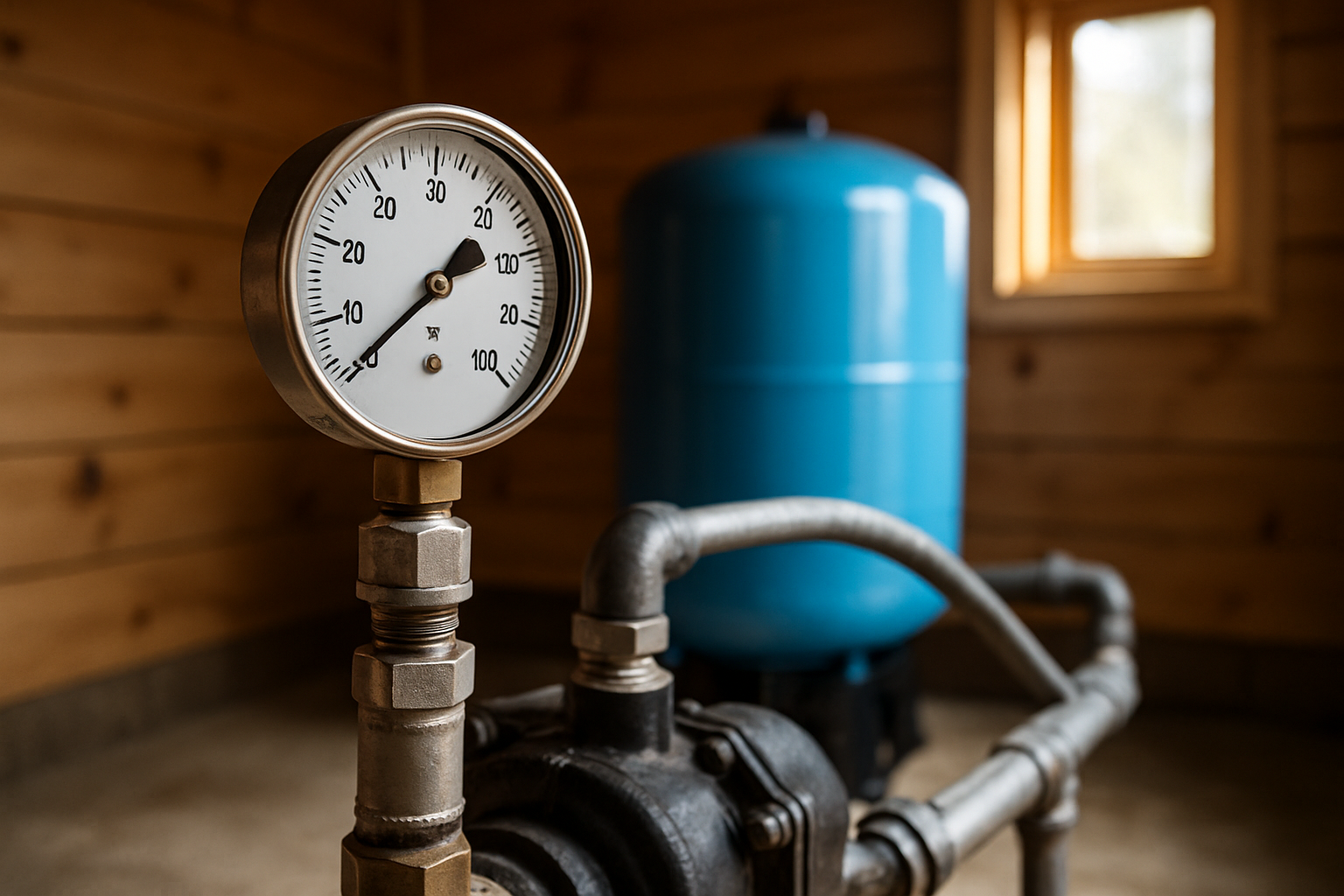
- Check your pressure gauge: Should read 40-60 PSI when pump is off. If it's cycling rapidly (every 1-2 minutes), you likely have a pressure tank or check valve problem.
- Listen to your pump: If you can hear it running (submersibles are usually silent), the pump may be cavitating (running dry).
- Smell the water: Sulfur (rotten eggs) = sulfur bacteria. Musty/earthy = iron bacteria or algae. Chemical/fuel = contamination.
- Test hot vs. cold: If only hot water is cloudy, it's minerals precipitating from heat — not a well problem.
- Check after non-use: If water is cloudiest first thing in the morning or after vacation, bacteria or sediment are settling in your pipes overnight.
City Heights-Specific Considerations
Unlike rural areas, City Heights property owners face unique challenges:
- Access limitations: Many wells are in tight side yards or driveways with limited space for equipment
- Proximity to neighbors: Well work can be noisy — communicate with neighbors and schedule accordingly
- Municipal water available: Some properties have the option to connect to city water; it's worth comparing long-term costs
- Older infrastructure: Many City Heights wells were drilled 40-60+ years ago; components have limited remaining life
- Contamination risk: Urban setting means higher risk of groundwater contamination from nearby sources
Should You Abandon Your Well?
Since City Heights has municipal water service, some property owners consider abandoning their well and connecting to the city system. Here's the math:
City water costs (San Diego): ~$6-10 per 100 cubic feet (748 gallons), plus monthly service charge (~$30). A typical household using 8,000 gallons/month pays $90-140/month.
Well costs: Electricity (~$15-30/month), occasional repairs ($200-500/year average), plus eventual pump replacement ($3,000-5,000 every 10-15 years). Annualized, that's roughly $40-80/month.
Connection fee to city water: Can range from $5,000-25,000+ depending on distance to the main, street cuts, permits, and plumbing changes required.
If your well system needs major repairs (pump, tank, treatment system), it may be worth comparing that cost against a city water connection. If repairs are under $3,000 and your well produces good water, keeping it usually makes financial sense.
However, if your well is contaminated, consistently low-yielding, or requires constant maintenance, the security and simplicity of city water may outweigh the monthly cost difference.
Why Choose Southern California Well Service
We've served City Heights and all of San Diego County for years. Unlike general plumbers or out-of-area contractors, we understand:
- Local geology: San Diego Formation characteristics, water table trends, seasonal variations
- Urban well challenges: Limited access, noise concerns, contamination risks specific to developed areas
- Permitting: San Diego County well permits, inspection requirements, abandonment procedures
- Fair pricing: We give you the real story — if city water makes more sense, we'll tell you
- Full-service capability: From diagnostics to repair to treatment to abandonment, we handle it all in-house
Get Your Water Tested
If you have persistent cloudiness, strange odors, or any health concerns, test your water. We recommend:
- Basic bacteria test: Total coliform and E. coli ($50-80 at most labs)
- Mineral panel: Hardness, iron, manganese, TDS ($80-150)
- VOC screen: If you suspect contamination from gas stations, dry cleaners, etc. ($150-300)
We can arrange testing or you can contact a certified lab directly:
- Babcock Labs (Riverside) — (951) 686-7210
- County of San Diego Public Health Lab — (619) 692-8499 (bacteria only)
- Eurofins Eaton Analytical (Chula Vista) — full-service commercial lab
Do NOT use the cheap hardware store test kits for bacteria — they produce false positives and false negatives. Use a certified lab for reliable results.