
Cloudy or Milky Well Water in Kensington
Noticing cloudy, milky, or white-colored water from your Kensington well? This issue has several possible causes—some harmless, others requiring attention. Understanding the unique geology of San Diego's mid-city neighborhoods helps identify the right solution.
📋 In This Guide
Kensington's Groundwater Context
Kensington sits in the San Diego River watershed, roughly 3-4 miles northeast of downtown San Diego. The neighborhood's hilly terrain and urban setting create unique well water challenges compared to rural San Diego County properties.
Local Geology & Well Characteristics
Most Kensington wells tap into the Santiago Formation—sandstone, siltstone, and shale layers from the Eocene epoch. These sedimentary formations produce water through fracture flow rather than porous media like valley alluvium.
- Typical well depth: 150-300 feet
- Static water level: 40-80 feet below surface
- Yield: 5-15 gallons per minute (modest but adequate for single-family homes)
- Water quality: Generally moderate hardness (10-15 grains), low iron, occasional sulfate
The urban environment adds complexity. Older wells (pre-1970s) may lack proper sanitary seals, and aging infrastructure can introduce contaminants. Additionally, Kensington's proximity to storm drainage, old septic systems, and landscaping runoff means surface water intrusion is a concern when cloudiness appears after storms.
Causes of Cloudy Well Water
Cloudy water from Kensington wells typically stems from one of these five sources:
1. Entrained Air (Most Common, Harmless)
When a submersible pump cycles on, it can introduce tiny air bubbles into the water stream. This causes a temporary milky-white appearance that clears within 30-60 seconds as the bubbles rise to the surface.
Indicators: Cloudiness clears quickly in a glass, no taste/odor, happens every time water first runs, pump cycling normally.
2. Suspended Sediment (Sand, Silt, or Clay)
Kensington's Santiago Formation naturally contains fine-grained sediments. Pump wear, screen damage, or aggressive pumping can stir up particles that cloud the water.
Indicators: Cloudiness settles to the bottom of a glass over 5-10 minutes, gritty texture, sometimes brownish tinge, worsens after heavy use.
3. Dissolved Minerals (Hard Water)
Calcium carbonate and magnesium can precipitate out of solution when water temperatures or pH shift. The result is a persistent white cloudiness that doesn't settle.
Indicators: Water stays cloudy indefinitely, white chalky deposits on fixtures, soap doesn't lather well, occurs after water sits (like in hot water heater).
4. Methane or Hydrogen Sulfide Gas
Organic matter decomposing in low-oxygen aquifer zones can produce gases. When water reaches the surface and depressurizes, these gases come out of solution, creating cloudiness or effervescence.
Indicators: Cloudy water with fizzing bubbles (like soda), rotten egg smell (H2S), sometimes flammable gas at faucet aerator (methane), worsens in stagnant water.
5. Bacterial Growth (Iron or Sulfur Bacteria)
Bacteria that metabolize iron or sulfur can create slimy, cloudy water. Iron bacteria produce rusty slime; sulfur bacteria create grayish cloudiness with a musty odor.
Indicators: Persistent cloudiness, slimy texture, musty or swampy odor, gelatinous strands in toilet tanks, discoloration (rust/gray).
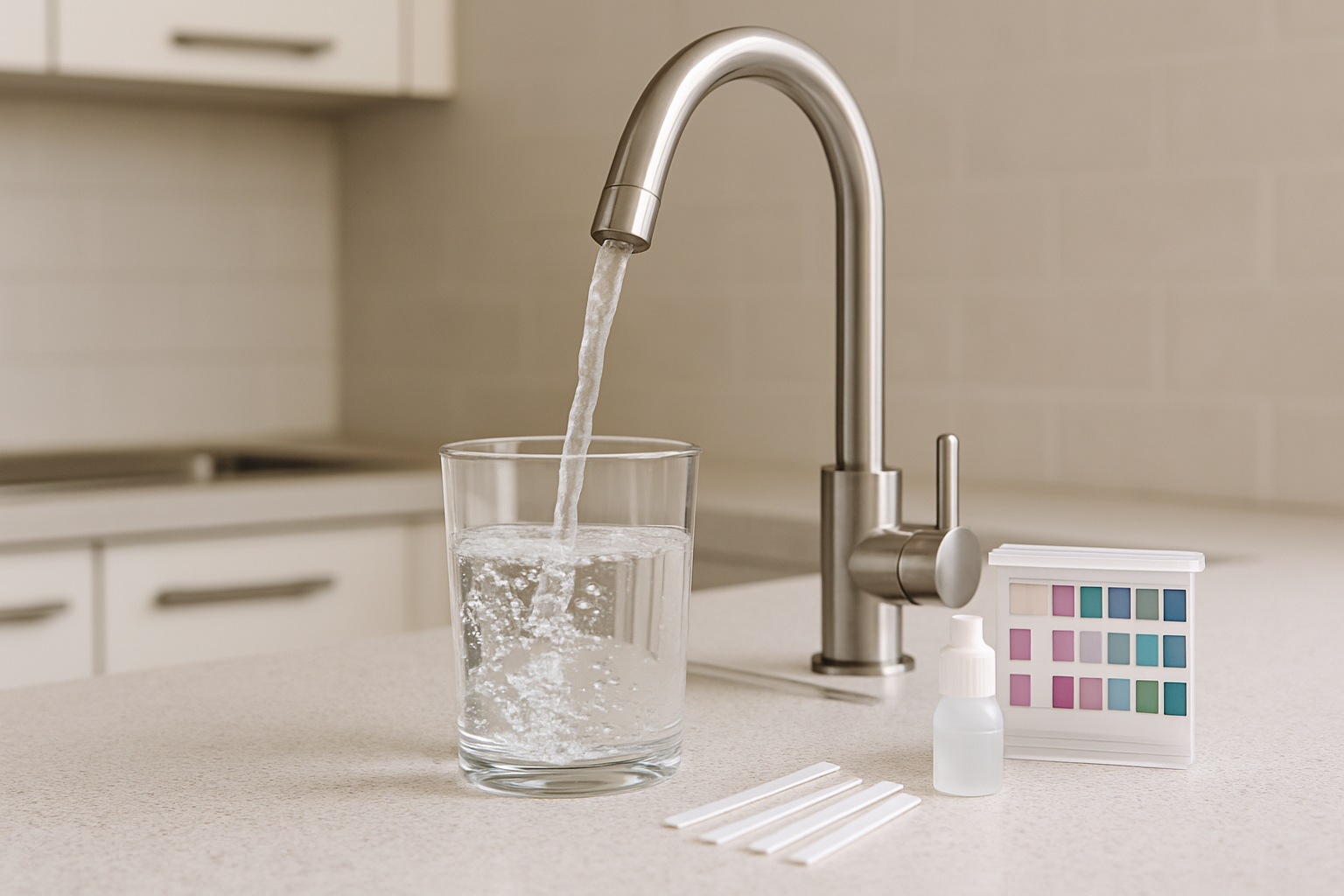
The Glass Test: First-Line Diagnosis
Before calling a technician, perform this simple test to narrow down the cause:
- Fill a clear glass with cold water from a tap closest to your pressure tank.
- Set it on a counter and observe for 5 minutes.
- Note the pattern:
- Clears from bottom up: Air bubbles rising—harmless pump aeration.
- Clears from top down: Sediment settling—filtration needed, possible pump/screen issue.
- Stays uniformly cloudy: Dissolved minerals or bacteria—water testing required.
- Fizzes or bubbles continuously: Dissolved gas (methane/H2S)—professional evaluation needed.
Also test hot water separately. If only hot water is cloudy, the issue is in your water heater (anode rod corrosion, sediment buildup, or bacterial growth in the tank).
Detailed Diagnosis Guide
Step 1: Rule Out Harmless Air
If cloudiness clears in under a minute and has no odor, it's almost certainly entrained air. This is normal and requires no action unless you find it aesthetically bothersome.
Step 2: Check for Sediment
If cloudiness settles, inspect your faucet aerators and showerheads. Remove and rinse them—if you find grit or sand, your well pump is drawing in sediment. This can indicate:
- Damaged well screen allowing aquifer sand into the well
- Pump set too deep near the bottom of the well where sediment accumulates
- Pump cavitation from running at low water levels
- Improper pump sizing pulling water faster than the aquifer can deliver cleanly
Schedule a well camera inspection to assess screen condition and sediment buildup. Often a pump depth adjustment or screen rehabilitation solves the problem.
Step 3: Test for Bacteria
If cloudiness persists and you detect odor or sliminess, bacterial contamination is likely. Kensington's urban setting increases risk:
- Old sanitary seals allow surface water intrusion
- Landscaping chemicals or pet waste can infiltrate shallow zones
- Storm runoff overwhelms older drainage systems and seeps into fractured bedrock
Order a coliform bacteria test from a certified lab. If positive, shock chlorination is the first step, followed by retesting. Recurring contamination means the well needs sealing, casing repair, or a sanitary cap retrofit.
Step 4: Test for Minerals and Gases
If the glass test shows persistent cloudiness with no sediment, order a comprehensive water test covering:
- Total dissolved solids (TDS)
- Hardness (calcium, magnesium)
- Iron and manganese
- Sulfate and chloride
- pH
- Dissolved gases (methane, hydrogen sulfide)
Most Kensington wells have moderate hardness but can spike after drought periods when water tables drop and mineral concentration increases.
Treatment Options
For Sediment: Filtration Systems
Install a whole-house sediment filter at the pressure tank outlet. For Kensington wells, we typically recommend:
- 5-micron spin-down filter for coarse grit (sand, silt)
- 1-micron cartridge filter for fine sediment
- Dual-stage setup with backwash capability to reduce maintenance
Cost: $800-$1,500 installed, including filter housings, cartridges, and bypass valves.
If sediment is severe, the root cause (damaged screen or pump depth) must be addressed first, or filters will clog constantly.
For Hard Water Minerals: Water Softeners
A salt-based ion exchange softener removes calcium and magnesium, eliminating mineral cloudiness and preventing scale buildup.
- Sizing: 32,000-48,000 grain capacity for typical Kensington household
- Salt usage: 40-80 lbs per month depending on water hardness and usage
- Regeneration: Automatic overnight cycles
Cost: $1,200-$2,500 installed, including brine tank, control valve, and drain line.
Alternative: For those avoiding salt discharge, a template-assisted crystallization (TAC) system prevents scale without removing minerals. Costs $800-$1,800 but requires no salt or backwash.
For Bacteria: Disinfection Systems
Bacterial cloudiness requires ongoing disinfection, not just one-time shock chlorination. Options:
UV Disinfection (Most Common)
A UV sterilizer uses ultraviolet light to kill 99.99% of bacteria, viruses, and protozoa without chemicals. Best for Kensington wells with good clarity (sediment must be filtered first).
- Flow rate: 10-12 GPM for typical home
- Maintenance: Replace UV lamp annually ($80-$120), clean quartz sleeve quarterly
- Cost: $800-$1,400 installed
Chlorine Injection (For Severe Contamination)
A chemical feed pump injects sodium hypochlorite (liquid bleach) upstream of a contact tank, then a carbon filter removes residual chlorine. Effective but requires more maintenance.
- Cost: $1,800-$3,200 installed
- Maintenance: Refill chlorine tank monthly, replace carbon filter quarterly
For Dissolved Gases: Aeration or Oxidation
Methane and hydrogen sulfide must be vented before water enters your home.
Aeration System
An air injection or venturi aerator strips gases from water, then vents them outdoors. Requires a vent pipe to roof.
- Cost: $1,200-$2,000 installed
- Maintenance: Check vent annually for obstructions
Oxidation Filtration (For H2S Only)
A catalytic carbon or manganese greensand filter oxidizes hydrogen sulfide into elemental sulfur, which is then filtered out.
- Cost: $1,500-$2,800 installed
- Maintenance: Backwash weekly, regenerate monthly with potassium permanganate
Combination Systems
Many Kensington wells benefit from a multi-stage approach:
- Sediment pre-filter (protects downstream equipment)
- Aeration or oxidation (removes gases)
- UV disinfection (kills bacteria)
- Carbon filter (removes taste/odor, residual chlorine if using injection)
Total cost: $3,000-$6,000 installed depending on system complexity.
When to Be Concerned
While air bubbles are harmless, certain scenarios demand immediate professional attention:
- Sudden onset cloudiness after years of clear water—may indicate aquifer contamination, surface water intrusion, or pump failure
- Flammable gas at faucets—methane buildup is a fire hazard and must be vented immediately
- Rotten egg odor with cloudiness—hydrogen sulfide is corrosive to plumbing and toxic at high concentrations
- Cloudiness after heavy rain—suggests surface water infiltration through damaged well seal
- Increasing sediment over time—indicates progressive well screen collapse or pump damage
Don't ignore these red flags. Kensington's urban environment means contamination sources are closer than in rural areas, and delayed response can escalate from a water quality nuisance to a health hazard.
Prevention & Maintenance
Annual Well Inspection
Schedule a professional inspection every 1-2 years, including:
- Sanitary seal check—ensure no surface water can enter
- Pump performance test—verify flow rate, pressure, and amperage
- Water quality snapshot—bacteria, pH, TDS
- Pressure tank inspection—check bladder integrity and air charge
Keep Surface Water Away
In Kensington's hilly terrain, stormwater runoff can overwhelm older well seals. Maintain proper grading around your wellhead, extend downspouts away from the well, and avoid ponding water near the well casing.
Monitor Pump Cycling
If your pump starts short-cycling (running every 1-2 minutes), the pressure tank bladder may be waterlogged. This can stir up sediment and introduce air. Replace the tank or recharge the air bladder promptly.
Flush Sediment Periodically
Every 6-12 months, run an outdoor hose bib for 10-15 minutes to flush accumulated sediment from the pressure tank and plumbing. This prevents buildup and keeps water clear.
Frequently Asked Questions
Is cloudy well water safe to drink?
If cloudiness is from air bubbles or minerals, it's safe but may taste off. If bacterial or chemical contamination is present, it's not safe. When in doubt, test your water and use bottled water until results confirm safety.
Why does my water clear up after running for a few seconds?
This indicates entrained air from the pump. The initial burst of water contains bubbles that were compressed in the pressure tank. Once steady flow begins, bubbles dissipate. This is harmless.
Can a water softener fix cloudy water?
Only if cloudiness is from hard water minerals. Softeners don't remove sediment, bacteria, or gases. If the glass test shows sediment or odor, a softener alone won't help.
How much does it cost to fix cloudy well water in Kensington?
Depends on the cause:
- Air bubbles: $0 (no fix needed)
- Sediment filter: $800-$1,500
- Water softener: $1,200-$2,500
- UV disinfection: $800-$1,400
- Full treatment system: $3,000-$6,000
- Well repair (screen/pump): $2,500-$8,000
Will a whole-house filter slow down my water pressure?
A properly sized filter won't noticeably reduce pressure. Undersized or clogged filters will. We size filters for 10-12 GPM flow to ensure normal household pressure even when multiple fixtures run.
Do I need a permit to install water treatment in Kensington?
Generally no for point-of-use systems. Whole-house systems with backwash discharge may require a plumbing permit depending on discharge method. Well repairs or modifications require San Diego County DEH permits.
Can I shock chlorinate my well myself?
Yes, but follow EPA guidelines carefully. Use 1-2 gallons of household bleach (5-6% sodium hypochlorite) per 100 feet of water column, circulate through all plumbing, let sit 12-24 hours, then flush until chlorine odor is gone. Retest water after 1-2 weeks.
Why does cloudiness come and go?
Intermittent cloudiness often correlates with pump cycling patterns, water table fluctuations, or recent heavy use. If cloudiness appears only after the well sits idle overnight, it's likely dissolved gas coming out of solution. If it happens during heavy use, it's sediment disturbance.
Should I replace my well pump if water is cloudy?
Not necessarily. Cloudiness doesn't automatically mean pump failure. First diagnose the cause via water testing and visual inspection. Many cloudy water issues resolve with filtration or treatment, not pump replacement.
What brands do you recommend for water treatment in Kensington?
We install and service:
- Filters: Pentek, Culligan, Rusco (spin-down)
- Softeners: Fleck, Clack, Pentair
- UV systems: Viqua (formerly Sterilight), Atlantic Ultraviolet
- Aeration: National Aeration, Champion Aeration
We avoid proprietary systems that lock you into one service provider. Our equipment uses standard parts available at any plumbing supply.
Need Help With Cloudy Well Water in Kensington?
Our licensed C-57 technicians diagnose and treat cloudy well water throughout San Diego County. We offer honest assessments, fair pricing, and long-term solutions—not band-aids.
Related Articles
Continue learning about well water quality and treatment

Our Locations
1077 Main St, Ramona, CA 92065
57174 US Highway 79, Anza, CA 92539