
Cloudy or Milky Well Water in Oceanside
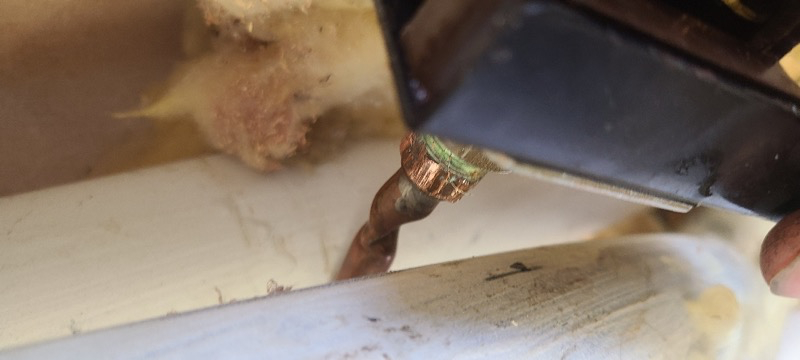
Noticing cloudy, milky, or white-colored water from your Oceanside well? This issue has several possible causes—some harmless, others requiring attention.
📋 In This Guide
Causes of Cloudy Well Water
- Air Bubbles: Tiny air bubbles (harmless, clears in minutes)
- Hard Water: High mineral content causing cloudiness
- Methane Gas: Natural gas dissolved in groundwater
- Bacteria: Bacterial growth in well or pipes
- TSS (Total Suspended Solids): Fine particles in water
The Glass Test
Fill a clear glass with water and let it sit:
- Clears from bottom up: Likely air bubbles (harmless)
- Clears from top down: Sediment settling (filtration needed)
- Stays cloudy: Dissolved minerals or bacteria (testing needed)
Treatment Options
- Aeration System: Removes dissolved gases
- Sediment Filtration: Removes suspended particles
- Water Softener: Reduces mineral hardness
- UV Disinfection: Kills bacteria without chemicals
- Shock Chlorination: One-time bacteria treatment
When to Be Concerned
While air bubbles are harmless, persistent cloudiness warrants investigation. Bacterial contamination or methane require professional attention for your family's safety.
Need Help With Your Well in Oceanside?
Our expert technicians serve Oceanside and all of San Diego County with professional well services.
Related Articles
Continue learning about well maintenance and troubleshooting
Signs Your Well Pump Is Failing
Catch pump problems early before you lose water completely.
Low Water Pressure From Well
Diagnose and fix pressure problems before they get worse.
Well Maintenance Guide
Keep your well running smoothly with regular maintenance.
Our Locations
1077 Main St, Ramona, CA 92065
57174 CA-371 (US Hwy 79), Anza, CA 92539
Understanding Cloudiness: Oceanside Geology and Well Water
Oceanside sits in a unique coastal zone where the San Diego Formation (coastal sedimentary layers) transitions to the Santiago Peak Volcanics farther inland. Most Oceanside wells are drilled 200-500 feet deep into fractured sedimentary bedrock or decomposed granite. This geology creates distinct water quality patterns that affect cloudiness.
Coastal vs. Inland Wells
Wells closer to the coast (within 2-3 miles) often encounter:
- Higher dissolved mineral content from marine sediment layers
- Occasional salt intrusion during drought when groundwater levels drop
- Calcium carbonate (chalk-like) deposits that create persistent cloudiness
- Methane gas pockets in deeper sedimentary layers
Inland Oceanside wells (east of I-5) tap into fractured volcanic and granitic formations with:
- Iron and manganese from decomposed granite — creates rusty or brown-tinted cloudiness
- Silica particles that don't settle quickly — stays milky for hours
- Seasonal sediment influx after winter rains when aquifers recharge
- Bacterial growth in warmer months, especially if well is shallow (<250 feet)
Diagnosing Your Cloudy Water: Step-by-Step Testing
Before calling a contractor, you can narrow down the cause with these home tests:
1. The Glass Test (5 minutes)
Fill a clear glass with tap water and observe for 3-5 minutes:
- Clears from bottom up: Air bubbles (harmless, caused by dissolved gases or pressure changes in the well pump)
- Clears from top down: Sediment settling (sand, silt, or minerals — filtration needed)
- Stays uniformly cloudy: Dissolved minerals (hardness), bacteria, or methane gas
- Clears then goes cloudy again: Temperature-dependent minerals (calcium carbonate) precipitating as water warms
2. Hot vs. Cold Water Test
Run hot water separately. If only hot water is cloudy, the issue is likely your water heater (magnesium anode rod creating milky appearance) or heat-activated mineral precipitation. If both hot and cold are cloudy, it's a well/plumbing issue.
3. Smell Test
- No odor: Likely air, sediment, or minerals
- Rotten egg smell: Hydrogen sulfide gas from sulfur bacteria or deep aquifer geology
- Earthy/musty smell: Iron bacteria or algae in well casing
- Chlorine smell: Residual from recent shock chlorination treatment
4. System Check
Ask these questions:
- Did cloudiness start suddenly or gradually?
- Recent pump repairs, heavy rain, or earthquake (even small tremors can stir sediment)?
- Worse at certain times of day (high demand periods can pull deeper, mineral-rich water)?
- Affects all faucets or just one area of the house (plumbing vs. well issue)?
5. Lab Testing (When Needed)
If cloudiness persists or you suspect bacteria, get a lab test covering:
- Total Coliform & E. coli ($50-75) — bacterial contamination indicator
- Turbidity ($25) — measures suspended particles, reported in NTU (Nephelometric Turbidity Units)
- Hardness ($30) — calcium and magnesium levels (grains per gallon)
- Iron & Manganese ($40) — common in Oceanside inland wells
- TDS (Total Dissolved Solids) ($30) — measures all dissolved minerals
Where to test: Midwest Laboratories (Oceanside location), Babcock Laboratories (Riverside), or mail-in kits from SimpleLab or National Testing Labs.
Treatment Solutions: Costs, Brands, and Installation
Once you know the cause, here are proven treatment options for Oceanside well owners:
1. Air Release Valve ($75-150 installed)
Use case: Harmless air bubbles that clear in minutes.
A simple valve mounted on the pressure tank discharge pipe automatically vents trapped air. Prevents milky water appearance without removing any contaminants.
Brands: Amtrol Air-Trol (most common), Watts, Taco
DIY? Yes, if you're comfortable with basic plumbing. Requires shutting off pump and draining pressure tank.
2. Sediment Filter System ($300-800 installed)
Use case: Visible particles, sand, rust, or silt in water.
Whole-house sediment filter removes particles down to 5-20 microns (human hair is ~75 microns). Install before pressure tank to protect pump and plumbing fixtures.
Brands:
- Pentek/Pentair Big Blue — 20" filter housing, $250-400, cartridges $15-30 each, replace every 3-6 months
- Rusco Spin-Down — reusable screen filter, $200-350, no cartridges (backwash monthly)
- Lakos Separator — centrifugal sand separator for severe sediment, $800-1200
Operating cost: $30-60/year (cartridge replacements)
3. Water Softener ($1,200-2,500 installed)
Use case: Hard water cloudiness (calcium/magnesium causing scale buildup), TDS >300 ppm, water spots on fixtures.
Ion-exchange system removes hardness minerals. Requires salt refills (~$10/month) and regenerates nightly or on-demand.
Brands for well water:
- Fleck 5600SXT — digital control, $900-1400, proven reliability
- Culligan HE — high-efficiency model, $1500-2200, uses less salt
- Water Right Impression Plus — no electricity needed, $1200-1800
Sizing: 32,000 grain for 2-3 people, 48,000 grain for 4-6 people, 64,000 grain for large families or high hardness (>15 grains)
Operating cost: $120-180/year (salt) + $50-80/year (water for regeneration)
4. Aeration System ($1,500-3,500 installed)
Use case: Dissolved methane gas, hydrogen sulfide smell, iron/manganese oxidation before filtration.
Aeration injects air into water, causing gases to vent and iron to oxidize (so it can be filtered out). Requires larger pressure tank and air compressor or venturi injector.
Brands:
- Hellenbrand Iron Curtain — $2000-3000, good for moderate iron (<10 ppm)
- Pro-OX (Orenco) — $1500-2500, uses air injection + backwashing greensand filter
- Custom aeration tank — $1200-2000 (DIY-friendly), pairs with sediment filter downstream
Operating cost: $50-100/year (electricity for compressor, occasional media replacement)
5. UV Disinfection System ($600-1,200 installed)
Use case: Bacterial contamination (coliform), cloudy water with earthy smell, well near septic system or livestock.
UV light kills bacteria without chemicals. Requires pre-filtration (sediment + carbon) to work effectively. Bulb replacement annually.
Brands:
- Viqua (Trojan) D4 — 12 GPM, $500-700, most popular residential model
- Atlantic Ultraviolet S12Q — 15 GPM, $600-900, commercial-grade
- Pentair UV-Sterilight — 8-12 GPM, $400-600, compact design
Operating cost: $60-80/year (bulb replacement) + $30/year (pre-filter cartridges)
6. Shock Chlorination ($300-600 service call)
Use case: One-time bacterial bloom, post-construction disinfection, well smells musty, cloudy water tests positive for coliform.
High-concentration chlorine solution circulated through well casing, then flushed after 12-24 hours. Temporary fix — pair with UV system if bacteria recurs.
Procedure: Professional service includes:
- Calculating chlorine dosage based on well depth and diameter
- Circulating chlorine through entire well and plumbing system
- Allowing contact time (overnight)
- Flushing until chlorine odor is gone (can take 2-4 hours of pumping)
- Retesting water 7-10 days later
Cost Summary Table
| Treatment | Install Cost | Annual Operating | Best For |
|---|---|---|---|
| Air Release Valve | $75-150 | $0 | Harmless air bubbles |
| Sediment Filter | $300-800 | $30-60 | Visible particles/sand |
| Water Softener | $1,200-2,500 | $120-180 | Hard water minerals |
| Aeration System | $1,500-3,500 | $50-100 | Gas/iron/manganese |
| UV Disinfection | $600-1,200 | $90-110 | Bacteria/coliform |
| Shock Chlorination | $300-600 | One-time | Bacterial bloom |
Preventive Maintenance: Keep Water Clear Year-Round
Most cloudiness issues are preventable with regular maintenance:
- Annual pressure tank check — verify air charge (should be 2 psi below cut-in pressure), look for waterlogged tank
- Sediment filter inspection — replace cartridges before they clog (3-6 months), prevents pressure drop
- Well cap inspection — ensure seal is intact, no cracks or gaps for surface contamination
- Post-rain water quality check — first major rain after dry season can stir aquifer sediment
- Water testing every 3 years — or annually if you have young children, pregnant women, or immune-compromised household members
Red Flags: When Cloudiness Is an Emergency
Contact a licensed well contractor immediately if you observe:
- Sudden cloudiness with foul odor — potential sewage/septic contamination
- Cloudiness after earthquake — well casing may be damaged, aquifer disturbed
- Oily sheen or chemical smell — possible fuel tank leak or industrial contamination
- Pink or reddish tint — Serratia bacteria (health risk) or manganese oxidation
- Persistent cloudiness despite treatment — may indicate well screen failure or aquifer depletion
- Positive coliform test — even if water looks clear, bacteria is a health hazard
Oceanside-Specific Considerations
Living in Oceanside adds a few wrinkles to well water treatment:
Coastal Climate
Salt air accelerates corrosion of metal well components (pump motors, pressure switches, tanks). Stainless steel or composite materials last longer. Budget for pump replacement every 10-12 years instead of 15-20 in inland areas.
Drought Cycles
Southern California's recurring droughts stress groundwater tables. During extended dry periods:
- Water tables drop, exposing new rock layers (different mineral content → water quality changes)
- Concentration of minerals increases as aquifer volume shrinks
- Competition from nearby wells intensifies (Oceanside has high well density in unincorporated areas)
Permit Requirements
San Diego County requires permits for new treatment system installations if they involve:
- Electrical work (UV, aeration systems)
- Plumbing modifications (whole-house filtration)
- Drainage for backwash systems (softeners, filters)
A licensed contractor handles permits — DIY installations without permits can complicate future home sales.
Frequently Asked Questions
Is cloudy well water safe to drink?
It depends on the cause. Air bubbles are harmless. Sediment and minerals are generally safe (but may damage fixtures). Bacteria, methane, or chemical contamination require immediate treatment. When in doubt, test before drinking.
How much does a water test cost in Oceanside?
Basic bacteria test: $50-75. Comprehensive water quality panel (bacteria, minerals, metals): $150-250. Test through Midwest Labs (Oceanside), Babcock Labs (Riverside), or mail-in services like SimpleLab.
Can I install a sediment filter myself?
Yes, if you're comfortable with basic plumbing (PVC or PEX connections). Whole-house filters install on the main line before the pressure tank. Budget $200-300 for housing + cartridges. Pre-tank filtration protects your pump and extends its life.
Why does my water get cloudy after it rains?
Heavy rain recharges the aquifer, stirring up sediment and organic matter. This is especially common in wells <300 feet deep. Install a sediment filter to catch particles. If cloudiness persists more than 2-3 weeks after rain ends, the well screen may be damaged.
How long does a water softener last?
15-20 years with proper maintenance (annual cleaning, timely salt refills). Well water with high iron (>3 ppm) can shorten lifespan to 10-15 years unless you pre-treat with an iron filter or aeration system.
What's the difference between a sediment filter and a softener?
Sediment filters remove particles (sand, rust, silt) — mechanical filtration. Softeners remove dissolved minerals (calcium, magnesium) — chemical ion exchange. Many Oceanside wells need both: sediment filter first, then softener.
Do UV systems require maintenance?
Yes. Replace UV bulb annually ($60-80) even if it still glows — effectiveness degrades over time. Clean quartz sleeve every 6 months (wipe with vinegar) to remove mineral buildup. Replace pre-filters (sediment + carbon) every 3-6 months.
Can cloudiness damage my well pump?
Sediment can. Sand and silt act like sandpaper on pump impellers, wearing them down. Iron bacteria can clog well screens and reduce flow. Install a sediment filter upstream of the pump (near wellhead) if you have chronic sediment issues.
How do I know if I have iron bacteria?
Look for reddish-brown slime in toilet tanks or faucets, oily sheen on water surface, musty smell, or rust-colored cloudiness that doesn't settle. Lab test for iron bacteria costs $40-60. Treatment: shock chlorination + maintenance chlorination or UV system.
Will a whole-house filter reduce water pressure?
Yes, slightly. A properly sized filter (1" or 1.5" connections) causes 2-5 psi drop when clean, 5-10 psi when dirty. Replace cartridges before pressure drops noticeably. Oversized housings (20" Big Blue) minimize pressure loss compared to standard 10" filters.